
Reviewed · WALKING TOURS
Private Warsaw Old Town & Royal Route Walking Tour – Bestseller
Old Town can feel busy. This one feels personal. You get a focused walking route through Warsaw’s center, with Chopin’s heart and WWII rebuilding stories tied to real places, not just names on a map. I especially liked how the guide brings the city’s turning points into the walk, and how the stops connect from royal monuments to Old Town corners. A possible drawback: it is a lot of history talk in a short span, so if you prefer quiet sightseeing, you may want breaks.
This is a private tour for up to 15 people, run by Warsaw Tourist Guide Łukasz Benedykciński, with pickup offered and a mobile ticket. It runs about 2 hours 30 minutes and starts at the Nicolaus Copernicus Monument on Krakowskie Przedmieście, ending at the Warsaw Mermaid Statue in Rynek Starego Miasta.
In This Review
- Key Things I’d Plan Around
- The Royal Route Concept: One Walk, Many Warsaw Eras
- Start Point at Krakowskie Przedmieście and the Hotel Pickup Option
- Holy Cross Church: Chopin’s Heart, Not Just a Statue
- Krakowskie Przedmieście: Why Warsaw Became the Capital
- Plac Marszałka Józefa Piłsudskiego: A Square with Skyline Views
- Presidential Palace Survived, While So Much Else Did Not
- Royal Castle and the Timing of Destruction and Rebuilding
- The Most Important Church Built Twice
- Tomb of the Unknown Soldier: A Monument with a Story
- Kanonia: The Small Amsterdam, Once a Cemetery
- Rynek Starego Miasta: Photos Before and After WWII
- Barbakan and the City Walls: Built Without Military Purpose
- Gnojna Góra: Padlocks, Romance, and the History Behind It
- Old Town Treasures: Piwna Street, the Pigeon Lady, and More
- Price and Value: Why This Group Tour Can Be a Good Deal
- Who This Tour Fits Best
- Should You Book This Private Old Town and Royal Route Walk?
- FAQ
- How long is the Private Warsaw Old Town & Royal Route Walking Tour?
- Where does the tour start and end?
- Is pickup available?
- Is the tour private, and how big can the group be?
- What language is the tour offered in?
- Do I need to buy tickets for the stops?
- What is the payment and ticket method?
- When will I get confirmation after booking?
- What are the operating hours?
- What is the cancellation policy?
Key Things I’d Plan Around
- Chopin’s heart story at Holy Cross Church, with the guide explaining how it returned to Warsaw
- Krakowskie Przedmieście, a major Warsaw street with answers to why the city became the capital
- A WWII-focused walking loop, including why the Presidential Palace survived and why the Royal Castle rebuild took decades
- Monuments that teach, like the Tomb of the Unknown Soldier and the Warsaw city walls area
- Old Town details you might miss on your own, including Piwna Street, the Pigeon Lady, and the mermaid
- Small-group feel, since it’s private and capped at 15
The Royal Route Concept: One Walk, Many Warsaw Eras
What I like about this tour is the way it refuses to treat Warsaw as one single “look.” Instead, you move through the city center like a timeline. You start with a famous cultural story (Chopin), then move into street life and power symbols (Krakowskie Przedmieście and a key square), and then pivot hard into WWII and reconstruction.
Warsaw’s Old Town is not just pretty. It is layered with what was lost and what was painstakingly rebuilt. On this route, that theme shows up more than once, especially around the Royal Castle and how Warsaw’s skyline and monuments changed.
Because it is a 2.5 hour walk, you should expect a steady pace and frequent stop-and-talk moments. You’ll cover a lot of ground, but the goal is understanding. If that is your style, you will likely feel like you “get” Warsaw much faster than wandering alone.
More Walking Tours in Warsaw
- Warsaw: Old Town Highlights Walking Tour in English
★ 4.7 · 1,516 reviews - Warsaw: Old Town Guided Walking Tour
★ 4.9 · 599 reviews - Half-Day Polish Food Walking Tour with Guide and Dinner
★ 4.5 · 381 reviews
Start Point at Krakowskie Przedmieście and the Hotel Pickup Option
The tour meets at the Nicolaus Copernicus Monument on Krakowskie Przedmieście. If you want less hassle, pickup is offered at your hotel reception. The provider notes you can also start right at your hotel, with a few extra stops before you reach the main route.
This matters because Warsaw’s Old Town area can be easier or harder depending on where your hotel sits. Pickup can save time and help you avoid the awkward moment of figuring out where to begin. The tour is also marked as near public transportation, so even if you skip pickup, you should still be able to get there without too much stress.
You get a mobile ticket, and the tour is scheduled daily during the stated opening window, 7:00 AM to 9:00 PM.
Holy Cross Church: Chopin’s Heart, Not Just a Statue
The first stop is Holy Cross Church (Kosciol Swietego Krzyza). Here, the big hook is Chopin’s heart. The tour notes that Chopin was one of the best known Polish musicians, but he died abroad, and he asked his sister to bring his heart back to Warsaw. The guide then explains how she smuggled it and where it is located.
This is one of those experiences where the building earns its fame. It is not a quick “look and go.” You get a clear human story, tied to the person behind the music. If you like classical music context, or you just like meaningful details that make famous names feel real, this stop is a strong start.
Time wise, the stop is brief (about 10 minutes), so you won’t get a full deep dive. But because the guide provides the story arc, it still feels substantial for the time.
Practical note: Holy Cross Church is listed with free admission for this tour stop. That keeps the start light and makes the opening feel easy.
Krakowskie Przedmieście: Why Warsaw Became the Capital
Next you walk Krakowskie Przedmieście, described as one of Warsaw’s most representative streets. This is where the tour shifts from one person’s story to the city’s bigger picture.
The guide covers:
- why Warsaw became the capital of Poland
- where the oldest coffee place in Warsaw is and how Polish people connect to European coffee history
- why the street name Krakowskie Przedmieście relates to the suburbs of Kraków
I like this stop because it is not just “tourist trivia.” It gives you a method for reading the city. Street names and coffee culture sound minor, until you realize they are signals of trade routes, cultural exchange, and how cities brand themselves.
Also, this is a comfortable walking segment that helps you settle into the day. If you are prone to feeling rushed early on, this stop is a good pace-setter before the tour reaches the more solemn monument areas.
The listed admission is free, and the time here is around 40 minutes, which is generous compared to some walking tours.
More Polish squares crossed on foot:


Plac Marszałka Józefa Piłsudskiego: A Square with Skyline Views
Then you reach Plac Marszalka Jozefa Pilsudskiego, and the tour points out the view for the Warsaw skyline. The stop is about 10 minutes.
This kind of pause is useful. It gives you orientation. Before you head toward Old Town, you get a quick look at the city from a meaningful vantage point, so later details feel anchored.
It is also a natural moment to refocus. After longer history and street walking, you benefit from a short break that still feels connected to the story.
Again, admission here is listed as free.
Presidential Palace Survived, While So Much Else Did Not
A key turning point in the tour is the WWII narrative, and one specific claim anchors it: after WWII, 70% of Warsaw was destroyed, but the Presidential Palace of Poland was spared. The guide explains why.
I like this part because it forces a more nuanced question than simply “everything was destroyed.” Even in a city that suffered horribly, some places were spared for reasons that were practical, strategic, or political.
You should treat this stop as one of the tour’s “meaning” moments. Even if you have read about Warsaw’s destruction before, hearing how specific buildings survived tends to make the overall story feel less vague.
Royal Castle and the Timing of Destruction and Rebuilding
Another WWII stop focuses on the Royal Castle (Zamek Królewski). The tour describes how Adolf Hitler ordered soldiers to blow it up in 1939. Holes for dynamite were drilled, but the tour notes the explosives were filled in 1944, five years later, and the guide explains why it took so long. Then you get why rebuilding took an additional 40 years.
This is a fascinating timeline problem, and it is exactly the kind of thing a walking guide can clarify better than a guidebook alone. The details about delayed destruction and long reconstruction show you that war damage is not always immediate, and reconstruction is rarely quick.
If you are the type who likes to understand how decisions play out over time, you will likely enjoy this stop. It also helps explain why Warsaw can look both historical and carefully restored at the same time.
Admission is listed as free for this portion, and it is presented as a stop with explanation rather than just photos.
The Most Important Church Built Twice
The tour then states: this is the most important church of Warsaw, built twice, and the guide explains why.
The phrasing here is intentionally about the concept rather than the building’s name. Either way, you get the idea you should be looking for: the structure you see now did not happen overnight. Warsaw’s major landmarks were rebuilt due to what was lost.
This is one of those stops where your experience depends on how you like to learn. If you prefer seeing the physical details first, you might wish there were more time to simply look. But if you like understanding the why behind the what, this stop should land well.
Admission is listed as free.
Tomb of the Unknown Soldier: A Monument with a Story
Next comes the Tomb of the Unknown Soldier, where you see the monument and listen to its history. This is a short stop, about 5 minutes.
Even with limited time, monuments like this work well on a guided walk because you get the meaning behind the design choices and the national memory tied to it. If you have ever felt unsure whether monuments are meant for reflection or spectacle, a good explanation turns it into the first.
Admission is listed as free. It is quick, respectful, and useful, especially if you are trying to balance sightseeing with thoughtful context.
Kanonia: The Small Amsterdam, Once a Cemetery
Stop number six on the list is Kanonia, described as a beautiful spot locals call the small Amsterdam. There is also a wishing bell located at Kanonia Square. The tour adds a major historical contrast: for hundreds of years there was a cemetery here, and the guide explains what happened to it.
I love stops like this because the city changes, but the geography stays. Today you can think of the area as romantic and charming. The tour makes sure you also understand what was there before.
About the wishing bell, the tour notes locals use it, but it also adds a gentle warning in the way it frames the place’s past. That matters because it nudges you to be a little more careful with rituals at a historically sensitive site.
Admission is listed as free here too, with the stop around 10 minutes.
Rynek Starego Miasta: Photos Before and After WWII
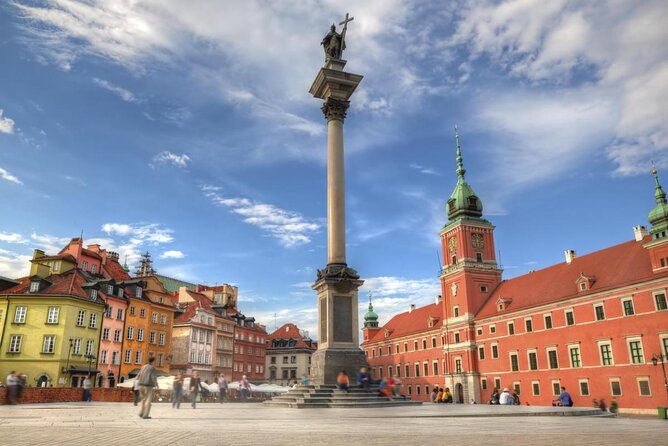
Then you reach Rynek Starego Miasta, Warsaw’s Old Town Market Square. The guide shows photos from before and after WWII and explains the process of rebuilding Warsaw after WWII.
This is the moment where the whole tour theme clicks. If earlier stops felt like “stories about buildings,” here you see the visual proof of what was restored and how it was done. The market square tends to be full of movement, so a guided explanation helps you spot what to notice, beyond just the pretty facades.
The stop is about 10 minutes and is listed with free admission.
Barbakan and the City Walls: Built Without Military Purpose
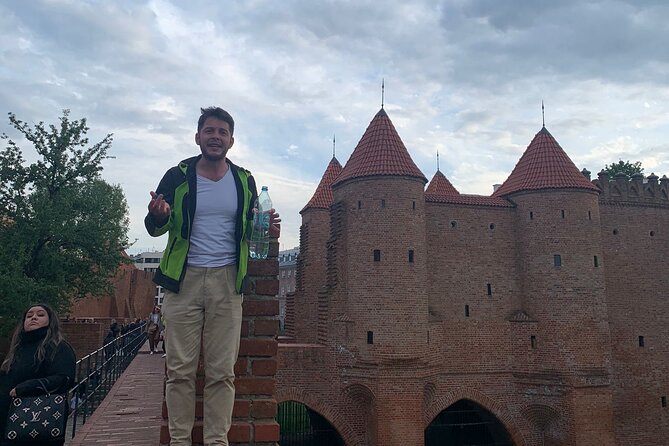
The tour includes Barbakan, part of Warsaw’s city walls, but it stresses something surprising: when it was built, it had no military importance. The guide explains who built it, why, and who used it.
I appreciate when a tour challenges your assumptions. City walls usually mean defense. This stop asks you to look for different motivations, like status, protection of certain routes, or control of movement.
Barbakan is also a helpful photo stop. Even when you only get a short look, you can usually get at least one angle that shows its relationship to the surrounding walls.
The itinerary lists admission as free for this segment.
Gnojna Góra: Padlocks, Romance, and the History Behind It
Another standout is Gnojna Góra hill, presented as romantic and popular for love padlocks. The tour notes there is a wishing ritual type of tradition via padlocks, but adds a key twist: the guide says they would not do it because of the hill’s history, and explains that history.
This is one of the best examples of what makes a guided tour feel smarter than self-guided wandering. A simple romantic ritual can flatten a site’s meaning, and the guide makes sure you see the deeper context.
The stop is about 10 minutes, listed as free. You’ll likely have time to take in the view and then refocus on what the place represents historically.
Old Town Treasures: Piwna Street, the Pigeon Lady, and More
The final stretch focuses on Old Town and its hidden treasures. This is about 40 minutes and is where you get multiple themed stops inside the Old Town area.
The tour highlights:
- Piwna Street, described as the beer street
- the Pigeon Lady
- the mermaid of Warsaw
- WWII in Warsaw
- and other stories connected to what you are standing in front of
Even if you do not consider yourself a “history person,” this segment can still work because you get a mix: street character, public art or quirky landmarks (like the Pigeon Lady), and a reminder of how WWII shaped the area.
Old Town is also a place where you can easily lose the plot without guidance. The guide’s job here is to point out what is worth your attention and to connect details back to the bigger story of Warsaw’s survival and rebuilding.
The tour ends at the Warsaw Mermaid Statue (Pomnik Syrenki) in Rynek Starego Miasta 18i. If you want to keep walking afterward, this end point is a practical launchpad since you are already in the Old Town heart.
Price and Value: Why This Group Tour Can Be a Good Deal
The price is listed as $258.88 per group, with a maximum group size up to 15. On paper, that can sound either expensive or like a bargain, depending on how many people are in your group.
Here is how I think about it:
- If you are traveling as a pair or small group, you still get the value of a private guide and direct pickup option, which can offset the cost of taxis or time lost finding starts.
- If you are a group of friends, the per-person cost becomes much easier to justify.
- The tour also includes several major narrative stops that are listed as free admission, so you are not paying extra entry fees to get the core experience.
It is also telling that this tour is booked far in advance (an average of 128 days). That usually means the format works, especially for people who want Old Town context without spending a full day on planning.
If your top priority is a fast, story-driven orientation to Warsaw’s center, the structure and guide-led pace make the price feel more like paying for clarity than paying for logistics.
Who This Tour Fits Best
This tour fits best if you:
- want a guided walk that explains why monuments and streets matter
- enjoy WWII context tied to specific buildings, not general statements
- like culture stops, like Chopin’s heart, with a clear story behind them
- prefer private guiding over joining a large crowd
It might feel less ideal if you:
- prefer long museum-style stops over quick street segments
- get tired quickly of continuous talking
- want lots of free time to roam without guided pauses
For most people, though, the 2 hours 30 minutes format is a sweet spot. You get the main highlights and the meaning behind them without the day dragging.
Should You Book This Private Old Town and Royal Route Walk?
I would book it if you want a fast route that gives Warsaw depth. The tour’s strength is not any single landmark. It is the way themes repeat across stops: Chopin’s connection to Warsaw, the importance of power centers, and the long arc from destruction to rebuilding.
The guide, Łukasz Benedykciński, is central to that value. The tour is designed to turn the places you see into stories that make sense, and that approach shows up in the consistently strong feedback score of 5 out of 5.
If you are visiting for the first time and want Old Town to feel understandable, not just photogenic, this is a smart booking. And if you like to travel with structure, pickup and a clear start and end point make it easy to plan your day.
FAQ
How long is the Private Warsaw Old Town & Royal Route Walking Tour?
It lasts about 2 hours 30 minutes.
Where does the tour start and end?
The tour starts at the Nicolaus Copernicus Monument on Krakowskie Przedmieście and ends at the Warsaw Mermaid Statue in Rynek Starego Miasta 18i.
Is pickup available?
Yes. The guide meets you at your hotel reception. You can also start the tour at your hotel with a few extra stops before reaching the main route.
Is the tour private, and how big can the group be?
Yes, it is private. Only your group participates, and the group size is up to 15.
What language is the tour offered in?
The tour is offered in English.
Do I need to buy tickets for the stops?
The tour notes free admission for the listed stops.
What is the payment and ticket method?
The tour includes a mobile ticket.
When will I get confirmation after booking?
You should receive confirmation within 48 hours of booking, subject to availability.
What are the operating hours?
The tour is listed as available daily from 7:00 AM to 9:00 PM within the stated date range.
What is the cancellation policy?
Free cancellation is available. You can cancel up to 24 hours in advance for a full refund, based on local time. If you cancel less than 24 hours before the start time, the amount you paid is not refunded.
Freshly posted from Warsaw
- Krakow Small Group Tour from Warsaw with Lunch, Schindler’s Factory included★ 5.0 · 7 reviews
- Warsaw Private Transfer from Warsaw Chopin Airport (WAW) to City centre★ 4.0 · 7 reviews
- 3-hour tour at Warsaw Uprising 1944 Museum /inc. Pick-up/★ 4.9 · 7 reviews
- Wolfs Lair – Hitlers hideout★ 4.5 · 7 reviews
- Warsaw: Evening History and Pubs Tour by Retro Minibus★ 5.0 · 7 reviews
- Warsaw: Private Vodka Tasting Night with Snacks and Pickup★ 5.0 · 7 reviews
- Warsaw Old Town with Royal Castle + Royal Route: SMALL GROUP /inc. Pick-up/★ 5.0 · 7 reviews
Walking Tours, compared.
Old Town Krakow & Wawel Castle Walking Tour
Read our review →
Gdańsk City Sights & History Guided Walking Tour in English
Read our review →
Browse the lists this tour appears in