
Reviewed · WALKING TOURS
Private Walking Tour of Old Gdańsk with an architect-guide
Old Gdansk ticks like a clock. This private walking tour helps you read the city through architecture and street-level details, from Teutonic power to maritime trade. You get an English-speaking guide, plus the comfort of a private group size capped at 7.
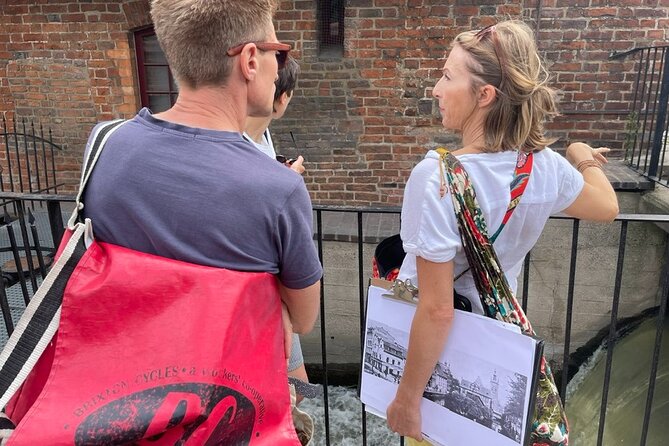
I especially like the way Agnieszka connects buildings to function, not just dates. I also love the old-photo style storytelling, including the area around the Great Mill where you can see how this part looked before World War II.
One consideration: it is still a long walking loop, roughly 1.5 to 4 hours, and some optional stops sit in towers or require stronger legs. If you want zero effort stops, you’ll need to plan around the optional museums.
In This Review
- Key highlights to look for
- Why an architect-guide changes Old Gdansk
- Price and value for a private group up to 7
- Starting at Ratusz Starego Miasta, City Hall, and Teutonic clues
- The Great Mill and wartime photos, plus the Amber Museum option
- A church in action and the Museum of Turrets Clocks
- Leaving Old Town: the medieval fortifications tower moment
- Great Armoury (Wielka Zbrojownia): wealth you can see in stone
- St. Mary’s Church and the noon astronomical clock
- Mariacka Street and Brama Mariacka: charm meets trade
- Green Gate and the Great Market, plus Artus Court interiors
- Uphagen’s House peek and Prison Tower ending
- Timing, walking style, and how to plan your day
- Who this private architect walk is best for
- Should you book this Old Gdansk architect-guided walking tour?
- FAQ
- Is this tour private?
- How large is the group, and what is the price?
- How long does the walking tour take?
- What languages is it offered in?
- Where does the tour start and end?
- Are admission tickets included?
- Are pickups available?
- When will I get confirmation after booking?
- What if I need to cancel?
- Is the tour suitable for everyone?
Key highlights to look for
- Architect-guide framing that explains why each building looks the way it does
- Pre-World War II photo context around the Great Mill area
- St. Mary’s Church astronomical clock and the daily noon chime
- Turret-clock museum details including the world’s first pulsar clock
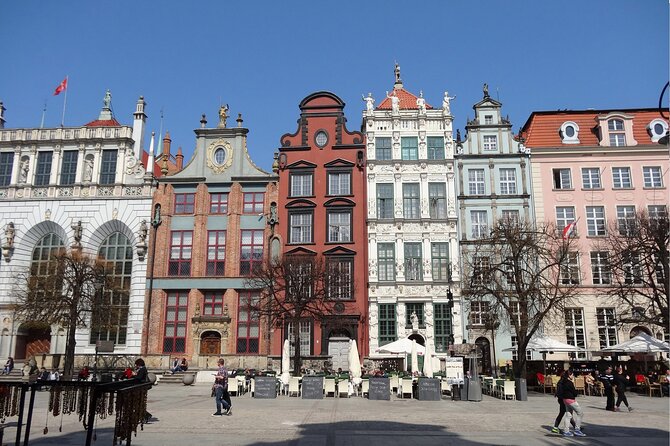
- City gates and market stops that tie Gdansk’s wealth to Baltic trade
- Flexible add-ons for museums like Amber Museum and Uphagen’s House
Why an architect-guide changes Old Gdansk

Old Town Gdansk can feel like a postcard maze. This tour helps you see the logic behind the maze, because the guide talks about structures like a working system.
You start with the civic and military story, then you move into trade and daily life. That pacing matters. It turns a list of landmarks into a connected map of power, wealth, and timing.
And since it is private, you can ask practical questions while you walk, instead of waiting for a group to catch up. Your guide also uses photos as a teaching tool, which is a big deal here because Gdansk has layers, and some of the street feel you get today did not exist the same way in the past.
More Walking Tours in Gdansk
- Gdańsk City Sights & History Guided Walking Tour in English
★ 4.8 · 876 reviews - Main Town Gdańsk Walking Tour
★ 5.0 · 644 reviews - Discover Gdansk Walking Tour
★ 5.0 · 495 reviews
Price and value for a private group up to 7
The price is $264.35 per group for up to 7 people, with private-only participation. That means the cost per person can drop fast if you are traveling as a small family or a couple of friends.
What you are really buying is time with an architect-style guide plus guided context at multiple major stops. Several highlights have free admission areas you do not have to pay for on the spot, like the Old Town City Hall area, St. Mary’s Church, Mariacka Street, and the Green Gate.
Some museum time is not included and is handled as options your guide discusses. That can be a plus for value. You choose what fits your interests and energy level, instead of paying for fixed entries you might skip.
Starting at Ratusz Starego Miasta, City Hall, and Teutonic clues
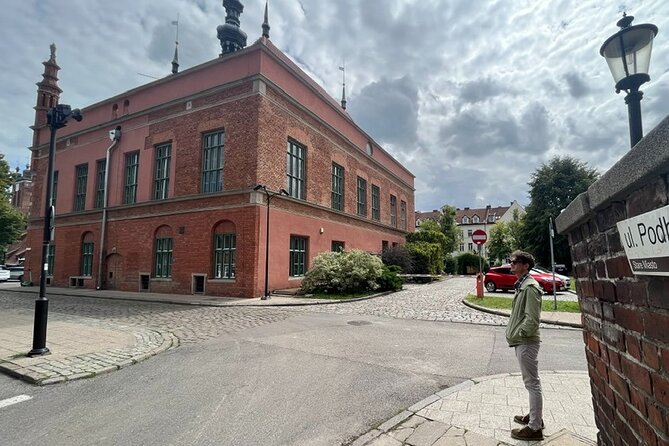
You meet at Ratusz Staromiejski, Korzenna 33/35, in the Old Town area. The walk opens at the Old Town City Hall, positioned by the Radunia Canal. That setting gives you a quick sense of how water and governance worked together.
This stop is more than a pretty facade. Your guide introduces the Teutonic Order connection, which helps you understand why Gdansk’s medieval story is not only local. It is shaped by outside forces, and those influences show up in the way buildings and institutions were used.
Since there is free admission at this point, it is a smart first stop. You can get grounded fast, take photos early, and let the guide set terms for the rest of the route.
The Great Mill and wartime photos, plus the Amber Museum option
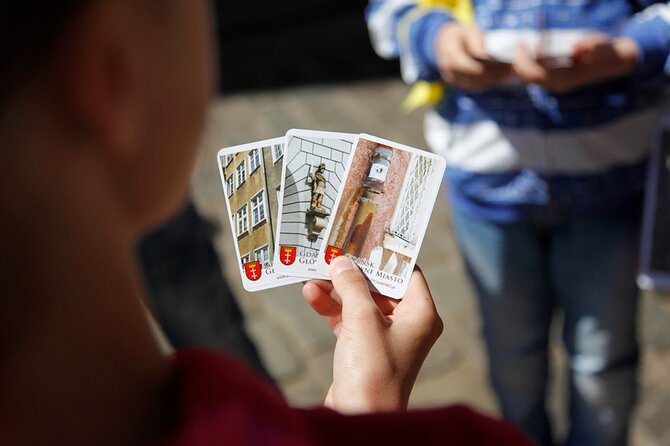
Next you head toward the Great Mill. This is one of those “why it matters” locations. The guide explains its importance and history, then adds visual context with pictures showing what the area looked like before World War II.
That photo approach is useful because the city you see today is not the city that was here in earlier eras. Even a short look can change how you read the street, the waterfront area, and the way trade shaped neighborhoods.
The Great Mill stop itself is brief, and admission is not included. But here is a practical tip: your guide strongly advises visiting the Amber Museum, which is in this building. It is not part of the tour by default, but it can be discussed so you can potentially do it before the tour starts. If amber and craft history are your thing, this is an easy add-on that fits naturally into this part of the route.
More Polish squares crossed on foot:



A church in action and the Museum of Turrets Clocks
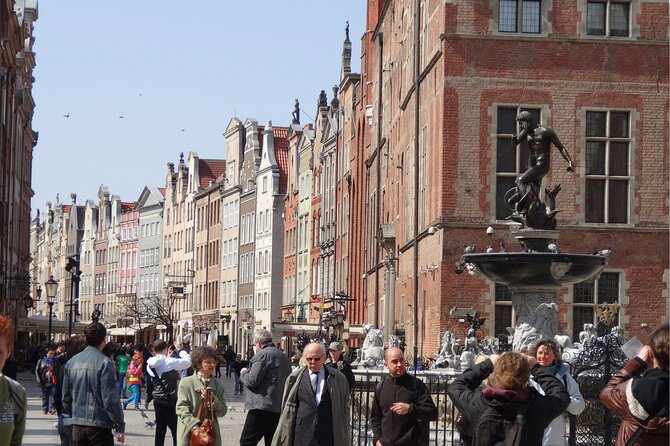
At the next church stop, the building is still running as a church, while also housing the Museum of Turrets Clocks. This is where the tour gets wonderfully specific about timekeeping tech, not just architecture.
The museum sits in a tower, so the route is not for everyone. The museum is described as being aimed at visitors with strong legs. That means you should be honest with yourself about stamina before you say yes.
If you do go, this is where you hear the big names and big claims: the biggest concert carillon in Poland and the world’s first pulsar clock are both part of the museum’s story. Those details make it feel less like a random museum stop and more like a lesson in how people measured life, sound, and science.
Since this museum is not automatically included in the tour and it is discussed, treat it as a choose-your-own-level moment. If you skip it, you still get the church setting and the historical framing.
Leaving Old Town: the medieval fortifications tower moment
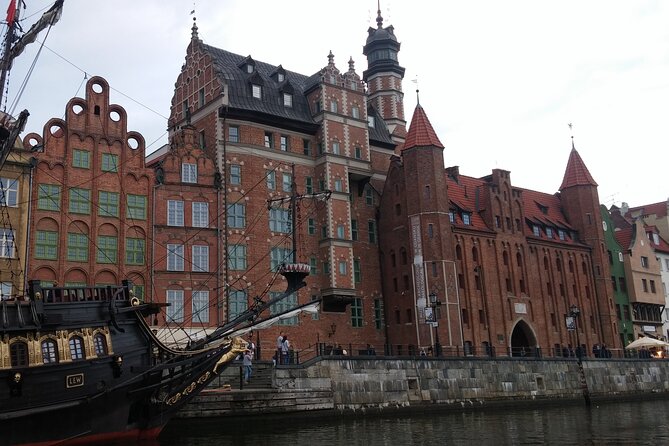
Then you hit the higher tower connected to medieval fortifications. This is the point where you actually feel the route shift from Old Town into Main Town and the broader scale of Gdansk.
Even without a long stay, the value here is viewpoint and perspective. A fortification tower is the city’s way of saying, we planned for control, defense, and surveillance. Standing at that kind of height helps you connect what you learned at the civic start to what comes next in trade and wealth.
If you are sensitive to steps or have mobility limits, this is another place to check with your guide in real time. You can likely adjust your pace while still staying part of the group.
Great Armoury (Wielka Zbrojownia): wealth you can see in stone
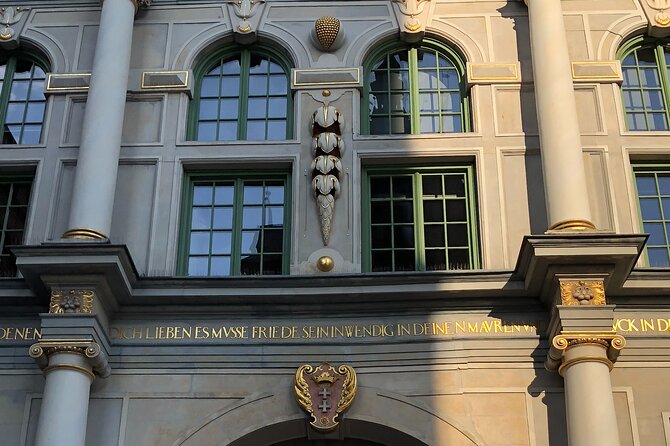
The Great Armoury, Wielka Zbrojownia, is a standout architectural object for a reason. The guide treats it like a “readable artifact” where looks and function line up.
You learn how the space worked and what its form signals, especially in the Renaissance period when the city’s wealth shows up in materials and scale. This is one of those stops where you might notice details you would otherwise miss, like how the building supports its purpose.
Free admission is listed for this stop, and it is also used today. The Academy of Fine Art now occupies the space, and it can sometimes be open to the public during student exhibitions. You might not see an exhibition every day, but even without one, the building itself carries the story.
St. Mary’s Church and the noon astronomical clock
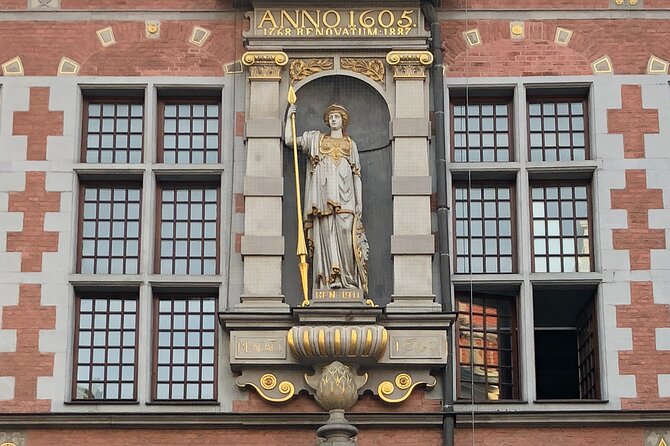
St. Mary’s Church is next, and it is memorable for two reasons. First, it is described as the biggest brick church in the world. Second, it holds a huge astronomical clock from the 15th century.
If you like timed moments, this stop is your friend. The clock chimes every day at noon. That is not a minor detail. It means architecture here is tied to daily rhythm.
Admission is free for this stop, so you can linger without budgeting extra. Your guide helps you connect the clock to how medieval and early modern societies organized the day, not just how to take a good photo.
If you hit this stop close to noon, arrive with a little patience. Wait for the chime if you can, then continue the walk with the sound still in your head.
Mariacka Street and Brama Mariacka: charm meets trade
After the church, you move into Mariacka Street, Ulica Mariacka. This stretch is where you get ambiance. It is the kind of street where the buildings feel like a stage set for older street life.
From there you pass through Brama Mariacka. This gateway point is not just a scenic passage. The guide uses it to talk about maritime trade and the Long Seashore.
That transition is smart. It shows you that Gdansk’s identity was not only brick churches and merchant houses. It was also ships, goods, and routes across the Baltic.
Free admission is listed for Mariacka Street and the gate area, so this section is low-cost, high-feel. It is also a good time to slow down for photos, because the guide’s pacing usually gives you a little breathing room here.
Green Gate and the Great Market, plus Artus Court interiors
At Green Gate, Brama Zielona, you enter the Great Market area, described as the place to be. This is where you see how a city organizes space for commerce, and how gates act like filters between zones of daily life and zones of movement.
The stop itself includes free access, and the guide ties it to the scale of market activity and the wealth of the city. Even if you do not shop, the point is understanding why this area mattered.
The route continues with a conversation about what you can see around this corner. The Artus Court is mentioned as a former merchant meeting place, and today it is presented as an astonishing museum of history and art. Your guide also references interiors of the Main Town Hall, though what you see depends on access.
This is a good reminder that architecture is social. A city does not build only for defense. It builds for meetings, decisions, and trust.
Uphagen’s House peek and Prison Tower ending
Uphagen’s House, Museum of Gdansk, comes next. Your guide offers a peek inside, but it is framed as a decision point for you. Admission is not included, so you can decide on the spot whether you want to add that museum time.
This approach is practical. If you are museumed out, you can keep walking and still leave with the main story. If you want more domestic detail, you can switch into longer mode for the house museum.
Finally, the tour ends at the Prison Tower area at Katownia Targ Węglowy 26. The ending tone is clear: this is where lives ended. It is a stark way to close a walk that started in civic governance and moved through trade wealth.
Not everyone wants a heavy ending. Still, the balance works because it completes the arc: power requires law, and law requires enforcement.
Timing, walking style, and how to plan your day
The tour runs about 1 hour 30 minutes to 4 hours. That range gives you flexibility, but it also means you should keep your schedule loose if you can.
Pickup is offered, and the tour uses a mobile ticket. Since the route is near public transportation, you can also treat it as a start or finish connected to your broader day planning.
Because the optional stops include museum entries and tower access, your best strategy is simple: decide your priorities early. If you want maximum clock and science content, make space for the Museum of Turrets Clocks option. If amber craft is your interest, the Amber Museum in the Great Mill building is the most natural add-on.
Who this private architect walk is best for
This is a strong fit if you want more than a sightseeing checklist. I would book it if you like architecture, want clearer context for medieval to Renaissance shifts, and enjoy practical explanations about why buildings and gates mattered.
It also works well for small groups of friends or a family up to 7. The private format keeps the pace workable and gives you time for questions about trade, fortifications, civic power, and timekeeping.
If you have limited mobility or you prefer very short visits, it may still work, but you should plan your optional choices carefully. Tower museums and tower views are mentioned as requiring strong legs.
Should you book this Old Gdansk architect-guided walking tour?
Yes, if you want a guided Old Town that feels like a story with structure. The combination of architectural framing, targeted stops like St. Mary’s Church with the 15th-century astronomical clock and noon chimes, and the dramatic optional details at the turret-clock museum make it a memorable way to spend your time in Gdansk.
I would not book it only if you want a quick highlights loop with zero decision-making. Some entries are free and some are optional, and the tour length can stretch up to 4 hours. If you like full control and very short walks, pick a tighter schedule and go in with a plan for which optional museums you want.
FAQ
Is this tour private?
Yes. It is a private tour, meaning only your group participates.
How large is the group, and what is the price?
The price is $264.35 per group, up to 7 people.
How long does the walking tour take?
It runs about 1 hour 30 minutes to 4 hours, approximately.
What languages is it offered in?
It is offered in English.
Where does the tour start and end?
It starts at Ratusz Staromiejski, Korzenna 33/35, 80-001 Gdańsk, Poland. It ends at KatowniaTarg, Węglowy 26, 80-836 Gdansk, Poland.
Are admission tickets included?
Some stops have free admission. Other places mentioned, like the Amber Museum, Museum of Turrets Clocks, Uphagen’s House, and Prison Tower, are not included and are discussed as options.
Are pickups available?
Yes, pickup is offered.
When will I get confirmation after booking?
Confirmation is received within 48 hours of booking, subject to availability.
What if I need to cancel?
You can cancel for a full refund if you cancel up to 24 hours in advance of the experience start time.
Is the tour suitable for everyone?
Most travelers can participate. Service animals are allowed, and the route is near public transportation.
Freshly posted from Gdansk
- GDANSK City Tour by Golf Cart Live Guide & Sightseeing 90min★ 4.7 · 7 reviews
- Stutthof Concentration Camp private tour★ 5.0 · 7 reviews
- Private Roundtrip Transfer to Stutthof Concentration Camp 4h★ 5.0 · 7 reviews
- Gdansk: Polish Craft Beer Tasting Session★ 4.5 · 7 reviews
- Gdansk, Sopot & Gdynia – Private 3 City Tour★ 5.0 · 7 reviews
- Gdansk: PRIVATE Alcotour City Tour Sightseeing Golf Cart★ 5.0 · 7 reviews
- Malbork Castle: Private Tour from Gdansk, Sopot or Gdynia★ 4.8 · 8 reviews
Walking Tours, compared.

Old Town Krakow & Wawel Castle Walking Tour
Read our review →

Gdańsk City Sights & History Guided Walking Tour in English
Read our review →

Browse the lists this tour appears in