
Reviewed · WALKING TOURS
Gdańsk: Old Town Private Walking Tour with Legends and Facts
Gdańsk has a talent for storytelling. This private Old Town walking tour strings together the city’s big sights with local legends, plus the Solidarity chapter that helped reshape Eastern Europe. I especially love the focus on legend-and-fact explanations from guides like Kaja and Krzysztof Przyborowski, and I also like the practical payoff, including tips on food, pubs, and souvenir stops. One heads up: it’s a walking tour, so expect cobblestones and plan for comfort shoes.
You’ll start at the Upland Gate (Brama Wyżynna) and work your way through the Medieval-to-Renaissance heart of the Old Town, including places like Neptune’s Fountain, Artus Court, and St. Mary’s Basilica. For many visitors, the most memorable moments are the church interiors and the Solidarity-linked stops, especially when a guide clearly connects dates, names, and the city’s maritime identity. If you are short on time, choose a shorter route, since the 4- and 6-hour options add more walking and a few extra layers of history.
In This Review
- Key Highlights Worth Prioritizing
- Getting Your Bearings at Upland Gate and Dluga Street
- The Long Market Core: Neptune’s Fountain, Town Hall, and Merchant Power
- Artus Court: Where Merchants Met, Now Where You See Local Culture
- Green Gate and Motlawa River Views That Reset Your Perspective
- St. Mary’s Basilica: Big Brick Church, Royal Chapel, and a Proper Interior Stop
- Great Armoury: Finishing With Renaissance Architecture That Feels Made to Last
- Choosing the 3-Hour Option: More Old Town, More Island-Trade Context
- St. Bridget’s Church on the 4-Hour Route: Solidarity Under Martial Law
- The 6-Hour Full Story: Shipyard Memory and the European Solidarity Centre
- Price and Value: $107 for a Private Guide That Adds More Than Facts
- Practical Logistics That Make the Day Easier
- Who This Private Tour Fits Best
- Should You Book This Gdańsk Old Town Private Walking Tour?
- FAQ
- How long is the Gdańsk Old Town private walking tour?
- Where does the tour meet?
- Is pickup from my accommodation included?
- What sights are included in the shorter options?
- Is entry to St. Mary’s Basilica included?
- Is St. Bridget’s Church included?
- Does the tour include the European Solidarity Centre?
- What languages are available for the private guide?
- Is the tour wheelchair accessible?
- Is cancellation and pay-later available?
Key Highlights Worth Prioritizing
- Private, licensed 5-star guidance that keeps the pacing flexible and the stories clear
- Old Town set-pieces like Neptune’s Fountain and the Long Market area
- St. Mary’s Basilica interior time in one of the largest brick churches in the world
- Artus Court as a history anchor, now part of the Gdańsk History Museum
- St. Bridget’s Church and its amber altar, tied to Solidarity under martial law
- European Solidarity Centre on the longest option, with skip-the-line entry
Getting Your Bearings at Upland Gate and Dluga Street
The tour begins right at the Medieval walls, at the High Gate area, outside the tourist information sign under Brama Wyżynna (Wały Jagiellońskie 2A). That choice matters. Gdańsk’s Old Town can feel like a maze if you arrive cold, but starting at the gate gives you a mental map fast.
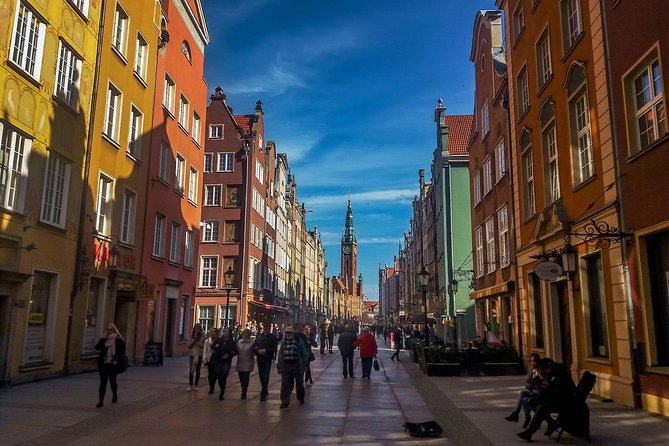
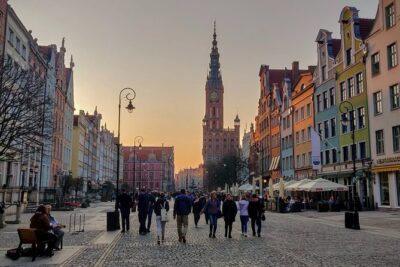
From there, the walking route heads past the Golden Gate and along Dluga Street toward the Long Market. You’re not just checking off buildings here. You’re learning how the city’s shape, trade, and power played out in stone and street layout. The guide also tends to add context around what you’re seeing in the moment, so the Old Town starts to make sense as a working commercial city, not just a pretty postcard.
One practical benefit: during the shorter options, you’ll get basic orientation plus tips on where locals go for meals and drinks and where to pick up souvenirs without wasting time. I like this because it turns the first day in a new place into a working plan, not a wandering day.
What to watch for: Dluga Street and the Long Market stretch are main pedestrian zones, so they can be busy at peak hours. If you’re sensitive to crowds, build in slow-down moments when the guide stops you for legends and details.
More Walking Tours in Gdansk
- Gdańsk City Sights & History Guided Walking Tour in English
★ 4.8 · 876 reviews - Main Town Gdańsk Walking Tour
★ 5.0 · 644 reviews - Discover Gdansk Walking Tour
★ 5.0 · 495 reviews
The Long Market Core: Neptune’s Fountain, Town Hall, and Merchant Power
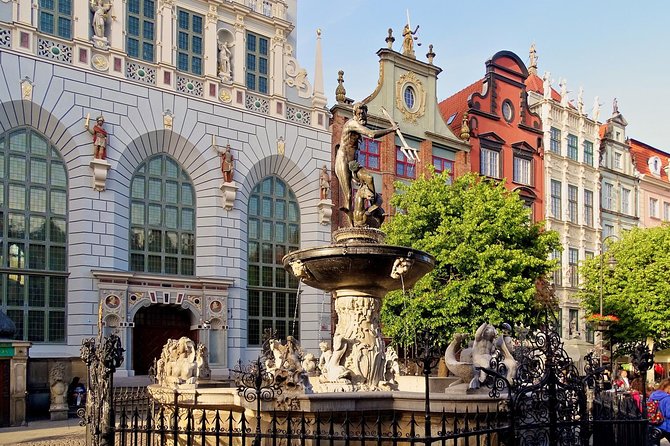
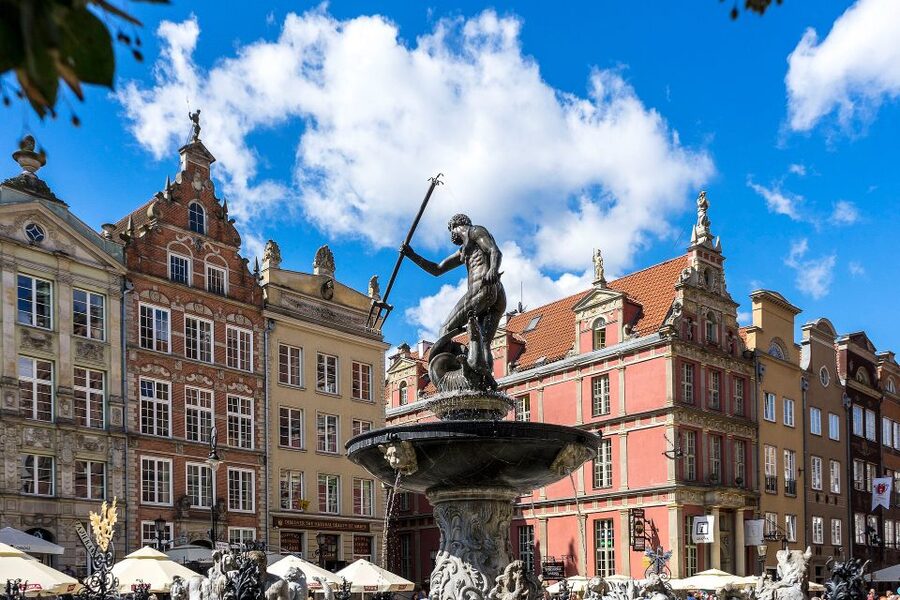
As you reach the Old Town’s beating heart, the tour leans into major visual landmarks. Along the Long Market area, you’ll see the Gdańsk Town Hall, the Golden House, and the 17th century Neptune’s Fountain. These aren’t random photo stops. They reflect how merchant wealth, city governance, and maritime culture blended into a single civic identity.
Neptune’s Fountain is a standout because it’s tied to Gdańsk’s long relationship with the sea. The guide’s job is to make that connection feel logical, not forced. When the story clicks, you start noticing the “why” behind the art and symbols rather than just the “what.”
The Town Hall area also helps you understand Old Town civic life. Even if you don’t plan to go deep into museum time, the outside setting gives you a sense of who held authority and what mattered to the city’s leadership.
Small travel tip: If you want the best fountain photos, wait for the guide’s timing. Private pacing often means you can catch a less crowded moment without trying to outsmart everyone in the square.
Artus Court: Where Merchants Met, Now Where You See Local Culture
Next up is Artus Court (Dwor Artusa), once a meeting place for Gdańsk merchants. Today it serves as a branch of the Gdańsk History Museum with collections focused on local history and arts.
This stop works especially well if you like the human side of history: who met where, how people negotiated, and what kinds of culture flowed through a port city. Even if you only get a limited visit depending on your chosen duration, it acts like a hinge between the open-air monuments and the church-heavy parts of the walk.
Think of Artus Court as the tour’s “business meeting” chapter. After you’ve seen the city’s major public symbols, you get a sense of how daily commerce and civic networking shaped everything around it.
A possible drawback: If you’re the type who hates any museum-style stop on a walking tour, you might want to choose a shorter duration. The overall experience still includes key sights, but the Artus Court time adds variety that some people love and others skip given their personal style.
Green Gate and Motlawa River Views That Reset Your Perspective
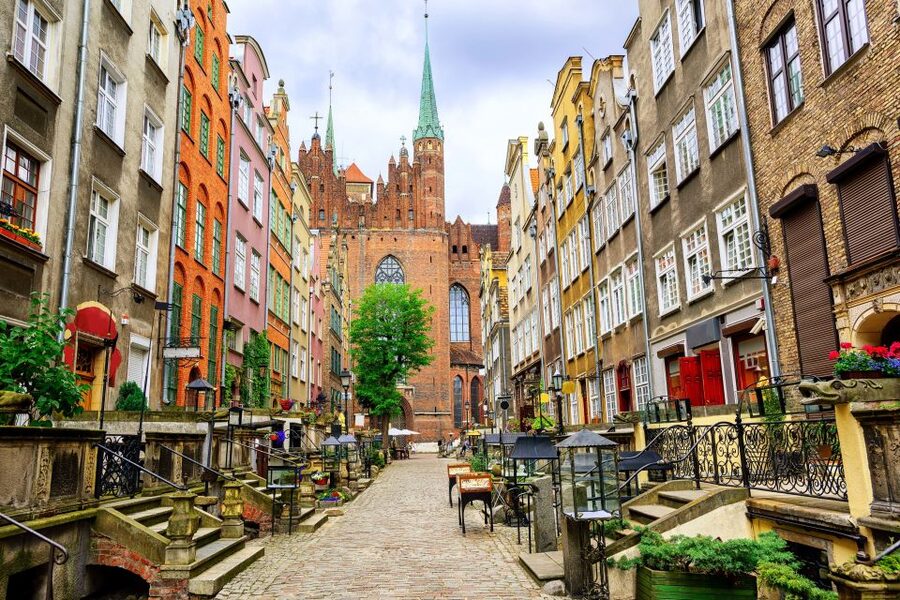
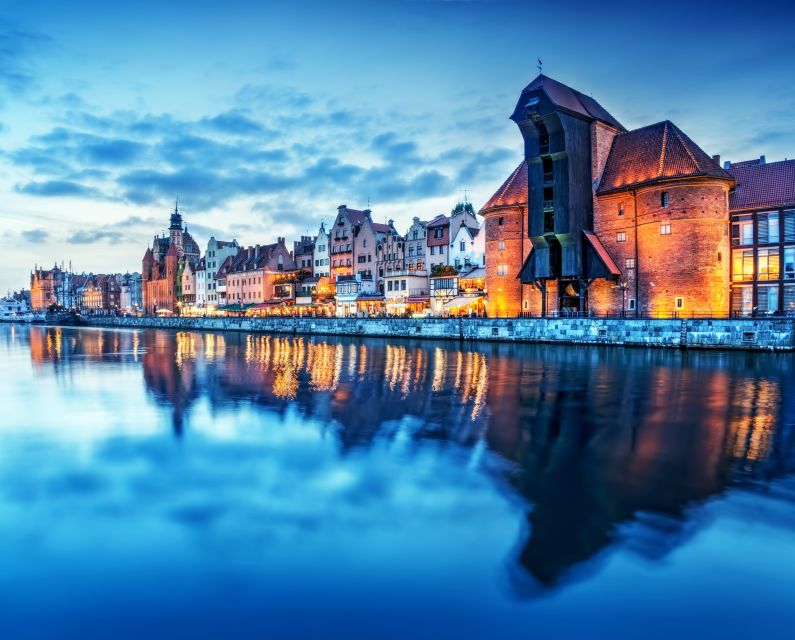
After the street monuments, the tour moves to the Green Gate area for a scenic view over the Motlawa River. This is not filler. River viewpoints give you scale. They also remind you that Gdańsk’s Old Town wasn’t just built for tourists. It was built to receive goods, support industry, and power a sea-facing economy.
I like that the guide uses these view moments to tie the stories together. You can hear the legends in your head, then look out and see the working waterfront logic. That connection makes the city feel less like a history lecture and more like a place with real geography and real trade routes.
Footnote for comfort: If you’re visiting in cooler months, the river area can feel breezier. Bring a light layer so the views stay enjoyable.
More Polish squares crossed on foot:




St. Mary’s Basilica: Big Brick Church, Royal Chapel, and a Proper Interior Stop
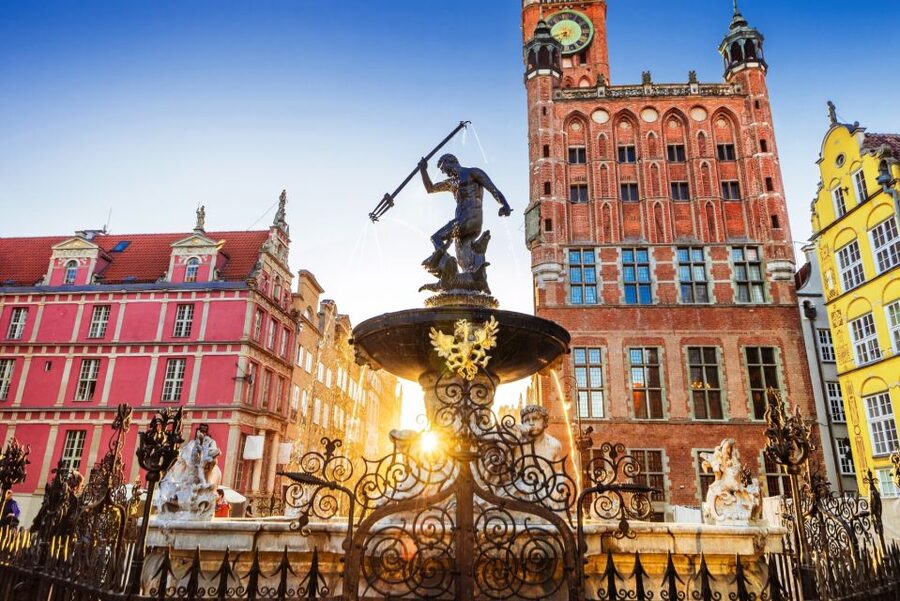
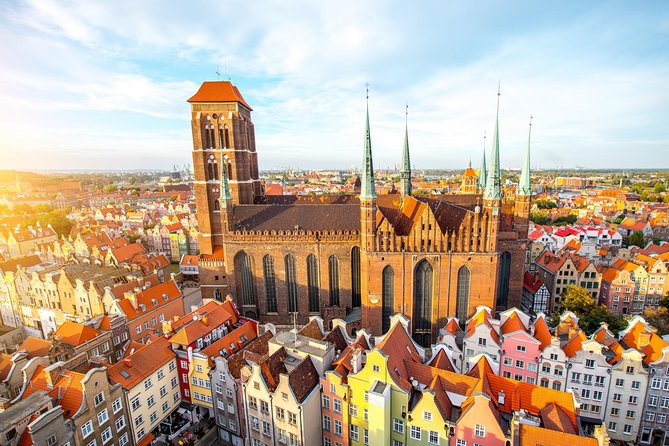
One of the strongest moments of the tour is the visit to St. Mary’s Basilica. You’ll step inside one of the largest brick churches in the world to see the grand hall church setup, an ornate altar, an organ, and a royal chapel.
This is where the tour earns its keep for people who love architecture and want more than quick glances. A good guide doesn’t just point at objects. They explain what you’re looking at, how the church’s grandeur relates to the wealth and identity of a port city, and why the space feels so monumental even though it’s made from brick.
The included entry covers the free parts of St. Mary’s Church across all options. That means you can plan your time without worrying about extra ticket steps for the core basilica moment.
Practical note: Inside, acoustics and shadows can change how details look. If you care about organ and altar details, stay steady for the guide’s explanation rather than constantly moving for photos.
Great Armoury: Finishing With Renaissance Architecture That Feels Made to Last
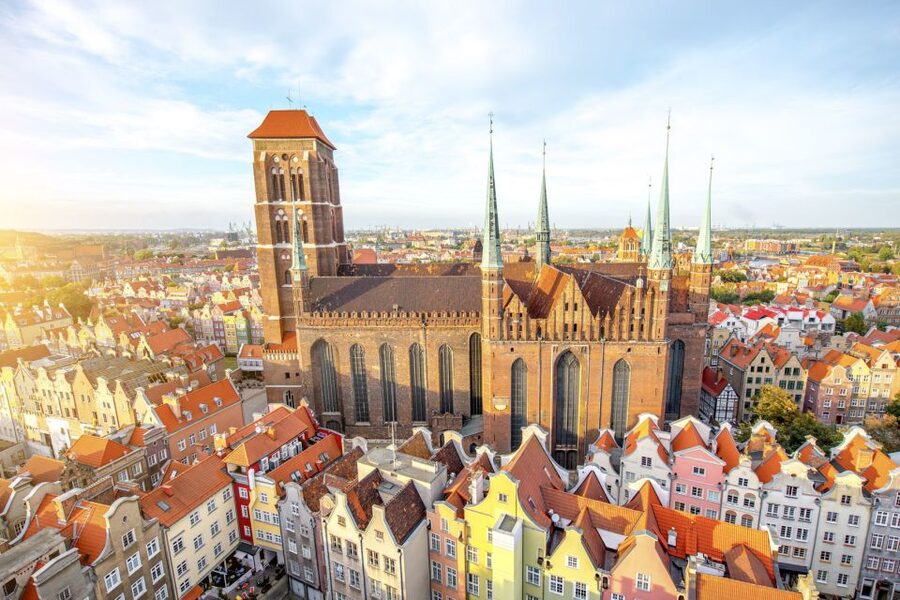
The walking tour ends at the Great Armoury, a 17th century building known as a major example of Renaissance architecture. This finale is smart because it shifts your attention from religious power to civic and defense-era identity.
Even if you don’t spend long lingering at every corner, the Armoury provides a sense of continuity. Gdańsk’s story is not a straight line from “medieval” to “modern.” It’s a set of layers. Ending here helps you feel that layered timeline under your feet.
Who will like this most: If you enjoy cities where architecture changes character as you walk, you’ll likely find this last stop satisfying because it gives you a final visual anchor.
Choosing the 3-Hour Option: More Old Town, More Island-Trade Context
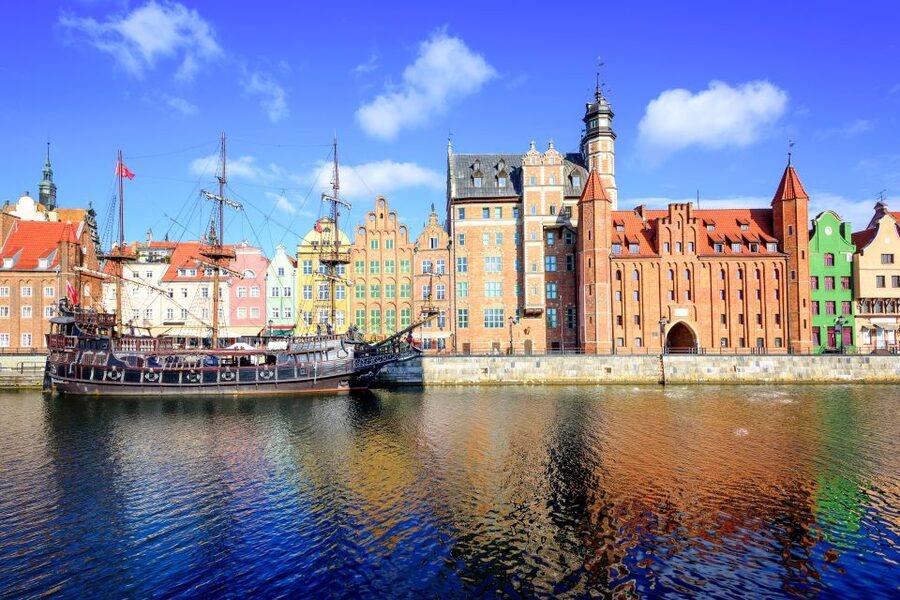
If you pick the 3-hour version, you’ll learn even more about Gdańsk and extend beyond the basic Old Town loop. A key added area is the Motlawa River islands, including Wyspa Spichrzow.
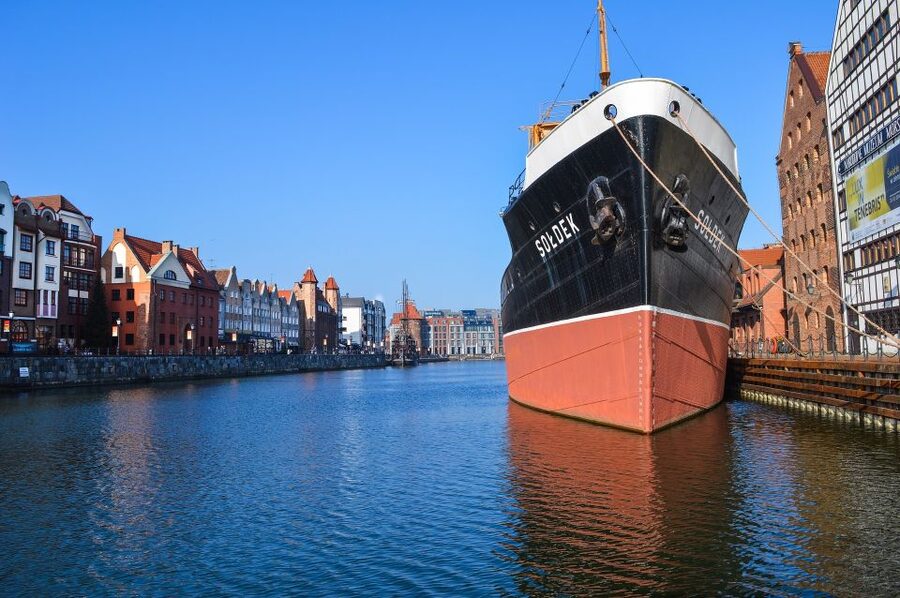
Wyspa Spichrzow is where you see redeveloped island spaces with older brick structures and warehouse ruins. The guide’s job is to make the warehouses feel purposeful: this is where trade logistics and shipping reality lived. Instead of only hearing about maritime wealth, you can see physical remnants of how goods moved and stored.
There’s also mention of Ołowianka Old Town and the red brick Baltic Symphony Hall in the route for longer options. If you love seeing how historical materials get reused in modern cultural settings, you’ll probably enjoy this contrast.
Good fit: Choose 3 hours if you want the core monuments but still want a taste of the river-island world without committing to the full day.
St. Bridget’s Church on the 4-Hour Route: Solidarity Under Martial Law
The 4-hour option adds St. Bridget’s Church, described as a sanctuary for leaders of Solidarnosc under martial law. This is the emotional and political peak for many visitors, because it links the city’s ideology story to a specific physical place.
Two details matter here. First, the church doors show multiple Solidarity scenes spanning August 1980 through the imposition of martial law in December 1981. Second, the church has an amber altar, made from the most recognizable raw material from this region.
That combination is powerful because it blends protest memory with local craftsmanship. You are not only absorbing politics. You are seeing how a community’s identity gets expressed through material culture and religious art.
If you are short on time: This is the one extra stop that often makes the longer option worth it. If you skip it, you lose the strongest Solidarity-on-the-street connection in the Old Town.
The 6-Hour Full Story: Shipyard Memory and the European Solidarity Centre
For the most complete experience, the 6-hour route expands beyond the Old Town and includes the Main Town. This is where Gdańsk stops being only a pretty historic core and becomes a landmark for 20th century political change.
You’ll visit the Monument to the Fallen Shipyard Workers of 1970, commemorating those who died during anti-communist riots. This matters because it shows how conflict and labor history fed into the later Solidarity movement.
Then you’ll head to the European Solidarity Centre. This modern museum covers Solidarity riots and the prominent trade union movement that contributed to the end of communist government in Poland. You also get skip-the-line entry on this longest option, which is a real value when museums have queues.
Who should take the 6-hour tour: If you care about why Solidarity mattered, and you like learning from a place that turns events into context, this longer route is the one to choose. If your goal is mostly first-time Old Town sightseeing, the extra time might feel heavier than you want.
Price and Value: $107 for a Private Guide That Adds More Than Facts
At $107 per person, you’re paying for a private walking tour with a licensed guide and flexible pacing. That price tends to make sense when you want three things at once: priority routing through major sights, explanation that connects the dots, and the ability to tailor the experience.
The tour’s value isn’t only the monument list. It includes practical help like recommendations for local restaurants and pubs, plus a focus on both legends and history. Guides like Karina or Kaja, and Krzysztof Przyborowski, are repeatedly associated with clear explanations, energetic delivery, and a sense of genuine affection for the city. That sort of guide energy often turns a standard walk into a more memorable one.
Also, private format usually helps if your group has different interests. The guide can adapt mid-tour once they understand what you care about, which is useful when one person wants more church time while another wants more river and street legends.
A fair consideration: It’s still a walking experience. If you’re not up for steady walking or you have tight mobility limits beyond wheelchair accessibility, a shorter option can be a better match.
Practical Logistics That Make the Day Easier
Here are the basics that help you plan smoothly.
- Meeting point: In front of the tourist information sign under High Gate at Brama Wyżynna, Wały Jagiellońskie 2A (about 8 minutes from the Main Railway Station).
- Pickup: Available only in Gdańsk Old Town, and only if your accommodation is within 1.5 km of the meeting point. If your place is outside that area, the itinerary may change.
- Languages: The guide speaks the chosen language, including Spanish, French, Italian, English, German, Polish, Russian, Norwegian, and Swedish.
- Accessibility: Wheelchair accessible.
This setup matters because Gdańsk’s Old Town streets can be confusing to navigate for the first hour. Meeting at a clear, public landmark plus a reasonable pickup radius reduces stress.
Who This Private Tour Fits Best
This tour is a strong match if you want:
- A guided route through major Old Town landmarks without guessing where to go next
- Church interior time, not just outdoor photos
- Solidarity context tied to real places, including St. Bridget’s Church and the European Solidarity Centre
- A guide who can explain both facts and the legends that locals like to tell
It’s also ideal if you’re traveling with someone who enjoys different styles of learning. You can cover street legends and major monuments in the same walk, then add museum or political stops on the longer routes.
Should You Book This Gdańsk Old Town Private Walking Tour?
I’d book it if you want your first Gdańsk day to feel organized and meaningful, not random. The private guide format and the legend-and-fact approach are the deciding strengths, especially for people who like a story that connects architecture, trade, and Solidarity.
Choose the 2-hour or 3-hour option if you want highlights plus orientation and a manageable pace. Choose the 4-hour option if Solidarity history is a priority and you want St. Bridget’s Church and its amber altar. Go for the 6-hour option if you want the full arc, including the 1970 shipyard memory and the European Solidarity Centre.
If you hate walking or you want a more self-guided, on-your-own experience, then you might prefer a shorter list of sights and skip the structured tour format. But for most visitors, this is a practical way to get the best of Gdańsk Old Town with a guide who knows how to tell the city’s story.
FAQ
How long is the Gdańsk Old Town private walking tour?
The tour duration options range from 2 to 6 hours, depending on what route you choose.
Where does the tour meet?
Meet your guide in front of the tourist information sign under High Gate, Brama Wyżynna, Wały Jagiellońskie 2A, 80-887 Gdańsk.
Is pickup from my accommodation included?
Pickup is available only within Gdańsk Old Town, and only if your accommodation is within 1.5 km from the meeting point. If it is outside that area, the itinerary may change accordingly.
What sights are included in the shorter options?
In the 2-hour tour you’ll cover the main Old Town route from Upland Gate past Golden Gate and along Dluga Street to the Long Market area, with major sights like Town Hall, Golden House, and Neptune’s Fountain, plus Artus Court and St. Mary’s Basilica. Wyspa Spichrzow is included in the 3, 4, and 6-hour options.
Is entry to St. Mary’s Basilica included?
Yes. The tour includes entry to the free parts of St. Mary’s Church across all options.
Is St. Bridget’s Church included?
St. Bridget’s Church is included on the 4-hour and 6-hour options, with regular tickets included.
Does the tour include the European Solidarity Centre?
Yes, the European Solidarity Centre is included on the 6-hour option, with skip-the-line ticket included.
What languages are available for the private guide?
The guide is available in Spanish, French, Italian, English, German, Polish, Russian, Norwegian, and Swedish.
Is the tour wheelchair accessible?
Yes, the tour is wheelchair accessible.
Is cancellation and pay-later available?
Free cancellation is available up to 24 hours in advance for a full refund. You can also reserve now and pay later.
Freshly posted from Gdansk
- Private Walking Tour of Old Gdańsk with an architect-guide★ 5.0 · 7 reviews
- GDANSK City Tour by Golf Cart Live Guide & Sightseeing 90min★ 4.7 · 7 reviews
- Stutthof Concentration Camp private tour★ 5.0 · 7 reviews
- Private Roundtrip Transfer to Stutthof Concentration Camp 4h★ 5.0 · 7 reviews
- Gdansk: Polish Craft Beer Tasting Session★ 4.5 · 7 reviews
- Gdansk, Sopot & Gdynia – Private 3 City Tour★ 5.0 · 7 reviews
- Gdansk: PRIVATE Alcotour City Tour Sightseeing Golf Cart★ 5.0 · 7 reviews
Walking Tours, compared.
Old Town Krakow & Wawel Castle Walking Tour
Read our review →

Gdańsk City Sights & History Guided Walking Tour in English
Read our review →
Browse the lists this tour appears in