
Reviewed · WALKING TOURS
Life Behind the Iron Curtain Warsaw Walking Tour
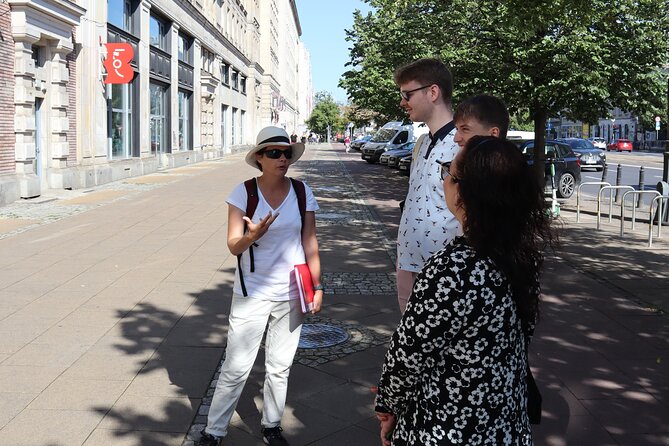
Warsaw has a funny way of telling hard truths. This 2.5-hour walk turns the city’s communist-era design into real-life stories, from staged shopping to how the state controlled what people could say and where they could go. I especially like how the guide uses architecture as evidence, not just background.
I also love the tour’s balance of seriousness and wit. You’ll hit key spots like the Free Speech Memorial, then connect that to censorship and espionage in a way that actually sticks, not just dates you forget.
One thing to plan for: this is about 3 km of walking, so if your legs struggle with sustained city strolling, you may want a gentler option.
In This Review
- Key things that make this tour worth your time
- Constitution Square: where the regime tried to design reality
- Marszałkowska Street and socialist realism that was meant to look convincing
- The Free Speech Memorial: censorship, espionage, and why words cost something
- Centrum Bankowo Finansowe and the maze of official life
- Cedet and the Central Department Store story of empty shelves
- Dworzec Centralny Warszawa: travel control you can feel in the idea
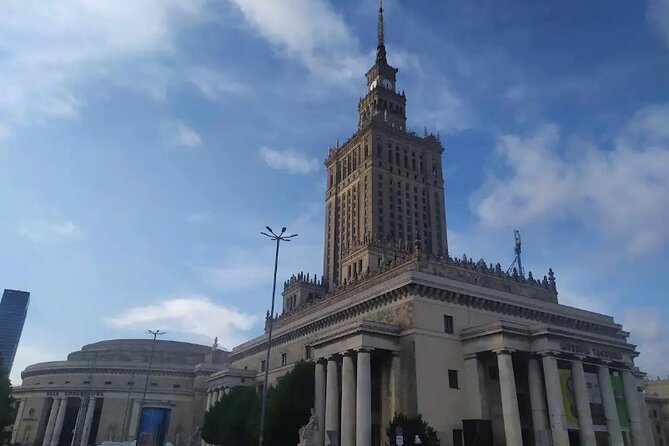
- Palace of Culture and Science: the controversial building with layered meaning
- How this tour helps you understand the iron curtain in daily terms
- Practical value: time, distance, and what you get for $32
- Should you book Life Behind the Iron Curtain Warsaw Walking Tour?
- FAQ
- How long is the Life Behind the Iron Curtain Warsaw Walking Tour?
- What is the price for the tour?
- Where does the tour start, and how do I find the guide?
- Is the tour in English?
- Is the Palace of Culture and Science terrace included?
- Is it wheelchair accessible, and who should avoid it?
Key things that make this tour worth your time
- Constitution Square’s planned “new center” and what it reveals about how the regime wanted to look permanent
- Marszałkowska Street’s parade-boulevard scale and why that width mattered politically
- Free Speech Memorial as a story anchor for censorship, surveillance, and fear
- Socialist realism you’ll debate afterward because it was meant to impress, not comfort
- Cedet and the comedy of shortages: empty shelves, scripted service, and daily workarounds
- Power points and the Communist Party HQ location to see how propaganda and control shaped movement
Constitution Square: where the regime tried to design reality
The tour starts at Constitution Square, and that’s a smart choice. This area reads like a stage set. Even if you’ve seen photos of Warsaw, it’s different when you stand in the space and feel the layout. The guide helps you understand that the square was not just a place to meet. It was supposed to be the new city center, the kind of bold urban statement meant to make the communist era look like the future you could trust.
What I like here is the “why” behind the visuals. You don’t just get told that buildings look official. You learn how space can be used to shape behavior, where attention goes, and how people are nudged toward certain routes. You also start seeing the repeated pattern of the period: the state making big plans, then forcing ordinary life to cope with what those plans ignored.
Expect a short orientation at the start, then the walk quickly turns into something more specific. You’ll begin picking up the theme of the tour: this wasn’t only politics on paper. It was policy affecting your commute, your shopping options, your speech, and your sense of normal.
More Walking Tours in Warsaw
- Warsaw: Old Town Highlights Walking Tour in English
★ 4.7 · 1,516 reviews - Warsaw: Old Town Guided Walking Tour
★ 4.9 · 599 reviews - Half-Day Polish Food Walking Tour with Guide and Dinner
★ 4.5 · 381 reviews
Marszałkowska Street and socialist realism that was meant to look convincing
Next comes Marszałkowska, one of those streets that tells you a lot by simply being wide. The guide points out how it was used for parades and marches. That’s the key detail: the scale wasn’t accidental. In a system built on public displays of power, a grand boulevard is a tool.
Walking this street, you’ll notice how socialist realism shows up in the buildings and their “confident” style. The interesting twist is that the tour doesn’t treat socialist realism as just pretty or just ugly. You get the context behind why the style was promoted, and why locals often saw a gap between the ideal and the lived reality.
Here’s the part you’ll probably remember later. The guide helps you understand that the propaganda look often felt too polished for real life. People didn’t just critique the messages. They also questioned the tone, the promises, and the mismatch between what was painted onto facades and what was available inside stores or workplaces.
If you like architecture, you’ll enjoy this stretch even more. If you don’t, you still get something practical: a mental map of how regimes use visual language to manage emotions at scale.
The Free Speech Memorial: censorship, espionage, and why words cost something
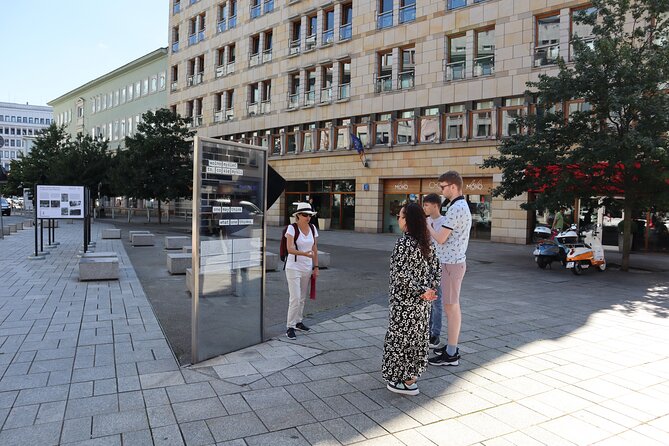
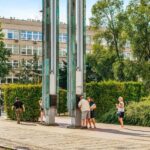
The Free Speech Memorial is the emotional hinge of the tour. This is where the Cold War turns from design choices into human pressure. The guide brings in the theme of censorship and espionage, and the stories make clear that controlling speech was never just about books or posters. It was about fear, risk, and self-editing in everyday life.
You’ll also get a better sense of how surveillance works on a personal level. Even when people weren’t sure who was watching, they learned what behavior attracted attention. That’s where the tour scores: it doesn’t just explain the ideology. It explains how ideology becomes a daily habit.
As you stand there, look at the space and listen for the guide’s framing. This stop helps you understand the title idea in a tangible way. “Behind the iron curtain” wasn’t only geography. It was a system that reached into conversations, workplaces, and the small choices people made to get through a day without trouble.
This is also where the tour’s humor has the right job. It doesn’t turn suffering into a joke. It shows how people used sarcasm and wit to cope with a system that made sincerity feel dangerous.
Centrum Bankowo Finansowe and the maze of official life
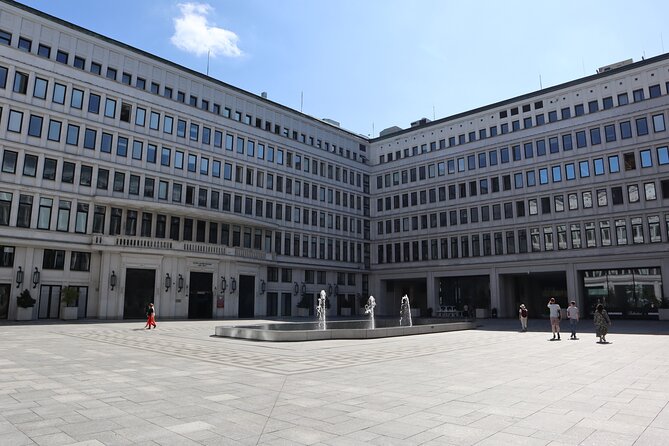
After the memorial, the walk continues into the city’s more official-looking zones, including Centrum Bankowo Finansowe. This is one of those stops where you start connecting dots about bureaucracy, public-facing buildings, and the feel of “state life.”
Even though this part is shorter, it matters because it keeps you from thinking the communist era was only about dramatic monuments. It was also about paperwork, institutions, and constant contact with systems designed to run without your consent.
At this point, I found it helpful that the guide repeatedly ties architecture back to daily friction. You begin to see how the state’s presence could feel normal in the physical world, then reveal itself as controlling once you understand the mechanics.
If you’re the type who likes cause and effect, this section delivers. You learn to spot how “official” spaces often served two purposes at once: looking stable and making access complicated.
More Polish squares crossed on foot:

Cedet and the Central Department Store story of empty shelves
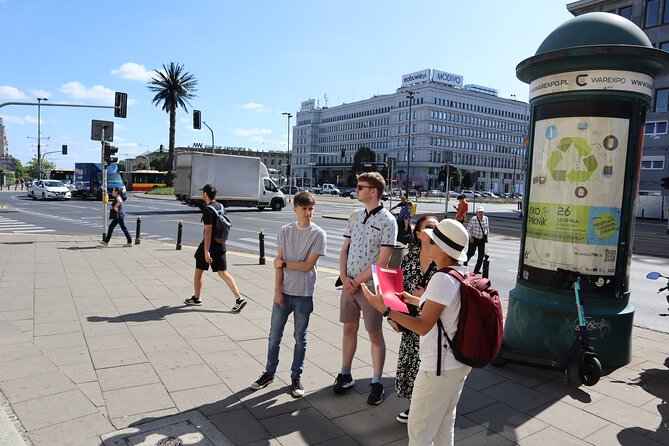
One of the best stops on the route is the Central Department Store Cedet. On the surface, it’s exactly the kind of place you’d expect for shopping and modern convenience. The tour flips that expectation by focusing on what shopping life could be like under the shortages and managed economy of the era.
You’ll talk about how people managed to buy things at stores that were, in practice, empty. That sounds like a contradiction, but it’s precisely the point. The system created strange gaps between what was offered, what was advertised, and what was actually available. The guide also brings up the joke about what can I get you? because it became a punchline for the difference between customer service language and reality.
This is where you learn a key skill for understanding history in Warsaw. Don’t judge the past only by what buildings still exist. Judge it by how those buildings functioned. A department store can look inviting and still be part of a system that frustrated ordinary needs.
You’ll also notice how these moments help you understand humor as survival. When the state can control supply, people can still control how they interpret it, talk about it, and keep their sanity.
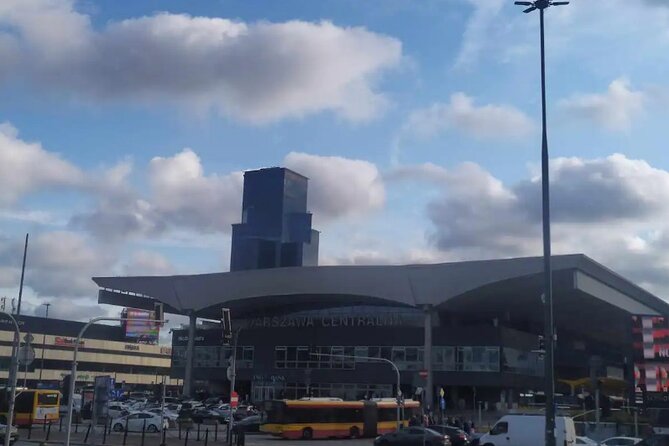
Dworzec Centralny Warszawa: travel control you can feel in the idea
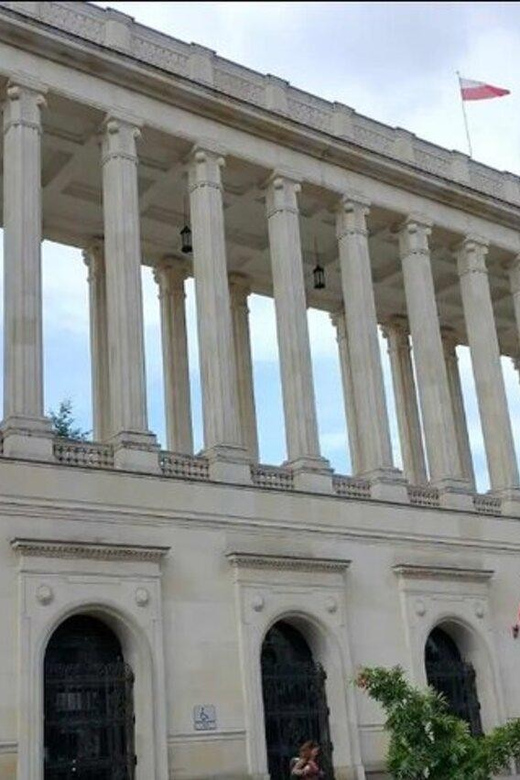
Then the tour moves toward Dworzec Centralny Warszawa. This stop is more conceptual than cinematic, but it’s important. The guide discusses how the state made sure Poles did not travel too far. The idea is that movement was power. If you can limit who goes where, you can limit information, connections, and organizing.
Even if you don’t get technical details, you come away with a clearer sense of the stakes behind everyday travel. Trains and stations are ordinary to us now. In a controlled system, they are leverage points.
You might find yourself watching how the station environment works, then thinking about what that meant when the ability to move freely was not assumed. The tour uses this area to connect the dots between freedom of movement and broader political control.
It’s also a good transition point in the walk. You’re no longer only examining propaganda. You’re seeing how the state shaped practical options.
Palace of Culture and Science: the controversial building with layered meaning
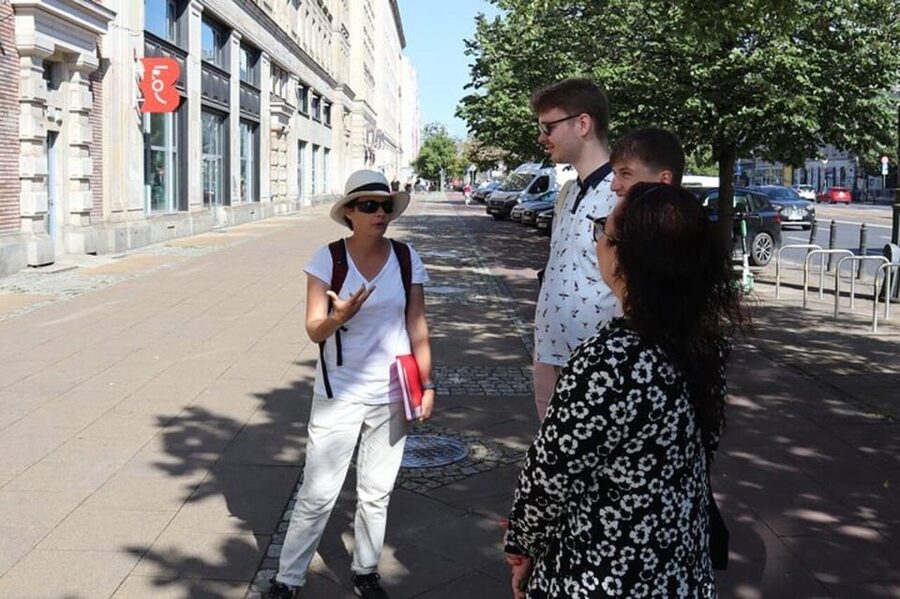
The final major stop is the Palace of Culture and Science. Love it or hate it, this building is part of Warsaw’s communist-era identity. The guide frames it as controversial for more than one reason, which is exactly how you should approach it. Don’t pick only one story. Ask what it meant to the regime and what it meant to people living under it.
You’ll also get tied-in context about power, including where the Communist Party HQ was located. The guide helps you understand why it matters to connect these “big signal” buildings with the everyday structures of control.
At this stage of the walk, you’ll also have built enough context that your reaction will be more nuanced. Socialist realism and parade boulevards stop being aesthetic topics and start being political tools. Censorship stops being an abstract term and becomes a lived tension. And the Palace stops being only a photo-op.
One practical note: the tour does not include an entry fee to the viewing terrace. So if you want city views from the top, you’ll need to plan that separately.
How this tour helps you understand the iron curtain in daily terms
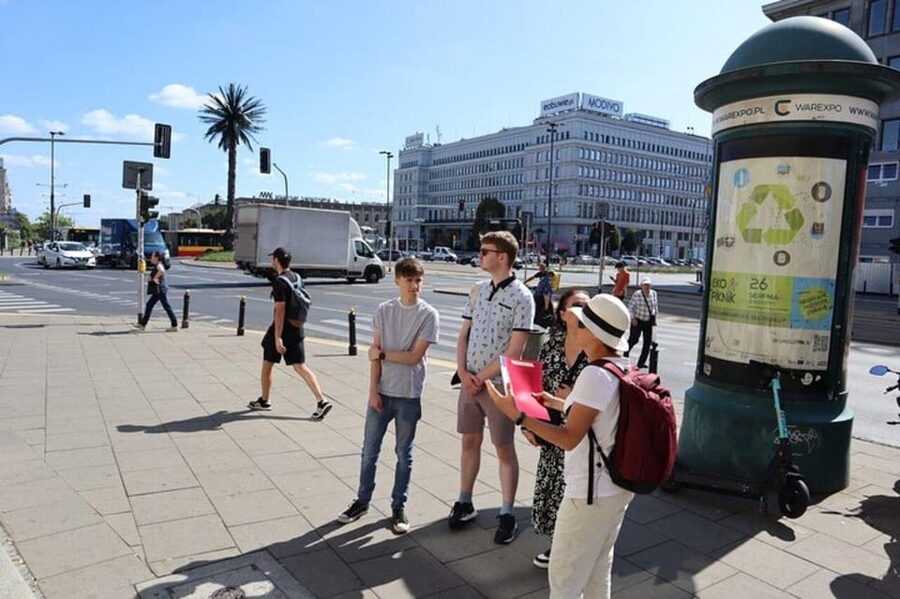
A lot of history tours list events. This one focuses on how a system behaves inside normal life. That’s why it works. You’re not left with a pile of facts. You’re left with a model.
Here’s the model the guide builds as you walk:
- Propaganda wasn’t only posters. It was the way space and buildings coached you to accept the system.
- Censorship wasn’t only censorship. It shaped what people dared to say, even in small conversations.
- Shortages weren’t only empty shelves. They created jokes, workarounds, and customer scripts that felt unreal.
- Control wasn’t only politics. It touched travel, information, and the ability to connect with the wider world.
And yes, the guide’s tone matters. The writing style you’ll feel on the walk is typically witty, sometimes dry, and often personal in the way it frames stories. Guides such as Olivia and Agnieszka are known for mixing humor with real details, which helps you process tough material without getting numb.
You should also expect lots of questions along the way. The flow of the tour is built for conversation, not just one-way lectures. That makes it easier to match the pace to your own curiosity.
Practical value: time, distance, and what you get for $32
At $32 per person, you’re paying for more than footsteps and viewpoints. You get a structured 150-minute experience (about 2.5 hours) covering roughly 3 km, plus a full info pack with a FAQ and helpful local links, and visual aids during the walk.
That matters for value because communist-era Warsaw can feel confusing if you only visit major landmarks. This tour gives you a guided thread through multiple themes: design, parade space, censorship, shopping frustrations, and political control. Without that thread, you might still enjoy the city, but you’d likely miss how the pieces connect.
The tour is live and in English. It’s also described as wheelchair accessible, and it offers private or small groups. Still, it’s not recommended if you have problems walking long distances, which is fair given the overall length and the number of stops.
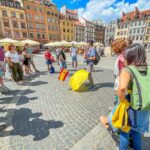
The logistics are simple: meet at Constitution Square, look for the guide with a white and green umbrella, and plan to finish at Emilii Plater 54. Since the walk ends at a known address, it’s easier to line up your next stop, whether that’s lunch, a museum, or just a breather.
A final practical tip: wear comfortable shoes. This is an urban walk with several guided moments, so you want your feet to be happy before you chase the best stories.
Should you book Life Behind the Iron Curtain Warsaw Walking Tour?
Book it if you want more than plaques and dates. You’ll probably enjoy it if you like your history grounded in everyday life, and if you’re curious about how ordinary routines were shaped by power. The stops make sense as a story arc, and the mix of socialist realism plus censorship and shopping realities gives you a fuller picture of the communist era.
Skip it or consider a lighter alternative if you can’t handle about 3 km of walking, or if you only want a quick highlight reel. This tour is built for a steady pace and discussion, not for rushing from photo to photo.
If you’re trying to understand Warsaw beyond monuments, this is a strong use of time. I’d treat it as one of your most “meaningful” stops, especially early in your trip, so the rest of the city starts to make sense.
FAQ
How long is the Life Behind the Iron Curtain Warsaw Walking Tour?
The tour lasts about 150 minutes, roughly 2.5 hours.
What is the price for the tour?
The price is $32 per person.
Where does the tour start, and how do I find the guide?
Meet at Constitution Square. Look for the guide holding a white and green umbrella.
Is the tour in English?
Yes, the tour is conducted in English.
Is the Palace of Culture and Science terrace included?
No. The viewing terrace entry fee is not included in the tour.
Is it wheelchair accessible, and who should avoid it?
The tour is listed as wheelchair accessible. It is also noted as not recommended for travelers who have problems with walking long distances.
Freshly posted from Warsaw
- Krakow Small Group Tour from Warsaw with Lunch, Schindler’s Factory included★ 5.0 · 7 reviews
- Warsaw Private Transfer from Warsaw Chopin Airport (WAW) to City centre★ 4.0 · 7 reviews
- 3-hour tour at Warsaw Uprising 1944 Museum /inc. Pick-up/★ 4.9 · 7 reviews
- Wolfs Lair – Hitlers hideout★ 4.5 · 7 reviews
- Warsaw: Evening History and Pubs Tour by Retro Minibus★ 5.0 · 7 reviews
- Warsaw: Private Vodka Tasting Night with Snacks and Pickup★ 5.0 · 7 reviews
- Warsaw Old Town with Royal Castle + Royal Route: SMALL GROUP /inc. Pick-up/★ 5.0 · 7 reviews
Walking Tours, compared.
Old Town Krakow & Wawel Castle Walking Tour
Read our review →
Gdańsk City Sights & History Guided Walking Tour in English
Read our review →
Browse the lists this tour appears in