
Reviewed · WALKING TOURS
Life Behind the Iron Curtain Warsaw Walking Tour
Communism feels close when you walk these streets. This Warsaw Iron Curtain walking tour connects specific buildings to how the Polish People’s Republic worked day to day, from parades and propaganda to censorship and grocery reality. It is also built for comfort: a small group (maximum 10) and a route that stays central.
I especially like two things. First, the guides bring the topic down to human scale, using real-life accounts and family perspective that makes the era feel less like a textbook and more like lived experience. Second, the stop list is practical and focused, with clear links between what you see outside and what life meant back then, including places like Mysia 3 and Nowy Świat 6/12.
One possible drawback: it is still a walking tour. If you have trouble with long distances, this may not be the best fit.
In This Review
- Key highlights worth knowing
- A 2.5-hour walk through Polish People’s Republic Warsaw
- Plac Konstytucji to Marszałkowska: planning, parades, and power
- From socialist realism to censorship: the government side of the story
- Nowy Świat 6/12 to Cedet: where control met daily life
- Rail travel under communism: Central Station and how movement worked
- Palace of Culture and Science finale, plus the 28 PLN terrace
- Price, value, and how to get the most out of the route
- Should you book this Iron Curtain Warsaw walking tour?
- FAQ
- Where does the tour start and end?
- How long is the Life Behind the Iron Curtain Warsaw Walking Tour?
- How much does the tour cost?
- What language is the tour offered in?
- What is included in the tour price?
- Are there any admission fees during the tour?
- Is a mobile ticket used?
- Is this tour suitable for people with mobility concerns?
- What is the cancellation policy?
Key highlights worth knowing
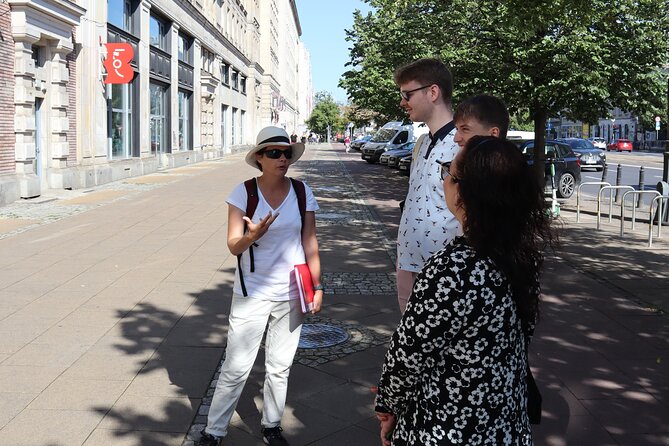
- Small group size (up to 10) means more chances to ask questions and keep the pace comfortable
- All stops are free to view except the optional Palace of Culture terrace (28 PLN)
- Mysia 3 and the Free Speech Memorial put censorship and espionage into plain context
- Socialist realism gets explained at a major government building, not just mentioned in passing
- Cedet Department Store shows everyday constraints, not only big political stories
- You finish at the Palace of Culture and Science, one of Warsaw’s most recognizable symbols
A 2.5-hour walk through Polish People’s Republic Warsaw
This tour is designed as a timeline you can see with your feet. In about 2 hours 30 minutes, you move through central Warsaw, stopping at points that reveal how the state organized public space, workplaces, and even where people went to buy basic goods. The structure matters. You get enough time to understand each site before moving on, and the small-group format helps you actually track the story.
The tour runs in English, and you use a mobile ticket, which is handy if you do not want to fuss with paper. It is also scheduled so you can tack it onto a busy day. If you are the type who wants your sightseeing to feel meaningful instead of just photo-friendly, this one delivers.
Value-wise, I think the price is reasonable for what you get. At $28.57 per person, you are paying mostly for interpretation, not admission. Most stops have no entry fees, and the included info pack plus visual aids do real work in filling gaps you would otherwise have to research on your own.
More Walking Tours in Warsaw
- Warsaw: Old Town Highlights Walking Tour in English
★ 4.7 · 1,516 reviews - Warsaw: Old Town Guided Walking Tour
★ 4.9 · 599 reviews - Half-Day Polish Food Walking Tour with Guide and Dinner
★ 4.5 · 381 reviews
Plac Konstytucji to Marszałkowska: planning, parades, and power
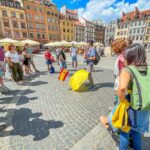
You begin at Constitution Square, at Plac Konstytucji. This is not just a meeting point. It is the opening argument of the tour: the Polish People’s Republic tried to build a new city center and shape how people moved through it. Even if you know Warsaw’s history, this stop helps you spot the “why” behind the layout rather than just the “what.”
From there, you head along Marszałkowska Street, a wide avenue built for large public displays. This is where the state’s influence shows up as architecture and space. When you learn what these broad streets were used for, the area starts reading like a stage set. You will also get help noticing how the city’s scale can feel official, controlled, and designed for the public to witness.
This part of the walk is a good warm-up because it teaches you a lens. After the first 30 to 40 minutes, you are not just looking at buildings. You are looking for messages in the street design.
From socialist realism to censorship: the government side of the story
The tour quickly shifts from “big public space” to the hard edges of governance. Next up is the Ministry of Agriculture and Rural Development, a strong example of socialist realism. You do not just hear the term. You get the characteristics explained and why the buildings were constructed this way. It helps if you are curious about how politics can be translated into stone, proportions, and visual style.
Then comes one of the most compelling stops: Mysia 3. Here you talk about the Free Speech Memorial, and the theme is censorship and espionage. The value of this stop is that it changes the temperature of the tour. You can stand at a real address and understand that control was not only abstract. It affected what people could say, what they feared, and how information could be manipulated.
If you like guides who point out details you would normally miss, this is where that skill shines. You will likely be encouraged to notice small cues on the street and on buildings, because those cues help turn broad history into something you can picture.
Nowy Świat 6/12 to Cedet: where control met daily life
The tour then moves to Nowy Świat 6/12. Today it houses the Banking and Finance Center, but the place’s role during the Polish People’s Republic matters. This is where you hear how the entire country was managed, and the Communist Party HQ location is part of the story. It is a reminder that power was centralized, and key decisions sat behind specific doors.
What I like here is the tour’s balance. You do not stay stuck in propaganda buildings only. You also move into ordinary life, where restrictions show up as friction. The stop at the Central Department Store Cedet makes that real. Buying everyday things during the communist era was a challenge, and the guide helps connect that frustration to how the system operated. Instead of treating the era as just political events, you see it through errands, queues, and access.
By the time you reach this middle section, the tour feels like it is teaching you how to read Warsaw. Buildings stop being just backdrops for photos and start acting like evidence.
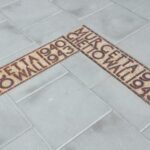
More Polish squares crossed on foot:

Rail travel under communism: Central Station and how movement worked
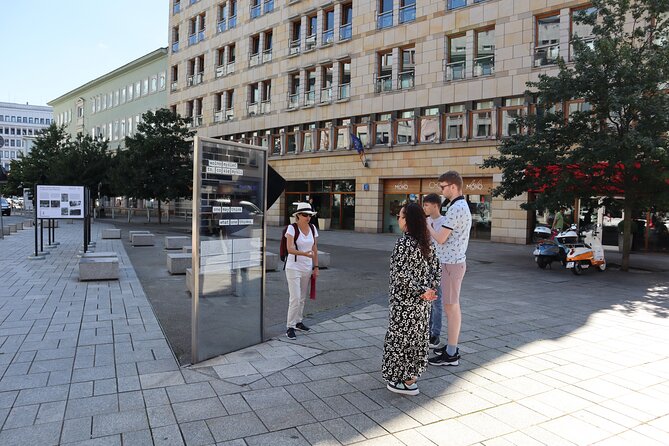
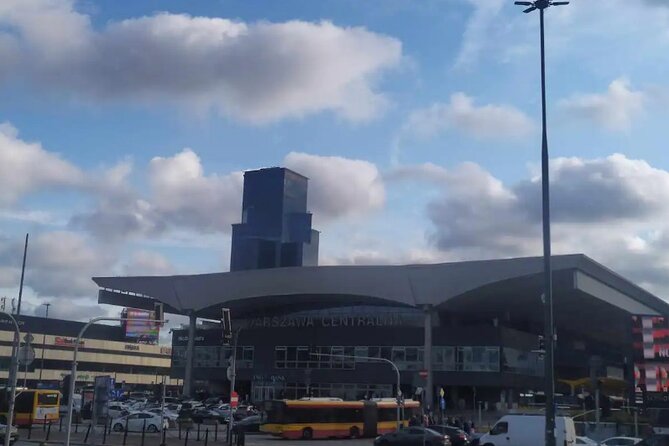
Next is Warsaw Central Railway Station, with a specific focus on both the Central Railway Station and the Downtown Railway Station. This is a smart inclusion because movement is part of power and part of daily life. You talk about local, regional, and international travel during the Polish People’s Republic, and you get a sense of how journeys could be shaped by the system.
Even if you know some modern Warsaw transit, this stop adds historical meaning. The station is a physical place where people tried to go somewhere, and you learn what that meant in a different political reality. It also helps if you plan other parts of your trip around rail travel, since this tour gives context for how people approached routes and travel priorities in the past.
This segment is also a practical break from focusing on government façades. Stations are where you can breathe a bit, listen to the guide, and watch the city’s flow.
Palace of Culture and Science finale, plus the 28 PLN terrace
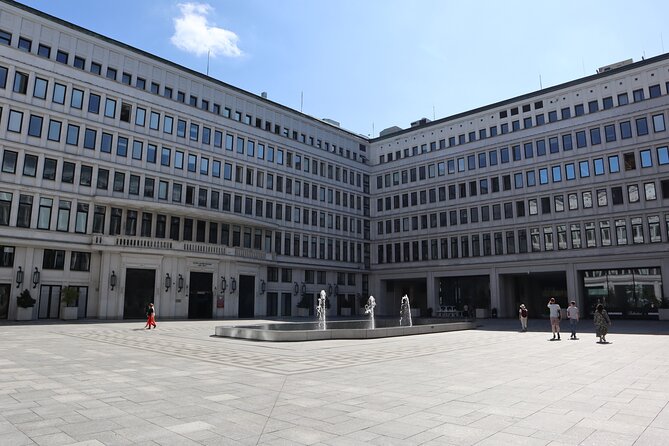
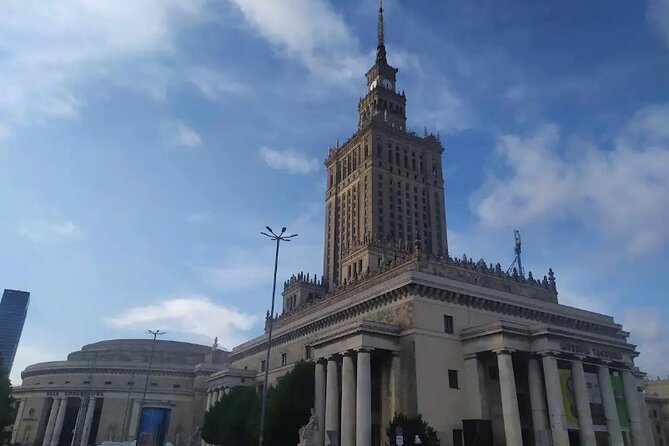
You finish at the Palace of Culture and Science, a symbol that still comes with controversy. The guide closes the loop by tying the building’s visibility to what it represented and why it remains debated. This is the kind of landmark where context changes the whole experience. You are not only looking at an iconic structure, you are learning what it signaled in its time.
There is also an optional decision at the end. The viewing terrace entry fee is 28 PLN, and it is not included. If you want the panoramic view, budget for that add-on. If you are more about the walking history, you can simply spend your time with the exterior and the explanation and keep it simple.
The tour ends near Emilii Plater 54, and that location is convenient for continuing your day. It also means you are not stuck wandering across town at the end, which matters when you are on a tight schedule.
Price, value, and how to get the most out of the route
Let’s talk value. At $28.57, you are buying a guided interpretive route where the heavy lifting is done by the guide and the included materials. Admission fees are mostly not part of the cost, since the stops are free to view, with only the Palace terrace as an optional paid item.
On top of the walking and storytelling, you get an info pack about Warsaw prior to your tour, plus visual aids. You also get recommendations about more places to visit and where to eat or drink. That matters because communist-era Warsaw can feel confusing if you only skim or only do museum stops. This tour helps you connect dots quickly, then you can use the recommendations to keep the day cohesive.
A quick practical tip: arrive a few minutes early at Constitution Square. With a group capped at 10, the timing tends to be respectful but efficient. If you want the best listening experience, do not show up right at the start time and then run to catch up.
One more reality check: the tour is not advertised for people who struggle with long walking distances. Even with a good pace, you are covering multiple central stops. Wear comfortable shoes and plan for a steady walk.
Also, book earlier rather than later. The tour is typically booked about 47 days in advance on average, which suggests it fills at least some dates. If you are visiting during peak season, earlier booking is a smart move.
If plans change, there is free cancellation up to 24 hours before the start time for a full refund. Just keep an eye on the timing in local time.
Should you book this Iron Curtain Warsaw walking tour?
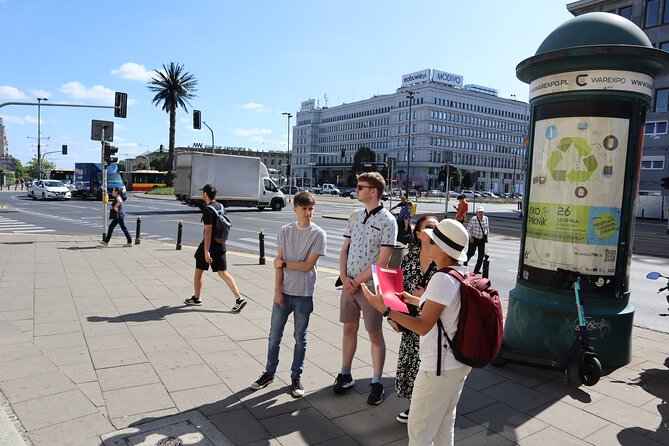
Book it if you want Warsaw history you can see in real locations, not just in museum rooms. This is a strong choice if you like a guide who teaches you how buildings and streets “work” as part of political control, and if you value everyday-life context, not only big-picture events. The stop selection hits key themes: socialist realism, censorship, party power, and the everyday grind at Cedet.
Skip it or choose a lighter option if walking long distances is a problem for you. Also consider whether paying 28 PLN for the Palace terrace is worth it for your travel style. The explanation at the finish is included, so you can still enjoy the tour without going up, but you need to decide that part for yourself.
If you want a tour with strong guide energy, this one has a reputation for guides like Olivia and Agnieszka, praised for clear explanations and for making the era feel personal through family perspective. That combination, plus the focused 2.5-hour route, is exactly the reason I think it fits many first-time visitors who want something deeper than a standard city walk.
FAQ
Where does the tour start and end?
The tour starts at Constitution Square (Plac Konstytucji), 00-647 Warszawa, Poland. It ends near Emilii Plater 54, 00-901 Warszawa, Poland, close to the Palace of Culture and Science.
How long is the Life Behind the Iron Curtain Warsaw Walking Tour?
It lasts about 2 hours 30 minutes.
How much does the tour cost?
The price is $28.57 per person.
What language is the tour offered in?
The tour is offered in English.
What is included in the tour price?
You get a full info pack about Warsaw before your tour (FAQ, useful links, and more), plus visual aids and recommendations about places to visit and where to eat or drink.
Are there any admission fees during the tour?
Admission is free at the listed stops. The only additional cost mentioned is the viewing terrace at the Palace of Culture and Science, which is 28 PLN and not included.
Is a mobile ticket used?
Yes, the tour uses a mobile ticket.
Is this tour suitable for people with mobility concerns?
It is not recommended for travelers who have problems with walking long distances. Service animals are allowed, and it is near public transportation.
What is the cancellation policy?
You can cancel for a full refund if you cancel up to 24 hours before the experience’s start time. If you cancel less than 24 hours before, the amount paid is not refunded.
Freshly posted from Warsaw
- Krakow Small Group Tour from Warsaw with Lunch, Schindler’s Factory included★ 5.0 · 7 reviews
- Warsaw Private Transfer from Warsaw Chopin Airport (WAW) to City centre★ 4.0 · 7 reviews
- 3-hour tour at Warsaw Uprising 1944 Museum /inc. Pick-up/★ 4.9 · 7 reviews
- Wolfs Lair – Hitlers hideout★ 4.5 · 7 reviews
- Warsaw: Evening History and Pubs Tour by Retro Minibus★ 5.0 · 7 reviews
- Warsaw: Private Vodka Tasting Night with Snacks and Pickup★ 5.0 · 7 reviews
- Warsaw Old Town with Royal Castle + Royal Route: SMALL GROUP /inc. Pick-up/★ 5.0 · 7 reviews
Walking Tours, compared.
Old Town Krakow & Wawel Castle Walking Tour
Read our review →
Gdańsk City Sights & History Guided Walking Tour in English
Read our review →
Browse the lists this tour appears in