Reviewed · HALF-DAY
From Warsaw: Treblinka Half-Day Tour with Car
Treblinka hits hard, and this tour handles it with care. In just 5 hours, you get the key spaces at Treblinka II, one of the most important Holocaust memorial sites in Poland, plus the context that makes the memorial feel less like a blur. I like that the drive from Warsaw gives you time to ask questions before you step into the museum and memorial grounds.
I especially like the combination of the Treblinka Museum (artefacts, documents, photos, survivor testimonies, plus a scale model and short film) and the walk along the symbolic railway route into the former camp area. Those two parts help you understand what the machinery looked like on paper, then connect it to the place itself.
One consideration: this is an emotionally heavy visit, and it’s not suitable for children under 14. Also, it’s a short window with no food or drinks included, so plan for hunger and take breaks when you need them.
In This Review
- Key points to know before you go
- Warsaw to Treblinka II in a half-day, what the 5 hours really gives you
- The car ride with an English guide: context before the memorial
- Treblinka Museum: artefacts, survivor testimony, and the camp model that makes it real
- Following the symbolic railway tracks into the former camp area
- The memorial field and the central monument with 17,000 stone markers
- What Operation Reinhard adds to your visit
- Who this half-day tour fits best, and who might want a different plan
- Practical details that actually affect your day
- Price and value: is $199 per person worth it?
- Final call: should you book this Treblinka II half-day tour?
Key points to know before you go
- Treblinka II only: this half-day focuses on the extermination camp, not Treblinka I
- Museum first: you’ll see documents, survivor testimonies, a scale model, and a short documentary before the memorial field
- Symbolic tracks: you’ll follow railway lines into the former camp area, while original buildings are gone
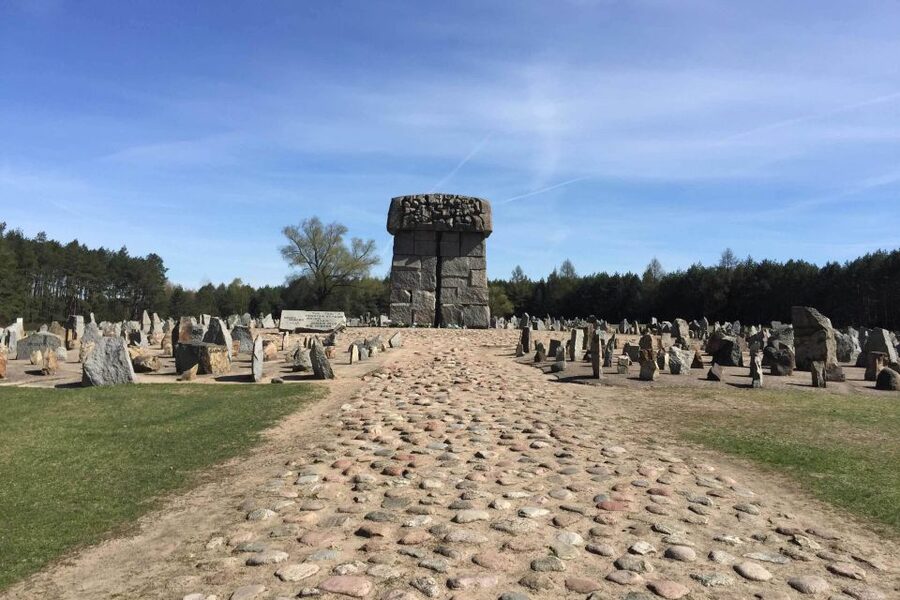
- Central monument: more than 17,000 stone markers represent destroyed Jewish communities
- Small group car tour: up to 7 people, English-speaking guide, and hotel pickup and drop-off in Warsaw
Warsaw to Treblinka II in a half-day, what the 5 hours really gives you

A trip like this is not about ticking a sightseeing box. It is about understanding a specific place in Poland’s Holocaust story, then letting the memorial architecture do its job. Treblinka II, hidden in a forest near Małkinia, was the second-deadliest Nazi German extermination camp, where about 900,000 Jews were murdered during World War II as part of Operation Reinhard.
The biggest value of this tour is the pacing. You are not rushed through the grounds, but you are also not stuck for a full day. In practical terms, that matters because Treblinka is intense, and your brain needs room to process what you just learned. The tour’s calm, respectful rhythm makes it easier to stay present instead of going into autopilot.
The format also helps: you start in Warsaw by car with hotel pickup and drop-off included. That means less logistics and less wandering on your own. For a site this serious, simplicity is a gift. The time in the vehicle with an English-speaking guide also matters, because you can get the big picture and ask questions before you arrive.
And yes, the emotional weight is real. Treblinka II is a place that asks you to slow down. You’ll want to plan your day in Warsaw so you don’t feel like you have to “perform” later, right after.
Still tacked up around Warsaw
- Warsaw: Chopin Concert in the Old Town
★ 4.8 · 2,287 reviews - Warsaw: Traditional Galar Cruise on The Vistula River
★ 4.6 · 1,640 reviews - Warsaw: Old Town Highlights Walking Tour in English
★ 4.7 · 1,516 reviews
The car ride with an English guide: context before the memorial
The tour uses an air-conditioned car and keeps the group small, limited to 7 participants. That’s not just comfort talk. A small group makes it easier to hear explanations and ask questions without feeling like you’re interrupting a parade.
During the drive, your guide provides historical context about Nazi occupation and the Holocaust in occupied Poland, then narrows in on Treblinka’s role in the extermination system. You also get a bit of buffer time on the road for questions and mental prep. That part is underrated. When you arrive already oriented to Operation Reinhard and deportations to Treblinka, the museum and memorial stops hit with more clarity.
One smart detail here is the focus on meaning over trivia. This is not a “facts only” tour. The guide’s job is to give you the framework so you can understand what you are seeing. For many visitors, that’s the difference between reading panels and actually grasping the human system behind them.
Treblinka Museum: artefacts, survivor testimony, and the camp model that makes it real
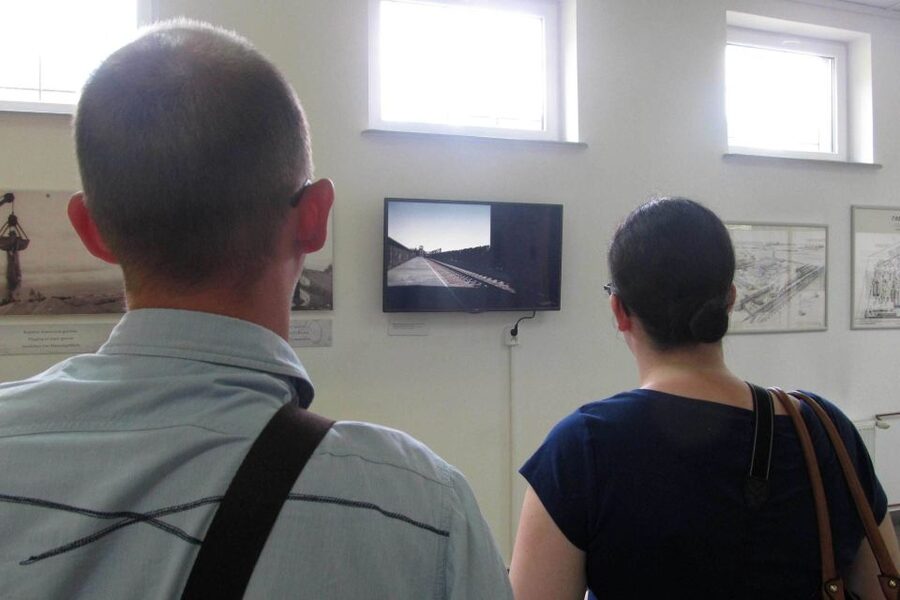
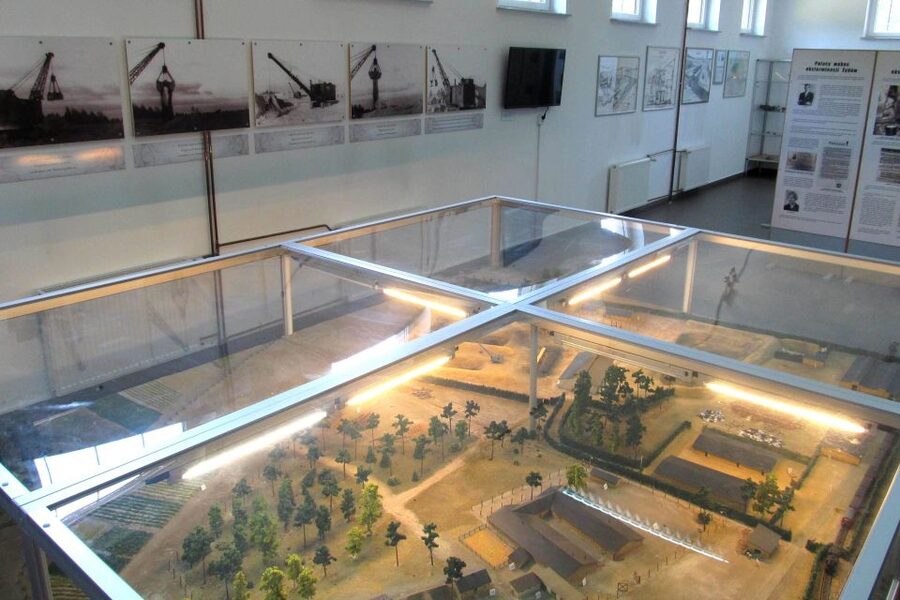
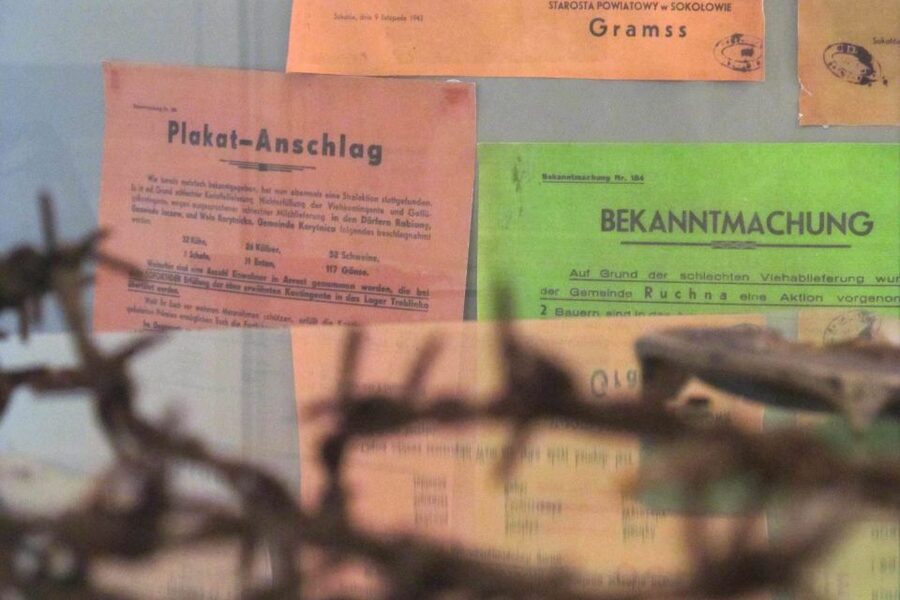
Your visit begins at the Treblinka Museum, and I think starting here is the right call. Before you see the open memorial field, you learn how the camp functioned. The exhibitions include historical artefacts, documents, photographs, and survivor testimonies, plus a detailed scale model of the camp.
That scale model is one of the most practical tools you’ll see. With a place like Treblinka, many visitors struggle with the layout because so much of the original camp buildings were destroyed in 1943. A model lets your mind place locations in the right relationship to each other, so later when you walk along the memorial grounds, things feel anchored rather than abstract.
There is also a short documentary film that explains how the extermination process operated. It is not a substitute for the museum’s content, but it helps some people connect the dots quickly, especially if you are new to the terminology and events. If you are the type who gets distracted by complexity, this film can act like a map you didn’t know you needed.
You’ll likely notice a pattern: the museum gives you the “how,” while the later memorial grounds give you the “where.” Together, they make the site easier to understand in one visit.
Following the symbolic railway tracks into the former camp area
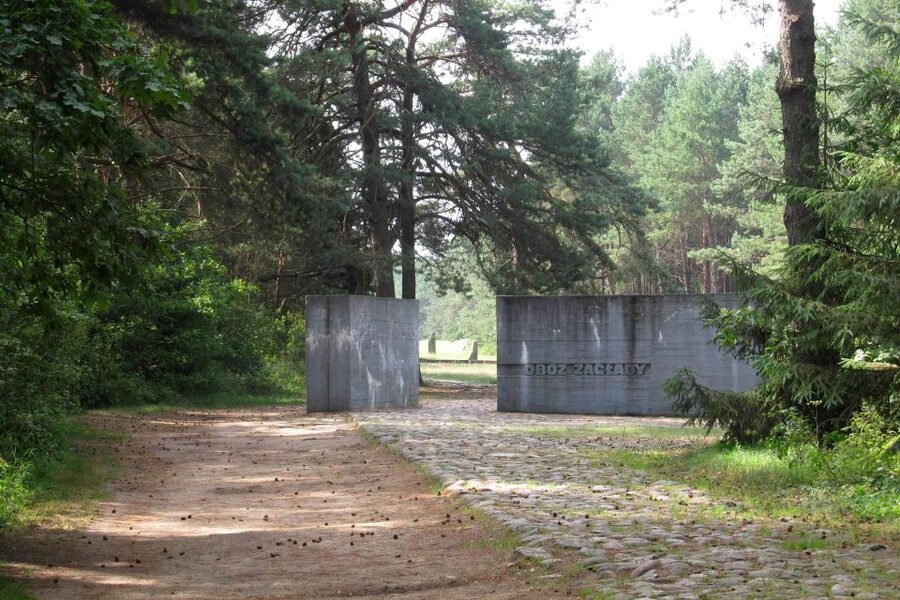
After the museum, you move to one of Treblinka’s most striking features: the symbolic railway route. You follow railway tracks into the former camp area, even though the original camp buildings were destroyed by Nazi forces in 1943.
This is where the design choice matters. Instead of pretending the old structures still stand, the memorial uses symbolic pathways, open spaces, and stone installations to mark key locations. That keeps you from imagining a ghost version of the camp. You are visiting the past through the lens of what remains, what was erased, and what was rebuilt as memory.
As you walk, your guide explains deportations to Treblinka and the daily reality inside the camp. That explanation helps the tracks feel like more than a memorial walk. They become a route tied to forced transport, arrival, and the crushing logic of the extermination system.
It is also one of the points where the tour’s respectful pacing pays off. This is not a “take a selfie and keep moving” environment. You will have time to look, absorb, and not feel like you’re being hurried. If you need a moment, take it. You’re not graded on how long you stare.
Beneath the newer pins on the Warsaw board:


The memorial field and the central monument with 17,000 stone markers
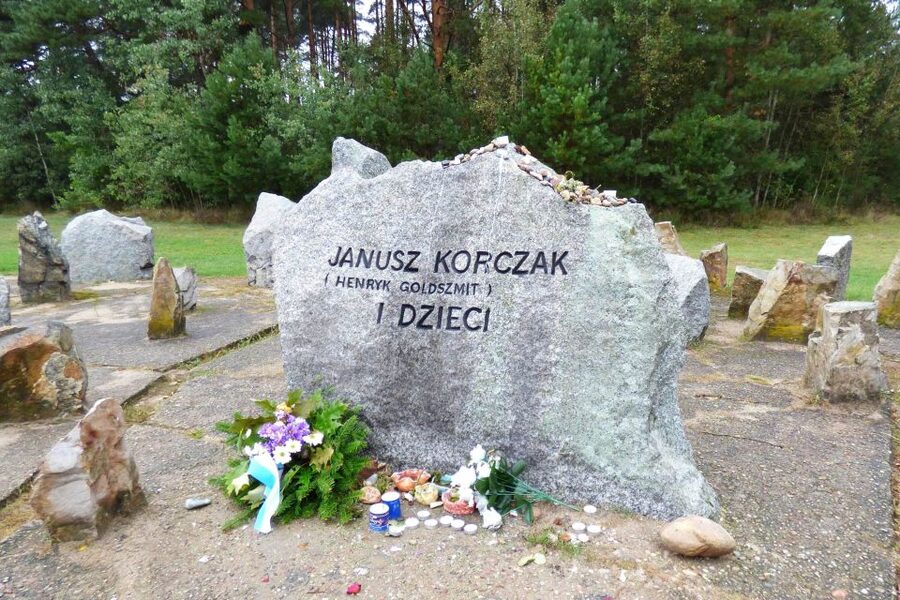
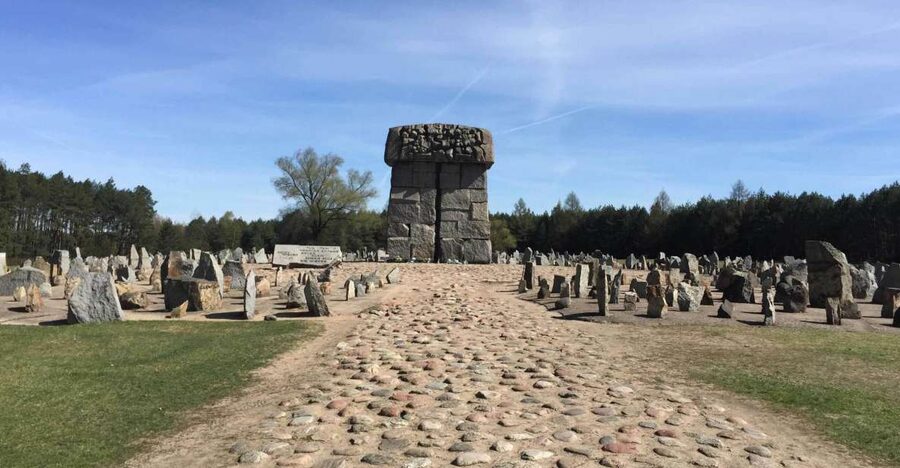
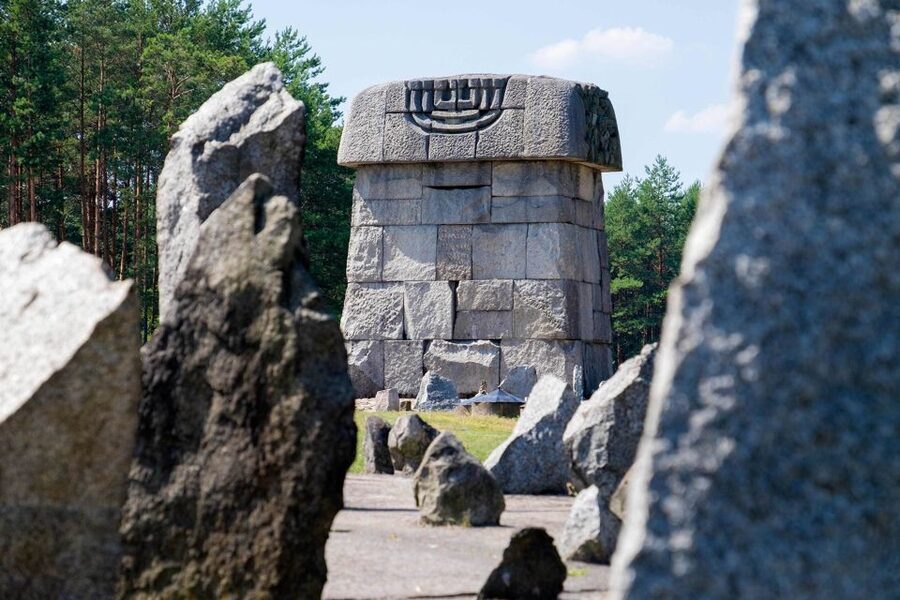
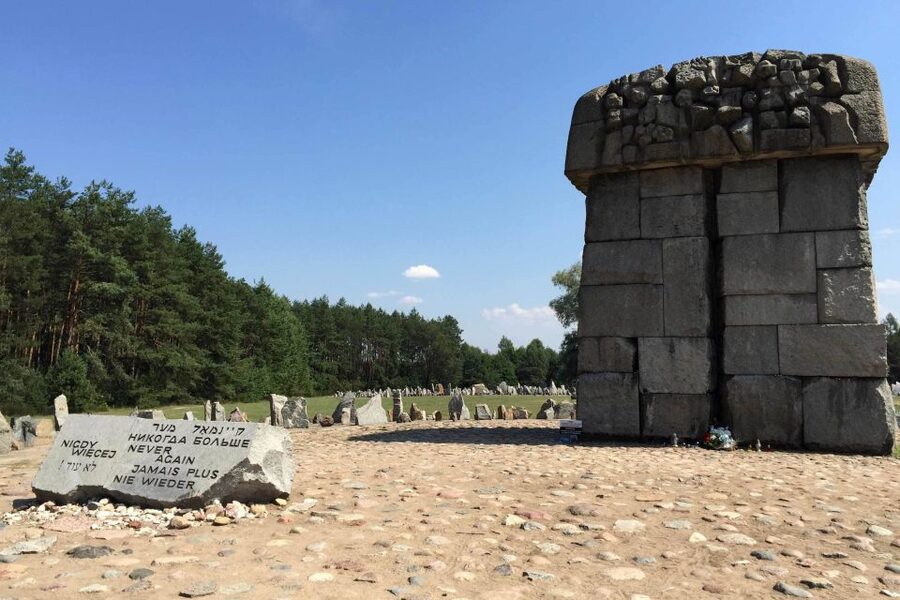
Next comes the part many people remember most: the central monument made of more than 17,000 stone markers. Each marker represents a destroyed Jewish community. That scale matters because it shifts the focus away from one camp and toward the broader devastation across Europe.
For your understanding, the markers do something important. They turn “numbers” into a physical field, and they suggest a tragic geography. You can also feel the intention of the design: the memorial is built to be read as a landscape of absence, not as a list of names you can finish in one pass.
Your guide explains the prisoner uprising of August 1943 and how it led to the camp’s closure. That detail changes the emotional temperature in a complicated way. It acknowledges resistance and human agency without rewriting the outcome. It also gives your visit a final historical anchor so you leave with the sense of chronology, not only despair.
At the monument, expect quiet space for reflection as part of the tour pace. You may find yourself pausing longer than planned, and that’s normal. This is a site where the mind naturally slows down, even when your schedule wants you to hurry.
What Operation Reinhard adds to your visit
This tour is built around Operation Reinhard, the Nazi plan tied to the extermination process. Treblinka II was part of that system, and understanding that link helps you avoid common misunderstandings.
Here’s what I think clicks for most people when a guide explains it clearly during the drive: Treblinka was not a random tragedy. It was an organized machine inside a broader policy of mass murder in occupied Poland. When you connect the camp’s function to Operation Reinhard, the museum’s documents and the memorial’s symbolic tracks stop feeling like separate story elements. They become one line of cause and consequence.
You also learn about the extermination of European Jews, and how Treblinka fits into the overall story of the Holocaust in occupied Poland. Even if you’ve read something before, I like having the guide’s structure in place. It reduces confusion and helps you remember what matters.
If you want to get the most out of the explanations, ask questions on the car ride. You’ll likely feel more comfortable asking in a moving vehicle than at the museum entrance. You’ll also get a chance to confirm terms you might otherwise misread while standing quietly in front of exhibits.
Who this half-day tour fits best, and who might want a different plan
This tour works best for people who want a focused, guided experience that doesn’t sprawl across the entire day. If you’re visiting Warsaw and want Treblinka II without complicated transfers, the hotel pickup and drop-off makes it much easier to plan. The small group size also helps, especially if you prefer a quieter tour environment.
I think it suits adults, older teens, and anyone ready for a serious topic. The guide’s English explanations and the structured flow from museum to memorial grounds create a coherent experience, even in a short time.
It does not fit well for kids under 14, and the tour is explicitly not suitable for that age range. That’s not about being unsympathetic. It’s about how heavy the site is, and how much time you need for reflection, not distraction. If you’re traveling with younger kids, you’ll likely have a better experience with a different kind of Warsaw plan until everyone is old enough for this kind of visit.
Also consider your own energy level. This is half-day duration, but emotional fatigue can last longer than you expect. If you have a packed evening after, you might want to keep it light, low-pressure, and not schedule something that demands full performance afterward.
Practical details that actually affect your day
Even when a tour is thoughtful, logistics still shape your comfort.
You’ll want to bring passport or an ID card, and travel insurance is recommended. You should also wear proper clothing because you’ll spend time outdoors at the memorial field and monument. In other words, dress for the weather, not for the restaurant you might want after.
Food and drinks are not included. That means you should eat before you go, or plan a simple snack buffer for the walk back into Warsaw. With a topic that intense, hunger can become a distraction, so do your future self a favor now.
The tour is English-language and includes entry tickets. It’s also a small group with a knowledgeable English-speaking guide, which helps keep the explanations clear and paced. If you’re someone who likes to process in your own head, the calm schedule and quiet reflection time are part of the value, not just decoration.
One more thing: this tour visits Treblinka II only. Treblinka I, a separate labor camp site, is not included. So if you want the full day-trip version that covers both, you’ll need a different option. This one is intentionally focused.
Price and value: is $199 per person worth it?
At $199 per person for a 5-hour tour, you should look at what’s included rather than just the number. You get hotel pickup and drop-off from Warsaw, air-conditioned car transportation, a professional English-speaking guide, and entry tickets.
For many people, the value is in the combination:
- You remove transportation headaches in a half-day window
- You get structured interpretation of museum exhibits and memorial features
- You travel in a small group rather than a large bus crowd
Could you do it yourself? Sure, you can always travel independently. But you would lose the on-the-road explanations and the guided meaning for what otherwise might feel like symbols without context. For Treblinka, context is not a luxury. It’s a big part of what makes the visit educational and respectful.
Also, the time efficiency matters. This is a short day trip that fits into a Warsaw itinerary without swallowing your schedule. If you have limited days in town, paying for clarity and convenience can be a good trade.
The only real downside on the value side is that food and drinks are not included. That’s not a dealbreaker, but it does mean you might spend extra on a simple meal afterward or plan snacks.
Final call: should you book this Treblinka II half-day tour?
If you want a guided, focused visit to Treblinka II from Warsaw with hotel pickup and drop-off, this is a strong choice. You’ll benefit from the order of experiences, museum first, then the symbolic railway tracks, then the central monument with its thousands of stone markers. The guide’s explanations about Operation Reinhard, deportations, and the August 1943 uprising give the site structure so you leave with understanding, not just visuals.
I’d skip it only if you know you cannot handle emotionally heavy places, or if you are traveling with children under 14. I’d also consider timing if your day is packed, because the reflection you’ll want here might not fit neatly into a hurried schedule.
If you book, go in with one mindset: this is not about speed. It’s about clarity, respect, and letting the memorial do its work.
Freshly posted from Warsaw
- Warsaw Uprising and WWII Old Town Walking Tour with Museum★ 5.0 · 1 review
- EVERYDAY Warsaw Traditional Food Tour with Old Town Sightseeing★ 5.0 · 1 review
- Warsaw to Auschwitz and Krakow Old Town Full-Day Trip by Car★ 5.0 · 1 review
- A Day in Warsaw: Private Full-Day Highlights Tour★ 5.0 · 1 review
- Pub Crawl with Shots, Discounts, Games & VIP Entry★ 5.0 · 1 review
- POLIN Museum of the History of Polish Jews : PRIVATE TOUR /inc. Pick-up/★ 5.0 · 1 review
- Private Guided Warsaw Walking Tour with Drone Photography★ 5.0 · 1 review
Half-Day, compared.

Half-Day Polish Food Walking Tour with Guide and Dinner
Read our review →
Half-Day Warsaw City Sightseeing Bike Tour for Small Group
Read our review →
Half-Day Krakow Food Tour in Old Town and Kazimierz
Read our review →
Half-Day Salt Mine and Schindler’s Factory Tour
Read our review →