
Reviewed · WARSAW TOURS & ACTIVITIES
From Warsaw: Guided Tour of Treblinka Camp
Treblinka hits hard, but it also makes sense. This guided trip takes you just outside Warsaw to a place where the Nazi killing system was built to run like an industrial operation, hidden in the forest. You also get the practical help you need to keep moving, from pickup to skip-the-line entry, without losing the solemn focus that the site demands.
What I like most is the skip-the-line access plus the steady guidance once you arrive. On tours led by guides named Jan, Leszek, and Janusz (and others mentioned by guests), the explanations land in a human way, not a memorized script, and you can ask questions without feeling rushed. Second, I really value how the route uses the remnants and the museum to show how Treblinka functioned, even though so little physical evidence still exists.
One thing to consider is time pressure. The memorial experience is intense, and the overall 6-hour format can feel tight if you want extra time in every corner, or if you are hoping to add more stops beyond Treblinka.
In This Review
- Key highlights I’d plan around
- Treblinka from Warsaw: the drive is part of the lesson
- Entering Treblinka: when absence is the main exhibit
- The museum stops that make the site understandable
- Operation Reinhard and the scale of what happened
- Penal labor camp ruins and the fight for dignity
- Why skip-the-line access and a live guide matter here
- Price and value: is $134 fair for a 6-hour memorial tour?
- What to bring and how to plan your day without stress
- Who this trip suits best, and who might want a different option
- FAQ
- How long is the Treblinka guided tour from Warsaw?
- Do I get hotel pickup and drop-off?
- Is the guide available in English?
- Are tickets included, and do I skip the line?
- Is food included in the price?
- What should I bring for the visit?
- Where is Treblinka located relative to Warsaw?
- Is it wheelchair accessible?
- Should you book this Treblinka day trip from Warsaw?
Key highlights I’d plan around
- Skip-the-line tickets so you spend your energy on the memorial, not waiting outside.
- Guides with strong scene-setting skills, including named guides like Jan, Leszek, and Janusz, who help you connect facts to what you see.
- Museum tools that make the camp legible, including an exhibit focused on the miniature architecture and films.
- A walk through ruins and penal labor history, including the penal labor camp area and the story of the August 1943 revolt.
- Built-in logistics from Warsaw, with hotel pickup and drop-off in an air-conditioned vehicle.
Treblinka from Warsaw: the drive is part of the lesson
From Warsaw, your day starts with pickup from your accommodation, then a meet-and-greet before you head out. The ride is in an air-conditioned vehicle, and the transfer itself is often smooth, punctual, and planned to get you there without stress.
That drive matters more than you might expect. Treblinka is not inside the city center, so your guide has time to set context before you arrive at a memorial site where many visitors feel disoriented. You are also already in a “listen mode,” which helps when the museum and ruins start throwing specific details at you.
Most departures run as a 6-hour block, so you should think of this as a focused, guided overview rather than a slow, day-long wandering tour. It can still feel like a full experience, but it is not built for long detours.
Still tacked up around Warsaw
- Warsaw: Chopin Concert in the Old Town
★ 4.8 · 2,287 reviews - Warsaw: Traditional Galar Cruise on The Vistula River
★ 4.6 · 1,640 reviews - Warsaw: Old Town Highlights Walking Tour in English
★ 4.7 · 1,516 reviews
Entering Treblinka: when absence is the main exhibit
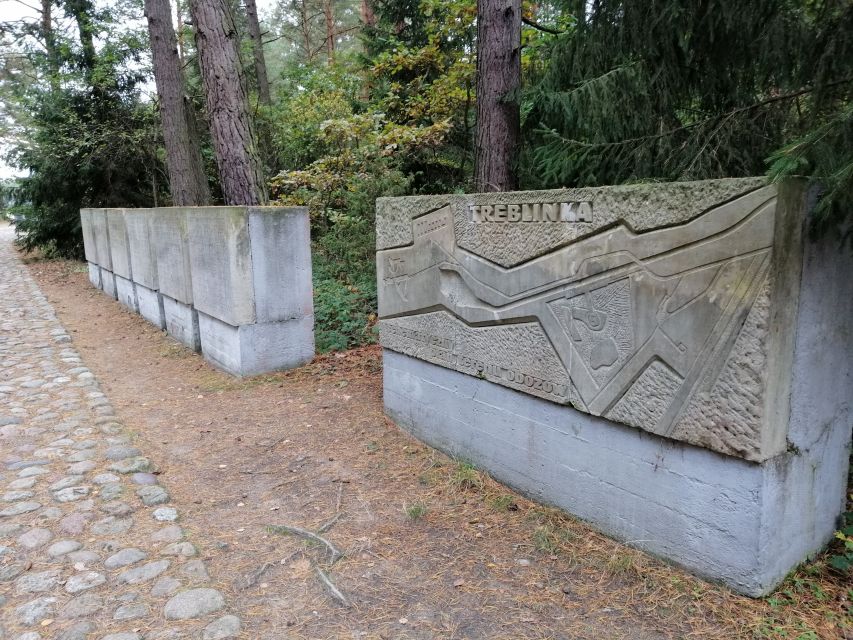
Treblinka was an extermination camp operated by Nazi Germany in occupied Poland during World War II. It sat in a forest area northeast of Warsaw, about 4 kilometers south of the Treblinka train station, in today’s Masovian Voivodeship.
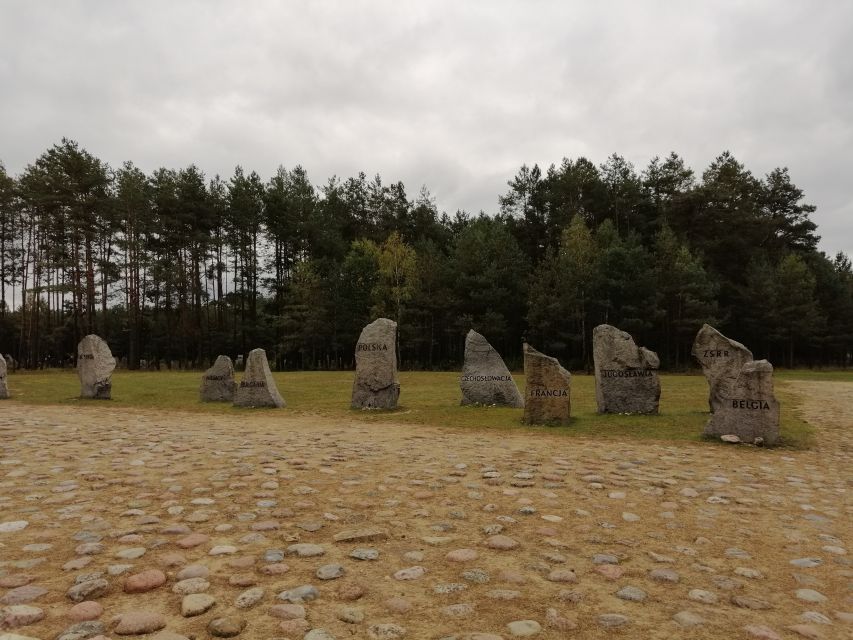
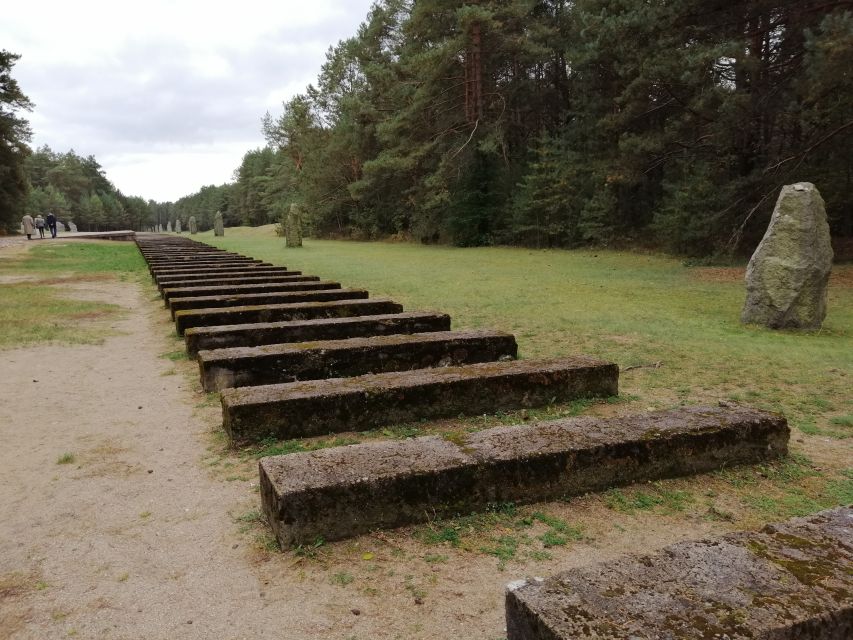
Here is the emotional reality you need to know before you go: there is not much left to look at. Guests describe the camp as flattened, with memorial works and reconstructed areas (especially around the train station) based mostly on testimony. That emptiness can feel eerie and unfair, but it is also part of what makes a guided visit so important. Your guide helps you read the space, not just observe it.
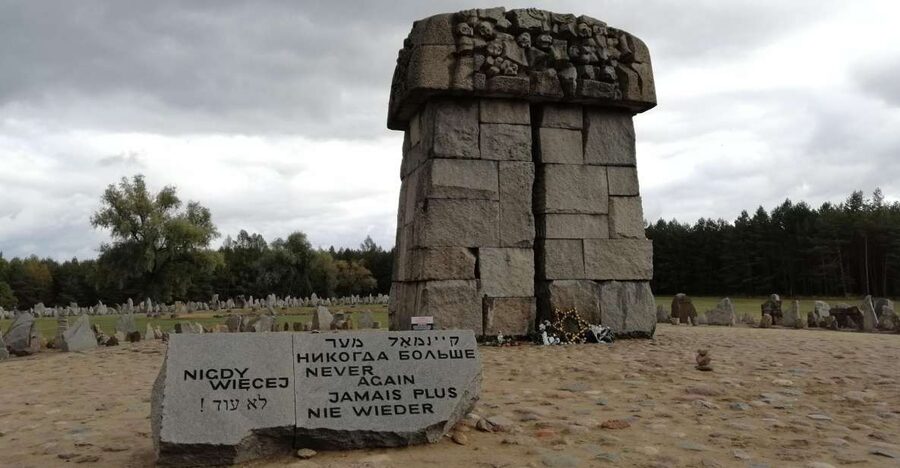
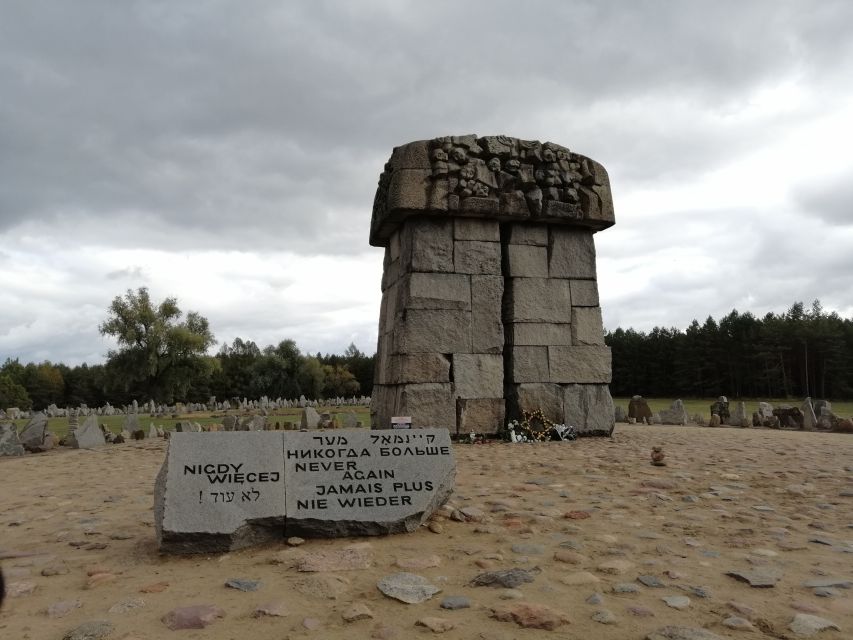
When you walk the memorial grounds, you are essentially learning through what remains: ruins, memorial layout, and interpretive explanations that connect geography to what happened there. A good guide keeps that respectful and clear, answering questions as they come up, and helping you avoid the common trap of staring at “nothing” and missing the meaning.
The museum stops that make the site understandable
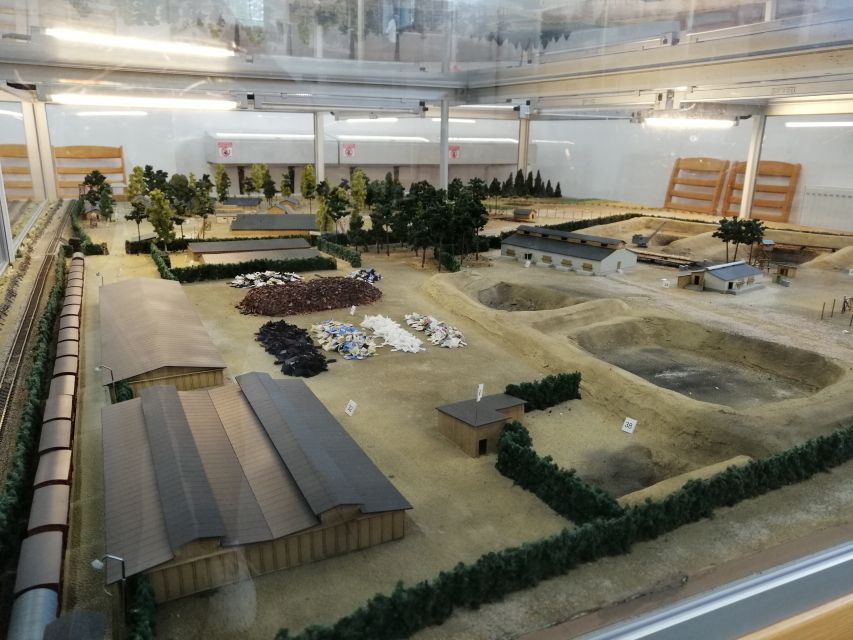
The tour includes time at the Treblinka museum, and that is where a lot of the “how did this work?” questions start to click. You get insights into the daily life of inmates, and you can also see a miniature version designed to help you grasp the camp’s architecture.
Even if you are the kind of person who usually rushes exhibitions, plan to slow down here. One guest specifically called out watching the films in the museum as a way to gain perspective, and that matches what the museum format is trying to do: connect facts to human stories.
You should also expect the museum to prepare you for the ruins outside. If you start the ground walk without that background, the memorial area can feel like a set of isolated fragments. With the museum first, you tend to leave with a map in your head, not just sad impressions.
Operation Reinhard and the scale of what happened
Your guide will place Treblinka inside the wider Nazi system, including Operation Reinhard, which covers the deadliest phase of the Final Solution. Treblinka operated from 22 July 1942 to 19 October 1943.
During that period, estimates state that between 700,000 and 900,000 Jews were killed in its gas chambers, along with about 2,000 Romani people. The scale is hard to process, and this is exactly where guided interpretation helps. It is not only about numbers. It is about how a killing center was organized and how victims were processed, transported, and controlled.
Your visit is also strengthened by the fact that much of the site is understood through testimony and reconstruction. That means you need a translator, so to speak, from “what’s visible now” to “what occurred here.” Guests singled out guides who were able to explain the horror in detail and connect it to the war and Holocaust context, which is the difference between visiting a memorial and understanding it.
Beneath the newer pins on the Warsaw board:


Penal labor camp ruins and the fight for dignity
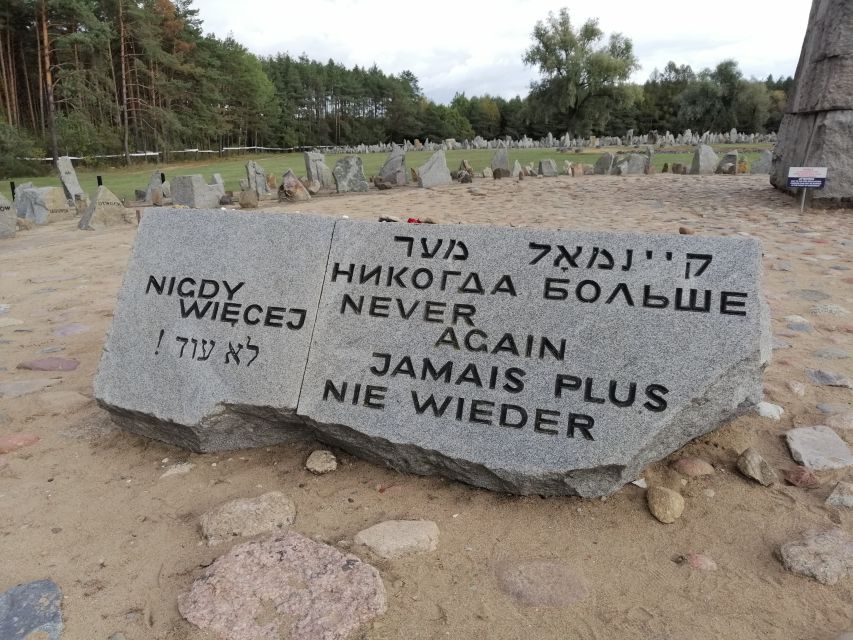
A big part of your guided time focuses on the ruins of the Penal Labour Camp. The goal is to help you understand that Treblinka was not only a killing site. It also held prisoners under brutal forced labor and detention conditions.
The tour also includes a powerful activity meant to help you grasp the scale of imprisonment: walking among ruins while learning how about 20,000 inmates were held there between 1941 and 1944. That “in the shoes of” concept is not meant to be gimmicky. With the right guide, it pushes you to think in terms of concentration, not a single victim or a single date.
Then you hear stories of desperate courage, including the account of 840 prisoners of the Death Camp who dared to rebel in August 1943. Even if you already know the basics, hearing it tied to the exact spaces you are standing in changes the emotional geometry of the story. You stop thinking of events as abstract history and start noticing how people tried to act anyway, even when the system was built to crush agency.
Why skip-the-line access and a live guide matter here
Treblinka is one of those places where waiting around feels wrong. The tour includes skip-the-line tickets, and that practical detail helps you keep your day respectful and efficient.
The live guide is the bigger value. Guests repeatedly mention how guides remembered names, answered questions patiently, and explained with depth without turning the visit into a lecture. Some even described a pre-trip group briefing using maps, memoirs, and documents, which is a smart way to get your bearings fast before you face a site where so little survives.
There can be minor friction, too. One guest wished for a microphone while driving, so if you are sensitive to sound, sit where you can hear clearly. Also, since this is a shared group experience, you might feel the rhythm of the schedule even when you would rather linger. Still, overall, the guide support seems to be the deciding factor for most people.
Price and value: is $134 fair for a 6-hour memorial tour?
At $134 per person for a 6-hour experience, the price can feel high, especially if you are traveling solo. One review noted that it was pricey for a solo traveler, and another person felt it was not worth the money they paid.
Here is how I would judge value in plain terms. The cost includes hotel pickup and drop-off, an English-speaking driver, skip-the-line tickets, and a guided tour inside Treblinka. Food and drinks are not included, so you will still need to handle lunch on your own.
If you tried to do this independently, you would likely spend time on planning transportation, ticket logistics, and finding a guide who can connect what you see to what happened here. For many people, the all-in structure is worth paying for, because it reduces decision fatigue on a heavy day.
My practical take: it is best value when (1) you want interpretation and Q&A, (2) you appreciate not having to coordinate transport, and (3) you can handle a 6-hour window without needing every optional add-on.
What to bring and how to plan your day without stress
For this day trip, wear comfortable shoes. You will be walking among ruins and memorial grounds, and you do not want to negotiate blisters while trying to pay attention to meaning.
Also plan for food. Food and drinks are not included, and since the day is tightly scheduled, you should either bring something you can eat calmly or plan for a lunch stop. One guest described being taken to an excellent restaurant on the way back when requested, but do not treat that as guaranteed.
If you do bring your own drinks, it can help you keep energy steady, especially in the busier parts of the day. Since you are picked up from your hotel, the simplest approach is to pack a small bag the night before, water included.
Who this trip suits best, and who might want a different option
This is a strong match if you are visiting Warsaw and want a serious, guided Holocaust site day trip close to the city. If you are studying WWII, history, or memorial politics, the guidance structure can feel like a focused seminar format, with maps and careful explanations tied to a specific location.
It also suits people who do not want to guess. Treblinka is hard to interpret on your own because so little is physically present. With a good guide, you get the missing links: why the camp layout mattered, how the processing system worked, and how testimony fills gaps left by the destruction of evidence.
If you are the type who needs long open-ended time to process quietly, the 6-hour structure may feel rushed. In that case, you might prefer a longer visit format if you can find one.
FAQ
How long is the Treblinka guided tour from Warsaw?
The tour lasts 6 hours.
Do I get hotel pickup and drop-off?
Yes. The tour includes hotel pickup and drop-off.
Is the guide available in English?
Yes, the live tour guide and English support are included.
Are tickets included, and do I skip the line?
Yes. Skip-the-line tickets to Treblinka are included.
Is food included in the price?
No. Food and drinks are not included.
What should I bring for the visit?
Bring comfortable shoes and food and drinks.
Where is Treblinka located relative to Warsaw?
Treblinka is in a forest area northeast of Warsaw, about 4 kilometers south of the Treblinka train station, in the Masovian Voivodeship.
Is it wheelchair accessible?
Yes, the tour is wheelchair accessible.
Should you book this Treblinka day trip from Warsaw?
If you want the shortest path to understanding Treblinka properly, I think this tour is a good bet. The combination of skip-the-line entry, hotel pickup, and a live English guide makes a difference at a site where context is everything and where so little remains in front of you.
I would book it if you like clear explanations, Q&A, and a well-run day that keeps you from getting stuck on logistics. I would hesitate if you need a slow, extra-long memorial visit, or if you are expecting food to be included in the price. For most people, though, the structure pays off, and the guides named in feedback show the service tends to get the tone right.
Freshly posted from Warsaw
- Warsaw Private Transfer from Warsaw Chopin Airport (WAW) to City centre★ 4.0 · 7 reviews
- Krakow Small Group Tour from Warsaw with Lunch, Schindler’s Factory included★ 5.0 · 7 reviews
- Wolfs Lair – Hitlers hideout★ 4.5 · 7 reviews
- 3-hour tour at Warsaw Uprising 1944 Museum /inc. Pick-up/★ 4.9 · 7 reviews
- Warsaw: Evening History and Pubs Tour by Retro Minibus★ 5.0 · 7 reviews
- Warsaw: Private Vodka Tasting Night with Snacks and Pickup★ 5.0 · 7 reviews
- Warsaw Old Town with Royal Castle + Royal Route: SMALL GROUP /inc. Pick-up/★ 5.0 · 7 reviews
Warsaw Tours & Activities, compared.
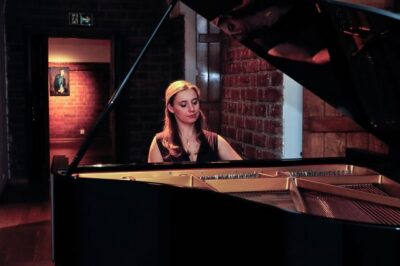
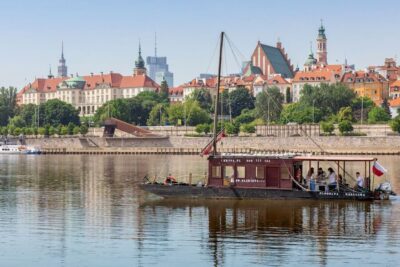
Traditional Galar Cruise on The Vistula River
Read our review →
Warsaw Concert: Chopin – Painted by Candlelights with Wine
Read our review →

Highline Warsaw Entry With 360° Views & Rooftop Bar
Read our review →
POLIN Museum of the History of Polish Jews Ticket
Read our review →
Browse the lists this tour appears in