
Reviewed · CITY TOURS
Faces of Warsaw’s 3-hour orientation city tour with hotel pick-up
Warsaw can feel like a living lesson, not just a sightseeing stop. This 3-hour private orientation packs major landmarks into a tight route, with hotel pickup so you lose less time hunting buses and meeting points. I like how the tour moves quickly from big contrasts, royal parks to World War II memorial places, and I love that it’s built around question-friendly stops with short time blocks. The one thing to keep in mind is the schedule is brisk, so you won’t have hours to linger in museums or read every plaque.
If you want a guided way to get your bearings fast, this works well. In particular, guides like Marzena are praised for a patient, cheerful approach to history and for answering questions clearly, which is exactly what you want when the subject matter turns heavy.
In This Review
- Key Highlights You Should Know
- A 3-hour Warsaw highlights route with hotel pickup that saves your energy
- Royal Łazienki Park and Palace Complex, plus a view of Warsaw’s political layers
- Grzybowski Square and the start of the Warsaw Jewish story
- POLIN Museum and the ghetto hero monument tied to Willy Brandt
- Umschlagplatz, where the final solution was carried out
- King Sigismund’s Column to Rynek Starego Miasta, UNESCO Old Town on foot
- Presidential Palace stop and the names that shape Poland
- Marie Skłodowska-Curie Museum, ending at her birthplace in the old town area
- Price and what you get for about $72.72 per person
- Who this tour suits best (and who might want a different approach)
- Practical tips before you go
- Should you book Faces of Warsaw with hotel pickup?
Key Highlights You Should Know
- Hotel pick-up and return: You meet your guide at your hotel reception with the PolinTours sign, or the guide waits in the car.
- A strong “contrast” route: Royal Łazienki Park, then straight into Warsaw Ghetto sites and memorials.
- POLIN Museum time window: Short, focused viewing tied to the ghetto hero monument linked with Willy Brandt.
- UNESCO Old Town stroll: You walk through the old town around Rynek Starego Miasta and King Sigismund’s Column.
- End at Marie Curie’s birthplace: You finish in the old town area, convenient for continuing on your own.
- Most admissions are free, one is not: Several stops list admission as free, but the Marie Skłodowska-Curie museum ticket is not included.
A 3-hour Warsaw highlights route with hotel pickup that saves your energy
This is a tight, well-managed city orientation designed for real time constraints. At about 3 hours, it’s long enough to hit the key “what is Warsaw, really” moments, but short enough that it won’t swallow your entire day.
The big practical plus is the pick-up from your hotel in the city center. That means you start the tour with fewer frictions: no navigating trams with a backpack, no waiting at a random corner, no second-guessing whether you’re late. Your guide meets you at reception with a PolinTours sign, or waits by the entrance in the car if that’s how your hotel works.
The pacing also matters. Several stops are time-capped, and the listed durations are usually around 10 to 30 minutes. You’re not meant to “study everything.” Instead, you’re meant to get a guided snapshot, then decide what you want to revisit later.
Because it’s private, the group size is just your party. That typically helps with questions and with hearing explanations clearly, especially in places where you might otherwise feel like one voice in a crowd.
Still tacked up around Warsaw
- Warsaw: Chopin Concert in the Old Town
★ 4.8 · 2,287 reviews - Warsaw: Traditional Galar Cruise on The Vistula River
★ 4.6 · 1,640 reviews - Warsaw: Old Town Highlights Walking Tour in English
★ 4.7 · 1,516 reviews
Royal Łazienki Park and Palace Complex, plus a view of Warsaw’s political layers
The tour opens at Łazienki Krolewskie w Warszawie, the Royal Łazienki Park and Palace Complex. This is a smart starting point because it gives you a calm visual anchor before the tour turns to harder history later.
What I like about this first stop is that it isn’t just pretty scenery. It’s presented as a unique kind of facility in Europe, so you immediately understand this park is more than a place to walk. You get the sense that Warsaw has always been shaped by power, culture, and identity, even when the setting looks peaceful.
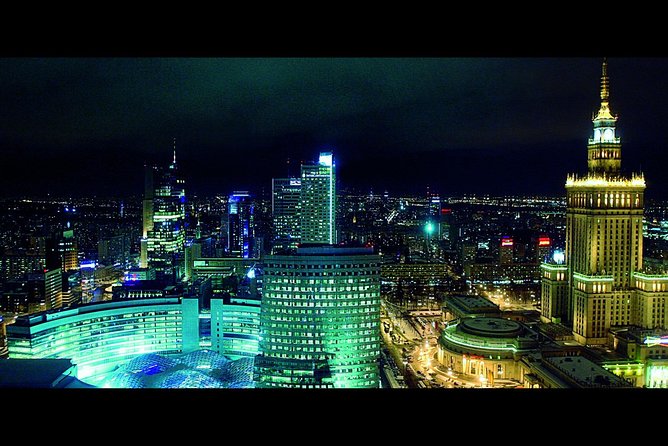
From there, the tour also points you toward how modern Poland sits over older political realities. You’ll look at the seat of the Polish Reichstag, and you’ll hear about the legacy of communism, including the controversial gift from Stalin, the Palace of Culture. That combo is why this stop works for orientation: you see how different eras physically overlap in the city.
A small consideration: since the tour is time-limited, this is not your deep reading phase. If you love architecture details or want to spend lots of quiet time in the park, plan to come back later on your own after the tour gives you context.
Grzybowski Square and the start of the Warsaw Jewish story
Then you shift to Grzybowski Square, where you explore the grounds of the former Warsaw ghetto and learn about the history of Warsaw Jews. Even though the time on this stop is shorter, it’s a critical transition point in the overall story.
This is the moment where the tour becomes more than general sightseeing. It moves into specific historical geography: the idea that Warsaw is not one single “old town versus new city” postcard, but a set of places where people lived, survived, and suffered.
My practical advice here is to take the guide’s lead on questions. If something is unclear, ask early. In a short orientation, the quality of your understanding depends on whether you spend a couple minutes getting clarity, rather than saving it for later when you might be tired or distracted.
Also note the admissions at this part are listed as free. That’s helpful for budgeting, because you can focus on learning rather than spending time at a ticket desk.
POLIN Museum and the ghetto hero monument tied to Willy Brandt
Next comes POLIN Muzeum Historii Zydow Polskich. You step into the times of heroic uprisings in the Warsaw Ghetto and stop at the ghetto hero monument, the one where Willy Brandt knelt down.
This is another stop that’s short but purposeful. The value here is not “seeing everything the museum offers.” The value is getting a guided way to connect the museum space to the most symbolic moments, like that monument and the story linked to Brandt.
I also think this kind of stop is ideal for first-timers because museums can feel overwhelming when you walk in cold. A tour like this gives you a route through the meaning. Even with a limited window, you walk out with a few strong anchors, which helps you decide whether to return for a longer museum visit later.
One practical note: because the POLIN Museum portion is timed, wear comfortable shoes. You’re likely to be moving through exhibits and walking between parts of the museum space.
Beneath the newer pins on the Warsaw board:

Umschlagplatz, where the final solution was carried out
Umschlagplatz is next, with a stop described as seeing the real places where the final solution of the Jewish question was put into practice.
This part of the tour is heavy. The good thing about having a guide here is that you’re less likely to turn history into a checklist. Instead, you get context that helps you understand why these are not just “photo spots,” but sites of documented, devastating actions.
In terms of how to prepare yourself: keep expectations realistic. This is only around 15 minutes on the schedule. That means you should treat it as orientation and respect the emotional weight. If you want deeper study, you’ll want time later for a return visit.
King Sigismund’s Column to Rynek Starego Miasta, UNESCO Old Town on foot
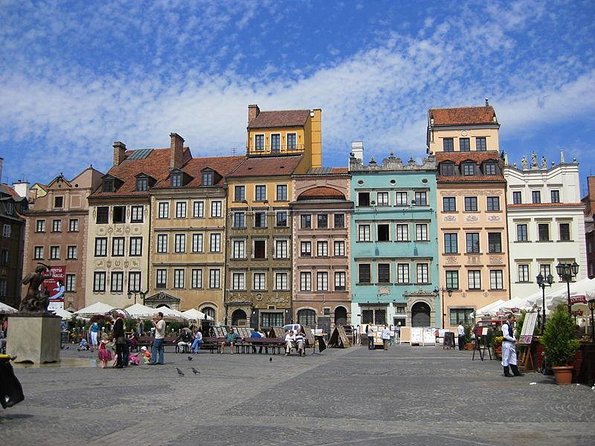
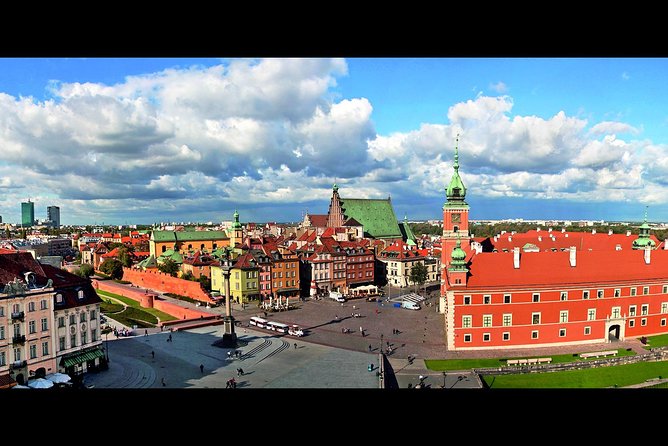
After the ghetto-related stops, the tour moves you back toward the city’s rebuilt heart. You’ll see King Sigismund’s Column (Kolumna Zygmunta), then you’ll get to experience the reconstructed old town declared a World Heritage Site by UNESCO.
What I like about this segment is that it directly ties the city’s identity to place. The column and surrounding sights help you grasp how Warsaw rebuilds its public memory, not as an abstract idea, but as architecture and street-level reality. The tour mentions important monuments and architectural pearls, and it highlights royal palaces and residences as part of what you’ll see.
Rynek Starego Miasta follows, with a stroll through the romantic streets of the old town. This is where you get the visual reward after a serious history run. It’s not a “switch off” moment, but it can be a needed reset.
A practical tip: old town streets can be crowded at peak times. Since this is a walking segment of about 30 minutes, you’ll want to be mentally ready for slower movement if the crowd thickens. Your guide will help you time it, but you should still expect a few bottlenecks.
Admissions are listed as free for this old town area stop, so again, you aren’t paying extra for the guided portion. That keeps the overall experience feeling good value.
Presidential Palace stop and the names that shape Poland
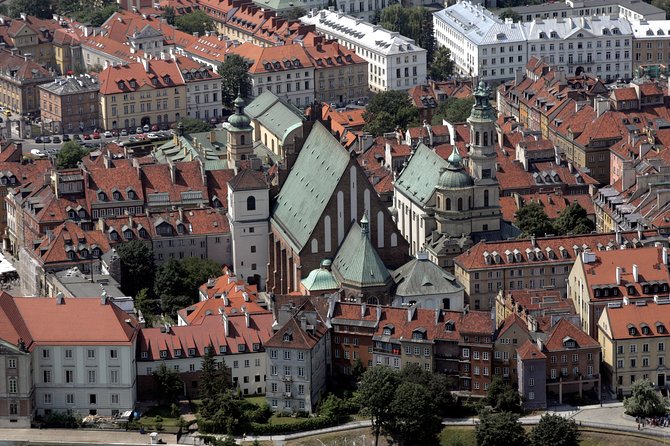
Then you go to Palac Prezydencki, the Presidential Palace. This stop focuses on great Poles named Frederick Chopin, Marie Curie, and Lech Wałęsa.
I like that the tour uses names like these to connect the dots between arts, science, and politics. It helps you understand Warsaw as a place that produces world figures, not just a backdrop for global headlines.
This stop is short, around 10 minutes. So approach it as a spotlight rather than a full education. If you’re specifically interested in Chopin, Curie, or Wałęsa, you’ll likely want to plan your own follow-up day, but the tour gives you the starting thread so your independent exploring feels more meaningful.
Marie Skłodowska-Curie Museum, ending at her birthplace in the old town area
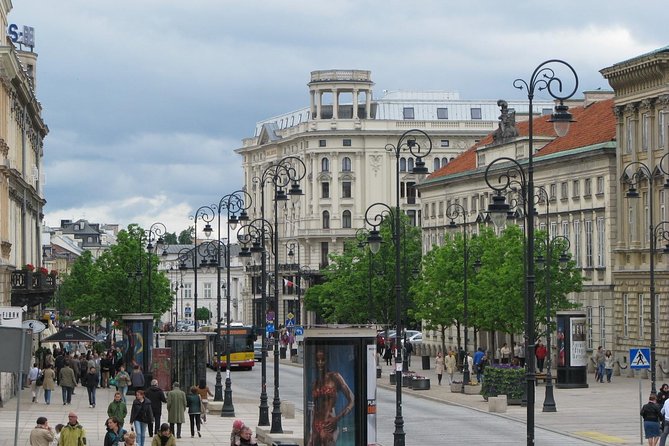
The tour ends at the Maria Skłodowska-Curie Museum, located at Freta 16, with the experience described as seeing Madame Curie’s birthplace and learning more about the most famous woman from Warsaw.
This is a strong finish because it’s celebratory and human-scaled after the heavy history. You’re not ending with a vague “and then we walked somewhere.” You end at a specific place tied to a specific person, and you get a simple reason to pay attention.
One key detail for planning: the ticket for this museum is listed as not included. That means you should budget a bit extra if you want to go in. It also means you might decide on the spot whether your priorities are more about taking photos and walking outside, or paying for the museum time.
Price and what you get for about $72.72 per person
At $72.72 per person for about 3 hours, you’re paying for three big things: the private format, the guide, and the logistics support.
Here’s the value angle I think matters most:
- You’re getting private transportation (air-conditioned car or minibus) with parking fees covered.
- You get pickup and return to your hotel in the city center area, which can easily be the difference between a smooth day and a stressful one.
- Most stops list admission as free, which reduces the “surprise costs” problem.
The main cost you should plan for is the Marie Skłodowska-Curie museum admission since it’s not included, plus whatever you choose to spend on a snack or drink since lunch is not included.
Also, this is typically booked about 11 days in advance, which suggests it’s a practical slot that people use to orient themselves quickly. If your schedule is tight, that’s another reason to reserve early rather than hope a last-minute opening appears.
Is it expensive? Compared to cheaper bus tours, yes. Compared to what you’d spend on transport plus separate entry fees plus time-wasting logistics, it can feel like a fair deal, especially because it’s private and timed so you see a lot without rushing on your own.
Who this tour suits best (and who might want a different approach)
This tour is a good match if you want:
- A first-day orientation in Warsaw, with a route that moves from parks to old town, and from royal stories to wartime history.
- A guide who can handle questions, because the route includes topics that benefit from explanation.
- A plan that reduces decision fatigue, especially with hotel pickup and a clear start and end.
It may not be the best match if you:
- Want long museum time, deep reading, or lots of free wandering. The stop durations are short, by design.
- Prefer to go at your own pace with no schedule pressure at memorial sites.
For most visitors, the “sweet spot” is day one or day two. You’ll learn enough to guide your next choices, and you’ll know what you want to return to for a slower visit.
Practical tips before you go
A few small things can make this much easier on the ground.
- Plan for walking. Even with transportation between stops, you’ll be moving through different city areas and spending short stretches on foot.
- Bring comfortable shoes, especially for the old town streets and any museum areas where standing and walking add up.
- If you’re sensitive to heavy historical topics, give yourself a mental buffer. The transition from the ghetto-related stops to the UNESCO old town is real, but it may not feel instant.
- Have a simple plan for the end. The tour finishes at Marie Curie’s birthplace area. If you want to keep sightseeing afterward, map a few nearby options so you’re not scrambling.
Should you book Faces of Warsaw with hotel pickup?
I’d book it if you want a guided route that gives you a clear Warsaw “map” in just a few hours. The private format, the hotel pickup, and the fact that many stops have free admissions make it feel efficient and good value. It also includes both the city’s standout contrasts, royal parks and UNESCO old town, and the places where wartime history changed lives.
Skip it or consider a longer option if your main goal is museum depth. This is orientation, not a long sit-down study. Also remember the Marie Curie museum ticket is not included, so factor that into your budget.
If you’re doing Warsaw for the first time and you want to get your bearings with an organized, human guide like Marzena, this is one of the more practical ways to start.
Freshly posted from Warsaw
- Krakow Small Group Tour from Warsaw with Lunch, Schindler’s Factory included★ 5.0 · 7 reviews
- Warsaw Private Transfer from Warsaw Chopin Airport (WAW) to City centre★ 4.0 · 7 reviews
- 3-hour tour at Warsaw Uprising 1944 Museum /inc. Pick-up/★ 4.9 · 7 reviews
- Wolfs Lair – Hitlers hideout★ 4.5 · 7 reviews
- Warsaw: Evening History and Pubs Tour by Retro Minibus★ 5.0 · 7 reviews
- Warsaw: Private Vodka Tasting Night with Snacks and Pickup★ 5.0 · 7 reviews
- Warsaw Old Town with Royal Castle + Royal Route: SMALL GROUP /inc. Pick-up/★ 5.0 · 7 reviews
City Tours, compared.
City Sightseeing Tour Eco Electric Buggy Golf Cart
Read our review →
Gdańsk City Sights & History Guided Walking Tour in English
Read our review →
Extended City Sightseeing Tour – Eco Buggy Golf Cart
Read our review →
Shared or Private City Tour Sightseeing by Golf Cart
Read our review →Browse the lists this tour appears in