Reviewed · WARSAW TOURS & ACTIVITIES
Explore Warsaw’s Art and Culture with a Local
Street art meets history in Warsaw. In 90 minutes, this small-group walk connects the city’s public art to big cultural themes, from an opera house start to iconic murals by Blu and Swanski, plus a Soviet-era controversy you cannot miss. I especially like that the tour is led by a local guide who brings the creative community to life, and that it feels more like guided walking and story than a museum lecture. One thing to consider: you will spend most of the time on your feet, so comfy shoes matter.
I like the pace too. The route moves through distinct visual worlds, so you keep noticing new details instead of repeating the same stops. A second consideration is that the group is small (max 8), which usually helps, but popular mural areas can still feel busy around prime hours.
In This Review
- Key Highlights Worth Your Attention
- Why This 90-Minute Art Walk Works in Warsaw
- Starting at the Ballet Artists Monument, Then Moving Into Art Mode
- The Opera House Stop: Where Classic Culture Sets the Tone
- The Mural Sequence: Learning How Warsaw Tells Stories on Walls
- Blu’s Most Famous Mural: A Street-Art Name You Will Remember
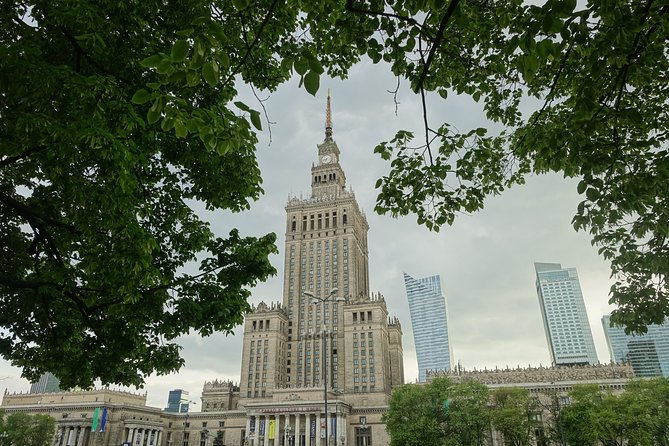
- The Stalin Gift Building: Warsaw’s Tallest Controversy
- Swanski’s Huge Mural: Contemporary Creativity at Full Scale
- Ending at a Modernist Museum for Polish and World Art
- What the Guide Brings to the Experience, Especially for First Timers
- Price and Value: Is $114.70 Worth It?
- Who Should Book This Tour (And Who Might Skip It)
- Tips to Get the Most From This 90-Minute Route
- Should You Book This Warsaw Art and Culture With a Local Tour?
- FAQ
- How long is the Warsaw art and culture experience?
- How much does the tour cost?
- What is the group size?
- What is included in the price?
- Do I get a ticket on my phone?
- Where does the experience start?
- Where does the tour end?
- Is the tour near public transportation?
- Can service animals join the tour?
- What is the cancellation policy?
Key Highlights Worth Your Attention
- Local-first storytelling that explains how street-art and contemporary art connect to Warsaw
- Iconic mural moments, including a famous Blu work and a huge Swanski mural
- A built-in contrast route, from an opera house to a controversial Stalin-era skyscraper
- A short, focused 1.5-hour format, ideal when you want art context without a long day
- Museum finale after street art, so the creative thread continues indoors
Why This 90-Minute Art Walk Works in Warsaw
Warsaw can feel like two cities at once. You get the careful, official architecture on one side, then the city’s creative pulse shows up on walls, posters, and sudden bursts of color.
This experience is built for that contrast. It stays short at about 1 hour 30 minutes, so you can fit it into a busy itinerary. And with a maximum group size of 8 travelers, the guide can actually steer the conversation toward what you care about, instead of rushing through facts.
The price, $114.70 per person, is not the bargain end of Warsaw tours, but it’s not random either. You are paying for a local perspective, guided route planning, and time spent interpreting specific art places you might otherwise half-skip. For a first trip or a return visit, it’s a smart use of time because the tour gives you a way to “read” the city while you are still walking through it.
Also, you get a mobile ticket, which makes it easy to stay organized. Just keep your phone charged and your walking pace steady.
Still tacked up around Warsaw
- Warsaw: Chopin Concert in the Old Town
★ 4.8 · 2,287 reviews - Warsaw: Traditional Galar Cruise on The Vistula River
★ 4.6 · 1,640 reviews - Warsaw: Old Town Highlights Walking Tour in English
★ 4.7 · 1,516 reviews
Starting at the Ballet Artists Monument, Then Moving Into Art Mode
You begin at Pomnik W Hołdzie Polskim Artystom Baletu, Molière 1 (00-076 Warszawa). This matters more than it sounds. Starting at a named monument in Warsaw keeps you oriented fast, and it signals that the day is not only about street art. It’s also about the broader artistic culture of the city.
From the start, the flow is simple: you walk, you look, and the guide connects the dots. This tour is set up so you do not just see places, you understand how Warsaw’s artists think and how their work fits into the city’s identity.
If you like travel where you come away with more than photos, this kind of start is a win. You’ll be mentally tuned to details right from the first stop, rather than scrambling to catch up later.
The Opera House Stop: Where Classic Culture Sets the Tone
The first main stop is a beautiful opera house. Even if you do not catch a performance, standing near an opera house in Warsaw gives you a strong baseline for what “official art culture” looks like here. It’s a good counterpoint to what you’ll see later on streets.
I like the way this opener frames the whole route. You start with music and performance energy, then you transition toward murals and contemporary art. That contrast helps you notice why street art is not just decoration in this city. It’s communication, and it has meaning.
Practical note: opera-house areas are sometimes cleaner and more formal, and streets nearby can change character quickly once you head toward murals. Keep an eye out for the shift. That’s where the tour’s storytelling starts paying off.
The Mural Sequence: Learning How Warsaw Tells Stories on Walls
After the opera house, the route moves to murals, starting with an impressive mural and then building toward the most famous one. This is where the city’s creative rhythm becomes very visible.
The tour focuses on more than what the mural looks like. You get the cultural reasoning behind it, including the way local street-art artists connect to Warsaw’s contemporary art scene. That’s the point many self-guided walks miss. Without a guide, you might see the wall and move on. With a guide, you start noticing themes, style choices, and why certain artists become reference points.
Expect a mix of looking and listening. You’ll pause, take in the imagery, then hear about the artist connection to Warsaw. It turns a quick stop into a meaningful one, especially if you are curious about how art works outside traditional museum frames.
Beneath the newer pins on the Warsaw board:


Blu’s Most Famous Mural: A Street-Art Name You Will Remember
One mural on the route is highlighted as the most famous in Warsaw, created by the local artist Blu. That’s a big deal for anyone who wants a fast introduction to Warsaw’s street-art identity.
What I find valuable here is recognition plus context. Blu is a name you can file away for later, and the guide helps you understand why this particular work resonates locally. Instead of treating it like a random photo stop, you are given a reason to care.
This kind of stop is also great for return visitors. If you have walked through central Warsaw before, a guide can redirect your attention from architecture to the city’s living creative layer. Suddenly, you are not just looking at old streets, you are seeing ongoing artistic conversations.
Tip: if you are taking photos, pause a beat before you shoot. Murals can look different depending on angle and distance, and your guide will often point out visual details that only show up when you step back.
The Stalin Gift Building: Warsaw’s Tallest Controversy
Next comes a major landmark: Warsaw’s tallest and most controversial building, described as a gift from Stalin. Even without extra background, you can feel the weight of that description in the building’s presence.
This stop is important because it shows how history shapes what people argue about in public spaces. The tour’s art angle makes this more than sightseeing. It becomes a lesson in why architecture, politics, and cultural identity can’t be separated in Warsaw.
A potential drawback here is that expectations can clash with reality for some people. You might think you’re on an art-only walk, but this stop reminds you Warsaw’s art culture is tied to major historical forces. If you prefer to stay strictly in the street-art world, just know this portion adds sharper political context.
Still, it’s a smart inclusion. It gives your mural experience a deeper stage to stand on.
Swanski’s Huge Mural: Contemporary Creativity at Full Scale
After the controversial landmark, you head back into mural territory with a huge mural by Swanski. Scale matters with street art, and this is one of those stops where seeing the work in person is the whole point.
The guide’s role here is to connect contemporary creativity to Warsaw as a place where modern artists keep shaping how the city is perceived. You learn how street-art artists fit into the larger cultural web, including relationships between street work and galleries or museums.
If you like contemporary art but don’t want to spend hours in exhibitions, this is a strong compromise. You get a big visual impact, then context, all within a short walking window.
Practical tip: bring your patience for pauses. The guide will likely ask you to look at details, not just the overall image. If you rush, you miss the best part.
Ending at a Modernist Museum for Polish and World Art
The tour concludes at a modernist building that houses a museum of Polish and world art and sculpture, from ancient to contemporary. Ending indoors is a clever move. It helps you carry what you saw outside into a larger art framework.
This final stop works well for people who want both kinds of culture in one outing. You get street art and then a museum setting that stretches across time periods, including ancient to contemporary. Even if you only skim what is on display, the concept is clear: art in Warsaw is not limited to one style or one decade.
Why it’s a good landing point: you can use this museum reference later on your own. If something caught your eye during the tour, you now have a place to chase it further.
Also, ending at a museum-style location typically means a calmer environment than the street-art hotspots. You finish the walk with a chance to slow down.
What the Guide Brings to the Experience, Especially for First Timers
One of the biggest strengths here is the guide. The experience is led by a local who wants to show you his city. In this case, the guide is Kasia, and the feedback around her is consistent, the tour feels like a guided cultural conversation rather than a checklist.
That matters because art interpretation is personal. A local guide can point out connections between artists and Warsaw that you would not pick up from signage. You learn not only what a mural looks like, but how it fits into the city’s artistic identity and community.
If you are visiting for the first time, you’ll appreciate the big picture fast. If you have been before, you’ll like the way the tour reframes your walk with fresh attention.
Price and Value: Is $114.70 Worth It?
Let’s talk value in a real way. At $114.70 per person for about 1 hour 30 minutes, you are paying for guidance, art interpretation, and a curated route that includes major landmarks and multiple mural stops.
Here’s what you get for that money:
- A local guide who connects street art and contemporary culture to Warsaw
- Small group size (max 8), which usually means less rushing
- Multiple high-interest stops instead of one or two generic sights
- A mobile ticket convenience factor
What you do not get is extra hand-holding like food or long indoor time. Food, drinks, and snacks are not included. So if you are the type who gets hungry mid-walk, plan a small water or snack before you start.
For many people, the best value is for those who want to learn something meaningful quickly. If you already know a lot about Polish art and street mural history, you might prefer a self-guided route. But if you want a shortcut to understanding, the guide-based approach is the point.
Who Should Book This Tour (And Who Might Skip It)
This is a great fit for:
- First-time visitors who want a quick, arts-focused orientation in Warsaw
- Returning tourists who want to see a different side of the city, street-level culture
- People who enjoy walking and looking closely at murals and public art
- Anyone who likes mixing different art worlds, opera culture, street art, then museums
You might skip it if you:
- Want a long, slow museum day
- Prefer strictly architecture with no political or controversy context
- Have limited mobility and struggle with a mostly on-foot route
Since most travelers can participate and the group is small, it’s usually easy to join. Still, choose this based on your comfort level with walking.
Tips to Get the Most From This 90-Minute Route
Small tours reward preparation.
Wear comfortable shoes. You will be moving between murals and major sights with short pauses. Bring a charged phone since the ticket is mobile.
Since food and drinks are not included, plan ahead. If you know you get thirsty or hungry quickly, carry a bottle of water or plan to grab something after the tour.
For the art parts, slow down your photo instincts. Look first, then shoot. The most interesting details are often what you notice when you step back and really take in the wall.
And if you’re sensitive to crowded areas, consider going at a quieter time of day when possible. Even with a small group, mural spots can draw attention.
Should You Book This Warsaw Art and Culture With a Local Tour?
I think you should book it if you want a compact way to understand Warsaw’s creative identity. The biggest win is the combination of street art, major historical context, and an art museum ending. At 1.5 hours with a maximum of 8 travelers, it’s efficient without feeling rushed.
I would pass if your goal is a full-day museum deep study, or if you only want architecture and nothing political. Also, if walking is hard for you, this format might feel like too much time on your feet.
If you’re deciding between a self-guided day and a guided art route, this is the guided choice that still leaves room to explore on your own right after. You’ll finish with names, themes, and a better “how to see Warsaw” mindset.
FAQ
How long is the Warsaw art and culture experience?
It runs for about 1 hour 30 minutes.
How much does the tour cost?
The price is $114.70 per person.
What is the group size?
The experience has a maximum of 8 travelers.
What is included in the price?
A local guide is included. Food, drinks, and snacks are not included.
Do I get a ticket on my phone?
Yes, the tour uses a mobile ticket.
Where does the experience start?
It starts at Pomnik W Hołdzie Polskim Artystom Baletu, Molière 1, 00-076 Warszawa, Poland.
Where does the tour end?
It ends in the Masovian Voivodeship, Warsaw, Poland.
Is the tour near public transportation?
Yes, it is near public transportation.
Can service animals join the tour?
Yes, service animals are allowed.
What is the cancellation policy?
You can cancel for a full refund if you cancel at least 24 hours in advance of the experience start time. Free cancellation is offered based on that rule.
Freshly posted from Warsaw
- Warsaw Uprising and WWII Old Town Walking Tour with Museum★ 5.0 · 1 review
- EVERYDAY Warsaw Traditional Food Tour with Old Town Sightseeing★ 5.0 · 1 review
- Warsaw to Auschwitz and Krakow Old Town Full-Day Trip by Car★ 5.0 · 1 review
- A Day in Warsaw: Private Full-Day Highlights Tour★ 5.0 · 1 review
- Pub Crawl with Shots, Discounts, Games & VIP Entry★ 5.0 · 1 review
- POLIN Museum of the History of Polish Jews : PRIVATE TOUR /inc. Pick-up/★ 5.0 · 1 review
- Private Guided Warsaw Walking Tour with Drone Photography★ 5.0 · 1 review
Warsaw Tours & Activities, compared.
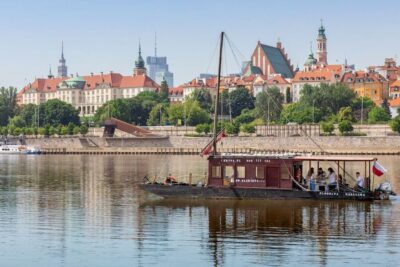
Traditional Galar Cruise on The Vistula River
Read our review →
Warsaw Concert: Chopin – Painted by Candlelights with Wine
Read our review →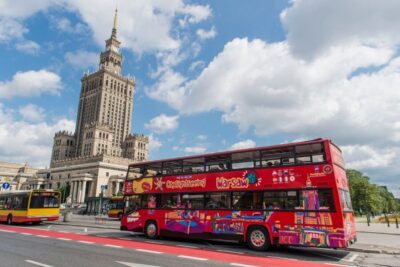

Highline Warsaw Entry With 360° Views & Rooftop Bar
Read our review →
POLIN Museum of the History of Polish Jews Ticket
Read our review →