
Reviewed · 2-HOUR EXPERIENCES
2-Hour Guided Tour in Kraków-Płaszów Concentration Camp
Silence tells a story at Plaszów. This 2-hour guided tour links the Kraków Ghetto memorial at Ghetto Heroes Square to the former camp at Kraków-Płaszów, where you trace key places of imprisonment, forced labor, and survival.
What I like most is how the guide turns empty ground into meaning, walking you through the surviving layout elements like the Grey House, roll-call area, and other remnants you would likely miss on your own. I also appreciate the way Oskar Schindler is handled, not as a tourist detour, but as part of the camp’s real timeline and prisoner registrations, including the work-permit angle that saved more than a thousand lives.
One thing to consider: Plaszów does not have lots of preserved buildings to look at. The site is mostly open space, so if you come expecting dramatic ruins, you might feel like there is not much to see. In hot weather, that openness can also feel challenging, and a stroller is not a good fit for this kind of walking.
In This Review
- Key things that make this tour worth your time
- Ghetto Heroes Square: starting with the memorial chairs
- Meeting point and pacing: what the 2-hour walk really feels like
- Entering Plaszów: open space, silence, and what you are meant to notice
- Grey House and roll-call area: turning key locations into clear context
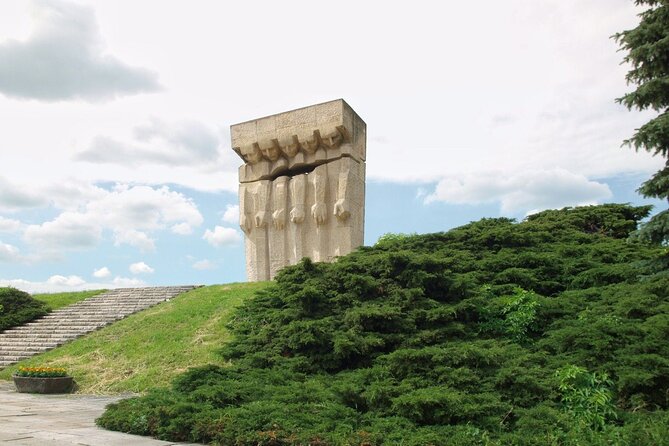
- Mass graves and the Monument of Torn-Out Hearts: remembrance in physical form
- Schindler’s story on site: work permits and survival as part of the timeline
- Who should book this Kraków-Płaszów tour, and who might want a different option
- Price and value: why $29 makes sense for this format
- How to prepare so the tour lands well
- Quick advice for booking: should you go?
- FAQ
- How long is the Kraków-Płaszów concentration camp guided tour?
- How much does the tour cost?
- Where do I meet the guide?
- What languages are available?
- Is the tour only for good weather?
- What should I bring and wear?
- Can I bring a stroller?
- Is the tour wheelchair or accessibility friendly?
- What does the price include?
- What happens if I arrive late?
- Is free cancellation available?
- Is there a reserve and pay later option?
Key things that make this tour worth your time
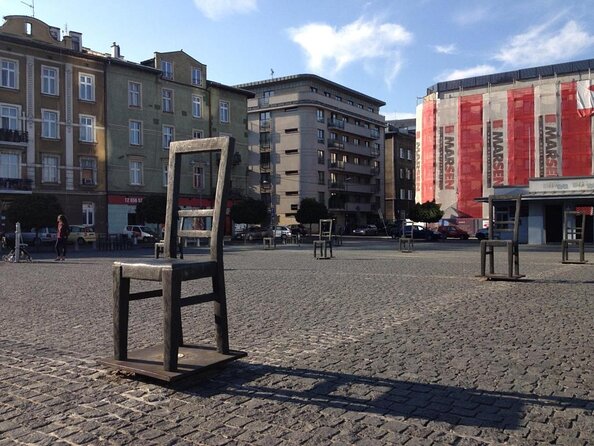
- A memorial start at Ghetto Heroes Square with the striking metal chairs that symbolize forced departures and absence
- A guided trace of the camp layout using surviving elements like the Grey House and roll-call area
- Honest remembrance across the site through memorial points such as mass graves and the Monument of Torn-Out Hearts
- Schindler’s story placed on the ground explaining work permits and later transfers that kept people alive
- A quiet, open-air experience where the best learning comes from listening carefully
- A practical 2-hour pace that works well if you dress for walking and weather
Ghetto Heroes Square: starting with the memorial chairs
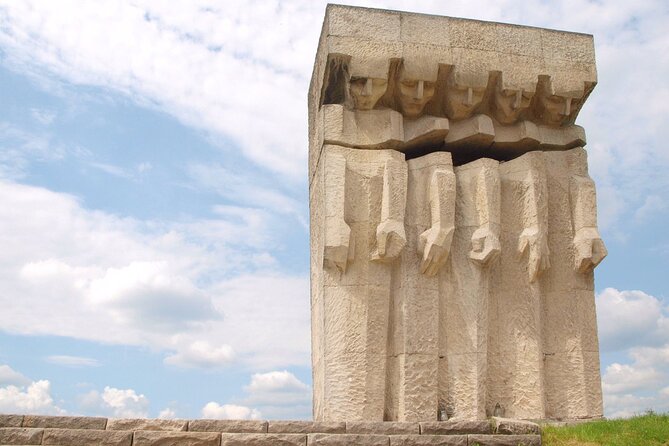
The tour begins in Podgórze, at the memorial space connected to the Kraków Ghetto: Ghetto Heroes Square. You are not just taking a photo stop. You are stepping into a part of the story that many people walk past when they are rushing through Kraków.
The square was transformed in 2005, and the installation of large metal chairs matters. They symbolize forced departures, and the idea of absence is not subtle. Even if you have read about the ghetto before, seeing the chairs in a real urban space helps you understand how displacement echoes into ordinary streets and daily life. It is also a useful reminder that this history is not only about a distant camp. It begins close to the city you are standing in.
I find this kind of start helps you learn better later. When the tour shifts to Plaszów, you are not just looking at a sad site, you are following a chain of events, from ghetto life and deportation to what happened after people were registered and processed.
Still tacked up around Krakow
- From Krakow: Auschwitz-Birkenau Guided Tour & Hotel Pickup
★ 4.5 · 33,358 reviews - From Krakow: Auschwitz-Birkenau Guided Tour & Hotel Pickup
★ 4.5 · 29,340 reviews - Krakow: Auschwitz Guided Tour with Optional Hotel Pickup
★ 4.5 · 15,280 reviews
Meeting point and pacing: what the 2-hour walk really feels like
The meeting point is simple: stand in front of Apteka Pod Orlem and look for the Former Concentration Camp Plaszow Guided Tour sign. The tour is 2 hours long on foot, and you will cover enough ground to feel it in your legs, even though the time stays compact.
Because Plaszów is open, you need to plan for the weather. The tour goes ahead in rain or shine, so pack the common-sense stuff: a light rain layer if storms are possible, sunscreen or a hat if it is hot, and footwear that can handle uneven, hard ground. One of the reviews notes the heat can be tough, and that openness makes shade limited.
Also, this is a walking experience that does not work well with a stroller. If you are traveling with a baby, you will want to rethink the stroller plan. For teens or anyone who struggles with long periods of listening in silence and an outdoor setting, the length can feel like a lot.
Entering Plaszów: open space, silence, and what you are meant to notice
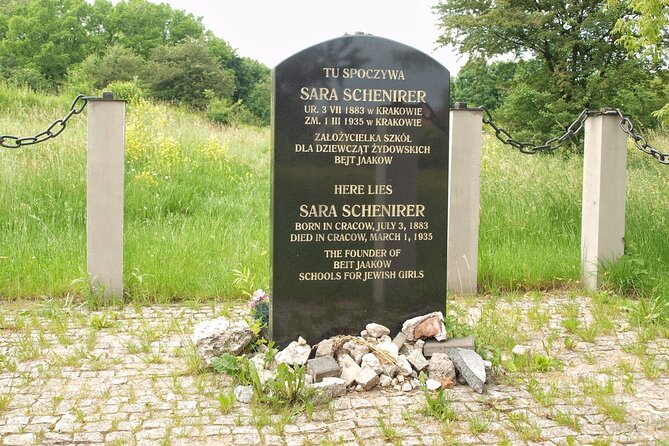
Plaszów Camp was established in 1942 on the grounds of Jewish cemeteries. That detail changes how you read the place. This is not a built-up museum. It is a memorial landscape, where the absence of structures becomes part of the lesson.
As you move through the former camp area, your guide helps you trace the layout through the elements that still exist. In a lot of historic sites, you look at surviving walls and roofs and imagine the past. Here, you do something different: you learn by mapping what is missing.
That is where listening becomes crucial. The tour leans on key locations such as the roll-call area and mass graves, and it connects them to the camp’s purpose over time. You hear that Plaszów started as a forced-labor camp and later became a concentration camp where more than 35,000 people were imprisoned and thousands lost their lives.
I like this approach because it keeps the focus where it belongs. There is no distraction from food courts, souvenir shops, or dramatic sets. You are learning about confinement, organization, and loss, in a setting that still feels stark.
Grey House and roll-call area: turning key locations into clear context
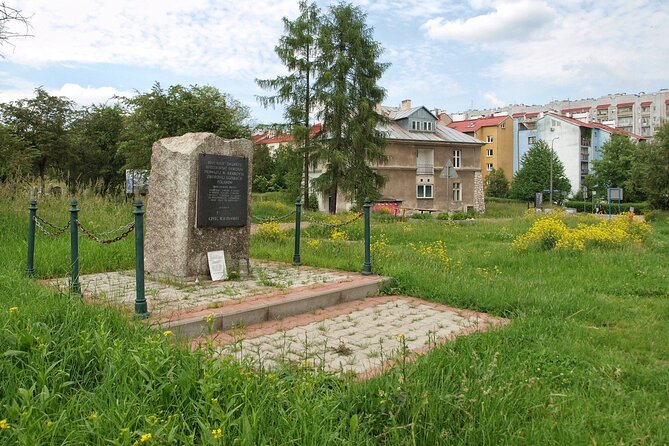
Inside Plaszów, the tour centers on several landmark areas that represent how the camp operated day to day. One of the best parts is the Grey House, which functions like a mental anchor for understanding the camp’s physical and administrative presence. Even if you have never heard the term before, your guide explains why it mattered and how it fits into the broader system.
Another important stop is the roll-call area. This is where you can sense the daily routine of control. Roll call is not just a moment, it is a method. In the story the guide tells, you start understanding how numbers became power, how order was imposed, and how punishment worked through procedure.
The tour also points out surviving remnants of key buildings and other layout features. What you are doing, practically, is learning the camp’s geography. Why does this corner matter? What did this area likely function as? The guide ties those questions to the timeline and to prisoner experiences.
One drawback worth noting, based on the experience’s design: if you come without a guide, it can feel like an open field with scattered points. The history behind those points is the main attraction. That is exactly why the guided format is the value here.
Beneath the newer pins on the Krakow board:

Mass graves and the Monument of Torn-Out Hearts: remembrance in physical form
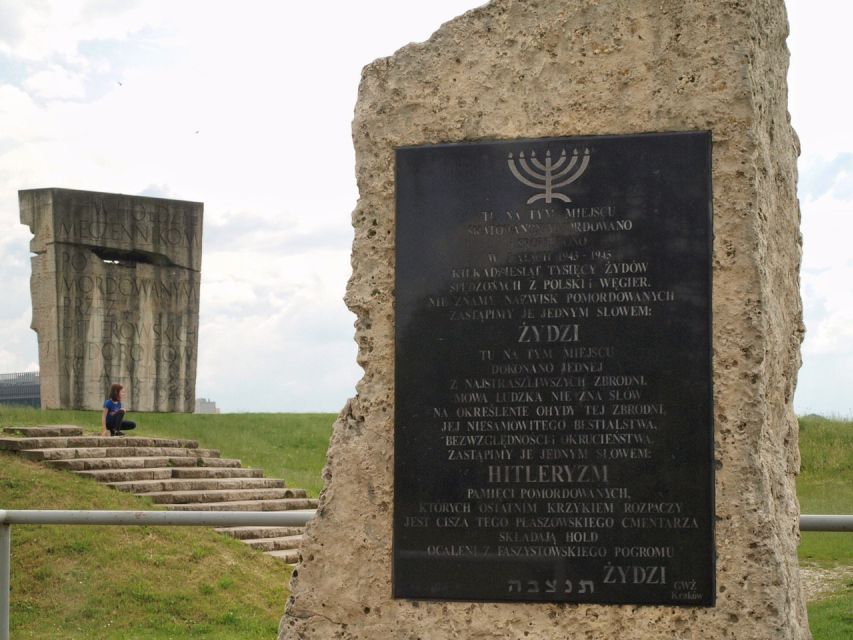
Plaszów includes memorial elements that are built to ensure people do not disappear into statistics. The route includes mass graves, which are handled carefully as sites of loss. Even though you cannot fully picture what was once there, your guide helps you place these areas into the larger system of imprisonment.
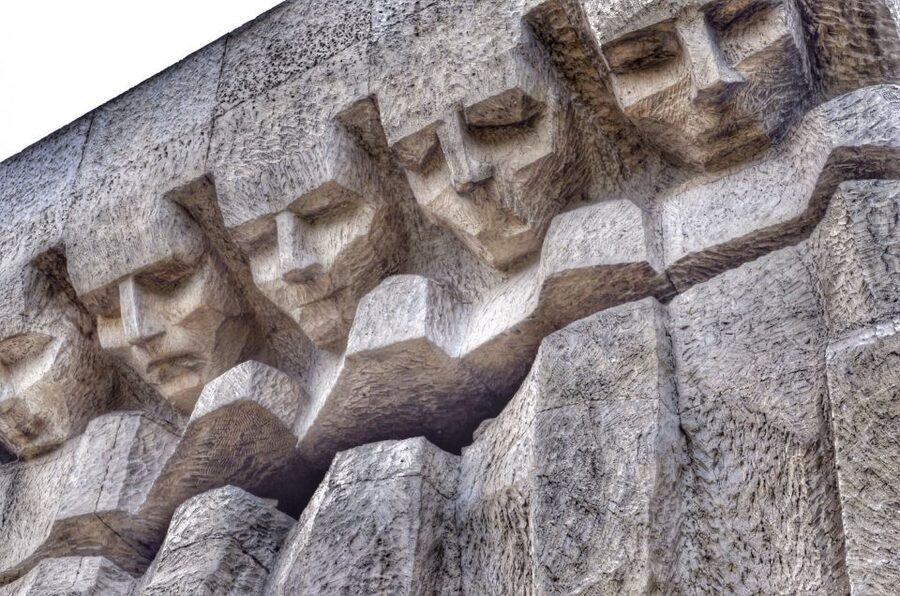
Then comes the Monument of Torn-Out Hearts. It is not the kind of memorial that lets you pass quickly. It asks for attention. If you are the type of person who needs a moment to process, plan for it here. This is where the tour shifts from explaining what happened to helping you honor those who were taken.
I appreciate that the tour does not rush through these points. The open space can make it feel quiet in a literal way, and that silence is part of the remembrance. You do not need a soundtrack in this place. You need time to let the meaning land.
Schindler’s story on site: work permits and survival as part of the timeline
A standout element of this tour is the narrative about Oskar Schindler and the prisoners he helped. The tour does not treat Schindler as a separate biography. It ties him to what was happening inside Plaszów and to the mechanics of prisoner registration.
You learn that Schindler arranged work permits for prisoners registered in Plaszów. Later, those workers could be transferred to his factory. The result, as shared on the tour, is that more than a thousand lives were saved.
Why this matters on the ground: Plaszów can feel like a closed system when you first look at it. The camp story is about machinery, forced movement, and erasure. Schindler’s story interrupts that fatalism by showing how specific paperwork, registered status, and assigned labor could change outcomes. You get a clearer sense of how survival could depend on bureaucratic pathways, not just bravery.
This is also where a good guide helps you avoid the common trap of turning history into a movie plot. The guide keeps it grounded in the real situation, so you leave understanding what was possible, what it cost, and why these rescue efforts mattered within the broader horror.
Who should book this Kraków-Płaszów tour, and who might want a different option
This tour is a strong fit if you:
- Want a guided, structured route through Plaszów’s key layout points, rather than wandering
- Appreciate memorial sites that rely on listening and reflection
- Are interested in how Schindler’s actions connect directly to prisoner registrations and transfers
It may be less comfortable if you:
- Hate long periods of standing and walking in open outdoor space
- Need lots of preserved structures to stay engaged
- Are traveling with a stroller, since stroller use is not suitable for this experience
One review note that surprised me in spirit is that the guide can bring personal connections. When a guide ties their family history into the topic, it adds weight and clarity. Even if your guide does not share the same personal thread, you can still expect an expert local approach and straightforward language, including guided explanations meant to be easy to follow.
Price and value: why $29 makes sense for this format
At around $29 per person for a 2-hour guided walking tour, the price is very reasonable for what you get. You are paying for three key things: a licensed local expert guide, a structured route through major points, and a one-way tram ticket included.
The tram ticket matters more than it sounds. It reduces one small stress on the day, especially if you want to keep your schedule tight and avoid extra ticket searching. But the real value is the guide time. Plaszów works differently than many museum-like sites. Without guidance, much of it can feel hard to interpret. With guidance, you connect location to meaning.
Also, the tour’s rating is high for a reason. People tend to remember it not because it was entertaining, but because it was instructive and respectful. If you come prepared for serious subject matter, the value lines up well.
How to prepare so the tour lands well
This is one of those tours where preparation is not about comfort only, it is about respect and focus. Here are practical steps I recommend:
- Wear weather-appropriate clothing and comfortable shoes. The site is outdoors and walking is part of the point.
- Bring water if the weather is warm. The tour runs through open space.
- Give yourself a buffer. The guidance asks you to arrive 10 minutes early, and latecomers cannot join once the group leaves.
- Choose your language carefully. The group tours are only in one language, selected when you book, and available languages include French, Italian, Spanish, and English.
And mentally, decide how you want to process it. This is not a casual history stroll. It is a remembrance walk where silence and open space shape your experience.
Quick advice for booking: should you go?
If you are visiting Kraków and you want to understand the reality of the Kraków-Płaszów site, I think this tour is a good booking. The guided format turns an open landscape into a coherent story, and the focus on memorial points plus Schindler’s specific rescue mechanism makes it more than a general overview.
Skip it only if you strongly dislike outdoor walking in heat or you need lots of preserved buildings to feel engaged. If you are okay with listening, learning, and reflecting, you will leave with a clearer sense of place, procedure, and human cost, plus an important lens on how survival sometimes depended on a narrow chance.
FAQ
How long is the Kraków-Płaszów concentration camp guided tour?
It lasts 2 hours.
How much does the tour cost?
The price is $29 per person.
Where do I meet the guide?
Meet in front of the entrance of Apteka Pod Orlem, and look for the Former Concentration Camp Plaszow Guided Tour sign.
What languages are available?
The tour is offered in French, Italian, Spanish, and English, and each group tour runs in only one selected language.
Is the tour only for good weather?
No. The tour goes ahead in all weather, rain or shine, so you should bring weather-appropriate clothing.
What should I bring and wear?
Bring weather-appropriate clothing and wear suitable footwear for a walking tour.
Can I bring a stroller?
A stroller with a baby is not suitable for this tour.
Is the tour wheelchair or accessibility friendly?
No accessibility details are provided in the tour information you shared, so you will want to check directly with the provider if this is a requirement for you.
What does the price include?
It includes a licensed local expert guide, the 2-hour guided walking tour, and one-way public tram ticket.
What happens if I arrive late?
You are asked to arrive 10 minutes before the tour begins. Once the group has departed, latecomers cannot join and tickets cannot be refunded.
Is free cancellation available?
Yes, you can cancel up to 24 hours in advance for a full refund.
Is there a reserve and pay later option?
Yes, you can reserve now and pay later.
Freshly posted from Krakow
- ZALIPIE – painted village, unique small group tour from Krakow★ 5.0 · 7 reviews
- “John Paul II Route” PRIVATE -Wadowice, Kalwaria Z.-Łagiewniki★ 5.0 · 7 reviews
- Krakow: Craft Beer Tasting City Walking Tour★ 4.4 · 7 reviews
- Magic of Krakow: Guided Tour of the Old Town★ 5.0 · 7 reviews
- Krakow : Zakopane Tour + Thermal Pools with Hotel Pickup★ 4.8 · 7 reviews
- Krakow in One Day: City Tour by Electric Car★ 5.0 · 7 reviews
- Guided Tour of Plaszow Concentration Camp, Kraków★ 4.8 · 7 reviews
2-Hour Experiences, compared.
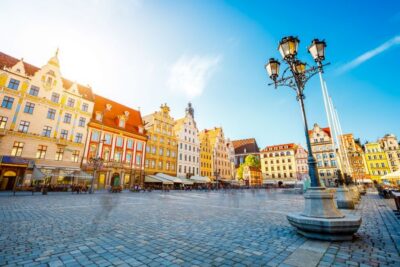
Private Old Town Guided Walking Tour (2 hours)
Read our review →
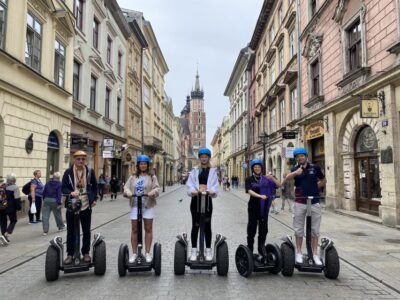
Krakow Old Town Segway Tour — 2H of History, Fun & Discovery
Read our review →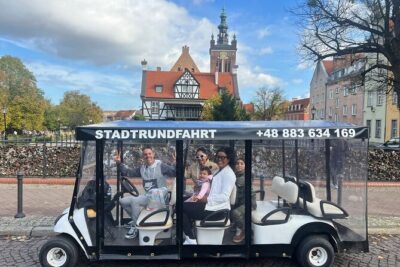
2H City Sightseeing Tour LIVE GUIDED by Buggy/Golf cart
Read our review →
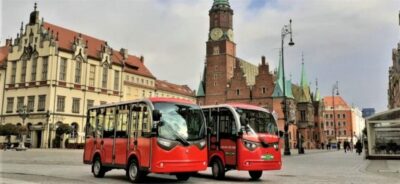
2-Hour Tour by Electric Car with a driver-guide
Read our review →Browse the lists this tour appears in