
Reviewed · 2-HOUR EXPERIENCES
2-Hour Guided Tour in Kraków-Płaszów Concentration Camp
Two hours in Kraków hits hard, in the best way. This guided walk ties Kraków’s Holocaust story to the real places you can still see, from Podgórze memorials to the camp grounds. It also connects to pop culture in a respectful way, since parts of the story are known through Schindler’s List.
I like how the tour is led by a professional guide who explains what happened clearly, not vaguely. I also like the tight focus and small group size, capped at 15, so the history feels personal rather than rushed. One drawback to plan for, the sites are outdoors and you’ll be walking over uneven ground in a former camp area and nearby preserves.
In This Review
- Key Highlights You Should Know
- Why Płaszów Fits Better Than a One-Stop Auschwitz Only Plan
- The 3:00 pm Start, Small Group Size, and What That Means
- Meeting at Plac Bohaterów Getta, Then Crossing into the Story
- Ghetto Heroes Square: 70 Metal Chairs and a Controversial Memory Design
- Płaszów Concentration Camp Grounds: What You See Now vs. What Happened
- The 1964 Memorial and the Smaller Markers You Might Miss
- Schindler’s List on Your Mind, Then Spielberg’s Replica in Liban Quarry
- The Fragment of Ghetto Wall: The 12-Metre Stretch That Survives
- Logistics That Matter: Walking Time, Getting Around, and Comfort
- Price and Value: What $23.27 Buys in Kraków
- Who This Tour Is Best For
- Should You Book the Płaszów Guided Tour?
- FAQ
- How much does the 2-hour guided tour cost?
- How long is the tour?
- What time does the tour start?
- Where do I meet the guide?
- Where does the tour end?
- Is the ticket mobile?
- Is admission included?
- Is a tram ticket included?
- How many people are in the group?
- What is the cancellation policy?
Key Highlights You Should Know
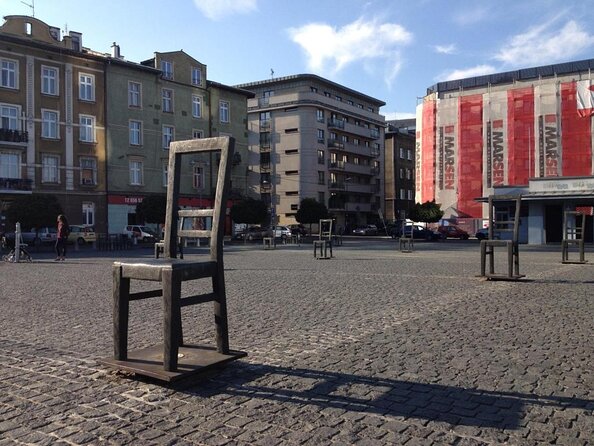
- Ghetto Heroes Square: 70 metal chairs that symbolize departure and absence, created after a messy post-war repurposing of Plac Zgody.
- Płaszów Concentration Camp: a guided walk through a large, now mostly undeveloped area that still holds the emotional weight of what took place from 1943 onward.
- Schindler’s List connections: the camp and life in it are shown in the 1993 film about Oskar Schindler.
- Memorials on site: one large memorial set up in 1964, plus several smaller ones.
- Liban Quarry replica: Steven Spielberg built a camp replica there, about a hundred meters away, because the original area is now a nature preserve.
- Fragment of Ghetto Wall: a 12-metre stretch of original wall with a Hebrew and Polish plaque raised in 1983.
Why Płaszów Fits Better Than a One-Stop Auschwitz Only Plan
Many people treat Auschwitz as the only must-see concentration camp. Kraków has its own major site, Płaszów, and seeing it helps you understand how the persecution in Poland worked step by step, not just as a single final destination.
This tour matters because it stays anchored in places. You’re not asked to imagine what you can’t verify. Instead, you walk between memory points tied to Kraków’s ghetto, the camp, and later commemoration efforts.
There’s also a second reason I think it’s worth your time. The tour links history to what you may already know from Schindler’s List, then grounds it back in real geography, memorials, and surviving wall fragments.
Still tacked up around Krakow
- From Krakow: Auschwitz-Birkenau Guided Tour & Hotel Pickup
★ 4.5 · 33,358 reviews - From Krakow: Auschwitz-Birkenau Guided Tour & Hotel Pickup
★ 4.5 · 29,340 reviews - Krakow: Auschwitz Guided Tour with Optional Hotel Pickup
★ 4.5 · 15,280 reviews
The 3:00 pm Start, Small Group Size, and What That Means
The tour starts at 3:00 pm and runs for about 2 hours. It’s set up for a maximum of 15 people, which is a big deal for a subject this heavy, because you want the guide to keep control of pace and focus.
You get a professional guide and a mobile ticket, which makes day-of logistics easier than paper-only tours. Also, the start and end points are different, so you won’t feel stuck circling back to where you began.
One small practical note: a tram ticket is not included, listed at 3.4 PLN. The good news is the tour is marked as near public transportation, so you’re not locked into a taxi plan.
Meeting at Plac Bohaterów Getta, Then Crossing into the Story
You meet at Apteka pod Orłem, Plac Bohaterów Getta 18. From there, you’ll head into the Podgórze side of Kraków, along the river area where the ghetto story and post-war memory became part of everyday space.
This is a smart setup because you ease in with context before you reach the camp grounds. You’re not thrown straight into ruins and expected to know the whole sequence. The tour builds understanding from earlier ghetto life toward the way the camp system expanded.
Even the meeting point area carries layers. After the war, Plac Zgody changed name to Plac Bohaterów Getta, and the memorial language that followed became part of public identity.
Ghetto Heroes Square: 70 Metal Chairs and a Controversial Memory Design
One of the most striking stops is Ghetto Heroes Square across the river in Podgórze. The square was historically significant even before it became what it is today, and the post-war repurposing makes it even more complicated.
The square’s earlier name was Plac Zgody. After the war, the name became Plac Bohaterów Getta and a small monument was added, but for decades the space didn’t receive consistent care. At one point, it was used in ways that feel wrong for the place, including as a public toilet or parking lot.
In 2005, the area was renovated, and that’s where the controversy shows up. The design uses 70 large metal chairs spaced out to symbolize departure and subsequent absence. On the ground, it can feel both iconic and uneasy, which is exactly why a guided explanation helps.
If you’re sensitive to symbolism, this stop can land emotionally fast. It’s not just a background moment. It’s a reminder that public memorials are also public debates, and memory gets redesigned over time.
Beneath the newer pins on the Krakow board:
Płaszów Concentration Camp Grounds: What You See Now vs. What Happened
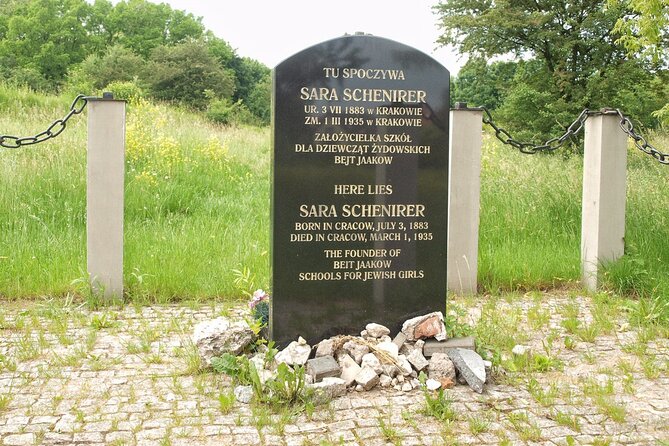
The heart of the tour is the walk through Płaszów Concentration Camp. The area is described as sparsely wooded hills and fields today, and that matters. When you’re standing there, the terrain can look calm, which makes the historical reality hit even harder.
The timeline here is essential. From 1943 onward, Płaszów began receiving thousands of Jews from the Kraków ghetto. That detail gives you a clear sense of scale and timing, not just a vague idea of suffering.
You’ll learn how this camp connected to Kraków itself, including how city history fits into the Holocaust story. That’s a big reason to do this tour even if you’ve already planned to see Auschwitz: it shifts the focus back to Kraków’s own forced displacement and destruction.
The guide’s role is key at this stop. The grounds are not a neat, staged museum walkway. A good guide helps you interpret what you’re looking at and what you can’t see anymore.
The 1964 Memorial and the Smaller Markers You Might Miss
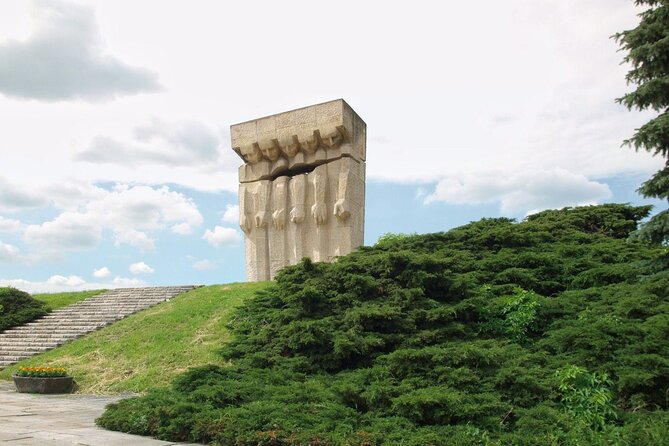
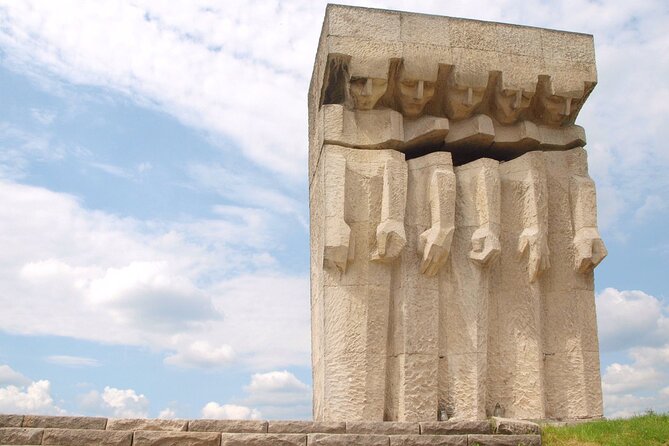
In the present-day Płaszów area, you’ll find one large memorial erected in 1964, plus several smaller memorials. The fact that there isn’t just one monument is important. It suggests commemoration has evolved through time, not been fixed in a single moment.
Because the area is now protected as a nature preserve, the memorials sit within a wider physical space of hills and fields. That means the walk isn’t only about reading plaques. It’s about understanding how the past has been left in the ground and then surrounded by protected nature.
This part also helps you avoid a common trap. It’s easy to treat concentration camps as if they only exist as buildings. Here, the memory is spread out across an area, and that changes how you process what happened.
If you like guided context, this is where it pays off. A guide can point out how different memorial pieces communicate different aspects of victimhood and loss.
Schindler’s List on Your Mind, Then Spielberg’s Replica in Liban Quarry
Płaszów is closely tied to Schindler’s List. The camp and life in it are shown in the 1993 film about Oskar Schindler, and that connection often shapes what visitors think they already know.
This tour doesn’t just reference the movie. It uses the film link to point you back to reality. The guide connects the story you may recognize from cinema to the actual geography and memorial layout you’re standing near.
Here’s one of the most interesting details from the setup: because the Płaszów area is a nature preserve, director Steven Spielberg built a camp replica in Liban Quarry, about a hundred meters away. You’ll visit the points connected to that as part of the experience.
That means you’ll have a moment where you can compare multiple layers of representation:
1) the historical camp space itself
2) the memorial landscape created afterward
3) the filmed reconstruction built for a specific purpose
You don’t have to love movies to get value here. The replica location helps you understand why certain spaces gained global attention, and why real places and recreated ones still feel different in the body.
The Fragment of Ghetto Wall: The 12-Metre Stretch That Survives
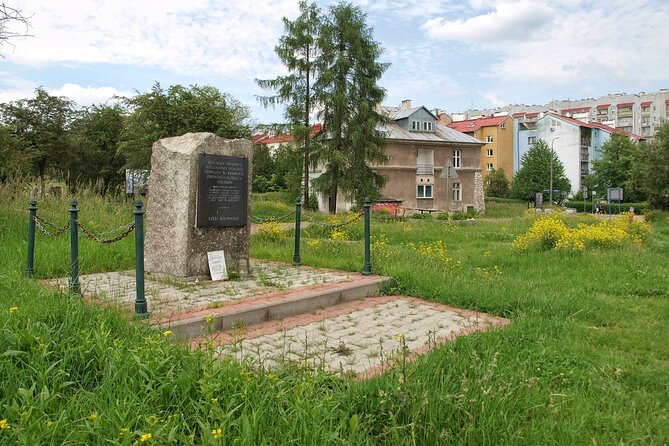
At the end of the tour, you pass a Fragment of Ghetto Wall, described as Kraków’s most prominent evidence of its ghetto. It’s a 12-metre stretch of original wall, which is a concrete size you can picture even if you haven’t seen it before.
This stop is powerful because it is specific. In 1983, a commemorative plaque was raised with text in Hebrew and Polish. The plaque says, Here they lived, suffered and died at the hands of the German torturers. From here they began their final journey to the death camps.
That wording matters for a reason. It doesn’t just commemorate abstract tragedy. It anchors the ghetto to lived experience and then to the brutal final transfer process.
After the broader camp grounds and memorial points, the wall fragment can feel almost like a sudden close-up. It’s smaller in scale, but sharper in meaning.
Logistics That Matter: Walking Time, Getting Around, and Comfort
You’ll be outdoors through multiple stops over roughly 2 hours. The Płaszów area is described as hills and fields, and that alone is a reason to wear shoes that handle uneven ground.
Start and end points are on different streets, so you should plan to leave the area with an easy return route. The end is listed at Henryka Kamieńskiego 57, near a bus stop, which makes it practical for getting back to central Kraków.
If you plan to take the tram, remember it’s not included in the tour price. Keeping a small amount of local transit money handy can save time if you need to hop between neighborhoods.
The tour is also marked as near public transportation, which helps if you’re arriving from central Kraków or Podgórze without a car.
Price and Value: What $23.27 Buys in Kraków
The price is $23.27 per person for a guided tour lasting about 2 hours. The inclusion list is short, but the key item is a professional guide, and that’s exactly the point with Holocaust sites: context turns a difficult place into an understandable place.
Admission for the camp stop is listed as free. That means you are mostly paying for interpretation, pacing, and guided explanation rather than entry fees.
Value here also comes from the group cap of 15 people. With a smaller group, the guide can keep attention on details instead of talking into a crowd.
If you’re trying to build a Kraków plan that doesn’t only focus on the big headline destination, this is a solid use of an afternoon. It’s focused, it’s not overly long, and it uses multiple nearby points so you see more than one category of memorial space.
Who This Tour Is Best For
I think this works especially well if you:
- want Kraków-specific Holocaust history, not only a day trip to another country or another city’s main site
- like guided explanation because the grounds themselves can be hard to interpret on your own
- prefer a small group format when visiting emotionally intense places
- want a short but meaningful add-on to a day already spent in Kraków’s old streets
If you’re expecting a polished, high-tech museum experience, you might find it more grounded and outdoors than you expect. But if you want authenticity, this is exactly the kind of tour that trades slick presentation for real location.
It’s also a good fit if you already know Schindler’s List but want to understand what parts connect to real spaces, and what the memorial geography looks like after the cameras stop rolling.
Should You Book the Płaszów Guided Tour?
Book it if you want a Kraków-based Holocaust experience that stays focused and guided. The combination of Ghetto Heroes Square, the camp grounds with memorial points, the Liban Quarry replica, and the Fragment of Ghetto Wall gives you a full arc in a short time.
Skip it only if you’re looking for a purely indoor, low-walking option. This tour is built around outdoor historical space and memorial sites, including hills and fields, so comfort and footwear matter.
If you’re balancing time between Kraków’s major sights and a deeper historical layer, this is one of the best ways to make that history feel local and real.
FAQ
How much does the 2-hour guided tour cost?
The price is $23.27 per person.
How long is the tour?
The duration is about 2 hours.
What time does the tour start?
The start time is 3:00 pm.
Where do I meet the guide?
You meet at Apteka pod Orłem, Plac Bohaterów Getta 18, 33-332 Kraków, Poland.
Where does the tour end?
The tour ends at Henryka Kamieńskiego 57, 30-644 Kraków, Poland, near a bus stop.
Is the ticket mobile?
Yes, the tour uses a mobile ticket.
Is admission included?
The information provided lists admission ticket free for the camp stop area.
Is a tram ticket included?
No. Tram tickets are not included, and the listed cost is 3.4 PLN.
How many people are in the group?
The maximum group size is 15 travelers.
What is the cancellation policy?
You can cancel for a full refund up to 24 hours in advance of the experience start time. If you cancel less than 24 hours before, the amount you paid will not be refunded.
Freshly posted from Krakow
- Krakow: Audio-Guided City Experience by Golf Cart★ 5.0 · 1 review
- Krakow: Zakopane and Thermal Springs Tour with Hotel Pickup★ 5.0 · 1 review
- Half-day In the footsteps of John Paul II Tour from Krakow★ 5.0 · 1 review
- Krakow: Wawel & Salt Mine Experience with Lunch★ 5.0 · 1 review
- Tour to Wadowice: Hometown of Pope Saint John Paul II★ 5.0 · 1 review
- Krakow: Outdoor Paintball with Hotel Transfers★ 5.0 · 1 review
- Krakow: Nowa Huta Communist District Walking Tour★ 5.0 · 1 review
2-Hour Experiences, compared.
Private Old Town Guided Walking Tour (2 hours)
Read our review →
Krakow Old Town Segway Tour — 2H of History, Fun & Discovery
Read our review →
2H City Sightseeing Tour LIVE GUIDED by Buggy/Golf cart
Read our review →
2-Hour Tour by Electric Car with a driver-guide
Read our review →Browse the lists this tour appears in