
Reviewed · WIELICZKA SALT MINE TRIPS
Wieliczka Salt Mine: Fast-Track Ticket and Guided Tour
If you love underground surprises, this one delivers. The Wieliczka Salt Mine tour is built around a real descent into a UNESCO site, with galleries, chambers, and salt sculptures you just cannot picture from above. It also includes that miner-style finish, coming back up in the original elevator.
I especially like two things. First, the tour is led by a licensed guide from the Salt Mine Museum, so the explanations come from the source, not generic storytelling. Second, you get to see salt-built spaces and details underground, including chambers, churches, and altars made from salt, plus carved features in a rock-salt world that looks gray and stone-like, not the bright white you might expect.
One thing to consider: timing can be a bit touchy. You pick a start time, but the exact timing can shift and some people report delays if a guide is late, so arriving early at the meeting point really matters.
In This Review
- Quick hits before you go
- Fast-Track Entry and 150 Minutes That Actually Feel Efficient
- Meeting at the UNESCO Sign, Then the Real Descent Begins
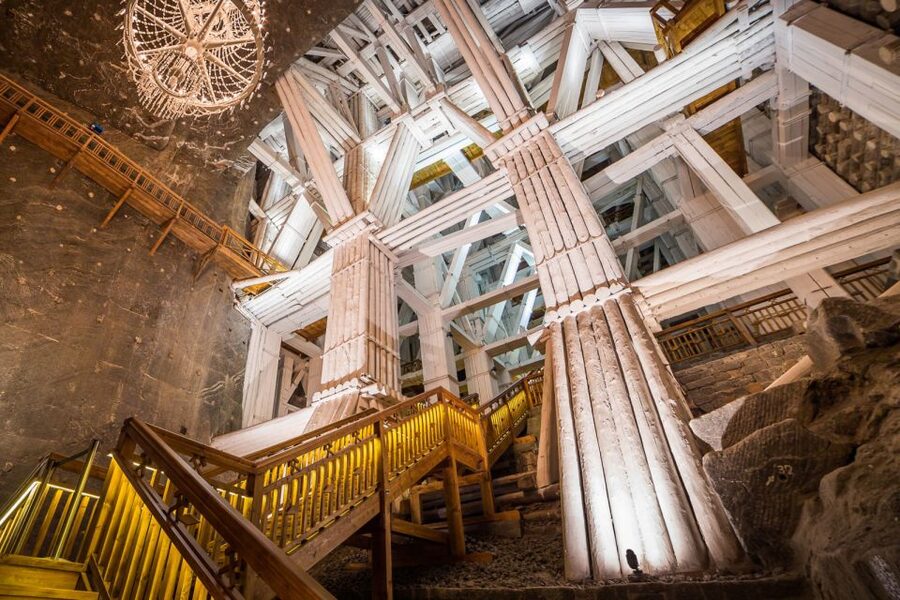
- What You’ll See Underground: Salt Galleries, Lakes, Chambers, and Salt Art
- Salt churches and altars you can’t explain away
- The mine’s scale, explained by the route
- The Guided Walk: 2.5 Kilometers, Group Pace, and Where Timing Can Slip
- Returning to the Surface in the Miners’ Elevator
- Price and Value: Is About $67 Worth It?
- Comfort and Practical Tips for a 14 to 16 C Underground Tour
- Where This Tour Fits Best (and Who Should Skip It)
- Should You Book This Wieliczka Salt Mine Fast-Track Tour?
Quick hits before you go
- Fast-track entrance helps you skip the ticket line and start sooner
- Licensed English guide keeps the tour focused and clear underground
- 800 steps descent and a long guided walk make good shoes non-negotiable
- Salt churches, altars, and sculptures show how art can be carved from stone-like salt
- Original miners’ elevator brings you back to the surface
- Gray-toned salt gives the mine a gritty, granite-like look rather than a snow-white fantasy
Fast-Track Entry and 150 Minutes That Actually Feel Efficient
At about 150 minutes, this is a well-paced way to do Wieliczka without turning it into an all-day slog. You still get the big-ticket experience, which is what matters here: going 135 meters below the surface, walking through underground chambers, and getting back up via the original elevator used by miners.
The fast-track ticket is a smart inclusion. The mine is popular, and skipping the ticket line means less time standing around and more time experiencing what you came for. Add a live English guide, and you get context as you go, not just pretty rooms you breeze past.
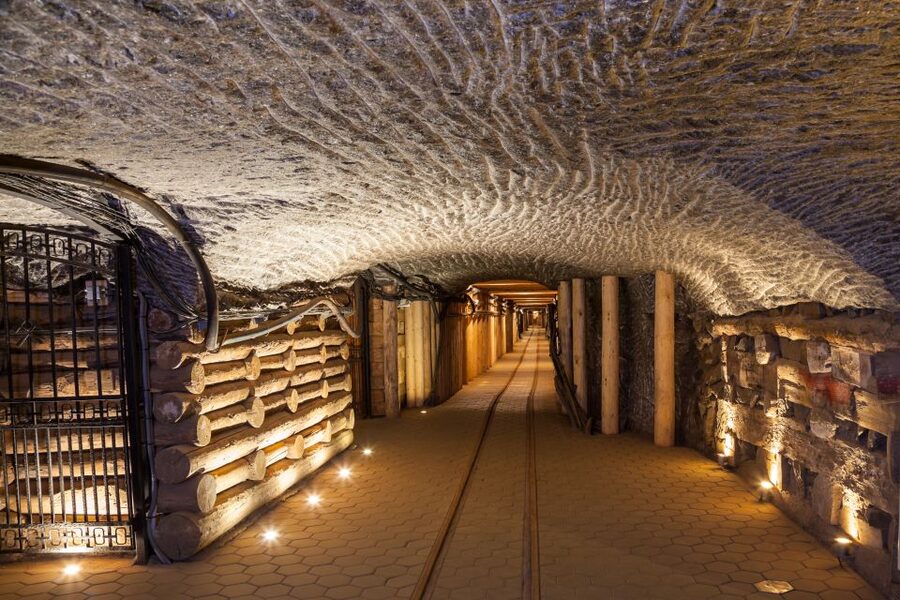
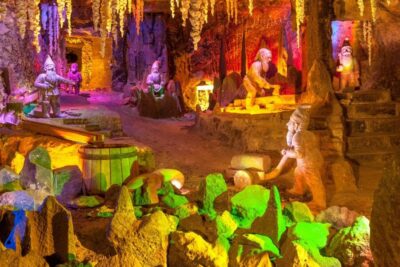
More chambers carved in salt:
- Krakow: Wieliczka Salt Mine Tour with Entry Ticket
★ 4.6 · 10,927 reviews - From Krakow: Wieliczka Salt Mine Tour
★ 4.6 · 9,393 reviews - Krakow: Auschwitz-Birkenau and Salt Mine Guided Tour
★ 4.7 · 9,020 reviews
Meeting at the UNESCO Sign, Then the Real Descent Begins
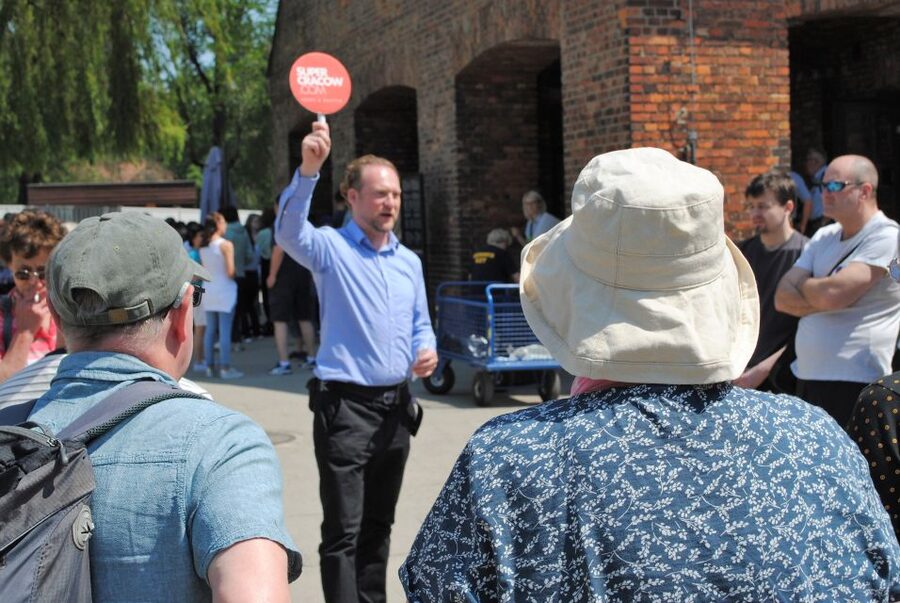
Your job is simple: arrive at least 15 minutes early in front of the UNESCO sign close to the Salt Mine Museum. That early buffer matters because you need to find your group and get checked in before the tour settles into motion.
Then comes the part that sets this mine tour apart from many “stand and look” attractions. The route takes you down roughly 800 steps to reach the mine level, with around 400 steps at the beginning. If you’re thinking, I’ll be fine, because it is only stairs, I’d still plan on it. This is a real physical chunk of the experience, and your pacing will affect how much you enjoy the later galleries.
You should also expect the climate to feel cool and stable. Underground temperatures run around 14 to 16 C. That means you can be comfortable without overheating, but you might still want something light you can tolerate after the stairs.
What You’ll See Underground: Salt Galleries, Lakes, Chambers, and Salt Art
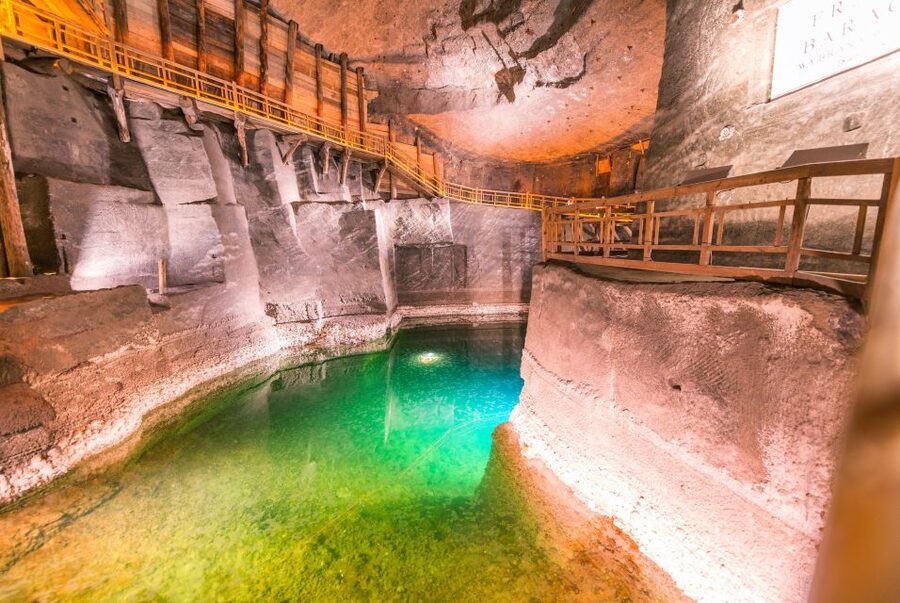
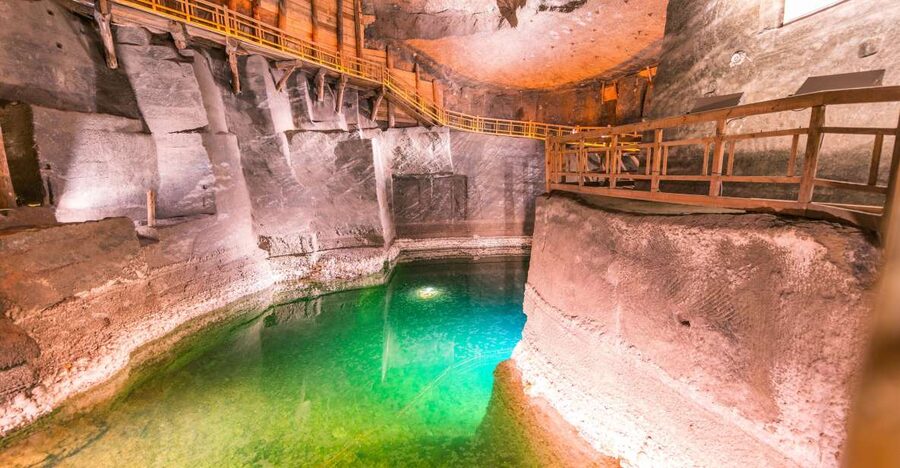
Wieliczka isn’t one room. It is a whole underground world with different shapes and textures. During the guided walk, you’ll move through a mix of excavated holes, galleries, ramps, lakes, chambers, and shafts. Seeing these in person helps you understand how a mine becomes a landscape.
One detail I love is how the salt doesn’t read like classic white crystals. The rock salt you see can come in different shades of gray, with a rough, stone-like look that feels more like granite than something pristine and decorative. That color reality makes the craftsmanship feel even more impressive, because the material looks sturdy, not delicate.
Salt churches and altars you can’t explain away
The tour includes underground spaces that feel more like places of art and architecture than “just a mine.” You’ll follow your guide through underground chambers, including churches and altars made of salt. These are the stops that usually stick in your memory because the form is so unexpected given where you are.
Also part of the experience are sculptures and chambers made from salt. This is where the UNESCO value becomes concrete. You’re not only watching mining history, you’re seeing how a subterranean site became a long-term canvas.
Still tacked up around Krakow



The mine’s scale, explained by the route
You’re visiting one slice of a much larger system. The mine reaches 327 meters deep and stretches 287 kilometers through corridors and chambers. Even if you never see all of that on one tour, the guided route makes the scale feel believable, not like a fact you half-remember after.
The Guided Walk: 2.5 Kilometers, Group Pace, and Where Timing Can Slip
After you reach the main underground circuit, the tour continues on foot. Your guided walk covers more than 2.5 kilometers, and you’ll spend around up to 3 hours sightseeing underground and between key stops.
Here’s the practical truth: group pace matters. If your group is moving slowly at a station, you may spend time waiting. That waiting is not always a big deal, but it can affect how you feel about the tour length. I recommend treating the schedule as flexible. You’re buying access and guidance, not a perfectly clockwork timeline.
Guide style can also shape your experience. In reviews of similar tours, I saw praise for professional, history-focused guiding, and I also saw complaints about guides being less engaging or harder to hear in the microphone. I can’t control your guide, but you can control your expectations: go in ready to listen, and if audio is an issue, position yourself where you can hear clearly and stay close to the guide.
One review even mentioned a guide named Paulina, describing her as very businesslike. That’s a reminder that guides differ in tone. The upside is that a museum-licensed guide tends to be accurate and structured, so even a no-nonsense style usually keeps the tour coherent.
Returning to the Surface in the Miners’ Elevator
The finale is a highlight because it’s functional and historical at the same time. After your underground route, you come back to the surface in the original elevator used by the miners.
It is a satisfying change of pace from walking through the chambers. You feel the route close properly, rather than ending with a random exit and a long scramble back to the main building. For me, that closing moment is part of the value, because it reinforces that you are experiencing the mine as a working underground site turned heritage space.
Price and Value: Is About $67 Worth It?
At roughly $67 per person, you are paying for four things bundled together: fast-track entry, a licensed guide, live English interpretation, and local tour leader assistance (plus a booking fee). You are also paying for the effort built into the experience, especially that big 800-step descent and the guided route through a large underground system.
So is it good value? In my view, yes, if you care about two priorities:
- you want a guide with museum credentials, not just someone reading facts
- you want to spend your limited time efficiently in the mine
It can be less worth it if you mostly want to look around and you do not mind moving through without much explanation. Still, the salt churches, altars, and salt sculptures are the kind of stops where context helps a lot. A guide can turn a cool room into an understanding of how this site became what it is.
Also note what is not included. Food and drinks are not part of the ticket, and transportation to and from the museum and parking fees are also not included. If you plan ahead, this is easy to handle. If you assume lunch is covered, you’ll be surprised.
Comfort and Practical Tips for a 14 to 16 C Underground Tour
This is a mostly underground experience, and comfort is not a “nice to have.” It is part of whether the tour feels enjoyable.
Bring:
- Comfortable shoes for stairs and uneven underground surfaces
Wear:
- layers you can handle after the descent, since it stays about 14 to 16 C underground
Plan around rules:
- No oversize luggage
- No baby strollers
- No smoking
- No smoking in the vehicle
- No alcohol and drugs
And consider your body:
- This tour is not suitable for people with mobility impairments and wheelchair users. The stairs and walking distance make it hard to make accessible adaptations based on what’s provided.
If you are fit enough, it is very doable. If you are unsure, treat the 800 steps and the long walking portion as the real test, not just the “150 minutes” label.
Where This Tour Fits Best (and Who Should Skip It)
I’d book this fast-track guided tour if you like structured sightseeing. You want the mine experience, and you want it explained while you’re still standing there. You also want to reduce friction by skipping the ticket line.
It’s also a good match if you appreciate the “how did they do that” side of heritage. The salt carvings, salt sculptures, and the salt-built churches and altars are the stops that tend to make the trip feel different from a standard museum.
I’d skip it, or at least reconsider, if:
- you cannot manage stairs and the walking distance
- you dislike group pacing and want total control over your schedule
- you’re looking for a less-guided, more independent experience
One more small caution based on reported experiences: start times can be adjusted, and meeting point confusion happens when a guide is delayed. You’ll have a better day if you arrive early, stay calm if there’s a wait, and keep your expectations flexible.
Should You Book This Wieliczka Salt Mine Fast-Track Tour?
Book it if you want the essentials done well: fast-track entry, a licensed English guide, and a guided route through the underground world, including salt churches, altars, sculptures, and the miner-style elevator return. The value is strongest when you think you’ll actually use the guide and appreciate the salt-carved craftsmanship rather than only photographing rooms.
Think twice if you hate uncertainty around timing or you struggle with stairs. With about 800 steps and a more than 2.5-kilometer guided walk, the mine does ask a physical commitment.
If you’re the type who plans shoes first and then plans your sightseeing, this is a very solid pick for your Wieliczka day.
Freshly posted from Krakow
- ZALIPIE – painted village, unique small group tour from Krakow★ 5.0 · 7 reviews
- “John Paul II Route” PRIVATE -Wadowice, Kalwaria Z.-Łagiewniki★ 5.0 · 7 reviews
- Krakow: Craft Beer Tasting City Walking Tour★ 4.4 · 7 reviews
- Magic of Krakow: Guided Tour of the Old Town★ 5.0 · 7 reviews
- Krakow : Zakopane Tour + Thermal Pools with Hotel Pickup★ 4.8 · 7 reviews
- Krakow in One Day: City Tour by Electric Car★ 5.0 · 7 reviews
- Cracow: Wawel Castle and Cathedral Guided Tour★ 5.0 · 7 reviews
Wieliczka Salt Mine Trips, compared.
Wieliczka Salt Mine Fast-Track Ticket & Guided Tour
Read our review →
Day Trip: Auschwitz-Birkenau and Wieliczka Salt Mine from Krakow
Read our review →
Wieliczka Salt Mine Tour & Skip the Line Ticket
Read our review →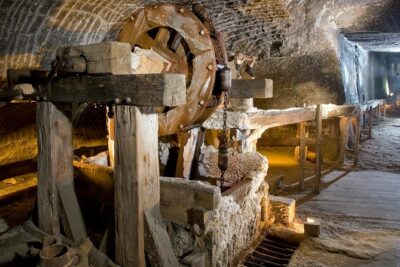
Krakow to Wieliczka: Salt Mine Guided Tour with Ticket & Transfer
Read our review →
Auschwitz-Birkenau & Salt Mine Full-Day Guided Tour
Read our review →Browse the lists this tour appears in