
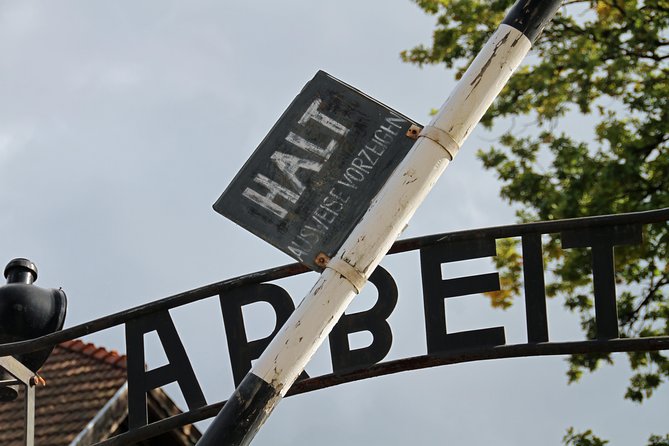
Reviewed · AUSCHWITZ-BIRKENAU GUIDED TOURS
Wheelchair accessible PRIVATE transfer to Auschwitz – Birkenau
Auschwitz day is easier when logistics behave. This private wheelchair accessible transfer from Krakow lets you start with stress-free hotel pickup and ride in a wheelchair accessible minivan with round-trip transport. I like that the schedule is built around your museum entry time, so you are not hunting for a meeting point while the day feels already heavy.
I also like the practical extras that reduce friction, like help for both electric and manual wheelchairs and a headphone system for your visit. The main thing to keep in mind is that Auschwitz-Birkenau is not fully accessible, so even with the best planning, you may still hit areas where you cannot go exactly where you want.
In This Review
- Wheelchair Transfer Highlights Worth Noticing
- Private, Wheelchair Accessible Transfer That Starts at Your Door
- The Timing Formula: Pickup 2 Hours Before Your Museum Entry
- The Drive in an Accessible Minivan From Krakow
- Auschwitz I Visit Plan: About 2 Hours, With Headphones
- Birkenau After Auschwitz I: Another Hour, Another Perspective
- Accessibility and Reality: What Is Included, What Isn’t
- Tickets, Security, and Luggage Limits You Should Not Ignore
- Price and Value: Is $295.87 per Group Worth It?
- Who This Transfer Fits Best
- Practical Tips to Make the Day Feel Manageable
- Should You Book This Wheelchair Transfer From Krakow?
- FAQ
- What time is pickup in Krakow?
- How long does the whole day take?
- Is this a private transfer or shared shuttle?
- Are Auschwitz and Birkenau entrance tickets included in the price?
- Can the vehicle handle electric and manual wheelchairs?
- Is Auschwitz-Birkenau fully wheelchair accessible?
- What luggage can I bring into the museum?
- What identification do I need?
- Can I cancel for a full refund?
Wheelchair Transfer Highlights Worth Noticing
- Hotel pickup and drop-off in Krakow, so your day starts where you sleep
- Private vehicle for up to 5, with room for one wheelchair plus 4 standard seats
- Two-part museum plan, Auschwitz I for about 2 hours, then Birkenau for about 1 hour
- Headphone system to make the visit easier and more comfortable
- Tickets are not included, so buying them in advance really matters due to limited entry
Private, Wheelchair Accessible Transfer That Starts at Your Door
This type of day works best when you stop fighting time and stairs. You get round-trip transportation from Krakow, and you do not have to commute to a meeting point first. The hotel pickup is timed around your entrance, so the day runs like a plan instead of a scramble.
Because it is private, you are not sharing the van with random schedules. That matters more than you might think. When you are using a wheelchair, every extra stop and extra person can add stress. Here, the vehicle and driver are focused on your group, and the driver can adapt to your individual needs while still following museum rules.
The service also includes assistance from an English-speaking driver. You are not stuck trying to interpret logistics on your own, which is especially helpful when museum procedures move at their own pace.
Other Auschwitz-Birkenau guided visits on this site:
- From Krakow: Auschwitz-Birkenau Guided Tour & Hotel Pickup
★ 4.5 · 33,358 reviews - From Krakow: Auschwitz-Birkenau Guided Tour & Hotel Pickup
★ 4.5 · 29,340 reviews - Krakow: Auschwitz Guided Tour with Optional Hotel Pickup
★ 4.5 · 15,280 reviews
The Timing Formula: Pickup 2 Hours Before Your Museum Entry
The schedule is built around one key number: your museum entrance time. Pickup happens about two hours before you enter the museum, and you will specify this when booking. Then you get about 1.5 hours of driving to reach Auschwitz-Birkenau in Oświęcim.
Why I like this approach is simple. Auschwitz is famous, so entry times can be tight and visitor flow can feel strict. Starting early gives you breathing room for security checks and getting settled before you face the first part of the exhibits.
You should also plan that your day will feel long, even if the stops are not huge. The total duration is listed as 8 to 9 hours (approx.), which usually covers transport, the two museum segments, and the movement between Auschwitz I and Birkenau.
The Drive in an Accessible Minivan From Krakow
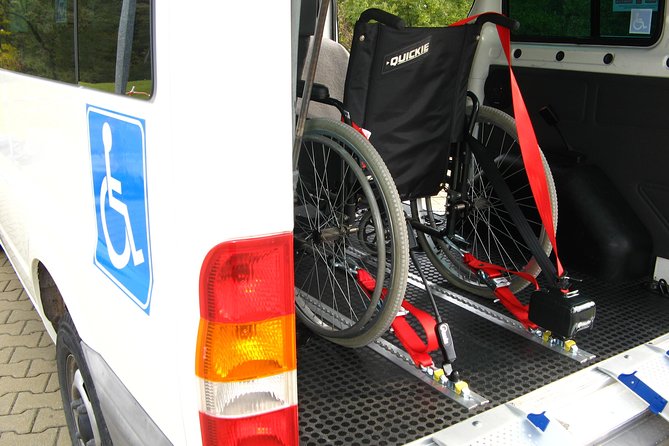
This transfer uses a wheelchair accessible minivan and includes parking fees. That means your day is less “find the right spot to park” and more “get on board and go.”
The vehicle setup is also specific: it has room for one wheelchair plus 4 standard seats. Service is offered for both electric and manual wheelchairs, which is a big deal for comfort and safety. If your wheelchair is electric, you will still want to confirm any special handling needs when booking, since the operator has to match the vehicle and secure your chair properly.
One detail that can quietly improve your whole day is the tone of the driver. In at least one documented case involving a schedule change, the driver named Piotr helped coordinate a way to still participate and see the other part of the tour, while explaining the situation to the office. That is the kind of practical problem-solving you want on a day when plans can shift.
Auschwitz I Visit Plan: About 2 Hours, With Headphones
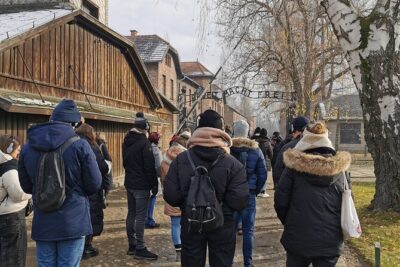
After you arrive, you are taken to the main entrance of the museum. Then you start with Auschwitz I, with about 2 hours of visit time.
This is the portion many people focus on first, since it sets the overall context. In two hours, you can cover the highlights without rushing through everything, especially if you rely on the audio support.
The tour includes a headphone system, which is meant to make the visit more convenient. Audio support can help you keep your attention on what you are seeing instead of on figuring out what the next section means.
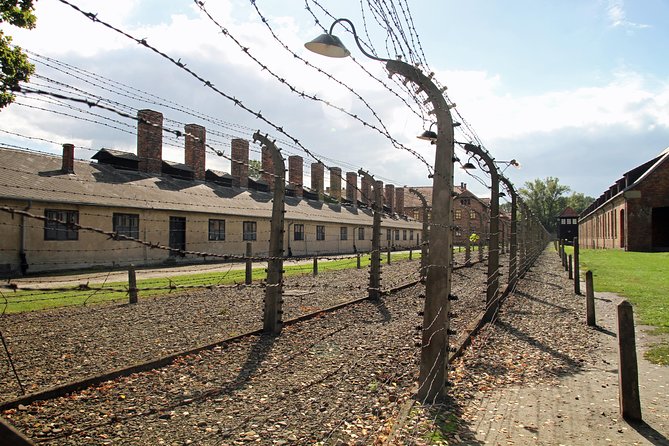
Important reality check: Auschwitz is not fully accessible. The operator notes this clearly, and it matches what you should expect at many historic sites. There may be areas with uneven paths, barriers, or restrictions that limit how close you can get to certain exhibits.
Your driver will adapt to individual needs, but you still have to follow museum regulations. That is not a flaw in the transfer. It is just how the site is run, and your best move is to go in ready to accept that access can vary by section.
Still tacked up around Krakow



Birkenau After Auschwitz I: Another Hour, Another Perspective
After the Auschwitz I visit, you return by minivan to Birkenau. The transfer to Birkenau and the second stop are built into the same day plan, not as a separate booking.
Birkenau time is about 1 hour. That can sound short if you imagine a sprawling open site as a place you can wander for hours, and it is fair to think that way. But one hour, paired with the earlier context from Auschwitz I, can be a workable pace. You get a shift in perspective without blowing up your whole schedule.
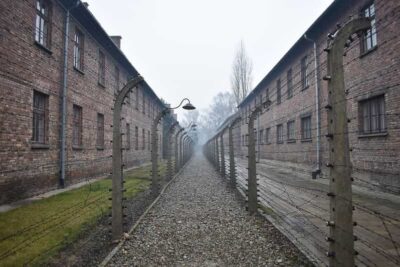
This part of the day is where you will feel the size and structure of the camp grounds more strongly. Even if you cannot access every area, you can still take in the layout and key viewpoints that help you understand the story being told on site.
You also want to remember that movement and safety rules can influence how long you can stay in any single area. So treat the Birkenau hour as time to see what you can comfortably access, then move with the flow rather than trying to force the day into an ideal photo run.
Accessibility and Reality: What Is Included, What Isn’t
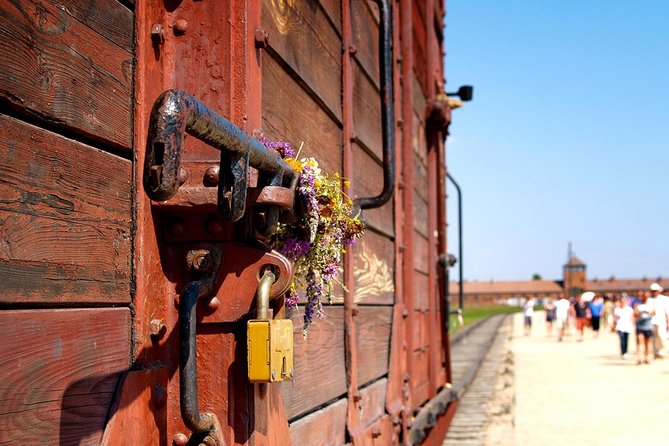
The transfer is designed to be wheelchair friendly, and it does include meaningful support. You get service for both electric and manual wheelchairs, and the vehicle provides space for one wheelchair with seats for up to four additional people.
There is also a “human factor” element. Your driver is responsible for adapting to your needs as much as possible, while still following museum regulations. That balance is important. The site is not a private museum where everything can be tailored around you.
The one big caution is spelled out: the museum is not fully accessible. That means your route, time spent in specific areas, and how close you can get to certain points may depend on what the site allows on that day. Your best strategy is to plan for flexibility rather than perfection.
This matters even for visitors with great mobility. Auschwitz-Birkenau is a site with strict procedures and on-site limits. A wheelchair makes that more visible, but it does not create the issue by itself.
So, if your expectation is that you will get a fully barrier-free experience everywhere, you will likely be disappointed. If your expectation is that you will get a well-run accessible transport plan, supportive driver, and the main content areas in a realistic time frame, this transfer is a strong fit.
Tickets, Security, and Luggage Limits You Should Not Ignore
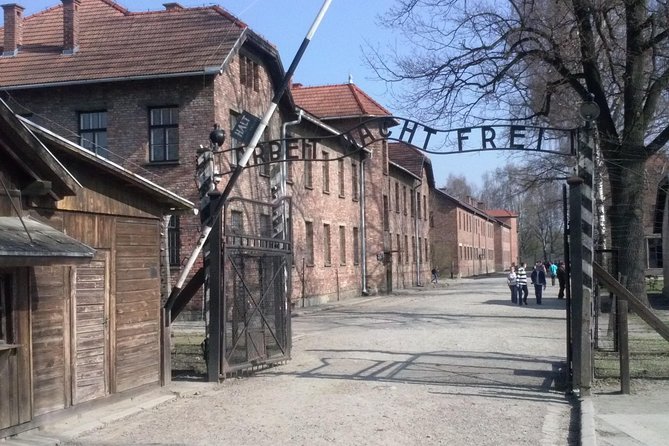
Museum entry fees are not included. That means you need to buy your tickets in advance, and the operator notes that the number of visitors is limited. This is one of those “read the fine print and you will thank yourself later” details.
You will also face security checks at the grounds. Each person entering is subject to screening, including use of electronic devices to detect dangerous items. If someone refuses checks, they will not be allowed on site.
Plan your bags accordingly. The maximum size allowed into the museum is 30x20x10 cm. If you normally travel with a larger day bag, you will need to downsize. This is especially important if you bring medical items or carry documents. Pack smart and keep the bag within the limit.
You also need a document with a photo, name, and surname. That is the kind of requirement that can derail your day if it is missing, so keep it accessible.
Price and Value: Is $295.87 per Group Worth It?
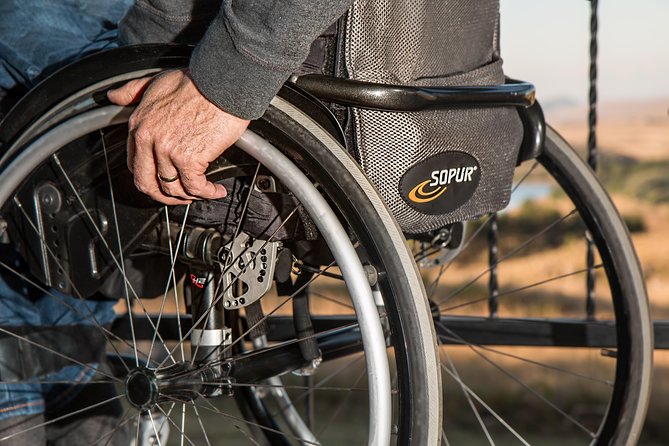
The price is $295.87 per group, up to 5 people. That means your value depends on how many seats you actually use.
If you fill the van with 5 people, the per-person cost drops a lot. If you travel as a couple, the per-person cost rises. Either way, you are paying for the most expensive part of this day: a private, wheelchair accessible vehicle plus door-to-door transport and driver support.
What makes this feel worth it is the avoidable hassle it removes. You avoid a meeting point that could be hard to reach smoothly. You also avoid squeezing into shared transport with an accessibility setup that may not be optimized for your needs.
You also get parking fees included and assistance from an English-speaking driver. Those small logistics pieces add up fast on a day like this.
So my rule of thumb is: if you need wheelchair access support and you want control over timing, privacy, and comfort, the price makes sense. If you are cost-only shopping and you do not need the specialized vehicle, you could find lower-cost options elsewhere. But they will not offer the same door-to-door plan and built-in accessibility.
Who This Transfer Fits Best
This is a strong option if you want a controlled day with minimal stress. The private setup is a real advantage when you are traveling as a small group that includes wheelchair users.
It also suits people who want the day structured: pickup from your accommodation, drive, Auschwitz I for about 2 hours, then Birkenau for about 1 hour. If you like clear timing and you do not want to manage transport between segments yourself, this will feel calmer.
It is also a good match if you appreciate practical help, like the included headphone system and an English-speaking driver. Even without a guide-led narrative, those pieces can make the site easier to process.
If you are traveling with anyone who might need gentle pacing or assistance with transitions between locations, private transport is usually the smoother path.
Practical Tips to Make the Day Feel Manageable
Auschwitz-Birkenau is emotional, and logistics can either add to that load or reduce it. Here are the moves that tend to help most people.
First, keep your pickup and entrance time aligned with your booking. If pickup is set for two hours before entry, do not aim to arrive late and then hope security will be quick. Start your day early and give yourself slack.
Second, pack within the 30x20x10 cm limit. If you have a larger bag, it is better to leave it behind than to plan a last-minute workaround.
Third, keep your photo ID ready. The requirement is specific, and it is not something you want to scramble for once you are at the gate.
Fourth, go in with realistic expectations about accessibility. The transfer helps, but the site is not fully accessible. The best approach is to focus on what you can reach comfortably and take in the key areas during the scheduled visit times.
Finally, accept that the schedule is not just transportation. It is part of how you stay regulated on site, especially in areas where movement and safety rules matter.
Should You Book This Wheelchair Transfer From Krakow?
Yes, if you want a private, wheelchair accessible way to get to Auschwitz-Birkenau with door-to-door pickup and transport between Auschwitz I and Birkenau. The setup makes your day simpler, especially when you value privacy, comfort, and fewer logistical surprises.
I would think twice if you expect a fully barrier-free museum experience throughout both sites. Since the museum is not fully accessible, your access will depend on on-site conditions and regulations.
If you can travel with the group size that matches the vehicle capacity and you are ready to buy your museum tickets in advance, this is a high-value way to do the day. It focuses on the part you can control, the ride and the flow, so you can focus on the experience itself.
FAQ
What time is pickup in Krakow?
Pickup is scheduled for about two hours before your museum entrance time. You provide the entrance time at booking so the driver can match your arrival.
How long does the whole day take?
The total duration is listed as 8 to 9 hours (approx.), which covers round-trip transportation and about 2 hours at Auschwitz I plus about 1 hour at Birkenau.
Is this a private transfer or shared shuttle?
This is a private tour/activity. Only your group participates, and the vehicle is set up for your party.
Are Auschwitz and Birkenau entrance tickets included in the price?
No. Museum entrance fees are not included, and you will need to buy tickets in advance because the number of visitors is limited.
Can the vehicle handle electric and manual wheelchairs?
Yes. The service includes support for both electric and manual wheelchairs, and there is room for one wheelchair plus 4 standard seats.
Is Auschwitz-Birkenau fully wheelchair accessible?
No. The museum is not fully accessible, so you should expect some areas may be difficult or restricted even with wheelchair support.
What luggage can I bring into the museum?
The maximum size allowed into the museum is 30x20x10 cm. Security checks also apply to everyone entering the grounds.
What identification do I need?
You need a document with a photo, name, and surname.
Can I cancel for a full refund?
Yes. You can cancel up to 24 hours in advance for a full refund, and cancellation cut-off is based on the experience’s local time.
Freshly posted from Krakow
- Krakow: Audio-Guided City Experience by Golf Cart★ 5.0 · 1 review
- Krakow: Zakopane and Thermal Springs Tour with Hotel Pickup★ 5.0 · 1 review
- Half-day In the footsteps of John Paul II Tour from Krakow★ 5.0 · 1 review
- Krakow: Wawel & Salt Mine Experience with Lunch★ 5.0 · 1 review
- Tour to Wadowice: Hometown of Pope Saint John Paul II★ 5.0 · 1 review
- Krakow: Outdoor Paintball with Hotel Transfers★ 5.0 · 1 review
- Krakow: Nowa Huta Communist District Walking Tour★ 5.0 · 1 review
Auschwitz-Birkenau Guided Tours, compared.

Auschwitz-Birkenau Guided Tour & Hotel Pickup
Read our review →Auschwitz-Birkenau Guided Tour & Hotel Pickup
Read our review →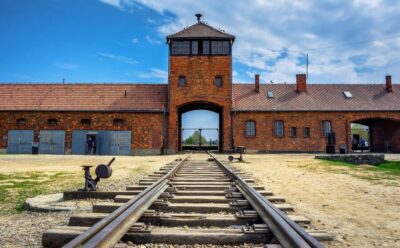
Auschwitz Guided Tour with Optional Hotel Pickup
Read our review →
Auschwitz-Birkenau Guided Tour with Pickup & Lunch
Read our review →
Krakow to Auschwitz Birkenau Guided Tour with Transfer and Ticket
Read our review →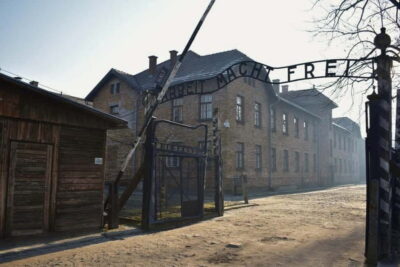
Auschwitz-Birkenau Guided Tour or Self-Guided Tour
Read our review →Browse the lists this tour appears in