
Reviewed · AUDIO TOURS
The Birthplace of Poland: A Self-Guided Audio Tour of Poznań
Poznan has a way of packing centuries into one walk. This self-guided audio tour stitches together Cathedral Island and Śródka District with smart, step-by-step narration. What I like most is that it feels easy to follow at your own pace, and you get offline audio and maps so you are not hunting for signal.
You also see a tight cluster of big names in Polish heritage, from the area around Mieszko to modern museums like Brama Poznania. One thing to consider: you need your own smartphone and headphones, since they are not included, and a small chunk of the experience is simply walking between stops.
In This Review
- Key highlights you will actually feel on the route
- Cathedral Island and Śródka: the story you get just by walking
- Price and time: why $8.99 feels fair here
- Getting started at Makieta Ostrowa Tumskiego, then letting the app do the work
- Cathedral Island stop-by-stop, from Mieszko’s layers to the city’s oldest cathedral
- Jordan Bridge and the reconnection story between Cathedral Island and Śródka
- Śródka District on foot: independence, street art, and Saint Margaret’s church
- Brama Poznania and Genius Loci: what you pass, what you might enter
- Cathedral Lock and the Prussian layer you can spot in the city
- Ending at the archdiocese Museum and the Lubrański Academy frontage
- What this self-guided format is best at (and when it is not)
- Should you book this Poznan Cathedral Island audio tour?
- FAQ
- Do I need tickets to visit museums on the route?
- What equipment do I need to use the audio tour?
- Can I use the tour offline?
- How long is the walk from start to finish?
- Is the tour only in English?
- Is this audio tour refundable if I cancel?
Key highlights you will actually feel on the route
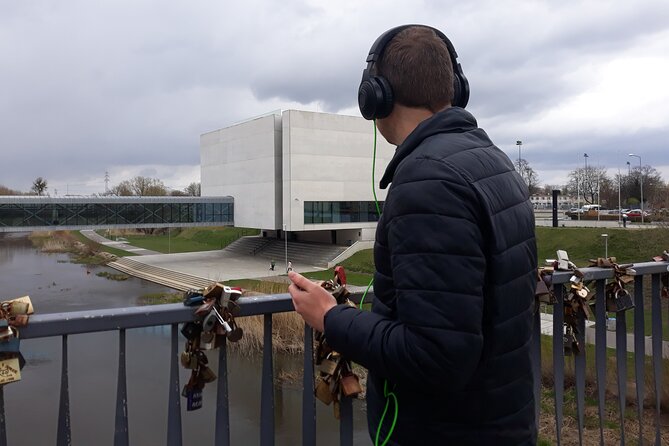
- GPS-triggered narration that plays as you move, so you do not have to constantly check your phone
- Offline access to audio, maps, and geodata, which is great for spotty coverage near rivers and old streets
- Cathedral Island to Śródka in one logical loop, with bridges and fortification leftovers connecting the story
- Architectural variety in a short time, from church interiors you pass by to palace-era structures and locks
- Modern “how we explain the past” stops like Brama Poznania and Genius Loci, plus 3D immersive films you can view if you enter
Cathedral Island and Śródka: the story you get just by walking
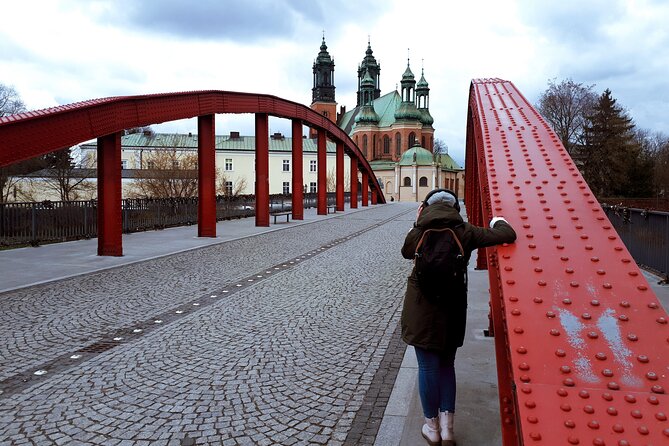
This route works because it is physically set up to teach you. Cathedral Island is where the city’s old power center grew, and Śródka is where the surrounding borough identity and independence show up later. When you walk from one to the other, you feel the change, not just read about it.
The narration keeps it grounded in real locations, so you are not stuck with vague talking-head history. You move past landmarks like Poznan Cathedral and the Archbishop’s Palace, then cross the Jordan Bridge to reach the Śródka side. That jump matters because it is one of those moments where a city’s map becomes a timeline.
Also, you get a nice change of scenery. Even without entering every museum, the walk is set up for sights along the river and through compact streets. The experience is short enough that you can stay fresh, but long enough that it does not feel like a quick photo dash.
Still tacked up around Poznan
- Wroclaw: E-Car Tour and Audio Guide
★ 4.6 · 1,738 reviews - Krakow: Day or Night Vistula River Cruise with Audio Guide
★ 4.5 · 1,303 reviews - Krakow: Hop-On Hop-Off Bus Tour with Audio Guide
★ 3.6 · 703 reviews
Price and time: why $8.99 feels fair here
At $8.99 per person, this is priced like a practical add-on to a day in Poznan, not like a major guided production. The duration, about 45 minutes to 1 hour 15 minutes, is another reason it works. You can fit it into an afternoon between meals, museums, or train times without stress.
The big value piece is lifetime access. You are not just renting a walk once. You can come back later, replay sections, and use it again when you want a refresher. That matters in cities like Poznan, where the “how it all connects” gets clearer after you see more than one site.
One small drawback: because it is self-guided, you only get what you choose to stop for. If you want to go inside attractions, the audio tour helps you place them, but tickets are not included. So plan for either quick exterior viewing only, or a few extra stops with separate admission.
Getting started at Makieta Ostrowa Tumskiego, then letting the app do the work
You begin at Makieta Ostrowa Tumskiego, Ostrów Tumski 9. That scale model is an underrated start. It gives you a mental map fast, before the tour asks you to move through the real streets.
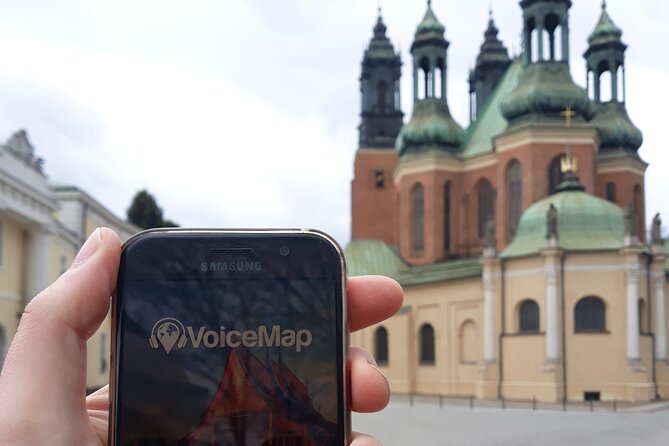
From there, the app explains the island and how VoiceMap playback works before you head out. In practice, the guidance is tied to where your phone is located, so you are not stuck tapping through screens every time you turn a corner. If you have ever been annoyed by audio tours that lag behind your position, this style is usually much calmer.
Before you step off, do two simple things:
- Charge your phone and bring a power bank if you tend to run low.
- Download what you need so the offline audio and maps kick in right away.
If technology misbehaves, you do have support options listed by the provider through email or telephone. Still, the self-guided nature means you are the one carrying the device and wearing the headphones, so reliability starts with your setup.
Cathedral Island stop-by-stop, from Mieszko’s layers to the city’s oldest cathedral
The tour’s Cathedral Island section is the heart of the route. It moves through key sites that explain how Poznan’s early power base formed, and how later religious and political buildings grew around it.
Church of Our Lady in Summo (with Mieszko’s relic underneath)
As you pass by the Church of Our Lady in Summo, the narration focuses on what lies underneath: a vast relic of Mieszko’s palace and palace chapel. Even if you do not enter the church, the story gives the building weight. You are no longer just looking at a façade. You are seeing a physical container for older eras.
Poznan Cathedral, the oldest Polish cathedral
Next is Poznan Cathedral, described as the oldest Polish cathedral. The tour helps you connect what you see on the walk to what those early foundations meant for the region. This is the kind of stop where an audio guide can prevent the classic mistake of treating a landmark like a standalone postcard.
Archbishop’s Palace, with multiple iterations over time
You also pass the Archbishop’s Palace, and the narration explains how the building has had many versions. That detail is helpful because palace buildings often get rebuilt, expanded, and redesigned as power structures change. The tour’s walking approach keeps this concept clear, since you see the palace in its place rather than as an abstract “old building.”
What to watch for here: try to look up as often as you look ahead. The tour’s strongest moments come when the buildings align with the narration’s point about time and authority.
Beneath the newer pins on the Poznan board:



Jordan Bridge and the reconnection story between Cathedral Island and Śródka
Crossing the Jordan Bridge is one of those “you feel the history” transitions. The narration covers how the bridge was built, destroyed, and rebuilt before it ultimately reconnected Cathedral Island and the Śródka District.
That history matters because it is not only about engineering. Bridges are political. They can mean access, control, trade, and movement. When the audio guide frames it that way, you start reading the surrounding areas differently, even before you reach the next district.
Also, the bridge crossing breaks up the walk nicely. It gives you a visual pause between the Cathedral Island landmarks and the next wave of stops on the Śródka side. If you want a quick moment for photos, this is a good place.
The only consideration: if weather is bad, a bridge walk can be chilly or windy. The tour is short enough that you can still do it, but dress for the conditions.
Śródka District on foot: independence, street art, and Saint Margaret’s church
Once you move through Śródka District, the tour shifts tone from early religious power to a more complex city identity. The narration notes that at one stage, Śródka was independent from the rest of Poland. That single detail helps the area feel more than just a neighboring neighborhood. It becomes its own chapter.
Srodka mural
You will also pass the Srodka mural, described as one of the first wall paintings of this type in Poland. This is a clever inclusion because it prevents the tour from becoming “only medieval stone.” Street art and public visuals tell you what a place values when modern culture uses the same walls that old communities relied on.
Saint Margaret Church
Then comes Saint Margaret Church, which you pass by while the audio gives you context. This stop works best if you let the church sit in your mind as part of the district story, not just another building. The route is teaching you a pattern: different institutions, different eras, same city footprint.
If you like walking history, this stretch is where the route starts to feel personal. You stop thinking in terms of individual monuments and start thinking in terms of how neighborhoods evolve around them.
Brama Poznania and Genius Loci: what you pass, what you might enter
Two modern sites appear along the route, and they change the pace from “look at old structures” to “how the past is explained now.”
Brama Poznania (Porta Posnania Heritage Center)
You pass Brama Poznania, described as the Porta Posnania Heritage Center. It is a state-of-the-art museum created in 2014, built to show issues connected with Cathedral Island and Śródka District. Since tickets are not included, you decide if you want the full museum experience or just the outside context. Either way, the narration makes the building feel like part of the story, not a random detour.
Genius Loci
Next is Genius Loci, a modern museum that shows relics of the one thousand-year-old borough’s walls. The tour also points out that it includes 3D immersive films. Again, tickets are not included, so you might just enjoy the idea and keep walking. But if you are the type who likes context before and after you see artifacts, Genius Loci can be worth pairing with this walk.
Practical tip: because the tour is self-guided and timed as a walking route, you will likely want to keep entrances optional. If you decide to go inside, give yourself a little extra time beyond the basic 45 minutes to 1 hour 15 minutes window.
Cathedral Lock and the Prussian layer you can spot in the city
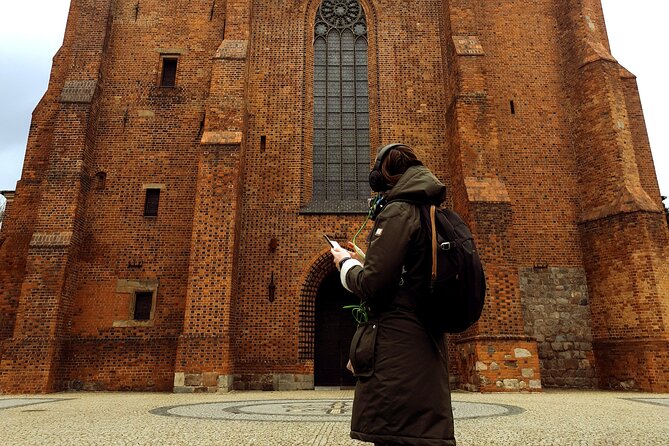
Not every part of the route is about medieval romance. You also pass the Cathedral Lock, described as a 19th-century element of the Prussian fortification system.
That is useful because it shows how Poznan kept getting reshaped by later powers. A lot of visitors focus on the medieval highlight reel. This stop reminds you the city did not freeze in time. It kept growing, and fortifications and infrastructure are physical proof.
Also, locks and related waterways often make a city feel more functional. You are not only seeing grand buildings. You are seeing how movement, control, and river life mattered in practical ways.
If you enjoy details, this is the stop where you may pause longer than the audio suggests, just to orient yourself to how the lock fits into the surrounding water-and-stone setting.
Ending at the archdiocese Museum and the Lubrański Academy frontage
Your tour ends in front of the Archdiocese Museum in Poznan at Jana Lubrańskiego 1. The narration notes that this place played an important role not only for the city, but for Poland from the 1500s until the 1700s.
That endpoint feels right because it ties back to the Cathedral Island theme. You started near the ancient core, and you end near an institution that shaped influence through several centuries. Even though it is a modern museum setting at the end of your walk, the timeframe gives you a satisfying arc.
The tour end is also listed as in front of the Lubrański Academy. So if you like to keep your final minutes relaxed, this is a good place to stop, gather yourself, and decide what comes next: another museum, a café, or simply retracing your steps to soak up the view without narration.
What this self-guided format is best at (and when it is not)
This audio tour shines if you like:
- A low-cost way to see a concentrated cluster of landmarks
- A walk where you can pause, restart, and go at your own pace
- A guide that helps you understand why sites matter, not just how they look
It might be less ideal if you:
- Want a fully hosted experience with an in-person speaker
- Do not have headphones ready or you are unsure your phone battery can handle GPS plus audio
- Prefer museums as the main event, since entry fees are not included and the tour is built around passing and context
From the experience setup, it is built for convenience. Offline access, lifetime access, and GPS-triggered guidance are the tools that make it feel smooth when it works.
Should you book this Poznan Cathedral Island audio tour?
I think you should book it if you want an efficient, meaningful first pass through Poznan’s most historic area, without paying for a full guided tour. The $8.99 price is low, and the lifetime access makes it easy to revisit when you have more time.
Book it in English if that matches you, download it for offline use, then walk slowly enough to read the buildings as you go. If you are the type who enjoys street-level history, the mix of churches, palaces, bridges, murals, and fortification leftovers is a strong combo.
Skip it only if you are expecting museum tickets or a hands-on guide. This is a smart self-guided route, and your best outcome comes from treating it like a guided walk even though nobody is physically with you.
FAQ
Do I need tickets to visit museums on the route?
Tickets or entrance fees are not included for museums or other attractions along the way. The tour can still help you understand what you are seeing outside, but you would need separate tickets if you want to enter.
What equipment do I need to use the audio tour?
You need a smartphone and headphones, since they are not included. You use the VoiceMap app on Android or iOS.
Can I use the tour offline?
Yes. The tour includes offline access to audio, maps, and geodata, which you can use through the VoiceMap app.
How long is the walk from start to finish?
The tour runs about 45 minutes to 1 hour 15 minutes.
Is the tour only in English?
Yes, it is offered in English.
Is this audio tour refundable if I cancel?
No. It is non-refundable and cannot be changed for any reason. If you cancel or request an amendment, the amount you paid will not be refunded.
Freshly posted from Poznan
- The Best of Poznan 4 Hour Guided Private Walking Tour★ 5.0 · 7 reviews
- Private walking city tour in Poznan★ 4.0 · 9 reviews
- Poznan: Private Traditional Polish Food Tour★ 5.0 · 9 reviews
- Poznań Half-day Tour★ 4.9 · 10 reviews
- Poznan: Old Town, Srodka District, & Cathedral Private Tour★ 5.0 · 10 reviews
- 2 Hour Poznan Highlights Tour★ 5.0 · 12 reviews
- Poznan: Pub Crawl with Free Club Entry★ 4.1 · 12 reviews
Audio Tours, compared.
Day or Night Vistula River Cruise with Audio Guide
Read our review →

Sightseeing Cruise on Vistula River with Audio Guide
Read our review →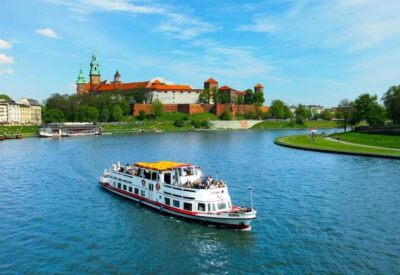
Vistula River Sightseeing Cruise with Audio Guide
Read our review →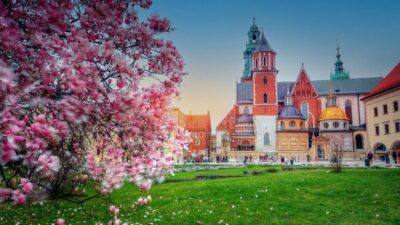
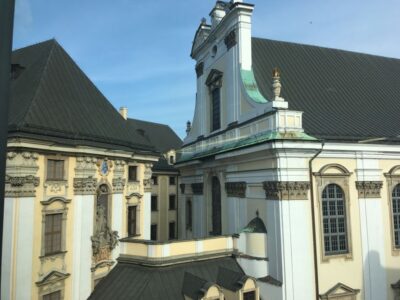
Wrocław University: Tour with Audio Guide & Admission
Read our review →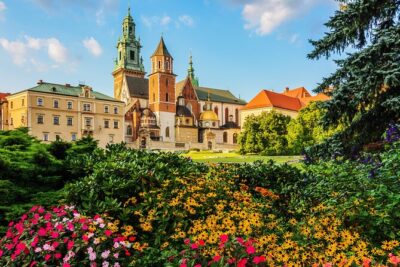
Browse the lists this tour appears in