Reviewed · GUIDED
Krakow: Small group Tour with a licensed guide Eugene
Krakow has a way of moving fast. This 5-hour small group walk turns the city into a clear story, from Old Town streets to the sites tied to WWII survival. I like the licensed guide Eugene, plus his calm, sensible pacing that makes a long day feel manageable. You also get a break built in, so the tour does not feel like a nonstop sprint.
The best part is how the route connects places you might see separately into one bigger picture. I also like the focus on both the famous postcard stops and the human details, like what you’ll learn around the university and later in Kazimierz and the ghetto. One consideration: it’s a walking tour, so even with breaks, plan on comfortable shoes and steady walking.
In This Review
- Key highlights worth planning around
- Starting on plac Jana Matejki and finding the group quickly
- Old Town fortifications and the Royal Walk: the city’s backstory in layers
- Main Square and Cloth Hall: St. Mary’s Basilica and smart souvenir time
- Jagiellonian University stop: WWII stories you will remember
- Wawel Royal Castle: royal courtyard, pantheon, and the Dragon’s Den
- Lunch break inside a former synagogue: a reset with meaning
- Kazimierz: where the day shifts from monuments to community
- Krakow Jewish Ghetto: active sites, cemetery history, and why the details matter
- Ending at Schindler’s Factory: finishing with a survivor-centered story
- Pacing, shoes, and how to make the most of a 5-hour route
- Price and value: what $57 buys in real sightseeing time
- Should you book Eugene’s Krakow one day tour?
- FAQ
- How long is the Krakow tour?
- What is the meeting point?
- Is the tour offered in English?
- What is included in the price?
- Are meals and drinks included?
- Is the tour wheelchair accessible?
- What should I bring and what is not allowed?
Key highlights worth planning around
- Licensed local guide Eugene (English, 9 years of experience) who helps the big sights make sense
- Old Town to Wawel to Kazimierz in one day, with a smooth sense of order
- Jewish Quarter and ghetto focus at places tied to everyday life and WWII history
- Schindler’s Factory finale at Fabryka Emalia Oskara Schindlera, built for maximum impact
- A structured 5-hour format with set sightseeing blocks and time to reset
Starting on plac Jana Matejki and finding the group quickly
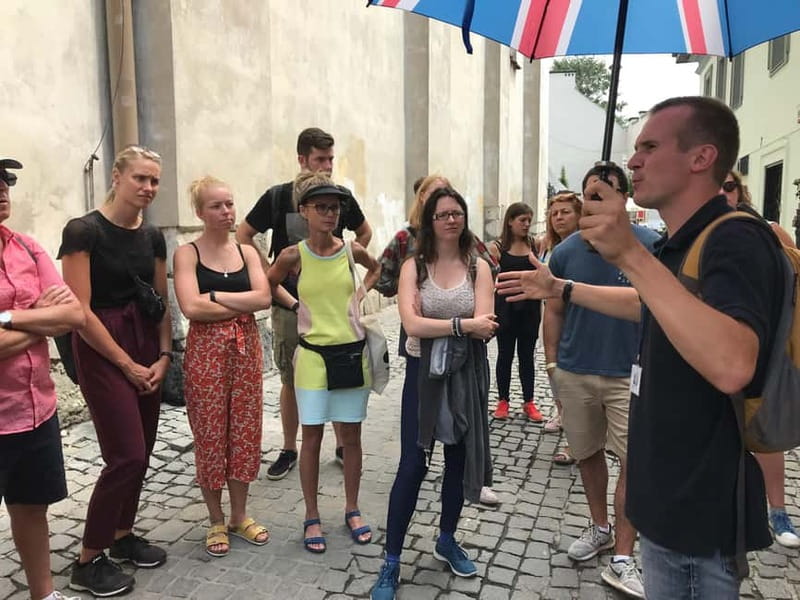
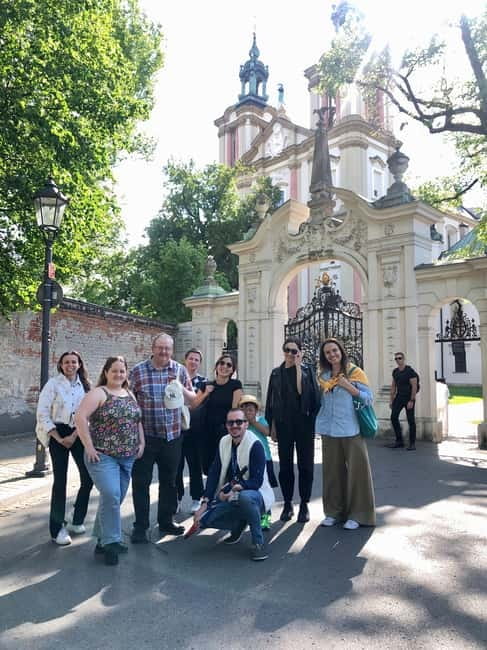
You begin in Krakow’s center, at plac Jana Matejki 2, with the meeting point in front of the Battle under Grunwald monument. That matters because Krakow’s Old Town can feel maze-like at first. Starting in a landmark area helps you get oriented fast, then you can spend your mental energy on the sights instead of searching for the group.
This tour runs as a walking route with scheduled sightseeing blocks: about 1.5 hours in the Old Town, then 45 minutes at Wawel Royal Castle, followed by a 30-minute break, then 75 minutes in Kazimierz, and finally about 1 hour in the Krakow Jewish Ghetto, ending at Fabryka Emalia Oskara Schindlera. In plain terms, you’re covering a lot of distance for five hours, so this is not the right fit if you want a slow, sit-down sightseeing day.
One more practical note: the info says it is wheelchair accessible, but it also states it is not suitable for wheelchair users or people with mobility impairments. If you fall into that category, I’d treat this as a “check closely first” situation rather than assume it will work.
Still tacked up around Krakow
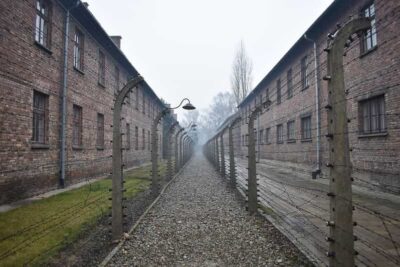
- From Krakow: Auschwitz-Birkenau Guided Tour & Hotel Pickup
★ 4.5 · 33,358 reviews - From Krakow: Auschwitz-Birkenau Guided Tour & Hotel Pickup
★ 4.5 · 29,340 reviews - Krakow: Auschwitz Guided Tour with Optional Hotel Pickup
★ 4.5 · 15,280 reviews
Old Town fortifications and the Royal Walk: the city’s backstory in layers
The Old Town segment is built around a strong foundation: Krakow’s 14th-century fortifications. Even if you do not stop at every wall section, having context helps you see why the city grew where it did, and why certain areas feel like they have always been the center of power.
From there, you head into the Royal Walk, the route where Polish kings and queens prepared for coronations. The idea is simple: you are not just looking at buildings, you’re tracing the moments when Krakow stood as a political stage. Eugene’s job here is to connect details, so you can understand what you’re seeing without needing to research every corner yourself.
A good guide will also share the kind of odd, memorable facts that make cities stick. In this tour, you might hear about Krakow’s official trumpeter, who plays a melody every hour, plus other surprises you could easily miss if you are sightseeing alone. Those “small facts” are not random trivia. They help you picture daily life, not just monuments.
If you like your walking tours structured and story-driven, this first segment sets the tone. If you hate being on your feet for long stretches, you may feel the pace here, since the Old Town portion is 1.5 hours before you even get to Wawel.
Main Square and Cloth Hall: St. Mary’s Basilica and smart souvenir time
Next comes one of the highlights of Krakow sightseeing: the largest medieval square in the world, the Rynek Główny. This is where Krakow’s public life happens, and it is hard to absorb everything quickly. A guided approach helps you avoid the common problem of wandering in circles, photographing the same façade from three angles, and then realizing you skipped the most interesting story.
You’ll visit St. Mary’s Basilica, one of the iconic anchors of the square, and then Sukiennice Cloth Hall, known for Polish souvenirs. Here, the value is not in buying something. It’s in knowing what you’re looking at and where the stalls fit into the space’s purpose. Cloth Hall is the kind of place that looks like a postcard, but it is also a window into how commerce and civic life used to work.
If you want souvenirs, this is your moment, but keep your plan practical:
- Decide before you arrive if you want gifts, food items, or crafts
- Use the time to compare a few stalls rather than jumping at the first display
- If prices feel confusing, ask the vendor to explain what’s what
A drawback to keep in mind: Sukiennice is a popular area, so if you need quiet, photo-light sightseeing, you might feel a bit “in the crowd” even though the group is small.
Jagiellonian University stop: WWII stories you will remember
One of the most compelling parts of this tour is the stop around one of Central Europe’s oldest universities. You’ll hear the moving story of its professors during World War II. This is the kind of lesson that changes how you look at a city. Instead of seeing an old academic institution as “just architecture,” you understand it as a place where people acted under extreme pressure.
This segment works best if you let the guide lead rather than trying to read everything yourself on the fly. University buildings can be easy to overlook when you are hungry for the next major landmark. Eugene’s approach is to tie the stop to a human narrative, so the university becomes part of the day’s overall theme: resilience, power, and survival.
You might also pick up small, clarifying details about how Krakow functioned culturally and socially, which helps when the tour shifts later into Kazimierz and the ghetto. The connection is the point, not just the stop.
Beneath the newer pins on the Krakow board:
Wawel Royal Castle: royal courtyard, pantheon, and the Dragon’s Den
Wawel is the “must-do” stop, but the tour makes it more than a name on a list. At Wawel Royal Castle, you explore the national pantheon, the royal courtyard, and the Dragon’s Den.
That combination matters. The national pantheon grounds you in the idea of Krakow’s role in shaping national identity. The royal courtyard gives you the “power and ceremony” feel, which links back nicely to the earlier Royal Walk. Then the Dragon’s Den brings in the legend side. It keeps Wawel from becoming only solemn.
This stop is 45 minutes, which is a tight window for Wawel. That’s why a guide earns their pay here. Eugene helps you see the most important spaces without turning your day into a checklist you barely remember.
Practical tip: keep your camera ready, but also pause long enough to look. Wawel can be visually impressive from one angle, and you might miss the overall shape if you are constantly shooting. If you want fewer regrets later, take a few wider shots first, then switch to close-ups.
Lunch break inside a former synagogue: a reset with meaning
You get a 30-minute break in a restaurant situated in a former synagogue. That is not just a convenient stop. It’s a chance to catch your breath while sitting in a space with deep historical context.
Food is not included, but this break is built into the tour so you can refuel before the Jewish Quarter and ghetto portion, which is heavier emotionally. A good break changes the quality of the rest of the experience. If you skip the reset, you can end up mentally “flat” when the tour turns serious.
Because meals and drinks are not included, come prepared to buy something light or a drink you will actually finish. If you know you get hungry quickly, plan to spend a few minutes deciding what you want before you feel rushed.
Kazimierz: where the day shifts from monuments to community
After the break, you move into Kazimierz, with about 75 minutes of sightseeing. Kazimierz is one of the most important districts to understand in Krakow, and the tour’s approach helps you connect streets and buildings with the people who lived through them.
Kazimierz is also the staging ground for what comes next. Eugene sets you up so that when you reach the Jewish Quarter and the ghetto, it does not feel like a separate chapter. It feels like the same story, just deeper and darker.
This portion of the tour tends to be more emotionally nuanced than the “photo stops” in Old Town. You’ll likely notice that conversations, pauses, and guided explanations take on a different tone. That shift is part of the value. You’re not rushing past a neighborhood. You’re being taught how to see it.
If you want a day that is about understanding, not just photographing, this is where it clicks.
Krakow Jewish Ghetto: active sites, cemetery history, and why the details matter
Next is the Krakow Jewish Ghetto, with about 1 hour on the ground. You’ll learn about the history of Krakow’s Jewish community, visit an active synagogue, and see one of Europe’s oldest Jewish cemeteries. Then you explore the former ghetto established by German Nazis.
This is serious ground. The tour’s structure helps you keep your bearings:
- Start with community and continuity, not only tragedy
- Use the synagogue and cemetery to anchor what life meant
- Then shift to the ghetto history so the timeline feels clear
A guide is essential here because the significance of places is not always obvious at first glance. You might see walls, gates, or building exteriors and think, I get it, but the context is what gives those details weight. Eugene’s role is to give you the missing links so you understand what happened and why it mattered.
One consideration: the ghetto segment is short, about one hour, so you will not see everything. What you do see is selected for impact and comprehension. If you want a longer, slower exploration with lots of optional reading time, you may need a different style of tour. For a one-day overview, this format is strong.
Ending at Schindler’s Factory: finishing with a survivor-centered story
The tour ends at Fabryka Emalia Oskara Schindlera (Schindler’s Factory). This is where the day’s central WWII theme lands. You’ll uncover the story of Oskar Schindler, who saved 1,100 Jews during the war.
The final stop works well because it gives you a sense of closure after the ghetto history. You’re not leaving Krakow with only what was lost. You’re also ending with a story of moral courage.
This is also a good “memory anchor.” When you get back home, it’s easier to remember your Krakow trip if it ends with a clear figure and a clear impact. Schindler’s Factory does that job.
Pacing, shoes, and how to make the most of a 5-hour route
A five-hour walking tour in Krakow is a useful sweet spot if your time is limited. You get a lot of highlights, but you still have enough structure to keep the day from feeling like chaos.
From a practical standpoint:
- Bring comfortable shoes you can wear for extended walking
- Bring water, since hydration helps you enjoy the harder segments
- Have a camera ready, but build in moments to look, not only shoot
Small group helps here. It keeps the day feeling closer to a conversation than a lecture hall. Eugene’s pacing is a standout feature, because it balances major sites with time to understand them rather than rushing through at full speed.
The main drawback is simple: you are walking. If you plan for it and wear decent shoes, you’ll be fine. If you expect a seated, slow tour, you will feel the pace.
Price and value: what $57 buys in real sightseeing time
At $57 per person for about five hours, the value comes from the combination, not any single stop. You get:
- A professional licensed guide in English
- Guided time across Old Town, Wawel, Kazimierz, the Jewish Quarter, the ghetto, and Schindler’s Factory
- A scheduled break included in the tour plan
Meals and drinks are not included, and that’s normal for a walking tour. You’ll also pay out-of-pocket for lunch or snacks, but the upside is that the guide can keep you moving so you do not waste time figuring out where to go next.
When a day is this site-heavy, the guide’s job is what you are really paying for. A self-guided route can work, but it’s harder to connect the dots fast, especially when you reach Kazimierz and the ghetto, where context is everything. This tour gives you that context in a tight timeline.
Should you book Eugene’s Krakow one day tour?
Book it if you want one strong day that covers the essentials, without turning Krakow into a scavenger hunt. This is a good fit for first-time visitors, people with limited time, and anyone who likes a guide to help them understand what they are seeing.
Skip it if you need a fully relaxed pace, if walking time is hard for you, or if you want long museum-style exploration rather than a guided route with multiple stops. Also pay attention to the accessibility notes, since the information is a bit mixed.
If you like tours where the city feels like a story, not a list, this one is a smart choice.
FAQ
How long is the Krakow tour?
The tour lasts 5 hours.
What is the meeting point?
You meet in front of the Battle under Grunwald monument. The starting location is listed as plac Jana Matejki 2.
Is the tour offered in English?
Yes, the live tour guide is English.
What is included in the price?
Included are a professional guide, the guided walking tour of Krakow’s Old Town, Wawel Castle, Jewish Quarter and Ghetto, and a break.
Are meals and drinks included?
No. Meals and drinks are not included, so you’ll need to budget for food during the break.
Is the tour wheelchair accessible?
The activity is labeled wheelchair accessible, but it is also listed as not suitable for wheelchair users and people with mobility impairments. If accessibility is a priority, it’s worth double-checking before you book.
What should I bring and what is not allowed?
Bring comfortable shoes, a camera, and water. Smoking and pets are not allowed (assistance dogs are allowed).
Freshly posted from Krakow
- Krakow: Zakopane and Thermal Springs Tour with Hotel Pickup★ 5.0 · 1 review
- Krakow: Audio-Guided City Experience by Golf Cart★ 5.0 · 1 review
- Half-day In the footsteps of John Paul II Tour from Krakow★ 5.0 · 1 review
- Krakow: Wawel & Salt Mine Experience with Lunch★ 5.0 · 1 review
- Tour to Wadowice: Hometown of Pope Saint John Paul II★ 5.0 · 1 review
- Krakow: Outdoor Paintball with Hotel Transfers★ 5.0 · 1 review
- Krakow: Nowa Huta Communist District Walking Tour★ 5.0 · 1 review
Guided, compared.
Auschwitz-Birkenau Guided Tour & Hotel Pickup
Read our review →Auschwitz-Birkenau Guided Tour & Hotel Pickup
Read our review →
Auschwitz Guided Tour with Optional Hotel Pickup
Read our review →
Auschwitz-Birkenau Guided Tour with Pickup & Lunch
Read our review →
Krakow to Auschwitz Birkenau Guided Tour with Transfer and Ticket
Read our review →
Wieliczka Salt Mine Fast-Track Ticket & Guided Tour
Read our review →