
Reviewed · CONCERTS
Krakow: Queen Classic Concert by Candle Glow
Krakow does rock, with strings and piano. This Candle Glow concert reworks Queen classics into a chamber trio format, so you get the punch of Freddie Mercury-era hits with a refined classical sound in a truly special Baroque room.
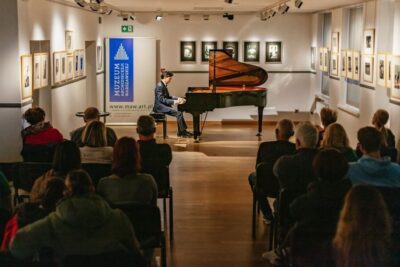
I love two things right away. First, the venue acoustics in a 17th-century hall at the foot of Wawel Castle make even familiar melodies feel fresh. Second, I like the clarity of the trio arrangement, with violin, cello, and piano shaping songs so you catch both the drama and the lyrics, not just the big choruses.
One possible drawback is simple: the show is short. Expect about 45 to 50 minutes, so if you want a long sit-down evening, you may wish it lasted more.
In This Review
- Key things to know before you go
- Royal Chopin Hall at Bernardine Monastery, right by Wawel
- How the 17th-century hall changes Queen songs
- The chamber trio approach: violin, cello, piano, and a new Queen sound
- Which Queen hits you will recognize, and why they feel different
- Duration and pacing, plan your evening around it
- Value for $29: what you get for the money
- Who this concert is for (and who should skip it)
- A quick word on booking and timing choices
- Should you book Queen Classic Concert by Candle Glow in Krakow?
- FAQ
- How long is the Queen Classic Concert in Krakow?
- Where do I meet for the concert?
- What instruments perform in the show?
- Is food or drinks included with the ticket?
- What languages are used by the host or greeter?
- Is free cancellation available?
Key things to know before you go
- 17th-century Baroque setting in Royal Chopin Hall, a moody room that fits the music
- Queen in chamber form, with violin, cello, and piano handling the emotional weight
- Great acoustics for a small trio, so details land even when the room is quiet
- A “short but sweet” runtime around 50 minutes (some performances feel closer to 45)
- Songs like Bohemian Rhapsody and Somebody to Love, recognizable yet newly arranged
- Expect a cozy atmosphere, with many reviews calling it warm and intimate
Royal Chopin Hall at Bernardine Monastery, right by Wawel
If you like your Krakow evening a little different, this works. The concert takes place in the Royal Chopin Hall at the Bernardine Monastery, at 2 Bernardyńska Street. The location matters because it puts you in a compact historic setting, not a modern theater where everything feels the same.
The best part is the atmosphere you get before the music even starts. The hall setting is described as a 17th-century Baroque space with stunning acoustics, and that shows up in the reviews again and again: people use words like warm, cozy, and classically atmospheric. In plain terms, it feels like you are stepping into the kind of room where musicians can be close to the audience and where the sound does not get swallowed up.
Two practical tips from the kind of issues that come up in small venues: first, give yourself time to find the entrance. One reviewer noted it can be around the corner on the side from the main entrance, which matters if you are arriving in bad weather or after a busy day in the Old Town. Second, plan on navigating entry and seating calmly. A review mentioned a crush at the one door to get in, and another pointed out that seating arrangements for families with small children may not feel ideal. Arrive early, and if you want to sit together, show up with enough buffer time that you can sort seating before the rush peaks.
Still tacked up around Krakow
- Krakow: Chopin Piano Recital at Chopin Concert Hall
★ 4.7 · 2,330 reviews - Krakow: Chopin Concert by Candle Glow
★ 4.4 · 460 reviews - Krakow: Chopin Concert by Candlelight with Wine
★ 4.6 · 447 reviews
How the 17th-century hall changes Queen songs
This is not just Queen music played “with instruments.” The entire point is that the room and the arrangement work together. In a Baroque hall with strong acoustics, sound has shape. You notice resonance. You hear the edges of notes. And that is exactly what makes a chamber trio version of rock feel convincing.
In reviews, people repeatedly mention impeccable or excellent sound, and the combination of piano, violin, and cello is why. When you are used to guitars and drums, it is easy to worry the music will lose its force. But the trio setup shifts the power. The piano can provide rhythmic clarity. The violin carries intensity and brightness. The cello anchors the low lines with warmth and emotion. That balance is what turns hard-driving rock into something more lyrical without making it feel soft or watered down.
And the setting supports that mood. Reviews talk about “cosy” and “intimate,” which is the magic combo for this kind of performance. You are close enough to feel the musicianship. You are in a room that makes small musical choices audible. Even if you do not read sheet music, you can still tell when the performers are shaping dynamics, breathing with the phrasing, and letting quieter moments matter.
The vibe is not overly formal, but it is not a loud party either. It is a seated concert where you can actually listen. One person even said it moved them to tears. That is not something you usually hear about a rock concert, and it is the best hint of what this venue and arrangement do together.
The chamber trio approach: violin, cello, piano, and a new Queen sound
The concert is built around a trio: violin, cello, and piano. You should expect a classical arrangement of Queen’s greatest hits, not a straight cover band setup. The program is described as new and intimate, with a classical character that brings out both rock energy and lyric subtlety.
Here is what that means in real-life listening terms. In typical Queen recordings, the sound is layered and wide. Here, the “wide” effect comes from how the musicians distribute melody and harmony. The piano is often your compass, outlining the structure and rhythmic identity of each song. The violin can take what you think of as the vocal line or guitar-like peaks, pushing the melody forward with emotion. The cello frequently adds the kind of gravitas that you might associate with bass lines or dramatic transitions in the original production.
That is also why the show works for two different types of music lovers. If you love Queen, the songs remain recognizable, including titles like Bohemian Rhapsody, Somebody to Love, and Don’t Stop Me Now. If you love classical music, the focus is on technique, phrasing, and a chamber-style balance, not volume and spectacle.
One theme that shows up across reviews is virtuosity with emotional depth. People call it marvellous, haunting, and exquisite in arrangement. In other words, it is not just “look, we can play this.” It is “we can make this song mean something different while still honoring it.”
Which Queen hits you will recognize, and why they feel different
This concert is designed as a greatest hits program, so you should not worry about it being obscure. The highlights you should plan around include Bohemian Rhapsody, Somebody to Love, and Don’t Stop Me Now. Those are big enough that you can enjoy them right away, even if you have not listened to a Queen deep cut in years.
What surprised me conceptually, and what reviews reinforce, is how the arrangements reshape your listening. With rock versions, you often feel the rhythm first and the lyrics second. With a chamber trio, that order flips. You start hearing the “story” inside the music: the tension, the release, the lyrical phrasing. One review specifically notes rock energy plus subtle lyricism, which is exactly what this format can do well when it is executed tightly.
There are also moments that feel theatrical in a different way. Since the project is tied to the Freddie Mercury Rock-Operatic lineage, you can expect the performance to carry drama, even without the full rock-band sound. Reviews mention impact from certain songs like The Show Must Go On and Who Wants to Live Forever in particular, and that fits the emotional advantage of violin and cello. Those instruments handle sustained lines beautifully, so the music can linger in your mind.
If you want the concert to be a genuine Queen experience, do not treat it like a background activity. Go in with your attention switched on. In a small hall, that is what makes the show feel special, not just “nice music.”
Beneath the newer pins on the Krakow board:


Duration and pacing, plan your evening around it
The concert is listed at 50 minutes. In practice, reviewers mention around 45 minutes in some cases, so think “about 45 to 50.” That timing is a big part of the value. At $29 per person, you are not buying an all-night event. You are buying an hour-plus of high-impact listening in a historic hall.
The pacing also has an upside. Short concerts reduce fatigue, especially if you are stacking Krakow experiences: maybe walking the Old Town, doing a river stroll, or catching another culture stop. Here, you get a focused evening moment that breaks up the day.
The drawback is also why you should set expectations. More than one reviewer wished it was longer. So if you are the kind of person who loves long performances and wants to linger in the hall after the final chord, you may feel a little rushed when the lights come up. My advice: plan a next stop right after, like dinner nearby or a short wander toward the castle area. That way, the ending does not feel like a cliff, it feels like a satisfying chapter.
Value for $29: what you get for the money
At $29 per person, this is priced like a true “doable highlight,” not a big-ticket gala. And the reason it feels like good value is the mix of factors you are getting in one place: a famous set of Queen songs, a chamber-classical twist, and a historic 17th-century Baroque hall with acclaimed acoustics.
You also get something intangible that you cannot measure in dollars: a sense of attention. Because it is a trio, the performers are not hiding behind a full ensemble. Reviews repeatedly point to the talent of the young musicians, and people describe the performance as intimate and emotionally engaging. That kind of personal sound is why the concert can feel like more than the sum of its parts.
There are also practical value factors. Tickets are included for the concert itself. Food and drinks are not included, so you can decide what fits your budget and taste for dinner afterward. And the show gives you a “culture credit” even if your day already included plenty of walking. It is a seated activity that still feels like an experience.
If you are wondering whether this is worth it for a casual Queen fan, I think it can be, because the set is built from recognizable hits. If you only like classical music and are worried about rock, the chamber format is the hook. You get classical technique and arrangement logic, not just rock nostalgia.
Who this concert is for (and who should skip it)
This fits best if you want one of these three things:
- A chance to hear Queen songs in a new classical arrangement
- A comfortable, seated evening in a 17th-century Baroque hall
- A short, satisfying cultural stop that does not take over your whole night
It is also ideal for people who appreciate live music details. Reviews mention excellent sound and people even call out the violin performance as incredible. If you enjoy listening closely, you will likely get more out of this than someone who expects a loud, high-energy rock show.
You might skip it if you want:
- A full-length concert (this is about 45 to 50 minutes)
- Rock instrumentation as in the original recordings (this is violin, cello, and piano)
- A package deal with drinks included (food and drinks are not included)
A quick word on booking and timing choices
You can typically keep your plans flexible thanks to free cancellation up to 24 hours in advance for a full refund, and there is also a reserve now, pay later option. That makes it easy to slot into your Krakow itinerary as weather and energy levels change.
My practical suggestion is to pick a time that does not leave you rushed. Because some people find the entrance a bit tricky and because entry can get crowded at the door, you will enjoy the show more if you arrive early, get oriented, and settle before the performance starts.
Should you book Queen Classic Concert by Candle Glow in Krakow?
Yes, I would book it if you like Queen and you are curious about how rock can sound in a chamber setting. The big selling points are the Baroque hall acoustics and the way the trio arrangement turns familiar songs into something that feels emotionally direct. At about $29 for roughly an hour, it is a smart Krakow add-on, especially if you want an evening that feels both classic and fun.
If you hate short concerts, or if you only want the original rock-band sound, you might want to look elsewhere. But if you are open to a fresh interpretation, this is one of those Krakow experiences that feels memorable for the room, the musicianship, and the surprise of hearing Queen in a new voice.
FAQ
How long is the Queen Classic Concert in Krakow?
The concert duration is listed at 50 minutes.
Where do I meet for the concert?
The meeting point is Royal Chopin Hall at the Bernardine Monastery, 2 Bernardyńska Street, 31-069 Kraków.
What instruments perform in the show?
The concert features a chamber ensemble with violin, cello, and piano.
Is food or drinks included with the ticket?
No. Food and drinks are not included.
What languages are used by the host or greeter?
The host or greeter is listed as English and Polish.
Is free cancellation available?
Yes. You can cancel up to 24 hours in advance for a full refund.
Freshly posted from Krakow
- ZALIPIE – painted village, unique small group tour from Krakow★ 5.0 · 7 reviews
- “John Paul II Route” PRIVATE -Wadowice, Kalwaria Z.-Łagiewniki★ 5.0 · 7 reviews
- Krakow: Craft Beer Tasting City Walking Tour★ 4.4 · 7 reviews
- Magic of Krakow: Guided Tour of the Old Town★ 5.0 · 7 reviews
- Krakow : Zakopane Tour + Thermal Pools with Hotel Pickup★ 4.8 · 7 reviews
- Krakow in One Day: City Tour by Electric Car★ 5.0 · 7 reviews
- Guided Tour of Plaszow Concentration Camp, Kraków★ 4.8 · 7 reviews
Concerts, compared.
Warsaw Concert: Chopin – Painted by Candlelights with Wine
Read our review →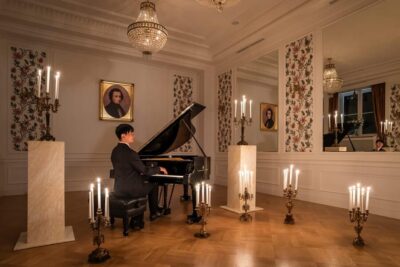
Browse the lists this tour appears in