
Reviewed · WALKING TOURS
Krakow: Plaszow Concentration Camp Guided Walking Tour
Open ground, heavy memories, clear guidance. This 2-hour Plaszow Concentration Camp walking tour turns a mostly open site into a readable story, with memorial stops and the Schindler connection woven in. I like that it is reflection-paced, not a race through ruins. I also like that the guide puts names and structure on a place where so little remains.
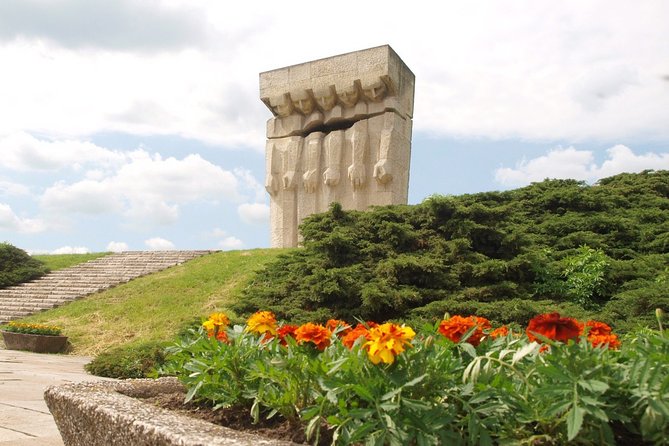
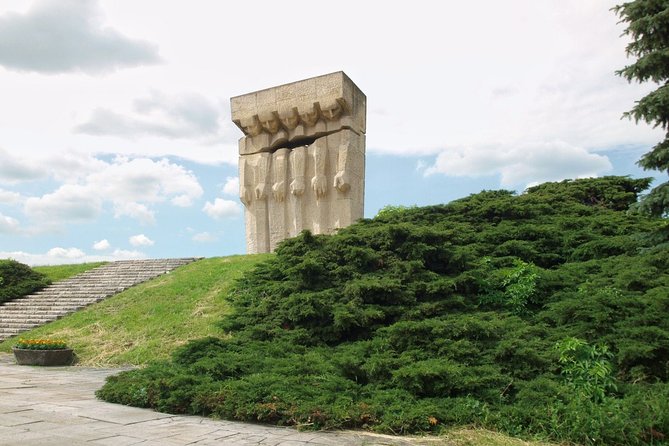
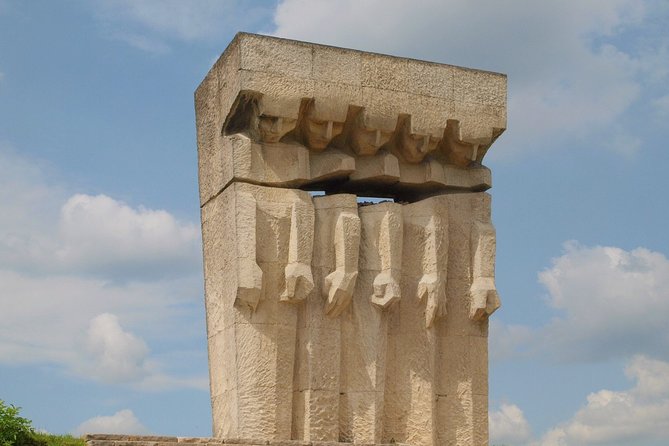
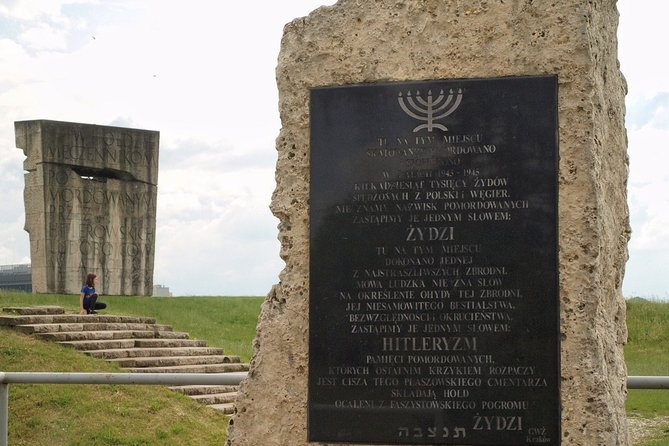
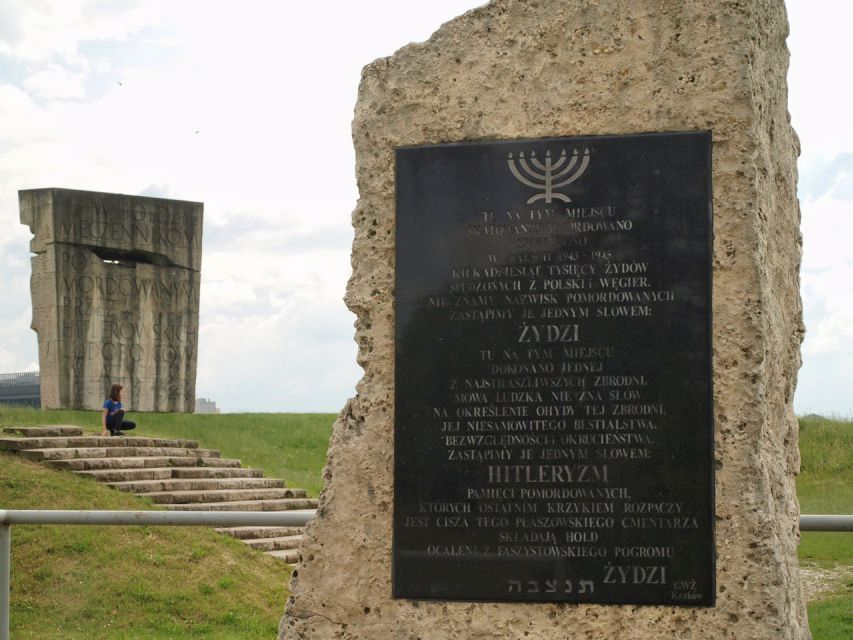
The best part for me is how your guide pieces together what survives, so you are not just wandering an empty area. You’ll spend time around the Grey House area, the ruins of the pre-burial hall, traces tied to the Jewish cemeteries, the roll-call square, and the paths where fragments of gravestones were once used for paving. Your second big win is the way the walk pushes you to remember the victims at major memorials, including the Monument of Torn-Out Hearts.
One drawback to plan for: this is an open-air site with few preserved buildings, so weather matters and you rely on the guide to make sense of what you see. Also, group tours run in just one language, so pick your option carefully when booking.
In This Review
- Key things to know before you go
- Why Plaszow feels different from other Krakow history stops
- Meeting at Apteka Pod Orlem and using the included tram ticket
- The Plaszow story your guide builds for you (1942 to 1944)
- On-the-ground stops: Grey House, pre-burial hall ruins, cemeteries traces, roll-call square
- Grey House and the idea of a camp system, not just one building
- The ruins tied to the pre-burial hall
- Traces of the Jewish cemeteries beneath the camp
- Roll-call square, where control had a rhythm
- Paths once paved with fragments of gravestones
- Memorial time that actually gives you room to think
- The Schindler connection, plus the Schindler’s List filming reference
- How 2 hours works in practice, and what to bring
- Price and value: what $29 buys you
- Who should book this Plaszow guided walking tour
- Should you book this tour or choose something else?
- FAQ
- Where do I meet the guide for the Plaszow tour?
- How long is the tour?
- What’s included in the price?
- What languages are available?
- Is the tour wheelchair accessible?
- Can I cancel for a refund?
Key things to know before you go
- Memorial-focused route that slows down for reflection rather than fast sightseeing.
- Surviving-trace tour of Plaszow’s key remnants, not a museum with full buildings.
- Holocaust context in plain steps, from 1942 camp creation to the 1944 transit role.
- Schindler’s List connection, explained through Oskar Schindler’s choices and the film’s filming locations.
- Memorials you can actually sit with, including the Monument of Torn-Out Hearts.
- Past guide names you may see assigned include Anna, Dominika, Barbara, Krysztof, and Bartolomiew (sp.), among others.
Why Plaszow feels different from other Krakow history stops
Plaszow Concentration Camp is not the kind of place where the story pops just by looking at preserved walls. It’s mostly open ground. That emptiness is part of the experience, and it can feel startling after you’ve seen more built-up historical sites.
What you get instead is space for thought. Your guide’s job is to connect the dots between what survives on the ground and what happened here. The tour is built around reflection, so you get time to stop at major memory points instead of rushing from photo spot to photo spot.
And yes, the emotional weight is real. The walk includes remembrance sites tied to the Holocaust, so I suggest you treat this as a serious visit, not an add-on between café stops. Bring your patience. The pacing helps.
More Walking Tours in Krakow
- Old Town Krakow & Wawel Castle Walking Tour
★ 5.0 · 1,508 reviews - Creepy Krakow: 2-Hour City Walking Tour
★ 4.7 · 1,131 reviews - Krakow: The Old Town Walking Tour
★ 4.8 · 794 reviews
Meeting at Apteka Pod Orlem and using the included tram ticket
You meet your guide in front of the entrance of Apteka Pod Orlem. Look for the guide holding a sign marked excursions.city. The tour runs for 2 hours, so that pre-start timing is important.
The good news: the ticket includes a single tram ride. That matters in practical terms because it reduces the “how do I get there and back” hassle when you’re trying to keep the day moving smoothly.
Give yourself a small buffer and arrive about 10 minutes early. Once the group departs, latecomers can’t join. That’s not just logistics, it also helps your group start together so the guide can keep the reflective rhythm.
The Plaszow story your guide builds for you (1942 to 1944)
Plaszow was created in October 1942 by Nazi German occupiers on the grounds of two Jewish cemeteries in Krakow. It started as a forced-labor camp for Jews taken from the liquidated Krakow ghetto. Later, from July 1943, a penal-labor section brought Poles into the camp system.
Then the camp’s purpose shifted again. In January 1944, Plaszow was redesignated as a concentration camp. Over the following months, it also functioned as a transit camp for Hungarian Jews sent onward to Auschwitz. Those changes in role are a key part of the explanation on this walk.
Your guide will also put numbers on the suffering: more than 35,000 people imprisoned here, and around 6,000 murdered. There were executions at several sites within the camp, and today, mass graves and memorial markers define much of what you see.
This history framing matters because the area can look confusing if you only have general knowledge. I like that your guide doesn’t treat the site like a single static moment in time. You learn how it evolved, and why that matters for understanding what you’re standing on.
On-the-ground stops: Grey House, pre-burial hall ruins, cemeteries traces, roll-call square
Because Plaszow has few preserved structures, your guide becomes the map. Instead of pointing at one obvious landmark, the tour walks you through several surviving traces and explains what each part meant.
Here are the main ground points you’ll focus on:
More Polish squares crossed on foot:
Grey House and the idea of a camp system, not just one building
The tour includes the Grey House area. Even if you don’t find much intact, the guide helps you understand why that location carried weight in the camp’s workings. It’s one of those places where the guide’s description turns a modest remnant into something historically specific.
The ruins tied to the pre-burial hall
You’ll also see the ruins of the pre-burial hall. The wording here is important. It points you to a process of death and disposal that was organized, not random. Your guide uses those physical traces to explain how camp life and camp violence were structured into operations.
Traces of the Jewish cemeteries beneath the camp
Plaszow was established on the grounds of two Jewish cemeteries. Your walk includes traces that connect to those cemeteries, so you understand this wasn’t built on empty land. It was built on a place of Jewish memory, then repurposed through Nazi occupation.
That connection can hit harder than a purely chronological explanation. It makes the history feel closer to human lives, not just dates.
Roll-call square, where control had a rhythm
The tour covers the roll-call square. This is a focal point in many concentration camp stories because roll call represents control and surveillance in daily life. Standing in that area, you can see why the camp demanded presence, counting, and obedience.
Paths once paved with fragments of gravestones
One of the most unsettling parts, handled with care, is the mention of paths where fragments of gravestones were once used to pave roads. Your guide explains why that matters, because it shows how Nazi policies reached beyond imprisonment, into the physical remnants of community remembrance.
This stop is not about shock value. The point is to understand what was done and how the camp environment was engineered.
Memorial time that actually gives you room to think
Unlike places that are all buildings and guided “look here” moments, Plaszow offers silence and open space. The tour leans into that. You are not forced to stand in a tight group. You get time at major memorials to slow down.
A standout is the Monument of Torn-Out Hearts. It’s the kind of memorial that doesn’t need explanation to feel heavy, but your guide will give context so it connects back to the people the camp system destroyed.
I also appreciate that the route is paced for reflection, not a rush. For you, that can make the difference between finishing the tour numb and finishing it understanding. You’ll remember more, too, because you’re not trying to process everything while hurrying.
The Schindler connection, plus the Schindler’s List filming reference
A central thread of this walk is Oskar Schindler. Your guide explains how his enamelware enterprise became a way to protect some Jewish prisoners who were registered through Plaszow.
Here’s what your guide ties together on the tour:
- Schindler sought work permits for Jewish prisoners connected to Plaszow.
- Those actions helped shield people from further transports.
- Later, Schindler organized their transfer to his wartime plant in Brunnlitz.
The tour frames this story as inseparable from Plaszow’s history, not as a separate side story. You see how bureaucracy, paperwork, and permits could mean life or death in the camp system.
There’s also a Schindler’s List filming element included. Your guide points out where the film was filmed, tying today’s screen images to the real geography. That can be a useful way to connect what you might already know from film to what is actually on the ground.
I’ll add a note of balance. Schindler’s story is hopeful in a specific, human way, but it does not erase the horror of what happened here. On this tour, the guide keeps both truths in view.
How 2 hours works in practice, and what to bring
Two hours is a real commitment, but it’s also a manageable one. You’re not doing a long half day where your brain shuts down halfway through. Instead, you get a focused walk that hits the core remnants and memorials.
Because you’re outside for much of it, plan for weather. Pack layers if you think it might cool down. Wear comfortable walking shoes with decent grip. And if you’re the type who likes taking photos, you’ll want to keep that habit under control here, because memorial moments need attention.
If you’re combining this with other Krakow history in one day, place it earlier rather than later. This isn’t a tour you want to rush through while tired.
Price and value: what $29 buys you
At around $29 per person for a 2-hour guided walk, the value comes from what’s included and what you avoid. You get an expert local guide for the full time, and you also get a single tram ticket baked into the experience.
The bigger value is interpretive. Plaszow is hard to read without guidance. The tour is built to help you understand the meaning of each physical trace and memorial, including the camp’s changing roles and Schindler’s connection.
So think of the price less as “entry fee” and more as payment for context. In a place like this, good interpretation is not optional. It’s the difference between seeing empty ground and truly understanding what happened there.
Who should book this Plaszow guided walking tour
This tour is a strong fit if you:
- Want a Holocaust-focused visit in Krakow that is outside and memory-centered.
- Like guided structure, especially in places where little is preserved.
- Want the Schindler thread clearly explained, including the connection to Schindler’s List filming locations.
- Prefer reflection time over nonstop sightseeing.
It can also be a smart follow-up if you’ve already explored Krakow’s Jewish quarter and want the next layer of history. And if you’re comparing options, Plaszow’s open, memorial-based feel is its own thing. It won’t replace Auschwitz for scale, but it does add a local, ground-level perspective.
Choose your language option carefully. The tour is offered in Spanish, Italian, French, English, German, and Russian, but each group tour runs in only one language. If you’re even slightly unsure, pick the one you’ll understand best.
Should you book this tour or choose something else?
I recommend booking if you want a well-paced, guide-led explanation that respects the setting and gives you names, structure, and context. If you’re sensitive to emotional sites, go prepared and give yourself time to sit with what you see. The reflection pacing is built for that.
I’d think twice if you’re looking for a light, casual outing, because this is serious history on open ground. Also, if you don’t do well in weather or you struggle with long outdoor walks, you might find the experience harder than a typical indoor museum visit.
If you want a simple decision rule: if you care about understanding Plaszow as a real camp system, not just a name from World War II, this guided walk is the kind of Krakow experience that will stay with you.
FAQ
Where do I meet the guide for the Plaszow tour?
Meet your guide in front of the entrance of Apteka Pod Orlem. Look for the guide with the excursions.city sign.
How long is the tour?
The guided walking tour lasts 2 hours.
What’s included in the price?
The tour includes an expert local guide, the 2-hour guided tour, and a single tram ticket.
What languages are available?
Live guided tours are offered in Spanish, Italian, French, English, German, and Russian. The group tour runs in one language.
Is the tour wheelchair accessible?
Yes, the tour is wheelchair accessible.
Can I cancel for a refund?
Yes, you can cancel up to 24 hours in advance for a full refund.
Freshly posted from Krakow
- ZALIPIE – painted village, unique small group tour from Krakow★ 5.0 · 7 reviews
- “John Paul II Route” PRIVATE -Wadowice, Kalwaria Z.-Łagiewniki★ 5.0 · 7 reviews
- Krakow: Craft Beer Tasting City Walking Tour★ 4.4 · 7 reviews
- Magic of Krakow: Guided Tour of the Old Town★ 5.0 · 7 reviews
- Krakow in One Day: City Tour by Electric Car★ 5.0 · 7 reviews
- Krakow : Zakopane Tour + Thermal Pools with Hotel Pickup★ 4.8 · 7 reviews
- Guided Tour of Plaszow Concentration Camp, Kraków★ 4.8 · 7 reviews
Walking Tours, compared.
Old Town Krakow & Wawel Castle Walking Tour
Read our review →
Gdańsk City Sights & History Guided Walking Tour in English
Read our review →
Browse the lists this tour appears in