
Reviewed · WALKING TOURS
Krakow: Plaszow Concentration Camp Guided Walking Tour
Plaszow hits hard, in the best way. This 2-hour guided walking tour connects Ghetto Heroes Square to the remnants of Płaszów Concentration Camp, with a clear focus on how the camp worked and how the story relates to Oskar Schindler. I especially like that the route uses what survives today, so the history lands on real locations, not generic facts. I also like the guide format, one language, small groups up to 25, which means you can ask questions and keep moving at a steady pace. One consideration: it is a heavy topic, and you need moderate physical fitness for the walking on uneven memorial grounds.
You also get a structured journey, not just a random stroll. Stop by stop, the guide explains the area’s role, from the ghetto’s logistics to camp organization into living, hospital, administrative, and industrial sections. The best part is how the guide ties the map on the ground to key scenes you may recognize. A possible drawback is that you are on the move most of the time, so if you prefer long quiet stops, plan for that limitation.
If you come in ready to be thoughtful, this tour gives you context you can actually use later. The guide language is English, and the tour provides a mobile ticket so you do not have to fuss with paperwork. Price-wise, the tour runs about $30.04 per person, with admission listed as free at the stops, which makes it easier to budget.
In This Review
- Key things to know before you go
- From Ghetto Heroes Square to Plaszów Concentration Camp
- Stop 1: Square of Ghettos Heroes, the ghetto’s control and departure point
- Stop 2: Płaszów Concentration Camp and how it changed over time
- Stop 3: Grey House, roll-call square, and the memorials you face
- The Schindler connection, permits, registration, and survival
- Walking pace, group size, and what it means for your day
- Price and value for a $30.04 English guided tour
- Who should book, and who might want a different option
- Should you book the Krakow Plaszów concentration camp guided walking tour?
- FAQ
- How long is the Krakow Plaszow concentration camp guided walking tour?
- What language is the tour offered in?
- How much does the tour cost?
- Where do I meet and where does the tour end?
- Is admission included for the stops?
- What fitness level do I need?
- Are there any rules about arriving late?
Key things to know before you go
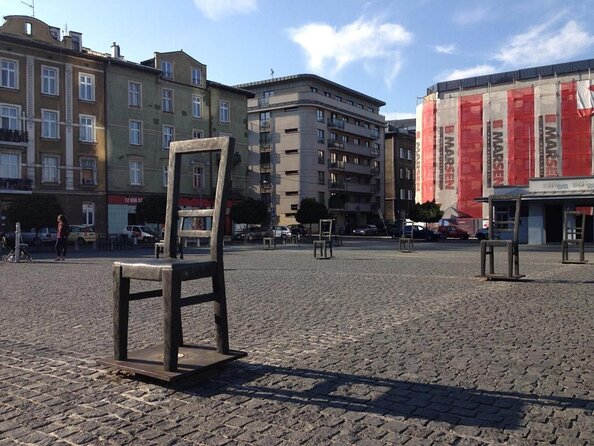
- Ghetto Heroes Square first: You start at the former logistical hub, so you understand the machinery before you see the camp.
- What survives matters: You walk past key remnants like the Grey House and the roll-call square.
- Gravestones as infrastructure: You hear how pieces of gravestones were once used to pave roads in the camp area.
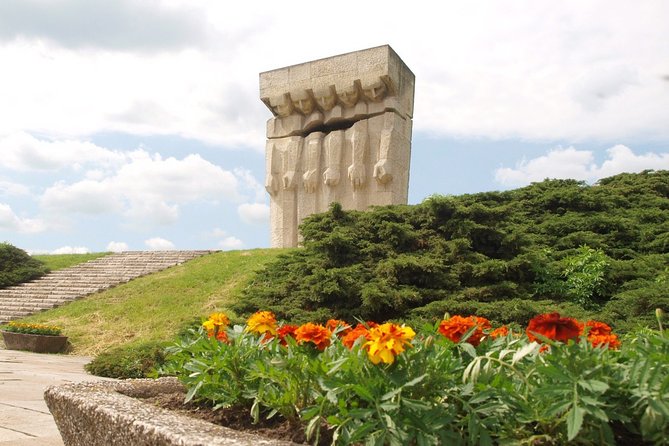
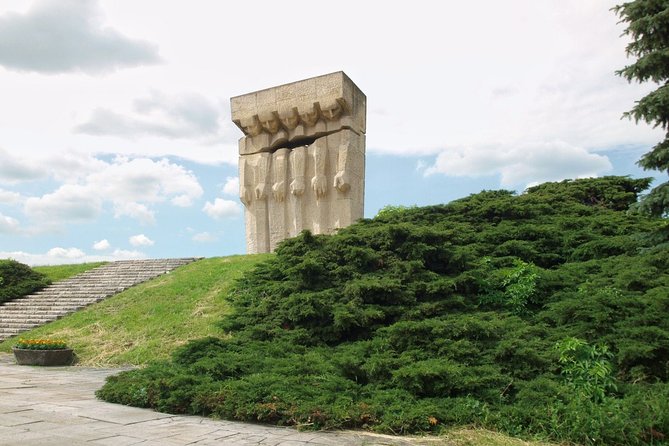
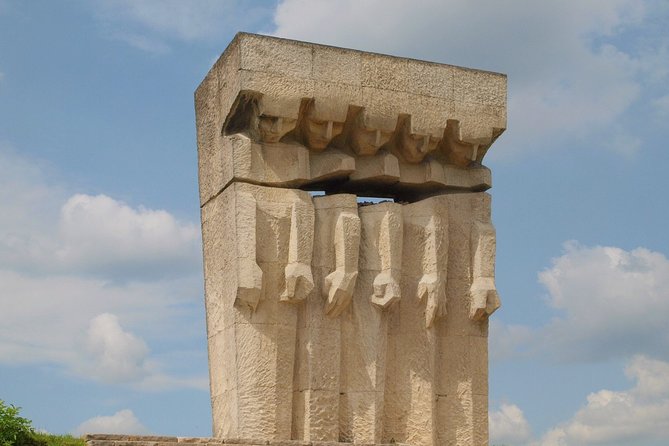
- Memorial moments included: You reflect at major memorials, including the Monument of Torn-Out Hearts.
- Schindler in the story: Oskar Schindler’s role is explained in a way that connects permits, registration, and survival.
- Small group, one language: Up to 25 people, and the tour runs in the single language you choose at booking.
From Ghetto Heroes Square to Plaszów Concentration Camp
This tour works because it starts with the system before it shows the prison. You begin at the Square of Ghettos Heroes, where the ghetto’s control and logistics were concentrated, including registry and departures for transports. Once you understand that flow, Płaszów is not just a site you look at, it becomes part of the same brutal pipeline.
The experience is also guided in a way that respects the pacing. Roughly 2 hours overall, you are not stuck in one place for long, and you cover both the ghetto square context and the camp’s surviving points. That timing is useful if you have a busy Krakow itinerary but still want more than a quick stop at a memorial.
Most importantly, the guide is there to connect the visible pieces to what happened. You get a walkthrough of camp organization, major sections, and key remains that anchor the narrative. If you want a tour that turns scattered plaques into a coherent story, this is built for you.
More Walking Tours in Krakow
- Old Town Krakow & Wawel Castle Walking Tour
★ 5.0 · 1,508 reviews - Creepy Krakow: 2-Hour City Walking Tour
★ 4.7 · 1,131 reviews - Krakow: The Old Town Walking Tour
★ 4.8 · 794 reviews
Stop 1: Square of Ghettos Heroes, the ghetto’s control and departure point
You start at Apteka pod Orłem, at Plac Bohaterów Getta 18, in central Krakow, at the meeting point by Ghetto Heroes Square. The square is known today for remembrance, but the guide frames it as something else historically: the logistical heart of the Kraków ghetto.
The guide explains how the square functioned as the place for control, registry, and the departure point for transports. That means you do not begin with a cemetery mood only. You begin with process and paperwork and movement, which can be harder to absorb, but it also makes the whole story clearer.
The tour gives you about 15 minutes here, and that is a good length. It is long enough to understand why the site matters, short enough that you do not feel rushed past the emotional moments. Also, admission is listed as free at this stop, so you are paying for interpretation and direction, not an extra entry fee.
One practical note for your mindset: expect this opening to set a factual, direct tone. If you are visiting to understand how people were processed and moved, this start helps a lot.
Stop 2: Płaszów Concentration Camp and how it changed over time
From the ghetto square context, you move into the camp area. Płaszów was created by Nazi German occupiers in October 1942, on grounds associated with two Jewish cemeteries in Krakow. The guide explains the camp evolved, starting as forced labor for Jews from the liquidated Kraków ghetto, then adding a penal labor section for Poles in July 1943.
The story keeps moving into new functions. In January 1944, it was redesignated a concentration camp, and later that year it also served as a transit camp for Hungarian Jews sent onward to Auschwitz. That timeline matters because it shows you the camp was not one static thing. The rules and purposes shifted, while suffering stayed constant.
The tour places about 1 hour at Płaszów in this main segment. The admission is listed as free at this stop, so again you are paying for the guide’s ability to point, explain, and connect. The guide also highlights that over 35,000 people were imprisoned and around 6,000 were murdered, with executions occurring at multiple sites within the camp.
What you are really looking for in this part is structure. The guide helps you connect the surviving remains and memorial markers to the camp’s layout and daily reality. If you have ever thought, I know the name, but I cannot picture the system, this is where the picture forms.
Stop 3: Grey House, roll-call square, and the memorials you face
This third segment is where the tour becomes most physical and most specific. The guide pieces the camp together from what survives, using points like the Grey House, the ruins of the pre-burial hall, traces of the Jewish cemeteries, and the roll-call square.
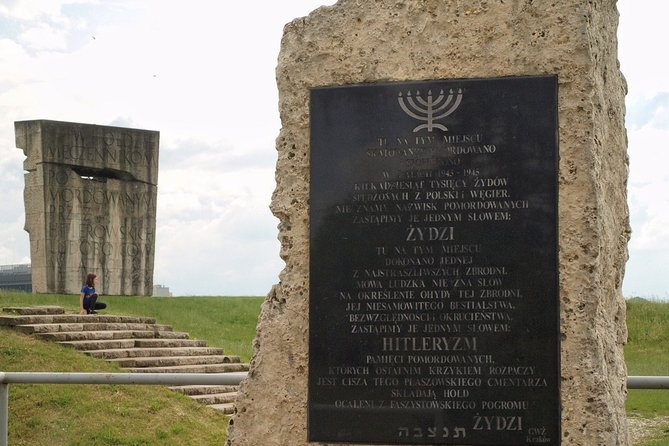
One of the most unsettling details the guide addresses is how fragments of gravestones were once used to pave roads. It is the kind of fact you want to hear carefully, with context, and this tour is set up to do exactly that. You are not just told, you are shown what remains and how it connects to the story.
You also visit memorial elements that help you process the scale of what happened. The tour includes reflection at the Monument of Torn-Out Hearts, among other major memorials. This matters because the camp site can feel like an outdoor museum of remnants, but the tour keeps guiding you back to meaning and loss.
Another key aspect here is camp organization. The guide explains how the space was divided into living, hospital, administrative, and industrial sections. Even when you cannot see buildings exactly as they were, you can understand how the camp worked as a system: labor, medical control, paperwork and administration, and production.
In this segment you get about 45 minutes, and that is a smart duration. It gives you enough time to move point to point without turning the visit into a nonstop lecture. Wear comfortable shoes and expect uneven ground around memorial areas.
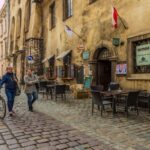
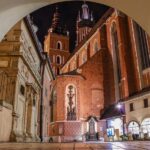
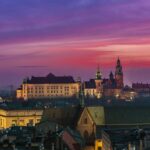
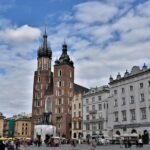
More Polish squares crossed on foot:
The Schindler connection, permits, registration, and survival
Płaszów is inseparable from the story of Oskar Schindler, and this tour does not treat that as a bonus detail. The guide explains Schindler through his enamelware enterprise and how he sought work permits for Jewish prisoners registered through Płaszów.
That part of the story matters because it shows how survival could depend on paperwork and approved labor status. The guide explains that Schindler later organized transfers to his wartime plant in Brünnlitz, saving over a thousand lives.
This segment is powerful because it changes your lens. You are still in a camp built to destroy, but you also see how a narrow path could open inside that machinery. It is not a happy ending, but it is a human story of action within extreme constraints.
If you know the film version of Schindler’s story, this tour helps you put locations and roles in the right place. Even if you do not, the guide gives you the connective tissue you need to understand why Schindler is mentioned again and again when people talk about Płaszów.
Just keep your expectations grounded. This is not a dramatized tour. It is an on-the-ground explanation of the parts of the system that allowed people to be moved out rather than pushed farther in.
Walking pace, group size, and what it means for your day
This is a guided walking tour with a total duration of about 2 hours. The group size is capped at 25 people, which helps a lot. With a smaller group, the guide can keep everyone together without racing, and you are more likely to hear answers to questions without waiting through a long line of voices.
You also know the tour language in advance. It runs in one language only, English in this offering, and you pick your language when booking. That matters when you want the guide to explain the camp organization and historical timeline clearly without switching gears.
Physical effort is listed as moderate. You are on your feet for most of the tour, and the ground around memorial areas can be uneven. Comfortable shoes are not optional, they are part of being respectful and able to keep up with the route.
Timing is another small but important factor. You are asked to arrive about 10 minutes early. Once the group departs, latecomers cannot join and tickets are not refundable. That policy may sound strict, but it is common for guided sites, and it keeps the tour from stretching out.
Price and value for a $30.04 English guided tour
At about $30.04 per person for roughly 2 hours, this tour is priced like a serious historical guide experience rather than a casual walking tour. The key value angle for me is that admission is listed as free at the stops. You are not paying extra on top of the tour price to enter each point, which makes budgeting simpler.
What you are paying for is interpretation. These sites have many layers, and without a guide, it can be easy to miss the logic of the place. Here, the guide explains the ghetto logistics first, then moves into Płaszów’s evolving functions, then focuses on the specific remains like the Grey House and the roll-call square, and finally ties it into Schindler’s actions through permits and transfers.
Also, the tour uses a mobile ticket. That means less administrative stress on the day, which is a small win when you are already mentally preparing for an intense topic.
If you are comparing options, think about this question: Do you want a guided explanation that connects surviving structures to the timeline? If yes, this price-to-value ratio makes sense. If you only want a quiet self-guided walk, you could do it on your own, but you would be losing most of the structure the guide provides.
Who should book, and who might want a different option
This tour is a strong match if you want to understand how the ghetto and Płaszów connect, and how the camp evolved over time. It is also ideal if you care about place-based details, like the roll-call square, the pre-burial hall ruins, and the memorials that shape your reflection.
It is also a good choice for English speakers who want one language with clear explanations. The guided nature and the small group size help a lot if you like asking questions and getting direct answers.
If you are someone who gets overwhelmed easily by heavy topics, you might want to prepare yourself before booking. This is not a tour built for light curiosity. The subject is harrowing, and the experience asks you to take it seriously from start to finish.
Should you book the Krakow Plaszów concentration camp guided walking tour?
Book this tour if you want the story to make sense, in order. Starting at Ghetto Heroes Square gives you the logistics first. Then Płaszów shows you the machinery of forced labor and transit, and the guide points out the specific remains and memorial markers that turn the site into a clear timeline.
I would also book it if Schindler’s story matters to you. The guide explains Schindler through permits, registration, and the transfers to Brünnlitz, connecting the well-known name to the local system at Płaszów.
Skip or consider something lighter if you cannot handle intense history or if walking for two hours on memorial grounds is not your thing. But if you can do it, and you want a structured, respectful, English-guided route with real site references, this is one of the best ways to understand Płaszów in Krakow.
FAQ
How long is the Krakow Plaszow concentration camp guided walking tour?
The tour is approximately 2 hours long.
What language is the tour offered in?
This tour is offered in English, and each group tour runs only in one language.
How much does the tour cost?
The price is $30.04 per person.
Where do I meet and where does the tour end?
Meet at Apteka pod Orłem, Plac Bohaterów Getta 18, 33-332 Kraków. The tour ends at Henryka Kamieńskiego 57, 30-644 Kraków.
Is admission included for the stops?
Admission tickets for the listed stops are free.
What fitness level do I need?
A moderate physical fitness level is requested because it is a guided walking tour.
Are there any rules about arriving late?
Please arrive 10 minutes before the tour begins. Once the group has departed, latecomers cannot join and tickets cannot be refunded.
Freshly posted from Krakow
- ZALIPIE – painted village, unique small group tour from Krakow★ 5.0 · 7 reviews
- “John Paul II Route” PRIVATE -Wadowice, Kalwaria Z.-Łagiewniki★ 5.0 · 7 reviews
- Krakow: Craft Beer Tasting City Walking Tour★ 4.4 · 7 reviews
- Magic of Krakow: Guided Tour of the Old Town★ 5.0 · 7 reviews
- Krakow : Zakopane Tour + Thermal Pools with Hotel Pickup★ 4.8 · 7 reviews
- Krakow in One Day: City Tour by Electric Car★ 5.0 · 7 reviews
- Cracow: Wawel Castle and Cathedral Guided Tour★ 5.0 · 7 reviews
Walking Tours, compared.
Old Town Krakow & Wawel Castle Walking Tour
Read our review →
Gdańsk City Sights & History Guided Walking Tour in English
Read our review →
Browse the lists this tour appears in