Reviewed · GUIDED
Krakow: Former Concentration Camp Plaszow Guided Tour
Płaszów hits harder when you walk it. This 2-hour guided route through Kraków’s Płaszów concentration camp is interesting because you’re shown real locations, not vague museum panels, and you get clear context for what happened here. I love the way the guide uses specific points on the grounds, especially the Grey House area, to make the camp’s layout understandable. I also like the human thread the guide keeps returning to, including how Oskar Schindler’s actions helped save more than a thousand lives.
One thing to keep in mind: Plaszów is mostly open ground, with few standing structures, so it is less about sightseeing and more about thoughtful, sometimes very heavy reflection while you walk.
Plan for that, bring comfortable shoes, and show up early. The tour is conducted in a single language (English, French, Spanish, or Italian), and you’ll want to be at the meeting point at least 10 minutes early because once the group leaves, late joining is not possible.
In This Review
- Key things I’d circle before you go
- Why Płaszów in Kraków feels different from a museum visit
- Meeting at Apteka Pod Orlem, then getting to the camp grounds
- How the walk is structured: reading the camp layout with a guide
- Grey House and the pre-burial area: where the story gets physical
- The roll-call square and other functional zones you’ll actually recognize
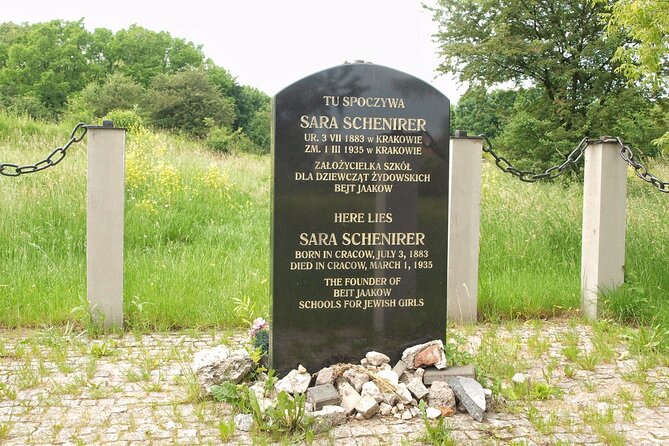
- Roads paved with fragments of Jewish gravestones
- Mass graves, the Monument of Torn-Out Hearts, and why Oskar Schindler is included
- What you learn about Płaszów’s timeline, in understandable pieces
- Price and value: is $29 worth a 2-hour guided walk here?
- How to prepare for this walk without rushing your emotions
- Who this tour fits best, and who should skip it
- Should you book the Kraków Płaszów guided tour?
- FAQ
- Where is the meeting point for the Płaszów guided tour?
- How long is the tour?
- How much does the tour cost?
- What’s included in the ticket price?
- Which languages are offered?
- What should I bring?
- Is the tour suitable for children or people with mobility or health limitations?
- Can I cancel, and is there a pay-later option?
Key things I’d circle before you go
- Authentic camp points like the roll-call area and the pre-burial hall ruins, explained in plain terms
- A guide-led sense of place, even though so much of the built environment has vanished
- Memorial moments at mass graves and the Monument of Torn-Out Hearts
- Gravestone fragments paving the roads, a detail that forces you to notice how terror also reshaped everyday space
- The Schindler connection, tied directly to how prisoners were processed through Płaszów
Why Płaszów in Kraków feels different from a museum visit
Most Holocaust sites are built to be visited inside buildings. Płaszów is different. This is a place where you’re walking across the grounds where people were imprisoned, held for forced labor, processed for deportation, and murdered.
That open, outdoor setting changes how you experience the story. With fewer walls standing, you rely on your guide to rebuild what used to be there, using the remaining outlines and points that still matter. You also get pauses at memorials so your brain can catch up with what you’re learning, instead of treating the visit like a quick checklist.
Still tacked up around Krakow
- From Krakow: Auschwitz-Birkenau Guided Tour & Hotel Pickup
★ 4.5 · 33,358 reviews - From Krakow: Auschwitz-Birkenau Guided Tour & Hotel Pickup
★ 4.5 · 29,340 reviews - Krakow: Auschwitz Guided Tour with Optional Hotel Pickup
★ 4.5 · 15,280 reviews
Meeting at Apteka Pod Orlem, then getting to the camp grounds
The tour meets at the entrance of Apteka Pod Orlem, and you should look for the guide holding an excursions.city sign. Getting there matters because the tour departs on schedule, and the provider notes that joining late is not possible once the group has set off.
A single tram ticket is included, which helps you avoid last-minute transport math in a city that already has plenty of tram options. The overall duration is about 2 hours, so it’s long enough to learn the key parts, but not so long that you’re stuck in one spot if your attention span is already under stress.
English, French, Spanish, and Italian are available, but the group runs in one chosen language. If you’re picky about understanding every detail, book the language you’re most comfortable with, not the one you can survive.
How the walk is structured: reading the camp layout with a guide
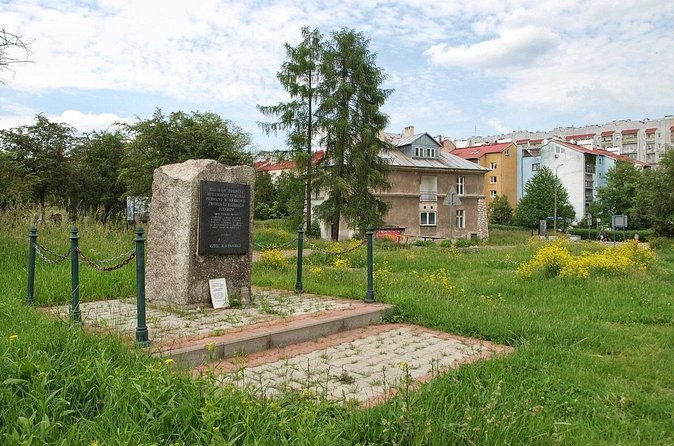
Plaszów can be hard to interpret on your own. The camp grew and changed over time, and today you don’t have a full set of preserved buildings to visually anchor the story. That is exactly why a guided approach works so well here.
Expect the guide to “rebuild” the vanished landscape through authentic points and careful storytelling. You’ll move from site to site and learn what each area was used for, including where people lived, where the hospital functioned, where administration operated, and where industry took place. The goal is not to overwhelm you with dates, but to help you understand how the camp’s system worked day after day.
You’ll also get explanations for why so few structures remain today. That matters, because without it, the emptiness of the grounds can feel confusing instead of meaningful.
Grey House and the pre-burial area: where the story gets physical
One of the most important stops is the Grey House. Even though the present-day view may not feel like a dramatic set piece, your guide’s narration gives the building’s role weight. This is where historical details start to connect to the lived reality of the camp system.
From there, you’ll see the ruins of the pre-burial hall. Standing in the vicinity of ruins makes the horror feel less abstract. You’re not just hearing that bodies were handled and moved. You’re learning that there were specific spaces built into the camp’s workflow for death, and those spaces were part of the machinery of terror.
If you tend to process information best through visuals, you’ll appreciate this part of the walk. If you’re hoping for a lot of preserved architecture, this may feel restrained, but the tradeoff is that you walk away with a clearer mental map of what the camp used to be.
Beneath the newer pins on the Krakow board:

The roll-call square and other functional zones you’ll actually recognize
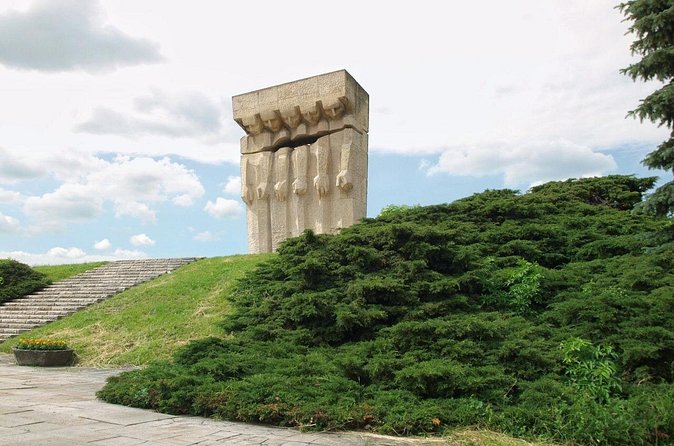
The tour includes the former roll-call square, a key part of understanding camp control. Roll call was not just routine, it was enforcement. It set the rhythm of fear, and your guide will connect the space to what the prisoners faced in daily life.
You’ll also get context around areas once assigned to living quarters and other camp functions like hospital, administration, and industry. Even when the area looks plain from the outside, you’ll learn what went on there and why it mattered.
This is one of the reasons I’d recommend doing this with a guide. The camp’s layout is readable only if someone helps you interpret it. You leave with a sense of how the system moved people through work, control points, and ultimately toward deportation and death.
Roads paved with fragments of Jewish gravestones
One of the most unsettling but important details you’ll learn is that fragments of Jewish gravestones were used to pave camp roads. That detail doesn’t just add shock value. It shows how the Nazis treated Jewish life as something to erase, even after death.
It also changes how you look at the ground. Instead of seeing only dirt and space, you start thinking about what was removed, broken, and repurposed to serve the camp.
A good guide will handle this carefully. The intent is respect, not spectacle. You’ll feel that in the tone of the explanation and the way the group is directed to pause and reflect when the story turns toward mass graves and memorials.
Mass graves, the Monument of Torn-Out Hearts, and why Oskar Schindler is included
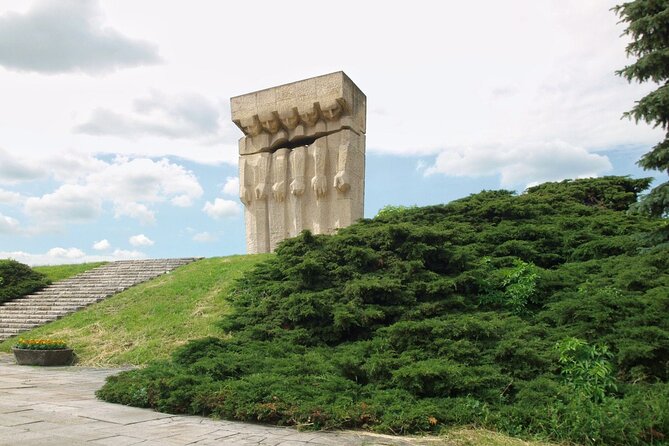
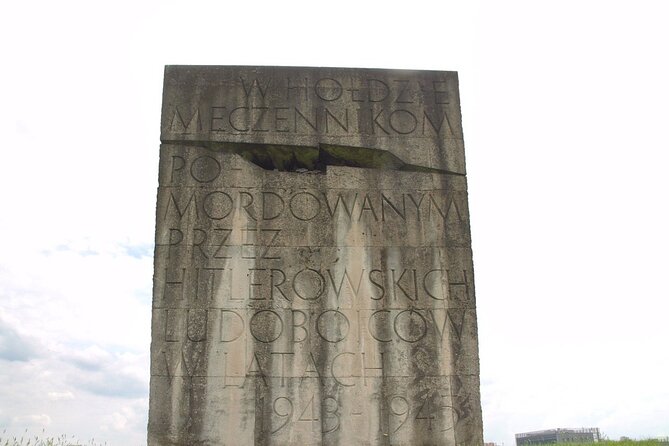
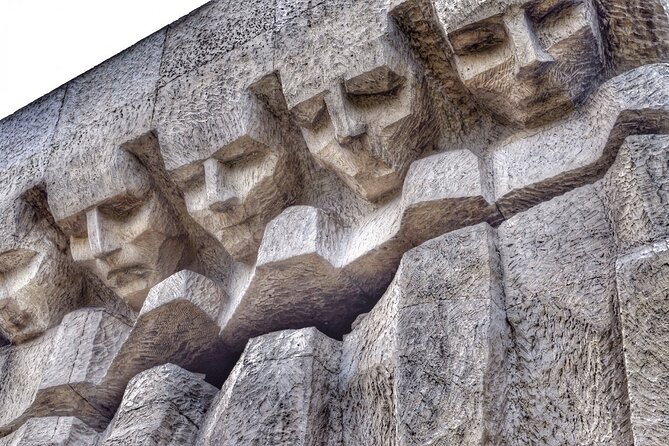
At marked fields of mass graves and major memorials, the tour pauses. One highlight is the Monument of Torn-Out Hearts. This stop matters because it shifts the visit from description to remembrance. You get time to take in the memorial’s presence and let what you’ve learned settle.
Then comes an essential thread: Oskar Schindler. Your guide will explain how Schindler helped save more than a thousand Jewish lives by securing work permits for prisoners registered through Płaszów and later arranging their transfer to his wartime plant in Brunnlitz.
This part of the tour is valuable because it refuses to end the story at pure devastation. It still stays honest about terror and murder, but it adds a different kind of lesson: that individuals could manipulate a brutal system to reduce suffering, even in the narrow margins allowed by the Nazis’ own bureaucracy.
What you learn about Płaszów’s timeline, in understandable pieces
You’ll hear how Płaszów began and evolved. Established by Nazi Germany in October 1942, it was set up on the grounds of two Jewish cemeteries in Kraków. It started as a forced-labor camp for Jews brought from the liquidated Kraków ghetto.
From July 1943, it also held Poles in a penal-labor section. In January 1944, it was redesignated as a concentration camp, and later it functioned as a transit site for Hungarian Jews sent onward to Auschwitz.
In total, more than 35,000 people were imprisoned here, and around 6,000 were murdered. Those numbers are not meant to be memorized for a quiz. They give you scale, so the stories you’re hearing land with gravity.
Price and value: is $29 worth a 2-hour guided walk here?
At about $29 per person for a 2-hour guided tour, this is fairly priced for what you get. You’re paying for more than walking access. You’re paying for a guide who can point out meaningful locations, explain what you’re seeing, and provide context so the visit does not become confusing or superficial.
The tram ticket included also adds value. It may not sound huge, but it reduces friction on the day, and it helps you focus on the experience rather than logistics.
The biggest value isn’t money-related. It’s interpretive. Plaszów is a place where the grounds can look too plain without explanation. A strong guide turns empty space into understanding, and that is what makes this tour worth doing at all.
How to prepare for this walk without rushing your emotions
This is not a casual stroll. It’s a somber site where the pacing is slower and reflective moments are built into the route.
Wear comfortable shoes. The tour is on outdoor ground, and you don’t want your feet to become the main problem. Dress for weather since you’ll be outside during the walk.
Plan around meals and drinks, because they’re not included. Also remember that alcohol and drugs are not allowed.
If you’re the type who gets overwhelmed easily, choose your time of day carefully. A guided visit can bring up heavy feelings, and you’ll want enough quiet time afterward to decompress on your own terms.
Who this tour fits best, and who should skip it
This tour is not for everyone, and the restrictions are there for a reason. It is not suitable for children under 12, people with mobility impairments, people with heart problems, and wheelchair users.
It also makes the most sense for adults and teens who want historical context and respectful remembrance while walking through an outdoor site that lacks dramatic preserved structures. If your goal is to understand how the camp worked, why specific places mattered, and how memorials connect to real actions, you’ll likely find this format effective.
For families with kids under 12, you’ll probably want a different approach. For anyone with mobility or health constraints, consider choosing a less physically demanding option that still provides context without requiring the same kind of outdoor walking.
Should you book the Kraków Płaszów guided tour?
Yes, if you want a respectful, place-based understanding of what happened at Płaszów and you’re willing to trade “big photo moments” for real context. This tour is at its best when you lean into the guide’s job: pointing out specific areas, explaining what they were used for, and pausing where remembrance is the point.
Skip it if you need something light and easy-going, or if your physical needs do not match an outdoor walk across open grounds. Also skip if you dislike guided pacing and prefer to wander completely on your own, because Plaszów requires interpretation to make sense.
If you do book, arrive on time, pick the language you understand best, and wear shoes you trust. That’s how you give yourself the best chance to absorb the story fully.
FAQ
Where is the meeting point for the Płaszów guided tour?
Meet your guide in front of the entrance of Apteka Pod Orlem. Look for the guide with the excursions.city sign.
How long is the tour?
The tour lasts about 2 hours.
How much does the tour cost?
The price is $29 per person.
What’s included in the ticket price?
It includes a professional guide and a single tram ticket.
Which languages are offered?
The tour guide is available in English, French, Spanish, and Italian.
What should I bring?
Bring comfortable shoes and weather-appropriate clothing.
Is the tour suitable for children or people with mobility or health limitations?
It is not suitable for children under 12, people with mobility impairments, people with heart problems, and wheelchair users.
Can I cancel, and is there a pay-later option?
Free cancellation is available up to 24 hours in advance for a full refund, and you can reserve now and pay later.
Freshly posted from Krakow
- Krakow: Audio-Guided City Experience by Golf Cart★ 5.0 · 1 review
- Krakow: Zakopane and Thermal Springs Tour with Hotel Pickup★ 5.0 · 1 review
- Half-day In the footsteps of John Paul II Tour from Krakow★ 5.0 · 1 review
- Tour to Wadowice: Hometown of Pope Saint John Paul II★ 5.0 · 1 review
- Krakow: Wawel & Salt Mine Experience with Lunch★ 5.0 · 1 review
- Krakow: Nowa Huta Communist District Walking Tour★ 5.0 · 1 review
- Krakow: Outdoor Paintball with Hotel Transfers★ 5.0 · 1 review
Guided, compared.
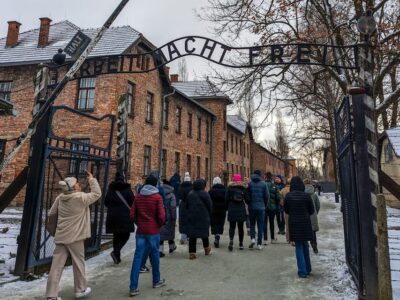
Auschwitz-Birkenau Guided Tour & Hotel Pickup
Read our review →Auschwitz-Birkenau Guided Tour & Hotel Pickup
Read our review →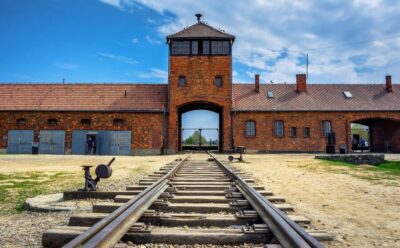
Auschwitz Guided Tour with Optional Hotel Pickup
Read our review →
Auschwitz-Birkenau Guided Tour with Pickup & Lunch
Read our review →
Krakow to Auschwitz Birkenau Guided Tour with Transfer and Ticket
Read our review →
Wieliczka Salt Mine Fast-Track Ticket & Guided Tour
Read our review →