Reviewed · GUIDED
Krakow: Former Concentration Camp Plaszow Guided Tour
Few places in Krakow feel this close to history. This short guided walk connects you to the Kraków Ghetto story through two sites, then moves on to the former Plaszów Concentration Camp area, right inside the city. Along the way, you get the kind of context that turns scattered stone and open space into something you can actually understand.
I especially like the first stop at Plac Bohaterów Getta, where the memorial uses 70 metal chairs to represent departure and absence, even though the square once had a very different everyday purpose. I also like that the Plaszów stop is practical and grounded, taking you to a vast space that can look almost empty until you know what you are seeing. One consideration: this is emotionally heavy and the grounds can be uneven, so wear sturdy shoes and be ready for a moderate walk.
In This Review
- Key Things I’d Plan Around
- Why This Krakow Tour Works Even If You’re Also Doing Auschwitz
- Plac Bohaterów Getta and the 70 Metal Chairs Memorial
- The 12-Meter Ghetto Wall Segment and Its 1983 Plaque
- Plaszów Concentration Camp Grounds: When “Empty” Is the Clue
- Price and Value: What You Pay for in a 2-Hour Guided Format
- Logistics That Make or Break Your Day
- The Guide Makes the Difference, Especially With Kinga
- Who Should Book This Tour, and Who Might Feel Frustrated
- Should You Book the Krakow Plaszów Guided Tour?
- FAQ
- Is this tour offered in English?
- How long is the Krakow Plaszów guided tour?
- What is the price per person?
- Where do I meet the guide?
- Where does the tour end?
- Will I need cash or can I use a mobile ticket?
- Is Plaszów admission included?
- How physically demanding is it?
- What’s the group size limit?
- Can I cancel for a full refund?
Key Things I’d Plan Around
- A tight 2-hour format that fits a busy Krakow schedule without turning into a long ordeal
- Small group size (max 25) for more direct guide attention
- English-guided storytelling that helps you connect the ghetto wall, memorial square, and Plaszów area
- Three linked stops: Plac Bohaterów Getta, the ghetto wall segment with a 1983 plaque, and the Plaszów camp grounds
- Plaszów admission listed as free for this experience, so you pay mainly for the guiding and time on site
Why This Krakow Tour Works Even If You’re Also Doing Auschwitz
Krakow has a reputation for being a launch point for Auschwitz. That’s true. But if you only do the big day trip, you miss another layer that sits closer to the city itself.
This tour is built for exactly that gap. You start at Plac Bohaterów Getta, move through visible reminders of the ghetto, then walk to the former Konzentrationslager Plaszow bei Krakau area in Podgórze. The result is a “wait, this is really here” feeling that stays with you, because the sites are not tucked away in some isolated corner.
For me, the biggest value is how fast you get your bearings. In about 2 hours, you go from one memorial element to another, so your brain can form a clearer map of place and meaning. It also helps that the guide keeps the story connected, rather than treating each stop like a separate photo op.
And yes, the topic is difficult. That’s part of the point. But the format is respectful, focused, and short enough that you can process it without burning your whole day.
Still tacked up around Krakow
- From Krakow: Auschwitz-Birkenau Guided Tour & Hotel Pickup
★ 4.5 · 33,358 reviews - From Krakow: Auschwitz-Birkenau Guided Tour & Hotel Pickup
★ 4.5 · 29,340 reviews - Krakow: Auschwitz Guided Tour with Optional Hotel Pickup
★ 4.5 · 15,280 reviews
Plac Bohaterów Getta and the 70 Metal Chairs Memorial
Your first stop is Plac Bohaterów Getta, at Plac Bohaterów Getta 18. If you’ve only seen Krakow’s famous streets and churches, this square can feel like a sudden shift. That shift is intentional.
Here’s what makes it so striking. After the war, the name changed from Plac Zgody to Plac Bohaterów Getta and a small monument was added. But the square didn’t become a calm memorial space overnight. For a long time, its historical significance was badly contradicted by practical uses, including being used as a public toilet or a parking lot.
Then, in 2005, the square was renovated, and the design sparked controversy. The memorial layout uses 70 large metal chairs, spaced far enough apart to create a sense of space between people. The chairs are meant to symbolize departure and also absence. Even if you don’t fully grasp the symbolism in the first minute, you quickly feel its rhythm: sitting down feels wrong, walking through feels too casual, and the emptiness starts talking back to you.
A practical tip: take a minute before you move on. Stand back and look at the chairs as a whole. Up close, you’ll focus on individual pieces. From farther away, you’ll understand the spacing and the intent. That’s where the emotional impact gets more precise.
Possible drawback: because it is a public square, the space can feel physically normal at first glance. That can clash with the subject. The guide’s framing matters here, because you need help turning “just a place in the city” into “a memorial with rules of attention.”
The 12-Meter Ghetto Wall Segment and Its 1983 Plaque
Next you’ll see one of the most prominent pieces of physical evidence of Kraków’s ghetto. It’s a stretch of original wall, about 12 meters long. It’s not huge. It doesn’t try to overwhelm you with scale. That is part of why it hits.
In 1983, a commemorative plaque was added in Hebrew and Polish. The text is clear and direct. It states, Here they lived, suffered and died at the hands of the German torturers. From here they began their final journey to the death camps.
When you read a plaque like that in the actual place where people were contained, the meaning doesn’t stay abstract. It becomes anchored. You can’t treat it like a museum label anymore.
What I like about this stop is that it gives you something to hold onto. The ghetto story often gets presented through documents and distant photos. Here, you get a boundary line you can stand beside. You can imagine a forced enclosure without needing extra details that aren’t on the wall itself.
One caution: take your time reading and then look beyond the plaque. People sometimes read and rush off. Slow down after the last line. Notice the surroundings, and then notice how your brain tries to normalize what you see. A good guide will help you fight that reflex.
Plaszów Concentration Camp Grounds: When “Empty” Is the Clue
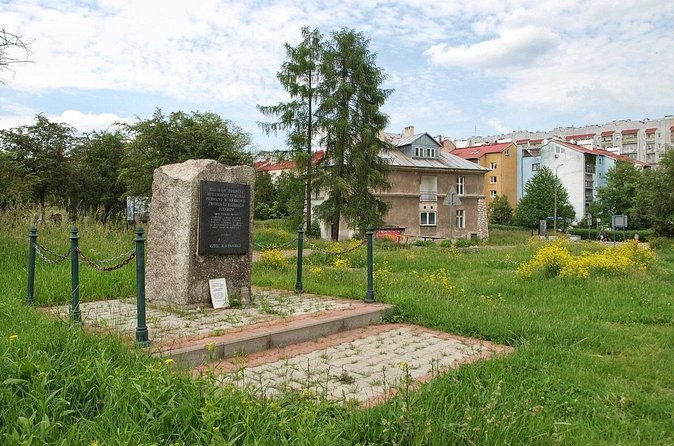
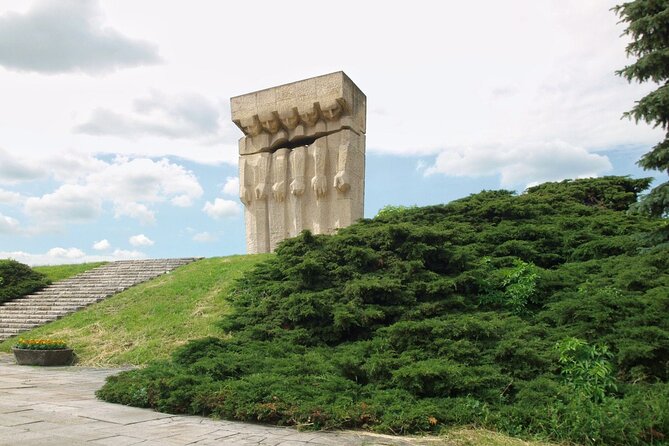
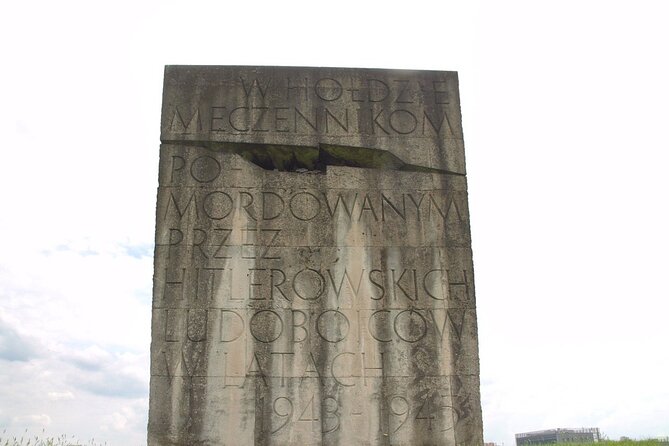
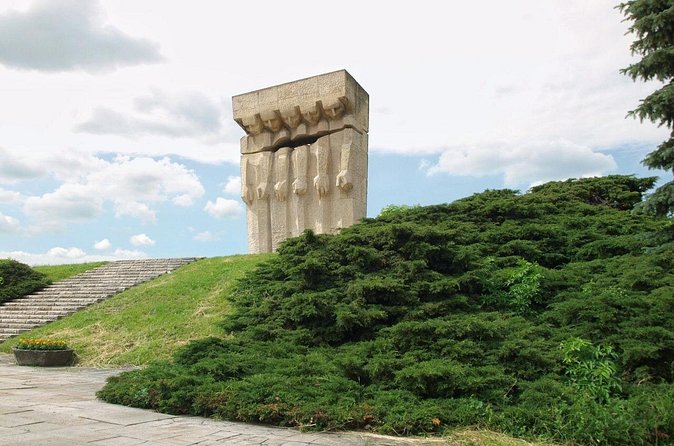
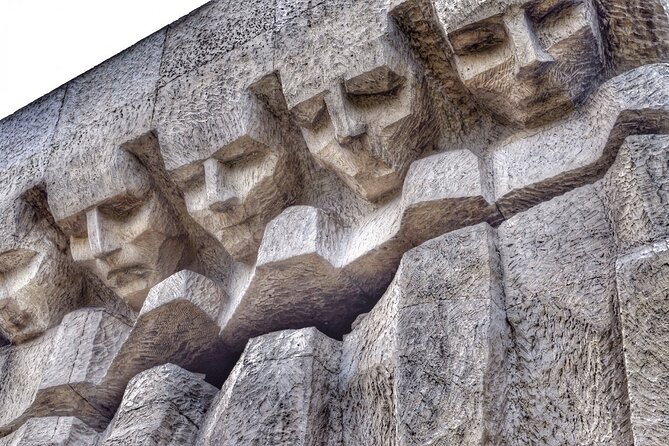
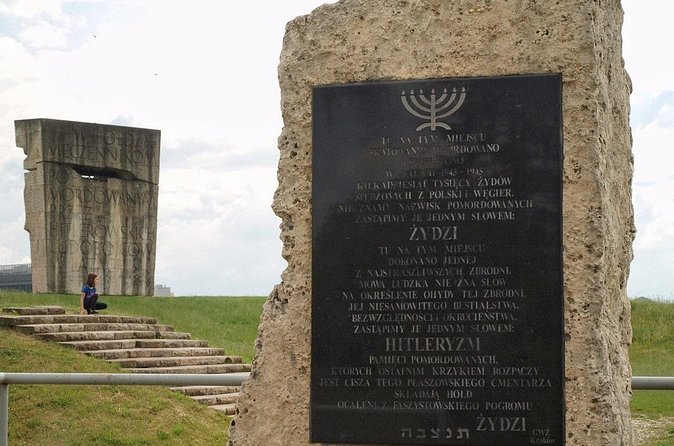
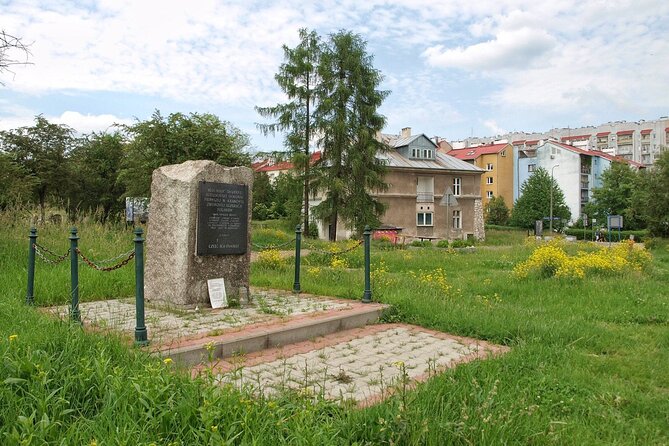
The tour’s main stop is at Plaszów Concentration Camp in Podgórze. It’s one of those facts that makes Krakow feel more complex: while so many visitors focus on Auschwitz, Krakow itself has a former concentration camp site in its own backyard.
This part of the city is not remote or forgotten by geography. The area is on the other side of the river, and it sits near a major communication artery, Wielicka Street, opposite Bonarka shopping center, and not far from Krakus Mound. That proximity is unsettling in a very specific way, because wartime suffering is placed next to everyday city rhythms.
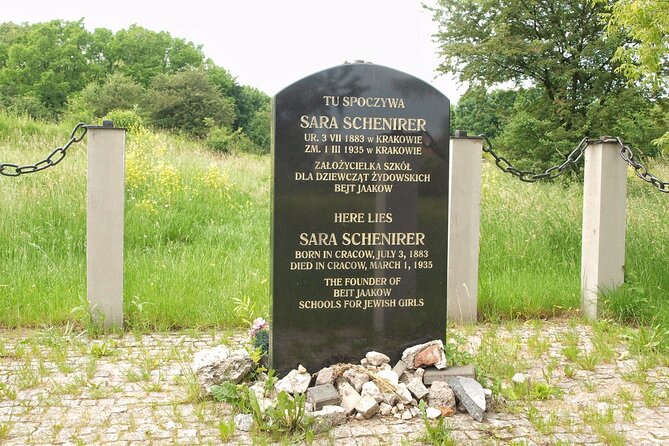
During the war it was the seat of the German Nazi concentration camp Konzentrationslager Plaszow bei Krakau. Today, what you’ll walk through is described as a wild, uneven space of land. It also notes that the site long looked like it didn’t advertise its own history. Until recently, it did not clearly signal what happened here.
That means the experience can feel more open than you might expect. Instead of heavy indoor exhibits, you are reading the ground and the edges of the space through your guide’s explanation. You may find yourself thinking, How could something so physical and so unfinished-looking hold such weight? That question is not a distraction. It’s part of the learning.
The tour schedules about 1 hour at this stop, and the admission ticket is listed as free. So the value here is the guidance, not entry fees.
Practical advice for your body: the grounds can be uneven. You’ll want shoes with solid traction and you should avoid anything that feels like a sneaker-thin sole. Also, give yourself mental space. This is not sightseeing at the same energy level as Old Town.
Beneath the newer pins on the Krakow board:
Price and Value: What You Pay for in a 2-Hour Guided Format
The price is $30.25 per person for around 2 hours. That may sound like a normal city-tour price until you remember the topic and the care required to do it properly.
Here’s where the value comes from. This tour is not trying to be a long history lecture or a checklist of monuments. Instead, it’s a short route that pairs multiple linked sites: the chairs memorial, a ghetto wall segment, and the Plaszów camp area. You’re paying for an English guide’s ability to connect those pieces into a coherent story.
Also, one listed entry detail helps your math: Plaszów admission is shown as free for this experience. So your payment is mainly for the guided time and on-site interpretation, not for multiple ticketed museum stops.
A small-group format matters too. The maximum is 25 travelers. In a group that size, you can usually ask questions without feeling lost in the crowd, and you get better pacing.
Another practical detail that affects value: this tour offers a mobile ticket and is offered in English. That saves time and friction at the start, which matters for a short tour.
One consideration about price fairness: if you already know these sites deeply and you love self-guided reading, you might feel you could spend less. But if you want your first real pass through Plaszów and Kraków’s ghetto physical reminders to be guided and understandable, this price starts to look reasonable fast.
Logistics That Make or Break Your Day
The tour starts at Plac Bohaterów Getta 18, 30-547 Kraków and ends at Henryka Kamieńskiego 57, 30-644 Kraków. That end point matters because it can shape your next move in the city. Plan your next activity with that in mind, especially if you are trying to catch a tram or bus.
It’s also listed as near public transportation, which is helpful. You can treat the tour like a normal city appointment instead of a far-off detour.
You should also assume moderate physical fitness is needed. That doesn’t mean athletic, but it does mean you should be comfortable walking and standing for a couple of hours, including over ground that may be uneven around the Plaszów area.
Finally, confirmation happens at booking. You’ll also get the mobile ticket. For the smoothest experience, have your phone ready and don’t plan to rely on spotty signal right at the start.
The Guide Makes the Difference, Especially With Kinga
One review highlights the difference a great guide can make, and it puts a name to it: Kinga. The comment praises her as fabulous and notes that she made the tour feel special instead of ordinary.
That matches what this kind of tour needs. These are not “look and move on” sites. They need interpretation. A guide is how you go from seeing objects and open spaces to understanding what they represent.
If you get Kinga or another similarly thoughtful guide, you can expect the pacing to feel more human. The story tends to land better when it’s delivered in a way that respects both the facts and your emotional reaction.
What I’d do to get the most out of the guiding: ask yourself what you’re not seeing yet. For example, at Plac Bohaterów Getta, your eyes may jump from chair to chair. The guide should help you connect that design to the meaning. At the wall segment, you might read quickly. The guide should slow you down so the words connect to the location.
In other words, this tour is not just about locations. It’s about how you are taught to look at them.
Who Should Book This Tour, and Who Might Feel Frustrated
This is a smart choice if you:
- want a Krakow-based alternative to only doing Auschwitz
- like guided context that helps you connect multiple Holocaust-related sites in one short outing
- prefer a small group and a manageable time commitment
- are comfortable with serious topics delivered in a respectful, on-foot way
It may not be the best fit if you:
- dislike uneven ground and long standing
- want something lighter and purely sightseeing focused
- are looking for a museum-style indoor experience with lots of artifacts and displays
Because it ends at Henryka Kamieńskiego 57, you should also make sure you can handle an open-ended next step after the tour. It’s not a full loop that drops you back exactly where you started.
Should You Book the Krakow Plaszów Guided Tour?
Yes, if you want a focused, English-guided introduction to Kraków’s wartime reality beyond the usual headline attraction. The short 2-hour format makes it easy to add, and the combination of Plac Bohaterów Getta, the 12-meter ghetto wall segment, and the Plaszów camp grounds gives you a connected route instead of disconnected stops.
I’d book it if you care about understanding the meaning of place, not just collecting photos. The memorial chairs and the ghetto wall plaque are powerful on their own, but the camp stop is where good guiding really matters, because the ground looks like empty space until it’s framed correctly.
I wouldn’t book it if you are not up for heavy subject matter or if you know you struggle with uneven walking. For everyone else who wants an authentic Krakow experience with real substance, this is a solid use of time.
FAQ
Is this tour offered in English?
Yes, it is offered in English.
How long is the Krakow Plaszów guided tour?
It runs for about 2 hours (approx.).
What is the price per person?
The price is listed as $30.25 per person.
Where do I meet the guide?
You start at Plac Bohaterów Getta 18, 30-547 Kraków, Poland.
Where does the tour end?
The tour ends at Henryka Kamieńskiego 57, 30-644 Kraków, Poland.
Will I need cash or can I use a mobile ticket?
You get a mobile ticket.
Is Plaszów admission included?
The Plaszów stop is listed as having Admission Ticket Free.
How physically demanding is it?
It’s recommended for travelers with moderate physical fitness, since you’ll be walking on site.
What’s the group size limit?
The tour has a maximum of 25 travelers.
Can I cancel for a full refund?
Yes. You can cancel for a full refund up to 24 hours in advance of the experience start time.
Freshly posted from Krakow
- Krakow: Audio-Guided City Experience by Golf Cart★ 5.0 · 1 review
- Krakow: Zakopane and Thermal Springs Tour with Hotel Pickup★ 5.0 · 1 review
- Half-day In the footsteps of John Paul II Tour from Krakow★ 5.0 · 1 review
- Krakow: Wawel & Salt Mine Experience with Lunch★ 5.0 · 1 review
- Tour to Wadowice: Hometown of Pope Saint John Paul II★ 5.0 · 1 review
- Krakow: Outdoor Paintball with Hotel Transfers★ 5.0 · 1 review
- Krakow: Nowa Huta Communist District Walking Tour★ 5.0 · 1 review
Guided, compared.
Auschwitz-Birkenau Guided Tour & Hotel Pickup
Read our review →Auschwitz-Birkenau Guided Tour & Hotel Pickup
Read our review →
Auschwitz Guided Tour with Optional Hotel Pickup
Read our review →
Auschwitz-Birkenau Guided Tour with Pickup & Lunch
Read our review →
Krakow to Auschwitz Birkenau Guided Tour with Transfer and Ticket
Read our review →
Wieliczka Salt Mine Fast-Track Ticket & Guided Tour
Read our review →