
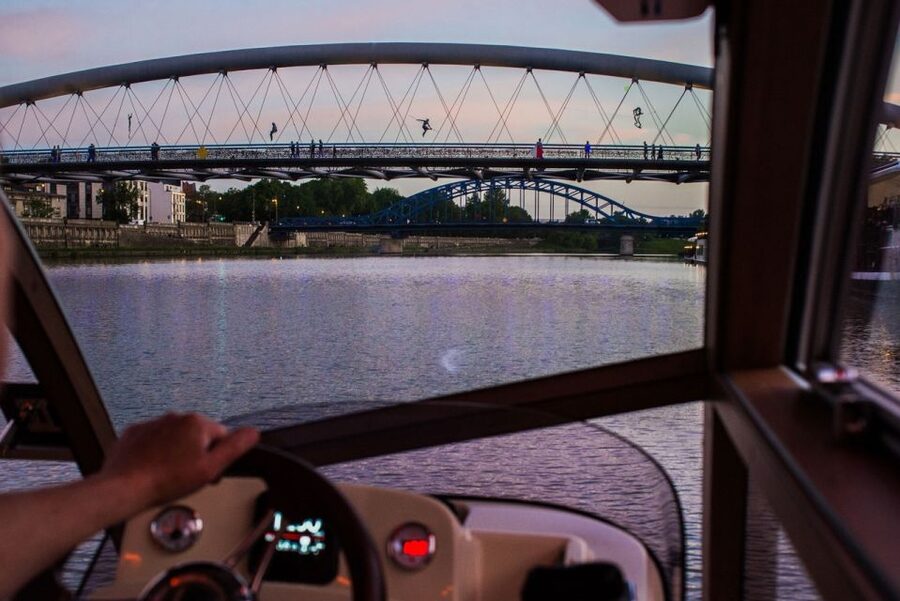
Reviewed · CRUISES & BOAT TOURS
Krakow: Cruise and Tour of Former Concentration Camp Płaszow
Krakow has a way of teaching in layers. This tour pairs a peaceful Vistula River cruise with a guided walk through Plaszow Concentration Camp, where the story is handled with care and time to think.
I like the balance here: you get panoramic views of Wawel Hill and other landmarks from the water first, then you move into Plaszow with a live guide who connects what remains on the ground to what happened there. I also like the format, a live guide for the camp plus an audio guide for the cruise and context, so you never feel lost.
One thing to consider: part of the experience is walking, and Plaszow has few preserved buildings. It is not a show, so if you prefer sites with lots of intact structures, this may feel more open, quiet, and demanding.
In This Review
- Key things I’d plan around
- A Vistula catamaran start in central Krakow (with warm deck options)
- Panoramic views and cruise audio that actually sets you up
- Entering Plaszow: where the story lives without many preserved buildings
- The Grey House, roll-call square, and traces you can almost follow
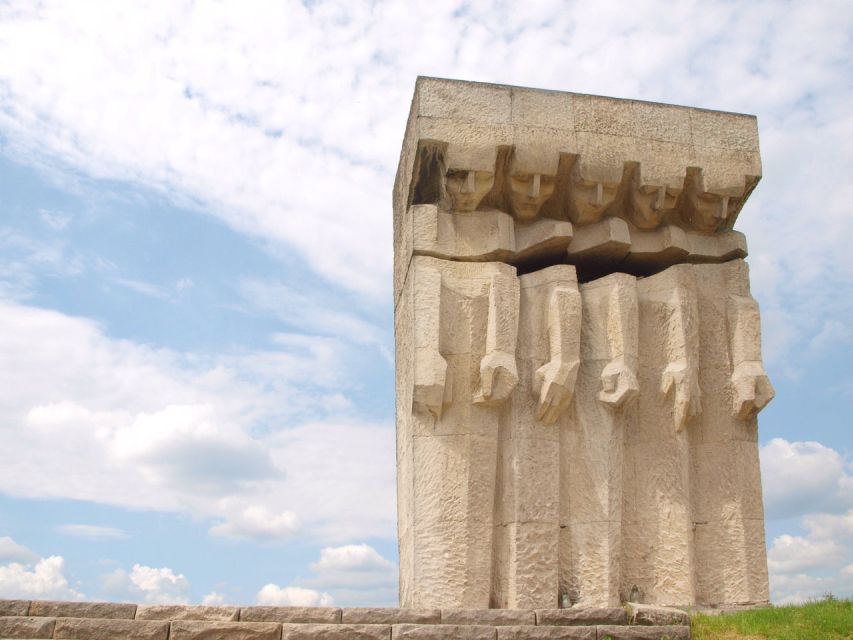
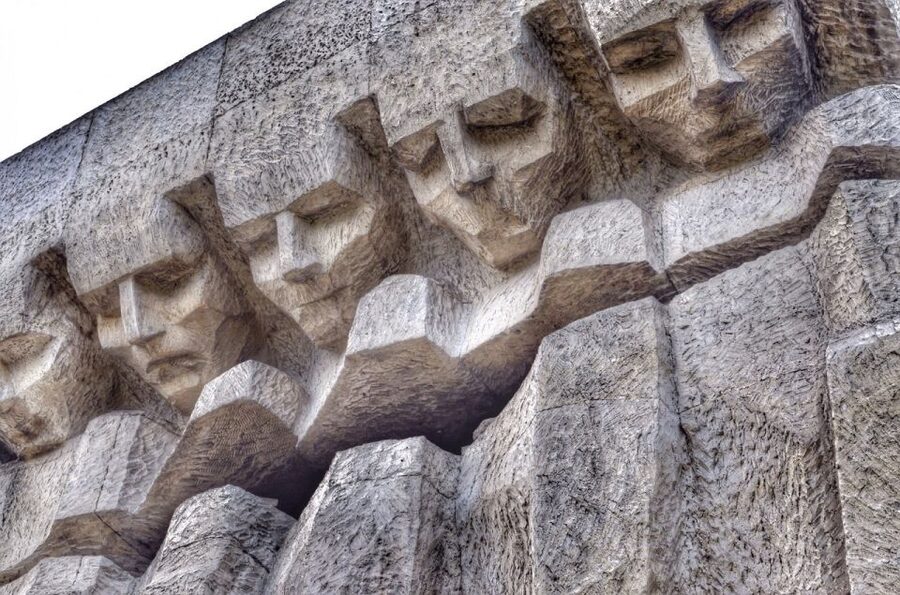
- Memorials and silence: paying respect at the Monument of Torn-Out Hearts
- Schindler’s story at Plaszow: why the tour connects it to real decisions
- Timing, pace, and what to wear for a 150-minute mix
- Price and value: what about $56 gets you
- Who this tour suits best
- Should you book this Krakow Plaszow cruise and tour?
- FAQ
- FAQ
- Where is the meeting point for the tour?
- How long is the Krakow cruise and Plaszow camp tour?
- Is there a live guide at Plaszow?
- Is an audio guide included?
- What transport is included in the tour?
- Is hotel pickup and drop-off included?
- What should I wear for the walking portion?
- How early should I arrive?
- What languages is the tour offered in?
Key things I’d plan around
- Heated deck comfort on the catamaran, with options to stand on the open platform
- English live guide at Plaszow paired with an audio guide for background
- What survives at the camp (like the Grey House and roll-call square), explained clearly
- Memorial moments, including the Monument of Torn-Out Hearts
- Schindler’s story tied directly to Plaszow, including how work permits helped
- A reflection-first pace, not a speed-run through history
A Vistula catamaran start in central Krakow (with warm deck options)
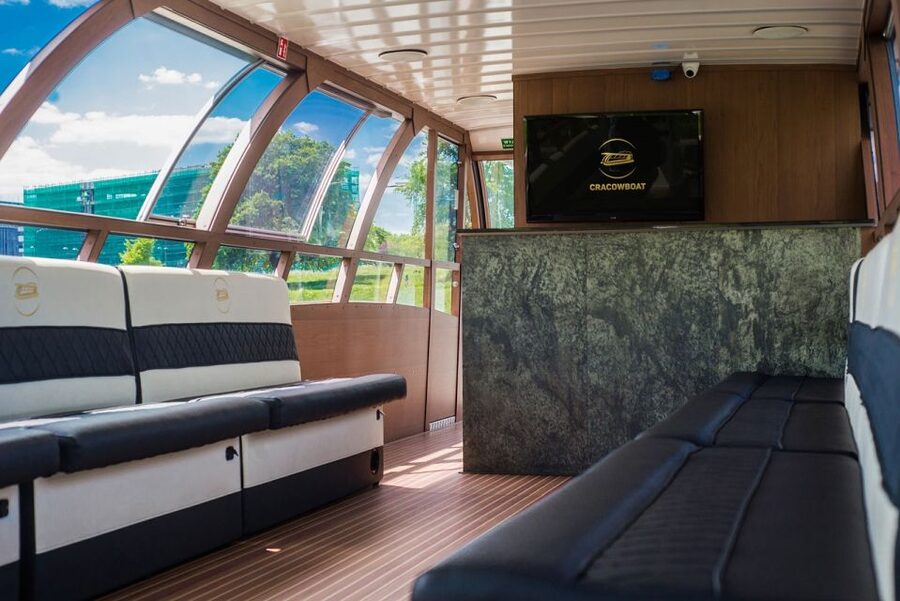
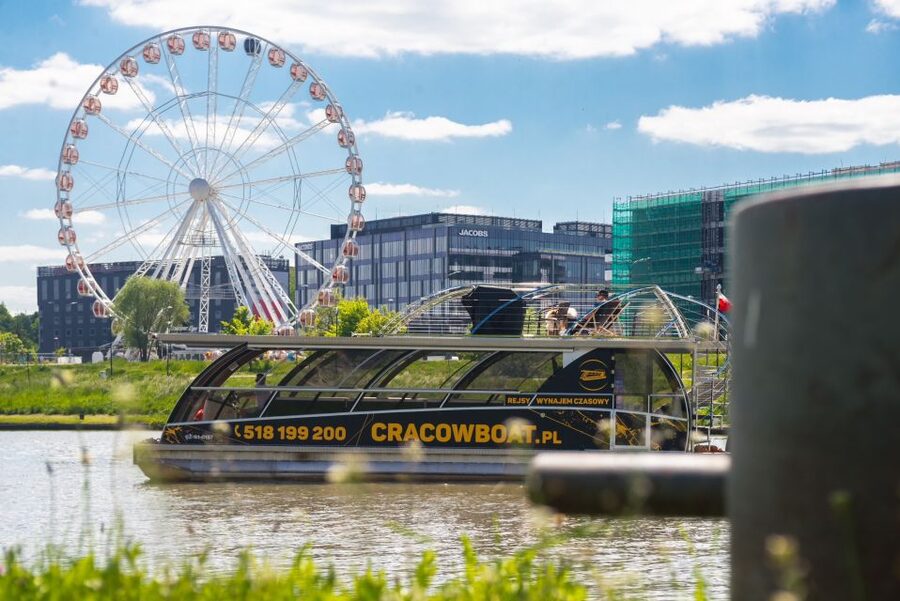
You begin in central Krakow at Inflancki Boulevard, right by the water tram stop called Paulinska. You’ll look for the team member holding a Cracow Boat sign, then board a modern catamaran for a one-way cruise on the Vistula River.
This first segment matters more than you might expect. It’s not just transport, it’s a reset. From the water you see Krakow landmarks from a calmer angle, and the tour’s audio guide helps you start thinking about the city in context before you arrive at Plaszow.
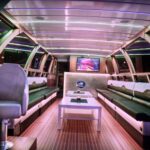
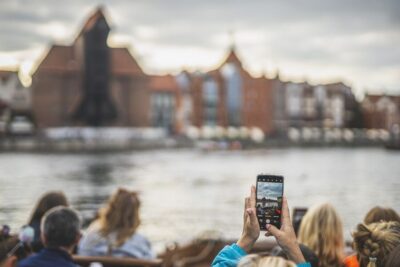
If the weather is chilly, you can relax on the heated deck with leather sofas. If you want air and photos, you can also choose the open platform. Either way, you’ll be moving, which keeps the group energy steady for what comes next.
More Boat Cruises in Krakow
- Kraków: Evening or Night River Cruise
★ 4.0 · 7,386 reviews - Krakow: Sightseeing Cruise by Vistula River
★ 4.1 · 1,897 reviews - Krakow: Day or Night Vistula River Cruise with Audio Guide
★ 4.5 · 1,303 reviews
Panoramic views and cruise audio that actually sets you up
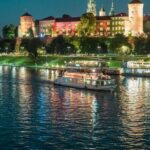
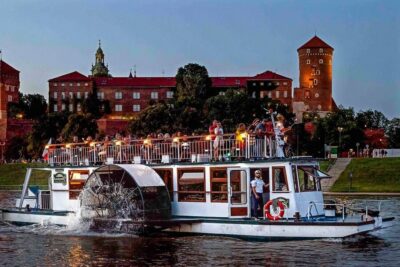
During the cruise, the audio guide gives you a thread of Krakow’s history while the boat passes major sights. Wawel Hill is specifically part of the story here, and you’ll also notice other monuments as you sail.
I like that the views are paired with listening. It’s a fast way to get your bearings fast around Krakow, especially if this is your first day in town. Even if you’ve seen photos of the skyline, watching it slide by on the river makes the city feel more real and less like a postcard.
One highlight I’d mark for yourself in advance is that the cruise portion includes learning where Schindler’s List was filmed. You won’t leave with a single random trivia fact, you’ll get it as part of how this city ties into the wartime story the camp tour will cover in depth.
Entering Plaszow: where the story lives without many preserved buildings
After the cruise, you switch gears. The Plaszow portion is a guided walk with a live expert guide who pieces together the camp from what survives today. This is crucial because Plaszow does not look like the camps you might picture from movies or from places with lots of original buildings.
Instead, you walk through a landscape of memory. There are mass graves and memorials, but you won’t find a dense museum-style environment. That lack of buildings can feel unsettling at first, but it also keeps your focus on names, dates, and human suffering instead of spectacle.
The tour explains Plaszow’s evolution in stages. It was created by the Nazi German occupiers in October 1942 on grounds connected to two Jewish cemeteries in Krakow. It began as a forced-labor camp for Jews from the liquidated Krakow ghetto, then expanded over time, including a penal-labor section for Poles from July 1943.
In January 1944 it was redesignated a concentration camp. Later that year, it also functioned as a transit camp for Hungarian Jews sent onward to Auschwitz. Over its existence, more than 35,000 people were imprisoned there, and around 6,000 were murdered. Those numbers are heavy, and the tour’s pacing is designed to give you room to absorb them.
The Grey House, roll-call square, and traces you can almost follow
The most effective part of this tour is how your guide connects locations to events, even when the physical evidence is faint. You’ll visit or pass major reminders of camp organization and daily routines, including the Grey House.
You’ll also see the ruins of the pre-burial hall, traces linked to the Jewish cemeteries, and the roll-call square. These stops sound simple on a brochure, but on the ground they help you picture the rhythm of the camp: arrivals, sorting, forced labor, illness, and control.
A detail that stood out as particularly meaningful is learning about paths where fragments of gravestones were once used to pave roads. It’s the kind of fact that makes you understand the wartime use of space was not random, it was deliberate, and it often involved desecration.
You’ll also learn how the camp was organized into areas described as living, hospital, administrative, and industrial sections. The goal is not just to list buildings, but to explain how people were handled. That makes the information stick in your mind after you leave.
More deck seats on Polish water:

Memorials and silence: paying respect at the Monument of Torn-Out Hearts
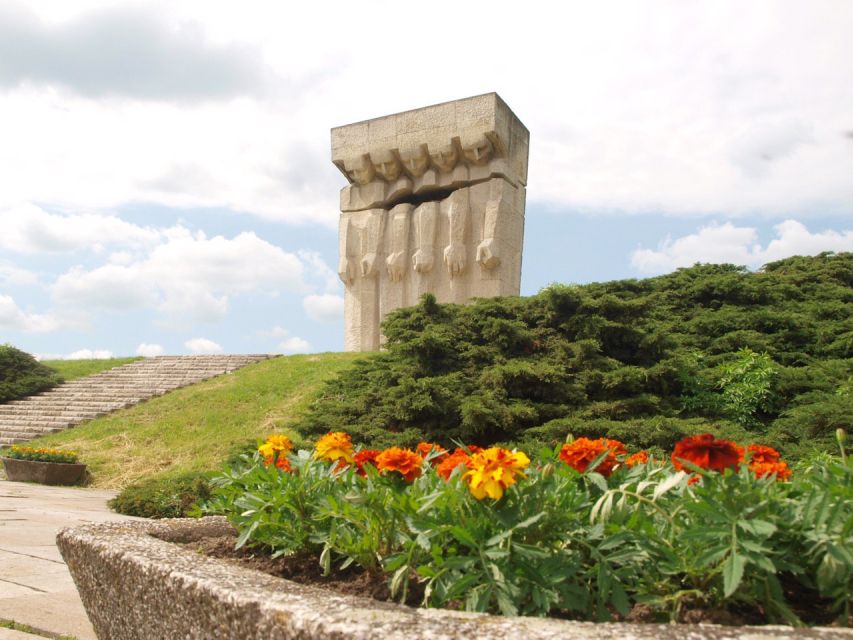
Plaszow includes memorials that shape the emotional tone of the visit. Your route includes reflection at major memorials, including the Monument of Torn-Out Hearts.
This is the part where I think the “reflection-first” pacing is a real strength. You’re not marched quickly from point to point. Instead, the tour builds pauses where you can read what’s there and let the guide’s context settle.
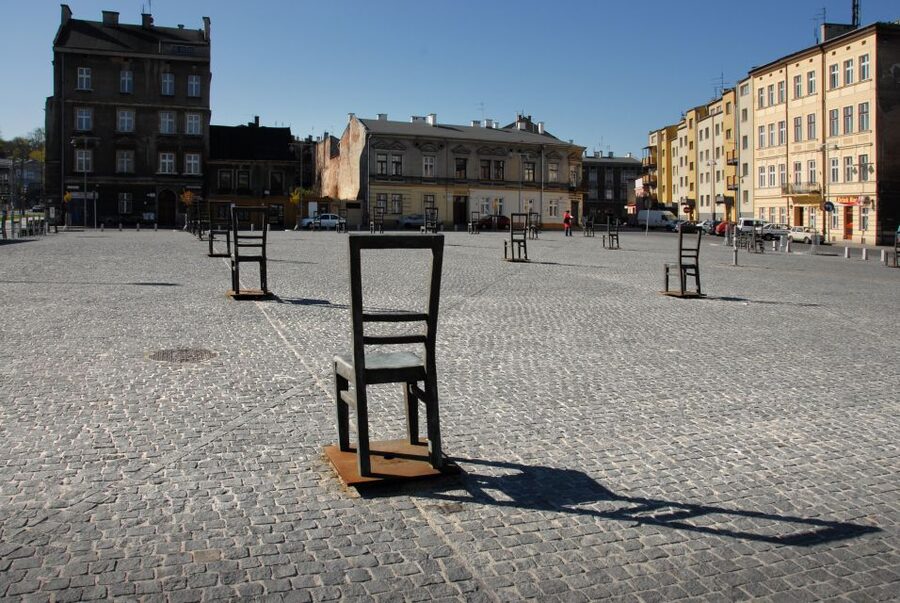
Because Plaszow has relatively few preserved structures, the memorials take on added weight. They are where the present meets what’s gone. If you go expecting a typical sightseeing stop, you may feel a mismatch. If you go prepared for memory and learning, the quiet spaces become part of the experience.
Schindler’s story at Plaszow: why the tour connects it to real decisions
A major reason people choose this tour is Oskar Schindler’s connection to Plaszow. The tour doesn’t treat him like a separate legend. It ties his actions directly to the camp’s systems and to how prisoners were registered.
You’ll learn how Schindler worked through his enamelware enterprise to seek work permits for Jewish prisoners registered through Plaszow. That detail matters because the mechanism was paperwork, not a magical intervention. It helped shield people from further transports.
The tour also explains that Schindler later organized their transfer to his wartime plant in Brunnlitz. The result, as the tour describes it, was the saving of over a thousand lives. When a story like this is placed inside the camp’s realities, it feels less like a movie plot and more like a record of choices made under extreme pressure.
And because you’ll already have heard context during the cruise, you’ll likely understand what you’re seeing much faster when you reach the camp. That continuity is one of the best forms of “value” a tour can give you.
Timing, pace, and what to wear for a 150-minute mix
The total duration is about 150 minutes. That’s long enough to do something meaningful, but short enough that you don’t feel stuck all day. A cruise and a walk together also creates a natural flow: water first, then the camp.
The tour is operated in English only, and it includes a live guide at Plaszow. The cruise segment is guided with an audio guide. Part walking, part listening, it works well if you like having both human explanation and reference material.
You do need comfortable walking shoes. Part of the route is walking inside and around the camp area, and you’ll want stable footing on uneven ground. Since the tour runs in all weather conditions, dress for what Krakow throws at you, not what your last weather app promised.
One practical tip: arrive about 10 minutes early. Once the group departs, latecomers cannot join, and tickets can’t be refunded. This tour moves with a set rhythm, so being on time protects your spot and keeps the group on schedule.
Price and value: what about $56 gets you
The price is $56 per person for a combo experience: a short one-way catamaran cruise, audio guidance, and a live guided walk at Plaszow Concentration Camp. It also includes a single tram ticket, which helps you avoid extra thinking about local transit for this day plan.
So you’re paying for three things at once:
- Transport plus commentary on the Vistula River
- Live interpretation from an expert at Plaszow
- Time and pacing that supports reflection
You might see low-cost tours that only cover one part, but then you lose the continuity between city orientation and camp context. Here, the cruise sets the stage, and the camp tour delivers the on-the-ground learning. That pairing is what makes the price feel more reasonable than it would if it were only a standard walking tour.
Hotels are not included, so you’ll handle getting to the meeting point on your own. If you’re already staying near central Krakow, that’s typically easy. If you’re farther out, plan transit time so you’re not sprinting to Paulinska with 60 seconds to spare.
Who this tour suits best
This is a strong fit if you want:
- Clear, respectful interpretation at Plaszow with a live guide
- A beginning that helps you orient yourself in Krakow from the river
- Schindler’s story presented as part of the real camp process, not just an unrelated film connection
- A pace designed for reflection rather than rushing
It’s also ideal if you like mixing learning styles, because you get both human guidance and audio narration. The audio guide on the cruise helps create context, and the live guide at Plaszow helps you understand what you’re standing near.
If you prefer tours with lots of preserved rooms and buildings to explore, you might find Plaszow less “visual” than other historical sites. Still, the open ground and memorials are precisely why this tour can feel so focused and honest.
Should you book this Krakow Plaszow cruise and tour?
I’d recommend booking if you want a meaningful first-time Plaszow experience with structure. The live guided walk is the backbone, and the cruise is a smart add-on that gets you grounded in Krakow before you confront the camp story.
Book it if you can handle a somber setting and you’re comfortable with a route that leaves space for reflection. This tour is not trying to entertain you, it’s trying to help you understand and remember.
Skip it if you dislike walking, or if you’re looking for a camp visit with lots of intact buildings and museum-style rooms. Here, you’ll learn through what remains, what the memorials communicate, and what your guide reconstructs from traces.
FAQ
FAQ
Where is the meeting point for the tour?
You meet at Inflancki Boulevard, next to the water tram stop called Paulinska. Look for the person with a Cracow Boat sign.
How long is the Krakow cruise and Plaszow camp tour?
The duration is 150 minutes.
Is there a live guide at Plaszow?
Yes. The Plaszow part is operated with an expert live guide in English.
Is an audio guide included?
Yes. The cruise includes an audio guide in English.
What transport is included in the tour?
The tour includes a one-way short cruise on the Vistula River on a catamaran, plus a single tram ticket.
Is hotel pickup and drop-off included?
No, hotel pickup and drop-off are not included.
What should I wear for the walking portion?
Wear comfortable walking shoes. The tour operates in all weather conditions, so dress appropriately for changes in weather.
How early should I arrive?
Arrive about 10 minutes before the tour begins. If the group departs, latecomers cannot join and tickets cannot be refunded.
What languages is the tour offered in?
The live tour guide and audio guide are available in English. The group tours are only in one language.
Freshly posted from Krakow
- Krakow: Zakopane and Thermal Springs Tour with Hotel Pickup★ 5.0 · 1 review
- Krakow: Audio-Guided City Experience by Golf Cart★ 5.0 · 1 review
- Half-day In the footsteps of John Paul II Tour from Krakow★ 5.0 · 1 review
- Krakow: Wawel & Salt Mine Experience with Lunch★ 5.0 · 1 review
- Tour to Wadowice: Hometown of Pope Saint John Paul II★ 5.0 · 1 review
- Krakow: Outdoor Paintball with Hotel Transfers★ 5.0 · 1 review
- Krakow: Nowa Huta Communist District Walking Tour★ 5.0 · 1 review
Cruises & Boat Tours, compared.
Traditional Galar Cruise on The Vistula River
Read our review →
Day or Night Vistula River Cruise with Audio Guide
Read our review →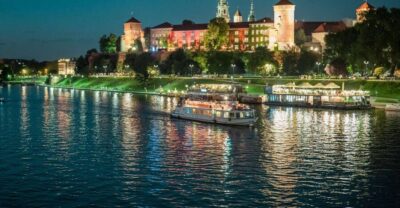
Browse the lists this tour appears in