
Reviewed · CITY TOURS
Katowice: city center walking tour
Katowice packs a lot into two hours. I love the way this walk stitches Silesian industry to today’s cultural power, starting at the former coal mine site. I also really like the contrast of landmark architecture, especially Christ the King Cathedral. One thing to plan for: the route is about 3 km and partly slightly uphill, so comfy shoes matter.
You meet your guide at NOSPR, the National Polish Radio Symphony Orchestra, with a live guide who can switch languages on request (Polish, English, Spanish, Russian, German). A January 2026 review noted how impressed someone was by Piotr’s knowledge of the city and region, and that kind of local expertise is exactly what makes a city-center walk worth your time.
In This Review
- Key highlights you will notice right away
- Where Katowice’s story comes from, and why it matters
- Meeting at NOSPR, then stepping into the Culture Zone
- Photo stops that actually set the tone
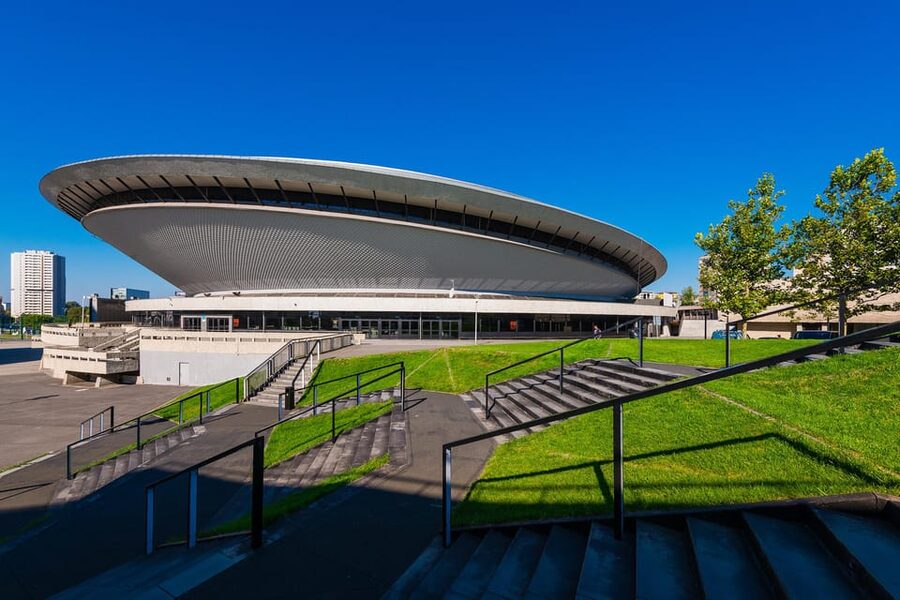
- Spodek: the showpiece you can’t miss
- Monuments along the route: Silesian Insurgents and September Scouts
- The main square and the 19th-century streetscape
- Stary Dworzec and St. Mary’s Church: old center with character
- Silesian Parliament Square and the Modernism Trail buildings
- Christ the King Cathedral: a big finish that feels earned
- Price and timing: is $103 worth it for a 2-hour walk?
- Who this tour suits best
- Should you book the Katowice city center walking tour?
- FAQ
- Where is the meeting point for the tour?
- How long is the Katowice city center walking tour?
- How much walking is there and is it hilly?
- What does the price include?
- Are meals included?
- What languages are available for the live guide?
- Is the tour wheelchair accessible?
- What should I bring?
- Is cancellation possible, and how far in advance?
Key highlights you will notice right away
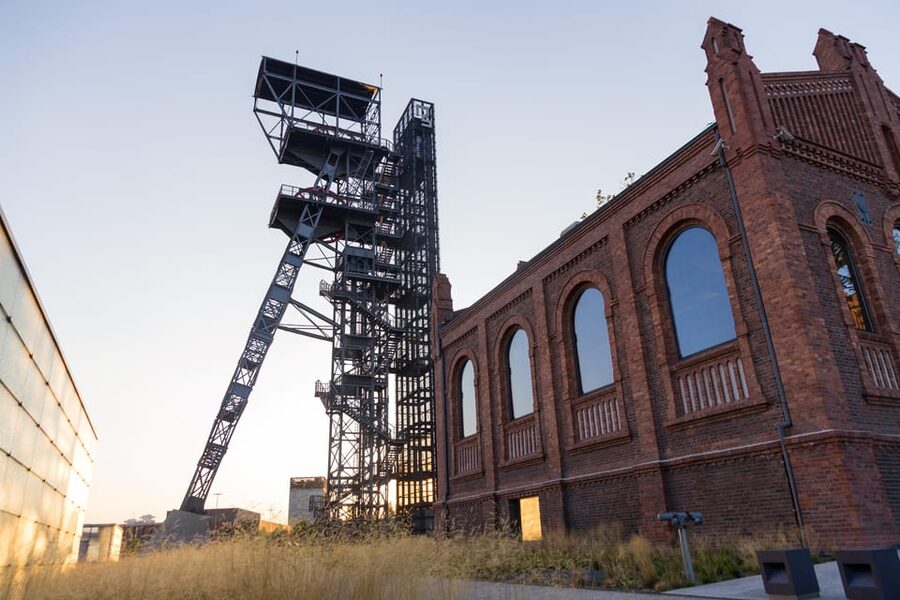
- NOSPR and the Culture Zone built on the old coal mine site
- Spodek as a recognizable Katowice showpiece
- Silesian Insurgents Monument and the September Scouts monument for context that goes beyond photos
- Katowice Modernism Trail architecture you can actually spot on foot
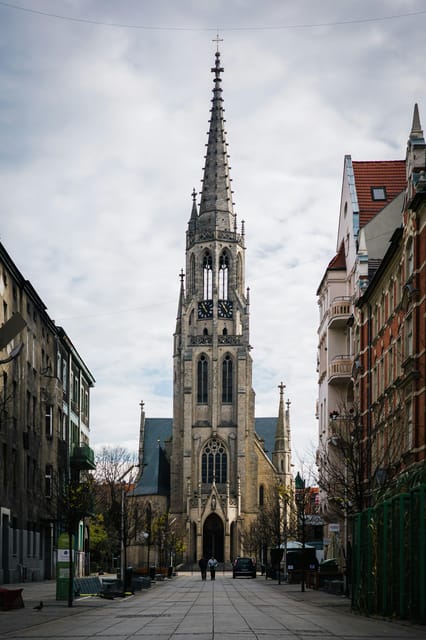
- St. Mary’s Church as the oldest preserved Catholic church in the city center
- Christ the King Cathedral as a major finish, built to impress
Where Katowice’s story comes from, and why it matters
Katowice can feel like a city of big statements. In a short walk, you get the logic behind the skyline, the monuments, and the civic buildings. The key idea is that this is not just sightseeing, it is a guided explanation of how Silesia’s industrial past shaped politics, culture, and public life.
I like that the tour keeps the focus on the “why,” not only the “what.” If you have ever wondered how a region becomes a distinct identity inside a country, Katowice is a strong place to understand it. And when you are on foot in the center, those lessons stick.
More Polish squares crossed on foot:
- Katowice: Express Walk with a Local in 60 minutes
★ 5.0 · 1 review - Warsaw: Old Town Highlights Walking Tour in English
★ 4.7 · 1,516 reviews - Old Town Krakow & Wawel Castle Walking Tour
★ 5.0 · 1,508 reviews
Meeting at NOSPR, then stepping into the Culture Zone
The tour starts at the main entrance to NOSPR, or inside if the weather turns. This is a smart warm-up stop, because it immediately places you in the middle of Katowice’s cultural machinery.
From there, you move through the Culture Zone area, where the former Katowice Coal Mine grounds were transformed. This is where the Polish National Radio Symphony Orchestra has a home, along with the International Congress Centre and the Silesian Museum. Expect photo stops here, and expect your guide to connect the dots between an industrial site and today’s institutions.
A practical tip: arrive with a little curiosity. If you are the type who likes to ask what used to be here, you will enjoy this section more. The buildings can look modern or civic from a distance, but your guide helps you “read” them as part of the same story.
Photo stops that actually set the tone
A lot of walking tours toss in quick photos and move on. Here, the early stops give you orientation. The Silesian Museum stop helps you understand what the area is trying to preserve and teach, and NOSPR gives you a sense of the city’s cultural scale.
Then you pass the International Congress Centre. Even if you do not go inside, it helps you see how Katowice functions as a place for public events and gatherings. It is one of those details that makes the city feel like it operates on more than street-level life.
If you care about architecture, pay attention to how the buildings relate to the mine site. Your guide can point out why this location became a cultural hub rather than staying purely industrial.
Spodek: the showpiece you can’t miss
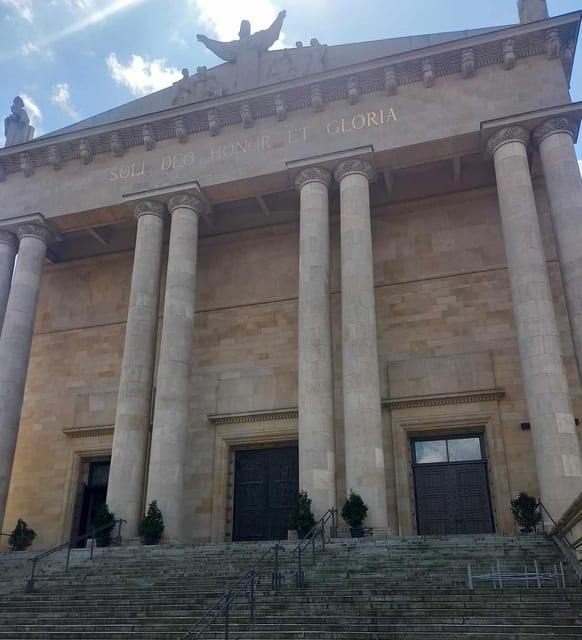
Next comes the Arena Spodek, Katowice’s best-known showpiece. You get a photo stop, but it is more than a picture opportunity. This kind of landmark is often tied to identity, and Spodek is clearly part of Katowice’s visual language.
From a visitor point of view, the Spodek stop is useful because it anchors the middle of your route. After this, the walk shifts from modern public spaces into the city’s civic and memorial heart.
If you are an architecture watcher, look at how the arena’s shape contrasts with the more traditional buildings you will see later. The tour’s pacing helps you catch that change in a single afternoon, without rushing.
Still tacked up around Katowice


Monuments along the route: Silesian Insurgents and September Scouts
After Spodek, you visit the Silesian Insurgents’ Monument. Plan for about 15 minutes here, because monuments like this are meant to be read slowly, not treated like a quick roadside stop. This is where your guide’s regional knowledge becomes important. You get the background that turns stone and symbols into something understandable.
Then you reach the September Scouts Monument. This is another memorial stop, and it fits the tour’s theme: Silesia’s political life, identity, and social memory. If you like history, you will appreciate that the tour does not bury the lead. It puts memorials right where they naturally belong in the center of Katowice’s story.
One consideration: if memorials and monuments are not your thing, this portion can feel more reflective than sightseeing. But even then, it provides context that makes later stops easier to interpret.
The main square and the 19th-century streetscape
You move onward along Wojciech Korfantego Avenue to the main square, Rynek. This is one of the places where Katowice shifts from big landmarks to everyday city life. You get time to visit the square, and your guide also points out details tied to the city’s past.
You will see the September Scouts Monument again in context and also notice tenement houses from the 19th century. Those facades matter because they show continuity. Katowice’s industrial era did not erase older urban layers, it layered over them.
Photo-wise, Rynek can be excellent for wide shots. For a more personal feel, take a moment to look at the street edges and storefront rhythm, because that is where you get a sense of how the square works as a social space.
Stary Dworzec and St. Mary’s Church: old center with character
Next you pass Stary Dworzec, the old train station building (noted as C1). This pass-by stop works as a bridge between city-center monuments and the older religious and civic spaces ahead.
Then comes St. Mary’s Church, described as the oldest preserved Catholic church in the city center. You get a photo stop here, about 10 minutes, which is just enough time to appreciate the site and absorb your guide’s explanation without getting stuck on one corner all day.
If you like churches, do not rush this stop just because it is short. The “oldest preserved” detail gives the church extra weight in the route. It also helps you compare what different eras valued, spiritually and architecturally.
Silesian Parliament Square and the Modernism Trail buildings
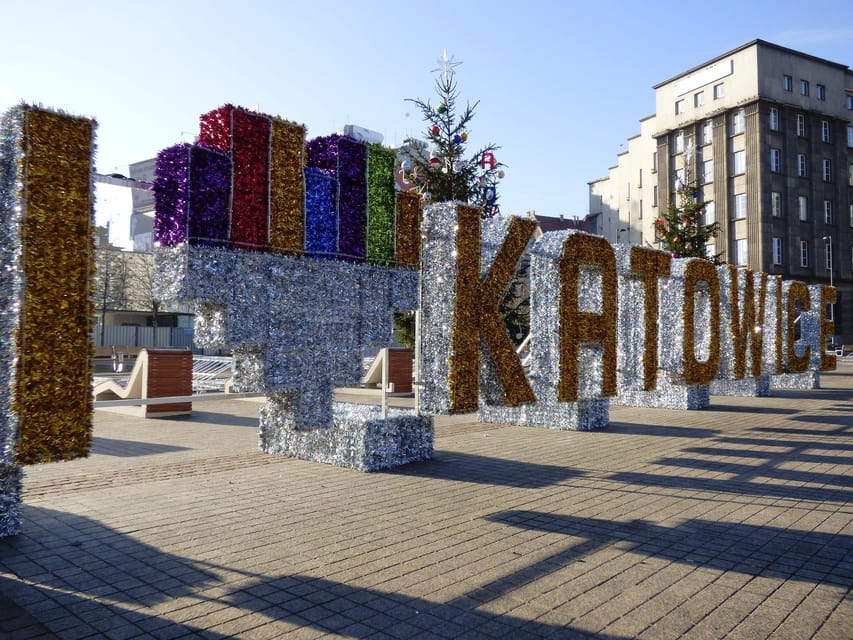
You continue south to plac Sejmu Śląskiego, where you visit the historical building of the Silesian Parliament. This is where the tour’s political thread becomes tangible. It is not abstract; you stand near a structure tied to governance and regional identity.
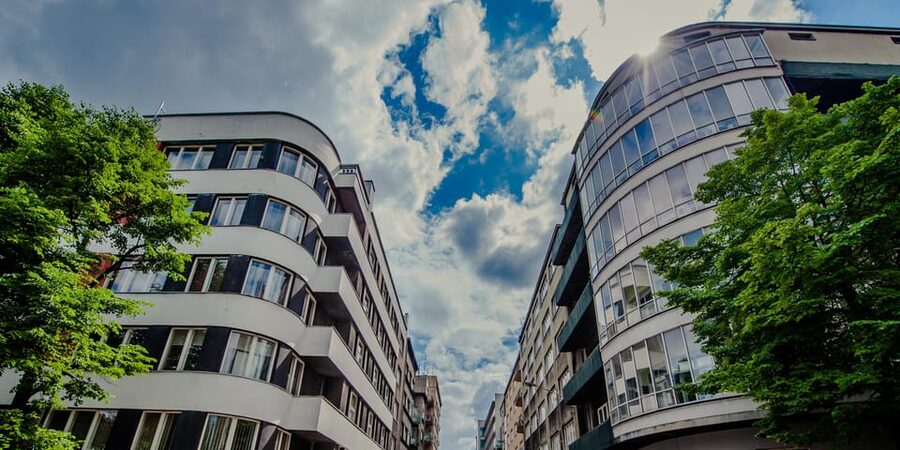
Then you walk by buildings connected to the Katowice Modernism Trail on your way to the cathedral. If you are thinking, wait, modernism in a coal-and-monument story, yes. That contrast is the point. Katowice’s 20th-century modernization is part of its ongoing reinvention, not a separate chapter.
Try this small technique: pick one detail at each modernist stop, a window pattern, a facade rhythm, or the way lines meet corners. It makes the walking part more satisfying, and you will start seeing modernism as a system rather than random stylish buildings.
Christ the King Cathedral: a big finish that feels earned
The tour ends with a photo stop at the Cathedral of Christ the King in Katowice, then finishes at Archikatedra Chrystusa Króla. The cathedral is described as one of the largest in Poland, and that scale shows.
What I like about placing the cathedral at the end is that it gives the walk a natural climax. You have built context with the mine site, cultural institutions, arenas, memorials, and civic buildings. Then the cathedral arrives as a physical conclusion, something monumental in a different way.
Even if you only catch exterior views during the time available, the size alone changes your sense of the city. Standing in that final area makes Katowice feel like a place that commands attention, not just a stop on a map.
Price and timing: is $103 worth it for a 2-hour walk?
At $103 per person for a 2-hour guided city-center walking tour, you are paying for concentrated value. You are not just seeing one building, you are getting a structured route that includes multiple major landmarks: the mine-site Culture Zone area, Spodek, memorials, Rynek, a church, the Silesian Parliament area, and the cathedral.
Here is how I think about it:
- You get a guided explanation at each meaningful stop, which helps when you are unfamiliar with local symbols.
- The total walking distance is about 3 km, with some uphill sections, so the time packs in a lot without needing transit.
- The tour also offers multiple languages, which can matter if you are traveling with people whose Polish is limited.
If you like self-guided sightseeing, you could probably assemble a similar list yourself. But if you want your questions answered while you are standing in front of the buildings, the guide time is the real product here.
Who this tour suits best
This tour is a great fit if you:
- Want a focused first look at Katowice’s center in about 2 hours
- Like architecture and can spot differences between eras
- Prefer guided context for memorials and regional history
- Want the major highlights without doing a long day
It may be less satisfying if you only want quick photo moments and do not care about history or civic context. In that case, you might find the memorial and parliament stops slower than you expect.
Should you book the Katowice city center walking tour?
If you want one high-impact, low-stress way to understand Katowice, I would book it. The route makes sense, it keeps walking efficient, and it hits the places that explain why the city looks the way it does.
Also, pay attention to the guide factor. With reviews praising Piotr’s knowledge of the city and region, you are not just buying a route, you are buying interpretation. And on a trip where time is tight, that usually turns into the difference between seeing landmarks and understanding them.
If your schedule allows only a short window, this is the kind of tour that gives you an easy “mental map” of Katowice by the end.
FAQ
Where is the meeting point for the tour?
You meet at the main entrance to NOSPR (or inside in case of bad weather).
How long is the Katowice city center walking tour?
The duration is about 2 hours.
How much walking is there and is it hilly?
The route is approximately 3 km and partly slightly uphill.
What does the price include?
It includes the guided tour of Katowice’s main attractions.
Are meals included?
No. Meals and beverages are not included.
What languages are available for the live guide?
The live guide is available in Polish, English, Spanish, Russian, and German.
Is the tour wheelchair accessible?
Yes, the tour is wheelchair accessible.
What should I bring?
Bring comfortable shoes.
Is cancellation possible, and how far in advance?
Free cancellation is available up to 24 hours in advance for a full refund.
Freshly posted from Katowice
- Katowice: Express Walk with a Local in 60 minutes★ 5.0 · 1 review
- From Katowice: Krakow Old Town Private Guided Day Trip★ 5.0 · 2 reviews
- Katowice Private Vodka Tasting Tour★ 5.0 · 3 reviews
- Katowice: Private Traditional Polish Food Tour★ 5.0 · 4 reviews
- From Katowice: Trip to the Guido Coal Mine in Zabrze★ 5.0 · 6 reviews
- Katowice:Visit a world of fairy tales and adventures -family★ 4.6 · 6 reviews
- Auschwitz-Birkenau Private Tour from Katowice & Transport★ 4.9 · 7 reviews
City Tours, compared.
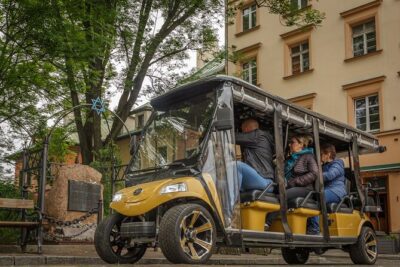
City Sightseeing Tour Eco Electric Buggy Golf Cart
Read our review →
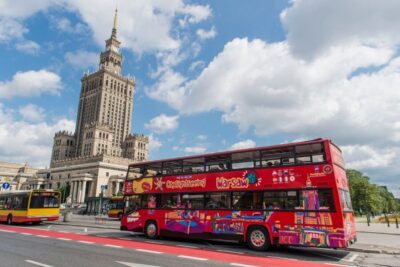
Gdańsk City Sights & History Guided Walking Tour in English
Read our review →
Extended City Sightseeing Tour – Eco Buggy Golf Cart
Read our review →
Shared or Private City Tour Sightseeing by Golf Cart
Read our review →Browse the lists this tour appears in