Reviewed · GUIDED
Guided Tour of Plaszow Concentration Camp, Kraków
Plaszow demands respect, and the tour keeps that tone. I like how the route is paced for reflection, not speed, and how the guide links the ground you see to the story of the camp, including key Schindler context. One thing to keep in mind is that Plaszow has few preserved buildings, so it is more about memory, memorials, and traces than about sightseeing comforts.
For me, the best part is the way the guide builds the camp from what remains, step by step. You will walk among memorials like the Monument of Torn-Out Hearts, learn how the camp was organized into sections, and understand why Schindler’s actions mattered. If you expect an easy, photo-heavy stop, this may feel heavy and quiet throughout, by design.
In This Review
- Key Highlights Worth Marking in Your Plan
- Plaszow in Kraków: Why This Camp Tour Feels So Different
- From October 1942 to Auschwitz Transports: The Story the Guide Builds
- Walking the Camp in Real Space: Grey House and Pre-Burial Ruins
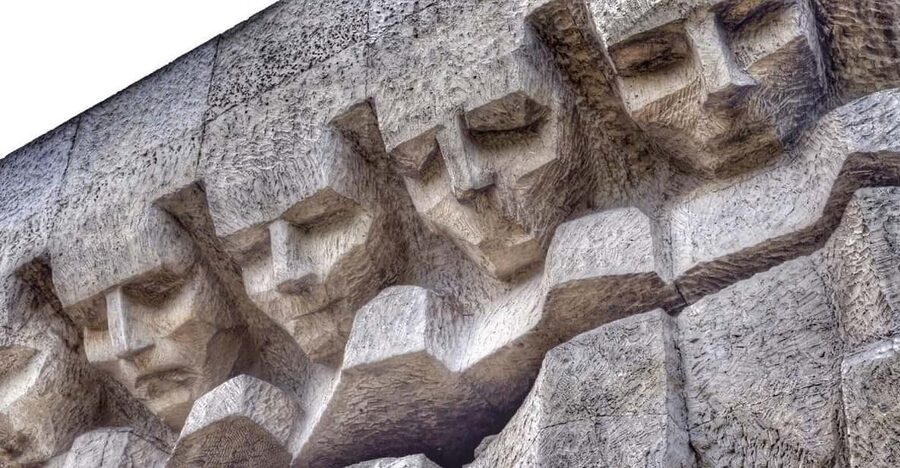
- Memorials That Matter: Roll-Call Square and the Monument of Torn-Out Hearts
- Schindler’s List Connections: Work Permits and Brünnlitz
- How the Camp Worked: Living, Hospital, Administrative, Industrial Sections
- Route Pace and Time Planning for a 2-Hour Walk
- Price and Value: What $29 Buys You Here
- Who Should Book This Plaszow Tour (and Who Might Rethink It)
- Meeting Point and Getting Oriented With Confidence
- Should You Book This Plaszow Concentration Camp Tour?
- FAQ
- How long is the Guided Tour of Plaszow Concentration Camp?
- What is the price per person?
- Is the tour in English?
- What will we see during the 2-hour walk?
- Where do we meet the guide?
- Is a tram ticket included?
- Is the tour wheelchair accessible?
- Can I cancel for a full refund?
- Do I need to pay right away to reserve?
- What time should I arrive before the tour starts?
Key Highlights Worth Marking in Your Plan
- A reflection-first pace that lets the story land without rushing you through
- Licensed English guide who answers questions and explains the camp layout clearly
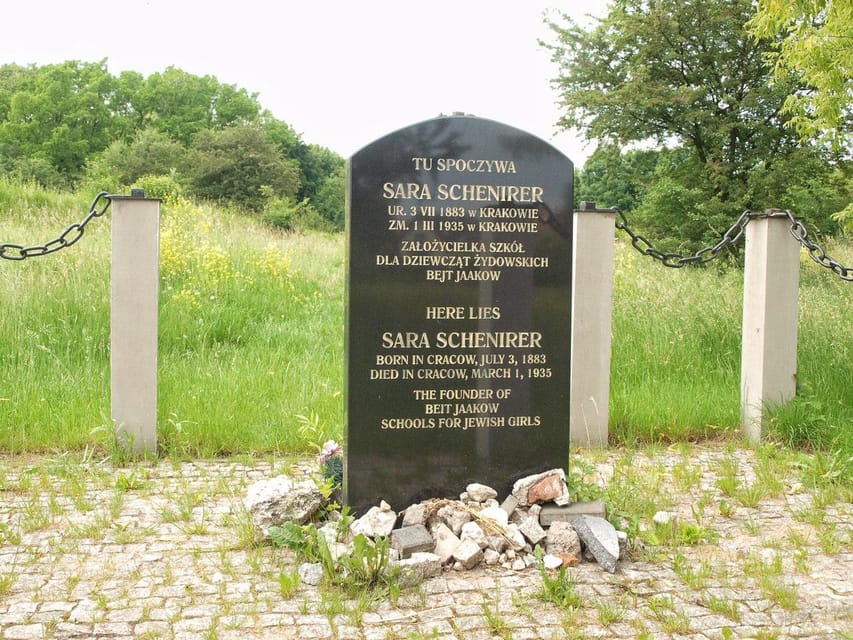
- Memorial stops you can connect to specific locations, including major monuments and graves
- Schindler’s List context grounded in real history, especially work permits and Brünnlitz
- A walk through traces, from roll-call areas to paths that once used gravestone fragments
Plaszow in Kraków: Why This Camp Tour Feels So Different
Plaszow Concentration Camp is not the kind of site where you wander through preserved buildings and call it a day. Here, you are on open ground, with silence and space doing part of the work. The tour’s pacing matters because the place asks you to slow down and actually look.
I like that this experience is built around understanding, not spectacle. The guide points to what remains and connects it to how the camp operated, from labor and administration to the path the story took afterward. One of the core takeaways is that Plaszow began in October 1942 on the grounds of two Jewish cemeteries in Kraków, so the land itself carries a weight you won’t forget.
Another reason it lands is the Holocaust memory focus. The tour includes time at memorials honoring victims and gives you a structured way to process what you’re learning. It is emotional, but it is also precise, with details about how the camp worked and how people were used, punished, and sent onward.
Still tacked up around Krakow
- From Krakow: Auschwitz-Birkenau Guided Tour & Hotel Pickup
★ 4.5 · 33,358 reviews - From Krakow: Auschwitz-Birkenau Guided Tour & Hotel Pickup
★ 4.5 · 29,340 reviews - Krakow: Auschwitz Guided Tour with Optional Hotel Pickup
★ 4.5 · 15,280 reviews
From October 1942 to Auschwitz Transports: The Story the Guide Builds
The guide starts by framing Plaszow as a camp that evolved, not a single static event. Nazi German occupiers established it in October 1942 on Jewish cemetery grounds in Kraków. It began as a forced-labor camp for Jews from the liquidated Kraków Ghetto.
Then the camp expanded its function. From July 1943, it also held Poles in a penal-labor section, meaning the camp’s prisoner population and system were not one-size-fits-all. In January 1944, Plaszow was redesignated as a concentration camp, and later it also functioned as a transit camp, including for Hungarian Jews being sent to Auschwitz.
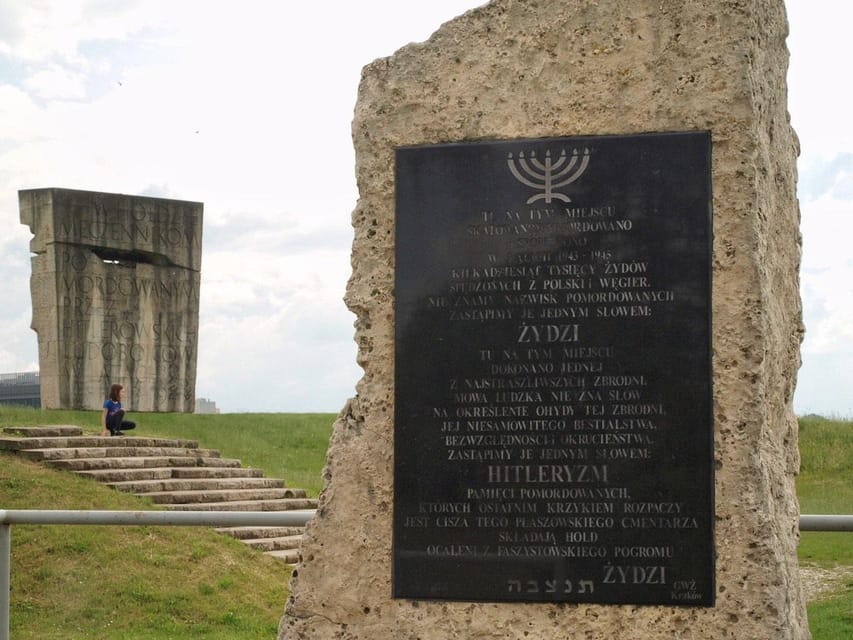
Over the camp’s existence, more than 35,000 people were imprisoned there, and around 6,000 were murdered. You will hear that executions took place at several sites within the camp, and today mass graves and memorials mark the ground. Knowing those facts ahead of time helps, but the tour brings them into focus by tying them to the places you are standing near.
What I like about the way the tour teaches this is the logic of the walking route. You are not just memorizing dates and numbers. You are learning how the camp was organized, where different functions took place, and how people were moved.
Walking the Camp in Real Space: Grey House and Pre-Burial Ruins
One of the tour’s strengths is that it treats the site like a puzzle the guide solves with you. You will visit key remnants and trace areas such as the Grey House, the ruins of the pre-burial hall, and traces connected to the former Jewish cemeteries.
The Grey House is especially important because it serves as a mental anchor for camp organization. Even when the physical structures are limited, the guide’s explanations help you understand what kinds of roles and decisions were happening there, and how that connected to the wider camp system.
Then you move through the area of the pre-burial hall ruins. This stop is not there to shock you. It is there to help you understand what came before bodies were buried and how the camp handled death as part of its machinery.
Because the site has few preserved structures, your eyes and your listening do the heavy lifting. That can be unnerving, but it also makes your understanding more grounded. You are forced to confront the fact that this is not a recreated set, it is an aftermath.
Memorials That Matter: Roll-Call Square and the Monument of Torn-Out Hearts
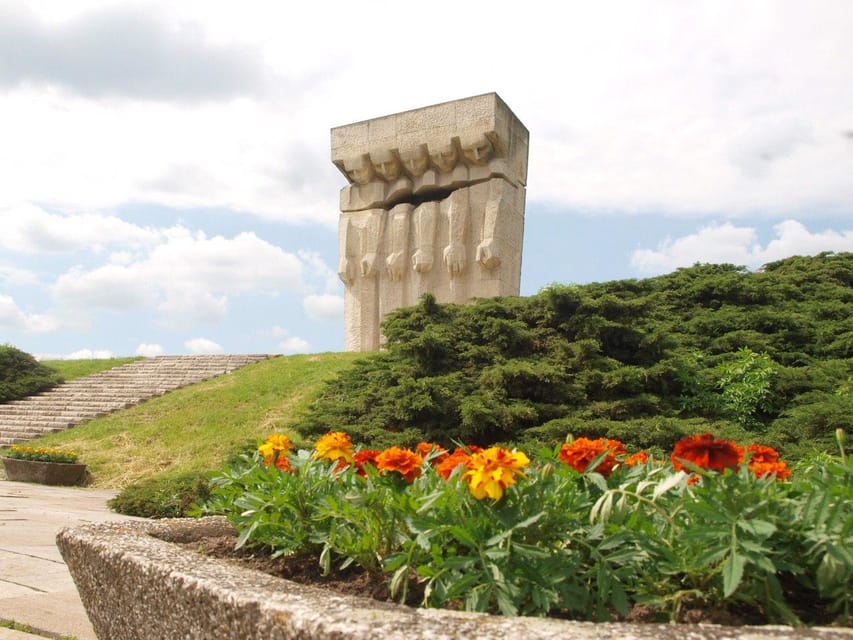
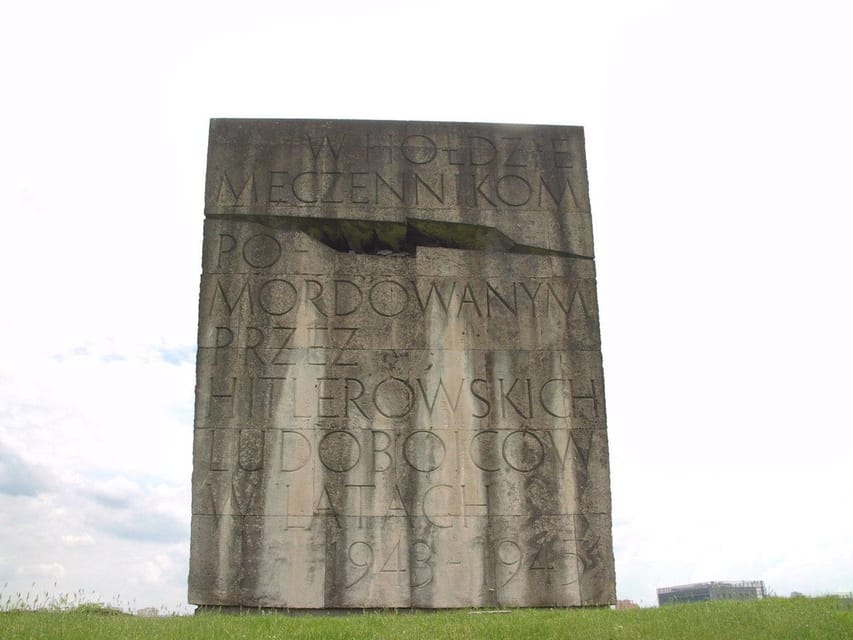
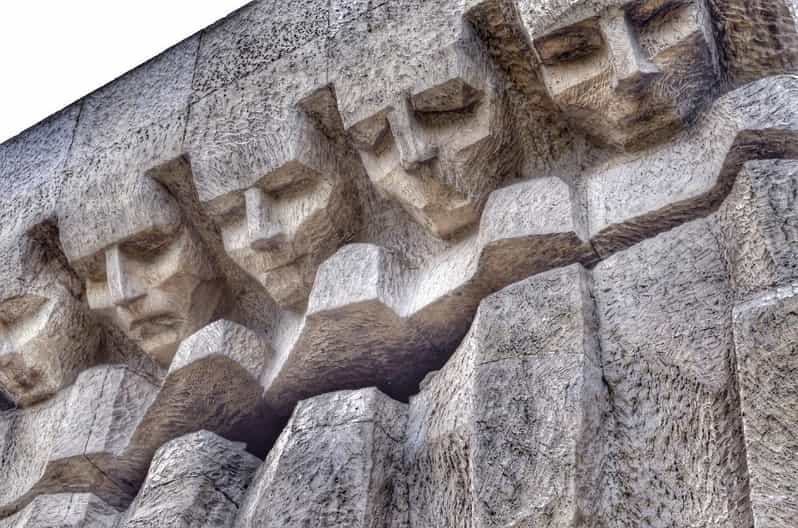
The tour includes major memorials where the time is meant for respect and reflection. The Monument of Torn-Out Hearts is one of the standout stops because it crystallizes the human cost behind the historical explanation.
You will also hear about the roll-call square. Even if the original layout is not fully visible, the guide helps you imagine what roll-call meant in a system built on control, surveillance, and routine suffering. This is the part of the tour where you may feel the emotional weight most strongly, because the purpose of the space is so clear.
Another memorable element is the idea of paths once paved with fragments of gravestones. That detail is not just a spooky fact. It shows how completely the camp disrupted Jewish life, including sacred spaces connected to the cemetery grounds. The tour helps you connect that to the camp’s origin on those cemeteries, and why that matters in the story.
The pacing for reflection really shows here. The guide encourages you to stop, look, and absorb rather than rushing on to the next checkpoint. It keeps the experience from turning into a checklist.
Beneath the newer pins on the Krakow board:

Schindler’s List Connections: Work Permits and Brünnlitz
If you came to Kraków after watching Schindler’s List, this tour will give you context that goes beyond the film. A big part of the story centers on Oskar Schindler and how his choices intersected with Plaszow.
The guide explains how Schindler, through his enamelware enterprise, obtained work permits for Jewish prisoners registered through Plaszow. Those permits helped shield people from further transports. Later, Schindler organized their transfer to his wartime plant in Brünnlitz, saving over a thousand lives.
This matters because it changes how you think about the role of individuals in a system designed to remove choice. Schindler’s actions are not presented as a fantasy rescue. They are framed as something that required strategy, timing, and the leverage he could use in that environment.
You will also learn how filming locations connected to Schindler’s List fit into the real camp geography. The goal is not to compare the movie to real suffering. It is to help you understand the real place and the real mechanisms behind what the film communicates.
For me, the best learning moment is when the guide connects the camp organization to Schindler’s strategy. You start to see why work permits mattered, why registration mattered, and why a list could mean survival.
How the Camp Worked: Living, Hospital, Administrative, Industrial Sections
Even with limited visible remnants, the tour explains the camp as a functioning system. Your guide walks you through how Plaszow was organized into sections, including living areas, a hospital area, administrative areas, and industrial functions.
This is useful if you want your understanding to be more than emotional reaction. You are not only remembering victims. You are also understanding how the Nazis structured control, labor, and logistics to keep the machine running.
The hospital piece is especially important for grasping what imprisonment meant day to day. Administrative spaces help you understand how decisions were made and recorded, and how the system managed people as numbers. Industrial functions explain why forced labor was central to the camp’s role within the broader war effort.
A good guide will also help you see how these parts connect to the transit phase that came later. Since Plaszow later served as a transit camp for Hungarian Jews being sent to Auschwitz, the organization you learn is part of what made that movement possible.
Route Pace and Time Planning for a 2-Hour Walk
This tour runs for 2 hours, and that timing makes a difference. You get enough time to cover the main areas and memorial stops, without the walk dragging into a marathon.
The route is paced for reflection, not rush. That means you can expect pauses at key points where the guide wants you to absorb what you’re seeing and hearing. It is also why arriving on time matters, because late arrivals can break the flow for everyone.
You will likely spend time at multiple memorials and explanation points, including the kinds of areas tied to the Grey House, pre-burial hall ruins, roll-call square, and the Monument of Torn-Out Hearts. Since Plaszow has open ground and few built attractions, your attention is a bigger factor than your shoe comfort alone.
Practical tip: wear comfortable walking shoes. The experience is not described as a sit-and-watch museum visit. You are walking through a site where the guide’s narrative is anchored to where you stand.
Price and Value: What $29 Buys You Here
At $29 per person for a licensed English guide and a 2-hour walk, the value is solid for a few reasons.
First, you are paying for interpretation. Plaszow can be confusing if you arrive on your own because the visible remains are limited. A guide helps you map the story to specific traces, so you leave with real understanding rather than vague impressions.
Second, you also get a single tram ticket included. That small add-on matters in a city where transit is often part of the day plan, especially if you are moving between Kraków sights.
Third, the tour is structured for reflection, so the time is purposeful. You are not paying for a long day. You are paying for a focused narrative walk that respects the site’s gravity.
If you can handle a quiet, emotionally serious experience, this is a strong use of your time in Kraków.
Who Should Book This Plaszow Tour (and Who Might Rethink It)
This tour fits best if you want a guided walk that explains Plaszow’s evolution and camp organization, and if you want Schindler-related context that ties back to real places. It also suits you if you appreciate a thoughtful pace and a guide who answers questions rather than rushing you through.
It may feel less suitable if you want an entertainment-style tour or a quick photo stop. Plaszow is explicitly described as a place of memory rather than spectacle, with silence and space for reflection. That tone is not a bug, it is the point.
If you are traveling with someone who needs a lighter pace, you might want to check whether both of you are comfortable with a serious Holocaust memorial setting where few physical buildings remain.
Meeting Point and Getting Oriented With Confidence
Meet up with the guide who will be holding a sign that says excursions.city. Arrive around 10 minutes early. Once the group departs, latecomers cannot join, and tickets cannot be refunded.
This is one of those tours where punctuality is not bureaucracy. It protects the route’s flow and keeps the reflective pacing intact for everyone.
Should You Book This Plaszow Concentration Camp Tour?
Yes, if you want a licensed English guide, a focused 2-hour walk, and memorial stops that help you understand the camp as it actually functioned. The tour’s emphasis on Schindler’s connection, including work permits and the Brünnlitz transfer, gives the experience extra meaning for anyone who has seen Schindler’s List.
I’d book it if you value a reflection-first route and you’re ready for a quiet, sobering visit. On the other hand, if you are looking for preserved buildings, a fast sightseeing loop, or a more casual atmosphere, this may not match your expectations.
FAQ
How long is the Guided Tour of Plaszow Concentration Camp?
The tour lasts 2 hours.
What is the price per person?
The price is $29 per person.
Is the tour in English?
Yes, the live tour guide is English.
What will we see during the 2-hour walk?
You can expect to see key areas and traces such as the Grey House, the ruins of the pre-burial hall, traces related to the Jewish cemeteries, the roll-call square, paths connected to gravestone fragments, and memorial stops including the Monument of Torn-Out Hearts.
Where do we meet the guide?
Look for the guide with the excursions.city sign.
Is a tram ticket included?
Yes, one tram ticket is included.
Is the tour wheelchair accessible?
Yes, the tour is wheelchair accessible.
Can I cancel for a full refund?
Yes, you can cancel up to 24 hours in advance for a full refund.
Do I need to pay right away to reserve?
No. The booking offers reserve now & pay later, so you can keep your plans flexible.
What time should I arrive before the tour starts?
Arrive 10 minutes before the tour begins. Once the group has departed, latecomers cannot join and tickets cannot be refunded.
Freshly posted from Krakow
- ZALIPIE – painted village, unique small group tour from Krakow★ 5.0 · 7 reviews
- Magic of Krakow: Guided Tour of the Old Town★ 5.0 · 7 reviews
- “John Paul II Route” PRIVATE -Wadowice, Kalwaria Z.-Łagiewniki★ 5.0 · 7 reviews
- Krakow: Craft Beer Tasting City Walking Tour★ 4.4 · 7 reviews
- Krakow in One Day: City Tour by Electric Car★ 5.0 · 7 reviews
- Krakow : Zakopane Tour + Thermal Pools with Hotel Pickup★ 4.8 · 7 reviews
- Full-Day Morskie Oko in The Tatra Mountains and Thermal Baths from Kraków★ 5.0 · 7 reviews
Guided, compared.
Auschwitz-Birkenau Guided Tour & Hotel Pickup
Read our review →Auschwitz-Birkenau Guided Tour & Hotel Pickup
Read our review →
Auschwitz Guided Tour with Optional Hotel Pickup
Read our review →
Auschwitz-Birkenau Guided Tour with Pickup & Lunch
Read our review →
Krakow to Auschwitz Birkenau Guided Tour with Transfer and Ticket
Read our review →
Wieliczka Salt Mine Fast-Track Ticket & Guided Tour
Read our review →