
Reviewed · 1-HOUR EXPERIENCES
Gdansk 1 Hour Guided Tour through the Heart of the Old Town
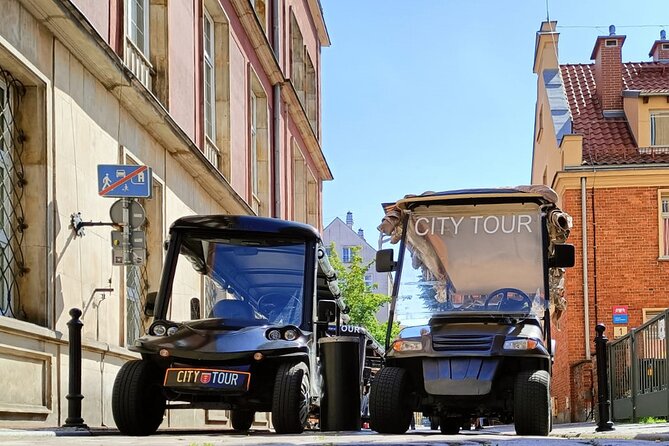
Gdansk moves fast when you ride it smart. This 1 hour to 1 hour 15 minutes Old Town tour uses an electric Melex-style ride to connect the big sights without wearing yourself out. I really like the cozy comfort of seeing a lot of the center with way less walking.
What I liked most is the way the route tells a city story. You get major Royal Route landmarks and you can feel how Gdansk grew from fortified gates and trade, to church power, to port industry, and to wartime memory.
One thing to consider is time. With a tight schedule and many stops, most sights are quick photo stops, and only St. Bridget’s Church entrance is included, so you may want to plan ahead if you want extra time inside museums.
In This Review
- Key highlights you will actually feel on the ground
- Why a one-hour Melex ride is the smart way to orient yourself in Gdansk
- Meeting at Długi Targ and settling into the Old Town loop
- Shakespeare Theatre on the theater roots of Gdansk
- Brama Wyżynna and the High Gate welcome ritual
- Prison Tower and Katownia, where the city gets grim
- Langgasser Tor and the Golden Gate on the Royal Route
- The Millennium Tree and the “present meets past” vibe
- Wybrzeże Theatre and the Coal Market Square context
- Great Armoury, built for war fears
- Jan III Sobieski Monument and the king-over-cannon image
- St. Mary’s Church and why it was a Catholic power anchor
- Zuraw crane miniatura, port history you can almost touch
- Ołowianka island, the Teutonic Knights’ strategic pocket
- St. Bridget’s Church inside access is the included payoff
- St. Catherine’s Church and the tower timeline
- Most Chlebowy, the Bread Bridge story behind the name
- World War II Museum and Bunkier, when the tour turns serious
- Museum of the Polish Post Office, Versailles-era territory in plain view
- Shipyard Gate No. 2 and the December shootings memory
- Hevelius Monument and Neptune’s Fountain, classic photo beats with meaning
- Should you book the Gdansk 1 Hour Guided Tour through the Heart of the Old Town?
- FAQ
- How long is the Gdansk 1 Hour Guided Tour through the Heart of the Old Town?
- Is the tour offered in English?
- Where does the tour start and end?
- What is included in the tour ticket?
- Are tickets required for the other stops?
- Are there any stops listed as free?
- Is this a private tour?
- Can I cancel for a full refund?
Key highlights you will actually feel on the ground
- A fast orientation of Gdansk’s core without the long walking grind
- English guide with real backstory, like when Christian kept the mood lively and Przemek mixed humor with details
- Gates, towers, and court-prison history right along Długa Street
- Motława River views with Zuraw Crane and the classic riverfront look
- Church stops that explain power shifts, including the included St. Bridget’s Church visit
- Port and World War II stops that add weight to the otherwise pretty Old Town
Why a one-hour Melex ride is the smart way to orient yourself in Gdansk
If you have limited time, you need the kind of tour that gets your bearings fast. This is built around a short loop through the Old Town heart, so you can match streets and buildings to the bigger story of the city.
I also like the practical pacing. You still see impressive architecture, but you are not forced into hour after hour of cobblestones. In the reviews, people called it warm and cozy, and that makes sense if you are visiting in cooler weather or you simply want less fatigue.
Still tacked up around Gdansk
- Gdansk: City Cruise on Historical Polish Boat
★ 4.8 · 2,913 reviews - Gdańsk: Sunset Cruise on a Historic Polish Boat
★ 4.9 · 977 reviews - Gdańsk City Sights & History Guided Walking Tour in English
★ 4.8 · 876 reviews
Meeting at Długi Targ and settling into the Old Town loop
You meet at Długi Targ 1 and the tour returns there at the end. That central start matters, because you can easily continue walking afterward to places you still want to revisit.
You also get a mobile ticket and the tour runs in English. It is private in the sense that only your group participates, which usually means your guide can adjust the pace if you want photos, a calmer look, or extra questions.
Shakespeare Theatre on the theater roots of Gdansk
The tour begins with a standout cultural stop, the Gdańsk Shakespeare Theatre. What makes it interesting is that it is not just a modern box with a name. The theatre is on a site tied to the earlier 17th-century Fencing School, where visiting English players performed works from the English Renaissance.
The building opened in September 2014, and it blends historical inspiration with modern tech. Even if you do not attend a show, the guide’s framing helps you see Gdansk as a city that imported culture, not only goods.
Why it’s worth your attention: it gives you a quick sense of how Gdansk connects to wider European currents, including England, long before you reach the big stone gates and harbor icons.
Brama Wyżynna and the High Gate welcome ritual
Next up is Brama Wyżynna, also called the Highland Gate. This one is all about entrance and power. It was the main entrance to Gdansk at one point, and it held ceremonial moments like welcoming Polish kings and handing over city keys.
The gate was built in 1574 to 1576 under the design of Jan Kramer. Standing near it, you start to understand why the city cared so much about thresholds. For a trading city, controlling movement meant controlling wealth.
One caution: the tour is quick here, so if you love details, keep an eye out for the guide’s clues about where it sits in the old fortifications.
Beneath the newer pins on the Gdansk board:




Prison Tower and Katownia, where the city gets grim
Długa Street has a darker pocket of history, and the tour hits it with the Prison Tower and Gdansk Katownia (the Torture Chamber). These buildings were part of a medieval gatehouse system, and later the same structure became a court, prison, and place of execution.
What I like about this stop is that it is not vague. You hear that the Torture Chamber was built in the second half of the 14th century, then rebuilt between 1593 and 1604 with rich sculptural decoration. The tour ties this to how the city handled punishment and control, especially for people from the lower social classes.
If you are sensitive to heavy themes, it is good to know this portion does not try to sugarcoat it. It is short, but it changes the mood.
Langgasser Tor and the Golden Gate on the Royal Route
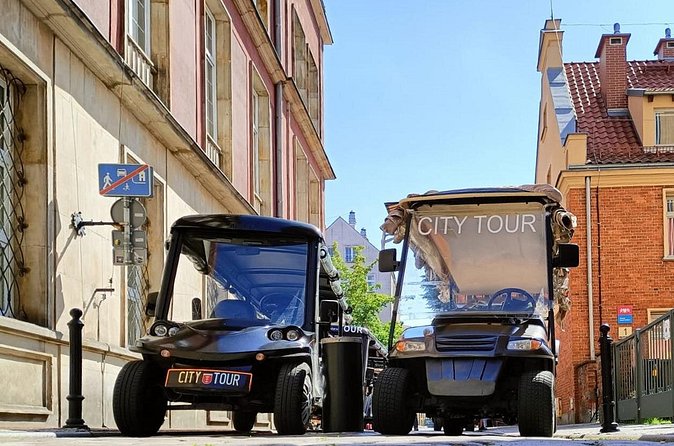
From the prison history, you jump into a more ornate layer of Gdansk defense and pride with Langgasser Tor (Goldenes Tor). This Renaissance city gate is one of the Old Town’s most notable attractions and sits right along the Royal Route.
It was created in 1612 to 1614, replacing an older Gothic gate called Brama Długouliczna. The placement is also key: you get a sense of how gates and streets worked together as a guided walk for anyone entering the city’s most symbolic path.
This stop is a good example of why the tour works for first-timers. You start to see the pattern: gate, street, church, river. It is all linked.
The Millennium Tree and the “present meets past” vibe
You will also pass by the Millennium Tree, a contemporary monument made from polished stainless steel. It commemorates the 1000th anniversary of Gdansk and includes leaves from multiple tree types plus small sculptural details like birds and insects.
This is a refreshing pause in the middle of all the old stone. It also helps you shift from “fortress and court” thinking to “city identity” thinking.
Wybrzeże Theatre and the Coal Market Square context
The route then moves through the Coal Market Square area, connected to the Royal Road. The site was granted to the city in 1342, and from the 15th century it was used for coal trading.
Standing near the theatre area, it is easier to imagine the daily logistics behind the Old Town. If you only look at facades, you miss how places like this square supported the city’s working life.
Great Armoury, built for war fears
One of the biggest secular landmarks in the Old Town is the Great Armoury (Wielka Zbrojownia). It is considered the most impressive Mannerist secular building in the city, and the tour connects it to practical fears from the late 1500s.
With growing pressure from Sweden, Gdansk townspeople decided they needed better storage for war equipment. The armoury was built between 1602 and 1605, and the guide’s explanation helps you see it as both functional and symbolic, a monument to readiness.
Jan III Sobieski Monument and the king-over-cannon image
You also pass the Jan III Sobieski Monument, unveiled in 1898. It shows Sobieski in traditional national dress, jumping over a destroyed Turkish cannon while holding a mace.
It sounds dramatic because it is meant to be dramatic. This is how public art in Gdansk communicates political pride and victories, long after the period itself has passed.
St. Mary’s Church and why it was a Catholic power anchor
The tour includes a stop near St. Mary’s Church and the story is about religious control. The baroque Catholic chapel (royal chapel) was built between 1678 and 1681 with help from King Jan III Sobieski.
The key point is the timing. It served as a Catholic chapel when St. Mary’s Church was held by Protestants. Even if you do not go inside, this is a great moment where you learn that churches in Gdansk were not only spiritual, they were political spaces.
Zuraw crane miniatura, port history you can almost touch
Next comes the port, and it is one of the best parts of the whole tour. The stop for Zuraw (the crane) highlights two brick towers with a wooden hoisting mechanism between them. This crane was used to lift ship masts and reload goods, and it also functioned like a city gate.
In 1945, the wooden structure was destroyed and later rebuilt after the war. The tour notes that visitors can enter the lifting mechanism since 2003, and the stop is marked as free.
If you want one “aha” moment, it is this. You finally connect the pretty Old Town look to the working harbor that made Gdansk important.
Ołowianka island, the Teutonic Knights’ strategic pocket
There is also a stop connected to Ołowianka, an island on the Motława River and the Stępka Canal. In the Teutonic Knights era, it was strategic, with the steward’s buildings there. It was connected to Zamczysko first by bridge, then by ferry from 1417.
The island became an island after the Stępka Canal was dug in 1576. This is the kind of detail that makes the city feel layered instead of flat.
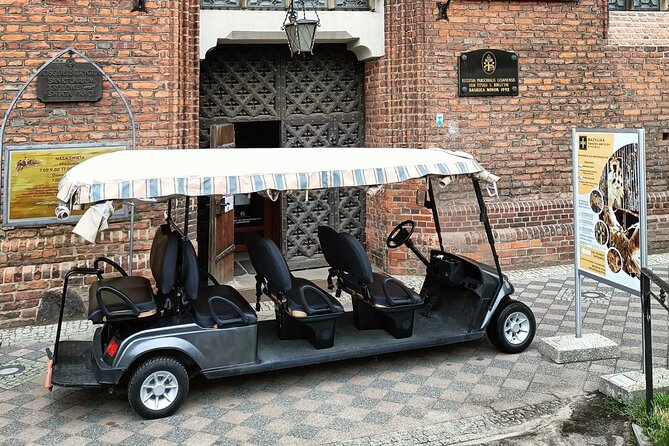
St. Bridget’s Church inside access is the included payoff
The biggest included moment is St. Bridget’s Church (Kosciol sw. Brygidy). The tour data says entrance here is included, and the stop is marked free for admission.
Why it matters: construction began in the 14th century and the monastery church work followed after 1394, when the Order of St. Bridget was brought to Gdansk. The first single-nave temple was finished in 1396 to 1397, with expansion continuing until the 16th century.
It also connects directly to modern Polish history. In August 1980, it became one of the symbols of Solidarność (Solidarity). So you are not just seeing medieval architecture. You are seeing a site tied to late 20th-century identity.
If you have to choose one “go in for real” moment on a short tour, this is the one.
St. Catherine’s Church and the tower timeline
Another church stop is St. Catherine’s Church. Construction began in 1227, with expansions in the 14th and 15th centuries. The tower was erected in 1450 but only completed in 1634, crowned with a Baroque cupola designed after a shift in control.
The church interior later received a carillon in 1738. The tour also notes that Protestants occupied the church from 1555 to 1945, when it was handed to the Carmelite order.
This is one of those stops where you learn to read time. Different layers show up in one building, and the guide’s timeline keeps it from feeling like random facts.
Most Chlebowy, the Bread Bridge story behind the name
Between viewpoints, you will pass Most Chlebowy or the Bread Bridge, built between 1338 and 1356 over the Radunia Canal. It connects Kowalska and Korzenna Streets.
Here’s the human detail: the bridge name comes from bakers who sold bread from stalls called bread benches starting in the 14th century. It is a nice reminder that food trade shaped street names and landmarks.
The bridge was rebuilt many times, widened with a tram line in the early 1900s, and after WWII, the bridge renovation restored a cobbled surface with stylized railings and lanterns.
World War II Museum and Bunkier, when the tour turns serious
This is where the tour stops being only “pretty Old Town.” You will see the Museum of the Second World War, a state cultural institution created in 2008, with exhibits opened in 2017.
Then you get a stop for Bunkier Luftschutz Hochbunker, an above-ground air-raid shelter built between 1942 and 1943. It is six storeys, covered with a double roof and built with thick reinforced concrete walls. The materials description is striking, the concrete is described as hard as granite.
If you prefer history that has physical weight, these stops hit. If you just want sightseeing, it helps to go in knowing the mood changes here.
Museum of the Polish Post Office, Versailles-era territory in plain view
You also pass the Museum of the Polish Post Office in Gdansk. The tour framing is clear: under the Treaty of Versailles, the Polish post office in the Free City of Danzig was treated as extraterritorial Polish property.
It notes the main post office building called Gdańsk 1 started in 1930, with a direct telephone line to Poland. This is a good reminder that infrastructure can be political, and that borders are not only lines on a map.
The stop is marked free, so you do not feel like you are paying to understand.
Shipyard Gate No. 2 and the December shootings memory
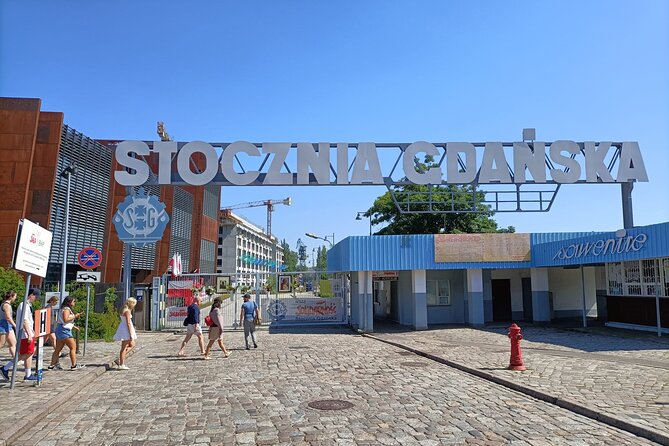
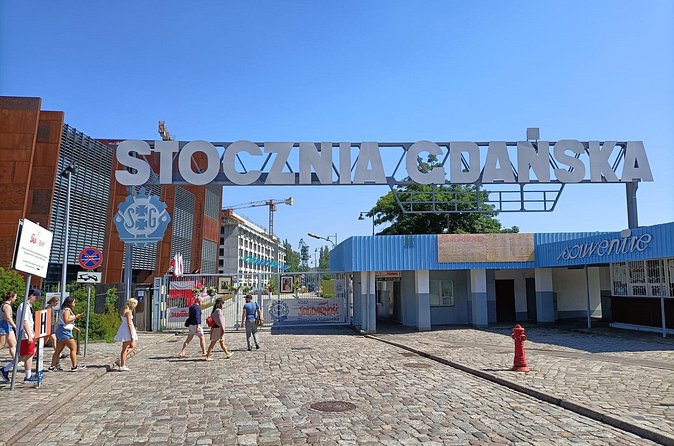
Near the end, the tour focuses on the Gdansk Shipyard area with Gate No. 2, described as the main entrance because it connects to management and the city center.
In December 1970, shipyard workers leaving through Gate No. 2 were fired on by army troops. The data says two people were killed and eleven were wounded, and it also explains that before later monuments, this gate was the first remembrance place for the victims.
This stop gives the tour a hard edge. It also explains why Gdansk history is not just monuments and old walls, it is also labor, protest, and memory.
Hevelius Monument and Neptune’s Fountain, classic photo beats with meaning
Near the city center, you will stop for Heweliusz Monument, commemorating Johannes Hevelius, astronomer, mathematician, inventor, and brewer. It notes he authored Selenographia and discovered comets and constellations. The monument is opposite the Old Town Hall and the tour places it on the site of his 17th-century observatory.
Finally, you reach Neptune’s Fountain, one of the most recognizable symbols of Gdansk and tied to the city’s sea connection. Work began early in the 1600s, and Neptune’s bronze sculpture was cast in 1612 by Piotr Husena. The fountain was put into operation in 1633 after delays.
These are the stops you remember as images. The bonus is that the guide also adds the why behind them, so the photos feel like part of a story, not random sightseeing.
Should you book the Gdansk 1 Hour Guided Tour through the Heart of the Old Town?
Book it if you want maximum Old Town coverage in a short window and you prefer a less exhausting way to get oriented. The included St. Bridget’s Church entrance is a real value add, and the route also covers gates, river history, and wartime memory without you having to stitch together separate tickets and long plans.
Skip it or consider adding extra time elsewhere if you are the kind of traveler who wants long museum sessions. This tour is fast by design, so many stops are best enjoyed as guided context plus a quick look, not a deep visit to every interior.
If your goal is to come out of Gdansk feeling like you understand the city’s layers, this is a strong choice.
FAQ
How long is the Gdansk 1 Hour Guided Tour through the Heart of the Old Town?
It runs about 1 hour to 1 hour 15 minutes.
Is the tour offered in English?
Yes, the tour is offered in English.
Where does the tour start and end?
It starts at Długi Targ 1, 80-828 Gdańsk, Poland and ends back at the same meeting point.
What is included in the tour ticket?
The ticket includes entrance to St. Bridget’s Church.
Are tickets required for the other stops?
The tour notes many stops as Admission Ticket Not Included, so you may need to buy separate tickets if you want to enter places beyond the included church.
Are there any stops listed as free?
Yes. Zuraw miniatura, Museum of the Polish Post Office, Heweliusz Monument, and Neptune’s Fountain are marked as Admission Ticket Free. St. Bridget’s Church entrance is included.
Is this a private tour?
Yes. It is listed as a private tour/activity, so only your group participates.
Can I cancel for a full refund?
Yes. You can cancel for a full refund if you cancel at least 24 hours in advance of the start time. Free cancellation is available.
Freshly posted from Gdansk
- Private Walking Tour of Old Gdańsk with an architect-guide★ 5.0 · 7 reviews
- GDANSK City Tour by Golf Cart Live Guide & Sightseeing 90min★ 4.7 · 7 reviews
- Stutthof Concentration Camp private tour★ 5.0 · 7 reviews
- Private Roundtrip Transfer to Stutthof Concentration Camp 4h★ 5.0 · 7 reviews
- Gdansk: Polish Craft Beer Tasting Session★ 4.5 · 7 reviews
- Gdansk, Sopot & Gdynia – Private 3 City Tour★ 5.0 · 7 reviews
- Gdansk: PRIVATE Alcotour City Tour Sightseeing Golf Cart★ 5.0 · 7 reviews
1-Hour Experiences, compared.



#1 Pub Crawl Warsaw with Optional Premium 1 Hour Open Bar
Read our review →
Pub Crawl with 1 Hour of Unlimited Alcoholic Drinks
Read our review →
Krakow by night 60 minutes cruise The Vistula River Krakow
Read our review →
City Sightseeing Tour by Buggy/Golf Cart LIVE GUIDED 1H
Read our review →
Krakow Vistula River 1 Hour Sightseeing Cruise
Read our review →
1 Hour of Open Bar Pub Crawl + Karaoke + VIP Entry to Best Clubs
Read our review →Browse the lists this tour appears in