
Reviewed · AUSCHWITZ-BIRKENAU GUIDED TOURS
From Krakow: Auschwitz-Birkenau Trip with Transport
Auschwitz is heavy, even with a guide. What makes this trip worth your planning is the round-trip Krakow transport plus an English-speaking tour leader that helps you understand what you are seeing, not just where it is. The day also includes a documentary on the ride, so the setting hits your brain before you ever reach the gate. The one drawback to plan around is the separate museum ticket (not included), which can mean a long wait in line and a later start time than you might expect.
I like how structured the visit is, with a headset for the Auschwitz I portion and a limited group size set at 35 travelers, so you are not constantly searching for your place. I also appreciate that the pace is built around museum regulations, not someone’s idea of “efficient.” Still, you should consider that your exact entry time and timing back to the bus can shift based on ticket availability and time slots.
If you go in prepared, this can be a meaningful day that feels organized enough to let you focus. If you go in hoping the line will be short, it can feel like a wasted bus ride.
In This Review
- Key things to know before you go
- From Krakow by bus, what this trip actually buys you
- Price and what is included vs what you pay on site
- The morning routine: meeting point, early departures, and ID rules
- Auschwitz I: what the gate walk and the headset do for your attention
- Auschwitz II, Birkenau: the scale lesson and the liberation ending
- Timing reality checks: ticket quotas, separate entry times, and waiting
- What the guide quality affects most
- Who this trip suits best, and who might prefer a different approach
- Small practical tips that make the day easier
- So, should you book this Auschwitz-Birkenau trip from Krakow?
- FAQ
- What is the duration of the tour from Krakow?
- Is the entrance fee included in the price?
- Do I need a passport or ID?
- Is this tour guided in English?
- How long are the two main site visits?
- What is included in the tour price?
- Is food included?
- Do I get skip-the-line access?
- What happens if the weather is bad?
Key things to know before you go
- Separate admission fee: The Auschwitz and Birkenau tickets are not included, and you pay on-site.
- Bring your passport or ID: The museum requires personal details confirmation at entry.
- No skip-the-line: You will still wait in line for tickets before your guided portion.
- English tour with headsets: You should be able to hear the guide clearly, especially at Auschwitz I.
- Expect timing surprises: Your guide visit can start later due to the ticket process and time-slot rules.
- Max group size of 35: Smaller crowds help you follow along without chaos.
From Krakow by bus, what this trip actually buys you
This tour’s main selling point is simple: you get round-trip transport from Krakow and a guided visit that keeps the day from turning into “figure it out” mode. For many people, that is the real value. Krakow to Auschwitz is not hard, but coordinating schedules, getting the right time slot, and lining up entry details can be stressful, especially when the Auschwitz memorial has strict procedures.
You also get a documentary film during the journey. That matters more than it sounds. By the time you arrive, you are not meeting the site for the first time with zero context. The day has a shape, and that shape helps you process what you are about to see.
One practical note: the vehicle is described as modern and air-conditioned. That is not just comfort. When you end up waiting outdoors for parts of the day (and some reviewers describe long ticket queues), being inside a comfortable bus between segments becomes your reset button.
Other Auschwitz-Birkenau guided visits on this site:
- From Krakow: Auschwitz-Birkenau Guided Tour & Hotel Pickup
★ 4.5 · 33,358 reviews - From Krakow: Auschwitz-Birkenau Guided Tour & Hotel Pickup
★ 4.5 · 29,340 reviews - Krakow: Auschwitz Guided Tour with Optional Hotel Pickup
★ 4.5 · 15,280 reviews
Price and what is included vs what you pay on site
The tour price is $62.31 per person, and it covers the transport and the guided experience support. Included items are pickup from your Krakow meeting point, round-trip air-conditioned transport, an onboard documentary, English-speaking tour leader assistance, and insurance.
What is not included is the museum entrance fee. You pay PLN130 per person on site. The important twist is that waiting for tickets is still part of the day. Even with a guided structure, you are not stepping straight into the memorial with skip-the-line access.
So how is this good value? It depends on your tolerance for the morning wait. If tickets are available and you move through the process smoothly, you essentially pay for: transport plus a guide plus the ability to focus on the meaning of the visit instead of logistics. If tickets are delayed or your slot is late, the bus portion can feel like time you will never get back.
The morning routine: meeting point, early departures, and ID rules
The trip starts at the Radisson Blu Hotel, Krakow on Floriana Straszewskiego 17. The tour ends back at the meeting point. Confirmation happens at booking time, and the pace is set by memorial regulations, so expect the schedule to be approximate.
The big thing I want you to take seriously is the ID requirement. The Auschwitz Birkenau museum requires mandatory confirmation of personal details. You need your passport or ID to enter. If you forget it, you may not be allowed in. That single detail has the power to ruin the day.
Also, build your morning planning around the reality that your pickup time and the actual start of the guided portion can be different from what you hoped. Some people describe early pickup around the very early morning hours and then waiting for tickets until later in the day. I treat this as normal for Auschwitz tours because ticket quotas and processing rules control what happens next.
My practical advice: keep your confirmation messages handy and double-check the pickup time the day before. Some reviews describe communication problems and late or changed pickup times, and I do not want you dealing with that stress.
Auschwitz I: what the gate walk and the headset do for your attention
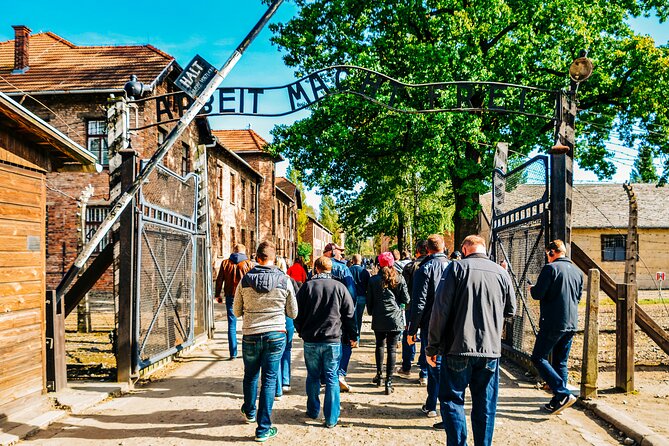
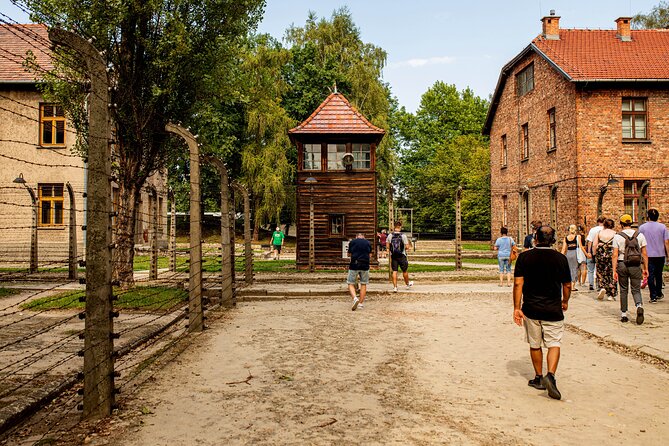
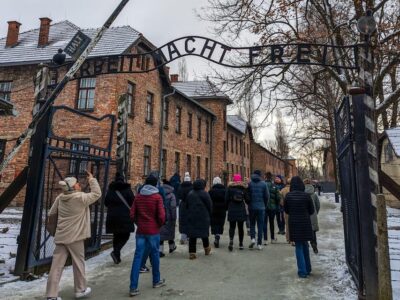
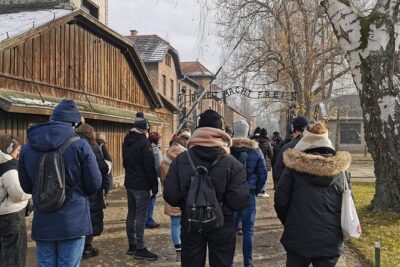
The Auschwitz I portion begins with walking through the gate of Auschwitz I, the first camp established after Germany annexed Poland in 1939. You will pass under the sign Arbeit Macht Frei. That moment is brief, but it sets the tone and the meaning of what comes next.
The Auschwitz I stop is typically the first long segment, around 2 hours, and you should use a headset to hear your guide clearly. That headset detail is more important than it looks. The memorial environment can be loud with people moving around, and if you miss the guide’s explanations you can end up just walking the grounds without connecting the dots.
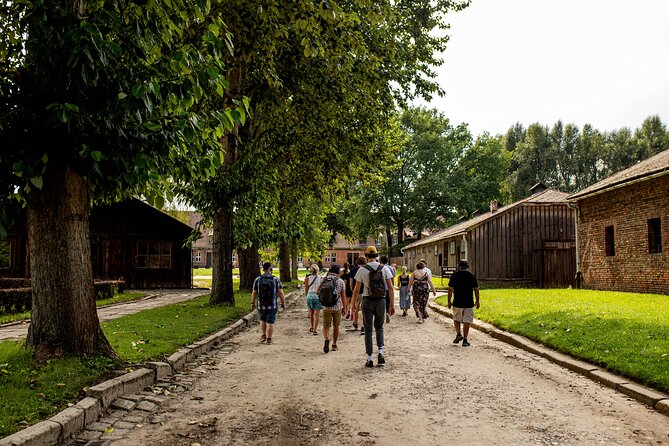
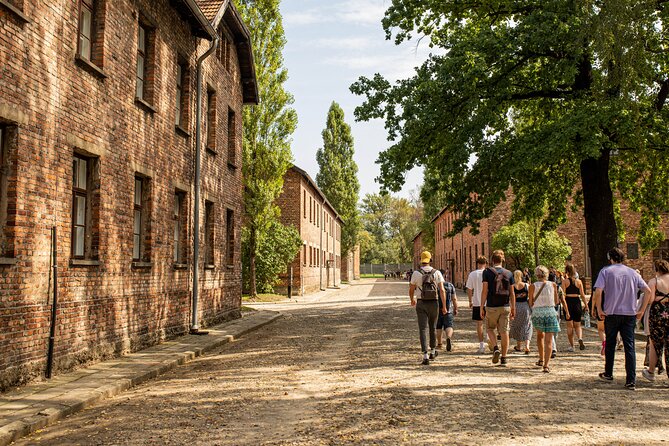
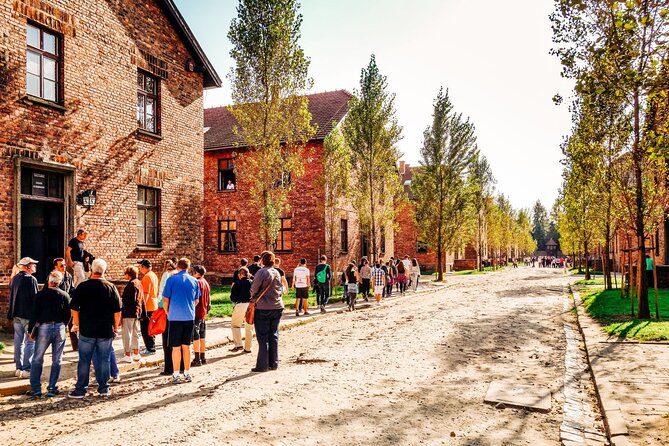
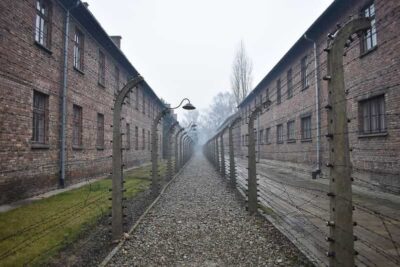
During this portion, you will see original wooden barracks, fortified walls, barbed wire fences, and the gas chambers and crematoria. Even when you have read about it before, seeing the layout makes the scale and the system more concrete. This is one of those sites where your questions tend to start mid-walk: How did they function day to day? Why were these structures built this way? A good guide gives you answers without rushing past the hard parts.
A consideration: the exact start time of your Auschwitz I guided visit depends on ticket availability. So even if your itinerary says a certain timing, what matters in practice is when the museum lets your group begin the guided portion.
Still tacked up around Krakow

Auschwitz II, Birkenau: the scale lesson and the liberation ending
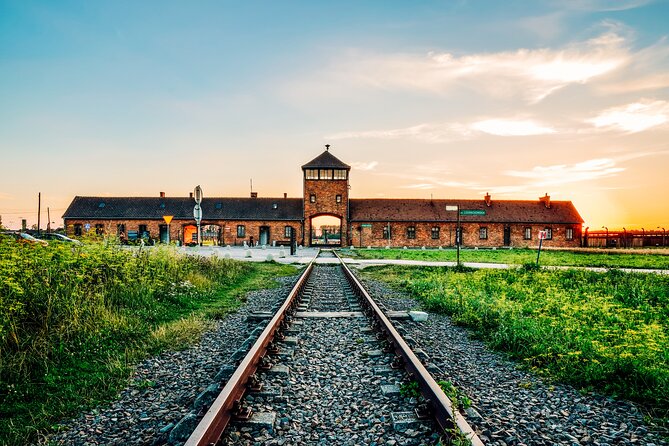
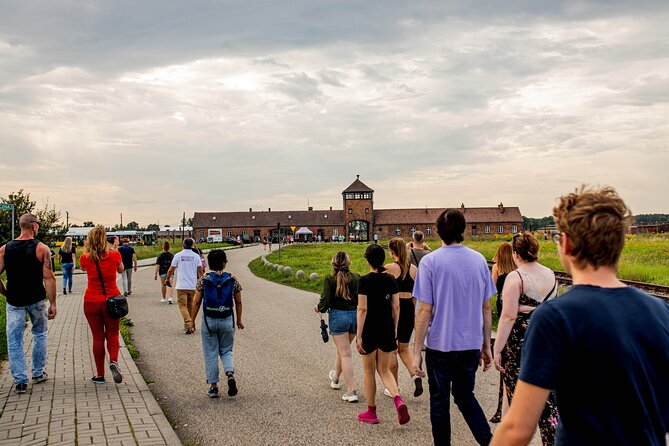
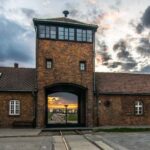
After Auschwitz I, the trip goes to Birkenau (Auschwitz II). It is close by, described as about 3 minutes away, so you are not spending the day crossing the countryside. This proximity is useful because it keeps your focus on the story rather than the travel in between.
Birkenau is described as the larger camp, built and operated for the purpose of making Europe “Judenrein.” The guide continues the narrative with details about brutal living conditions, a cruel selection process, and pseudo-scientific medical experiments carried out by Nazi doctors, including Josef Mengele. You learn the camp was constructed in 1941 under the orders of SS commander Heinrich Himmler and that it could hold around 90,000 prisoners.
The Birkenau stop is around 2 hours. This is where many people feel the scale hit them physically. Auschwitz I can feel like a compact “system you can map.” Birkenau is more spread out, and it can be harder to take it in without guidance. That is why the guide’s narration matters: it helps you look in the right direction at the right time.
The tour concludes with the liberation story, describing how soldiers from the 60th Army of the First Ukrainian Front opened the gates of Auschwitz on January 27, 1945. That ending matters, because it brings you back to the human consequence of what happened and why genocide must never happen again.
Timing reality checks: ticket quotas, separate entry times, and waiting
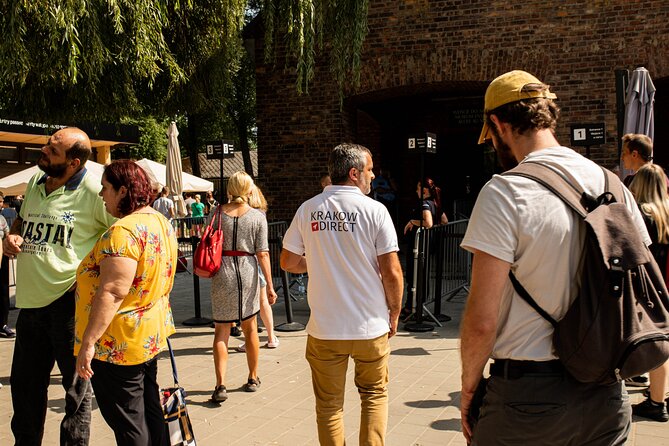
Here is the part you need to plan for, even if it is not the part you want to hear. The experience includes a mandatory ticket process, and the tickets are individual with time-slot quotas. That means your group might not begin and end at the exact same moment as others. It can also mean your museum guided portion starts later than expected if the ticket line is long.
Some reviews describe standing in line for hours to receive tickets, and in those cases the visit does not fully get underway until late morning. Others also mention that tickets can be issued for later time slots, even if the group arrived early.
This is also why the tour can feel like a “bus ride” when things go wrong. If you show up late for the right time slot or the tickets you need are no longer available, the day can collapse. One review describes a scenario where people did not get to tour Auschwitz at all because tickets were no longer available after waiting.
I cannot control ticket availability. But I can control your preparation. If you want to reduce stress, arrive with a calm mindset and assume waiting is possible. Wear layers. Bring water. And do not plan a tight schedule on the Krakow side of the day. This is a half-day plan only in theory.
What the guide quality affects most
The tour lives or dies on the guide and the pacing. The good news is that multiple reviews praise the tour’s emotional impact and the guide’s care. People highlight passionate English commentary and a kind, supportive delivery. That kind of guidance helps you process what you are seeing without getting lost in facts alone.
The use of a headset at Auschwitz I also supports comprehension. If you can hear the guide clearly, you are less likely to feel overwhelmed or disconnected. That matters for Auschwitz, because the site is full of details that can blur together if you are reading them without a framework.
I would treat the guide as part of the ticket value. If you are sensitive to detail and context, this format tends to work better than a self-guided walk where you have to piece the story together yourself.
Who this trip suits best, and who might prefer a different approach
This tour suits you best if you want three things:
- Round-trip transport so you can avoid the logistics of getting there and back.
- A guided narrative in English that connects the site to the larger story.
- A structured day that keeps you moving through Auschwitz I and Birkenau.
It is also a good fit if you do not want to spend your limited vacation time wrestling with ticket time slots and entry procedures.
But if your top priority is minimizing waiting time, you should think carefully. The ticket process is not skip-the-line, and waiting can be long. If you prefer more control and flexible pacing, you might consider other arrival methods. Some reviewers explicitly recommend train travel as a cheaper and more controllable alternative, largely because of perceived time savings.
Also consider this: if you rely on a very specific timetable for other Krakow plans, a long morning queue can disrupt everything. This is a day for Auschwitz, not a day to squeeze in extra stops.
Small practical tips that make the day easier
Since you do not get food and drinks included, plan accordingly. If the schedule stretches, you do not want to reach the point of hunger and lose focus. Bring water, and if allowed by your comfort level, a small snack.
Wear comfortable shoes. The memorial grounds involve walking and standing, and when you are waiting for tickets you will feel every layer of cold or discomfort.
Bring your ID, no excuses. It is not optional for entry, and the day is not worth the risk.
Finally, be mentally ready for the emotional weight. Even with guide narration and a documentary on the bus, Auschwitz is still Auschwitz. The structure helps, but it does not make the content lighter.
So, should you book this Auschwitz-Birkenau trip from Krakow?
Book it if you want guided context, English narration, and the convenience of round-trip Krakow transport. The plan to cover both Auschwitz I and Birkenau with a tour leader is exactly what most people need to make the day feel coherent, not just historical sightseeing.
Do not book it if you cannot handle the uncertainty around ticket waits and start times. The entrance fee is extra, tickets require personal ID confirmation, and you should expect line-ups for tickets even when you arrive early. If you are the type who panics when a schedule slips by a few hours, this may test your patience.
My bottom line: this trip can be powerful and well-guided when the logistics line up, and reviews strongly suggest the guided portions can be moving and memorable. Just go in with open eyes, bring your passport or ID, and accept that the morning queue is part of the deal.
FAQ
What is the duration of the tour from Krakow?
The trip is listed as about 7 to 10 hours. The exact timing can vary because the memorial sets the pace and visitor service regulations apply.
Is the entrance fee included in the price?
No. The entrance fee is PLN130 per person and is paid on-site.
Do I need a passport or ID?
Yes. You must bring your passport or ID because the Auschwitz Birkenau museum requires personal details confirmation at the entrance.
Is this tour guided in English?
Yes. The tour is offered with an English-speaking tour leader assistance.
How long are the two main site visits?
Auschwitz I is typically about 2 hours, and Birkenau (Auschwitz II) is typically about 2 hours as well.
What is included in the tour price?
Included items are pickup from the Krakow meeting point, round-trip air-conditioned transportation, a documentary film on the way, English-speaking tour leader assistance, and insurance.
Is food included?
No. Food and drinks are not included.
Do I get skip-the-line access?
No. Waiting in line (no skip-the-line access) for entry tickets is required, and the ticket process happens on-site.
What happens if the weather is bad?
The experience requires good weather. If it is canceled due to poor weather, you will be offered a different date or a full refund.
Freshly posted from Krakow
- ZALIPIE – painted village, unique small group tour from Krakow★ 5.0 · 7 reviews
- “John Paul II Route” PRIVATE -Wadowice, Kalwaria Z.-Łagiewniki★ 5.0 · 7 reviews
- Krakow: Craft Beer Tasting City Walking Tour★ 4.4 · 7 reviews
- Magic of Krakow: Guided Tour of the Old Town★ 5.0 · 7 reviews
- Krakow : Zakopane Tour + Thermal Pools with Hotel Pickup★ 4.8 · 7 reviews
- Krakow in One Day: City Tour by Electric Car★ 5.0 · 7 reviews
- Guided Tour of Plaszow Concentration Camp, Kraków★ 4.8 · 7 reviews
Auschwitz-Birkenau Guided Tours, compared.
Auschwitz-Birkenau Guided Tour & Hotel Pickup
Read our review →Auschwitz-Birkenau Guided Tour & Hotel Pickup
Read our review →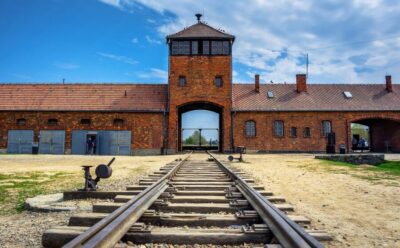
Auschwitz Guided Tour with Optional Hotel Pickup
Read our review →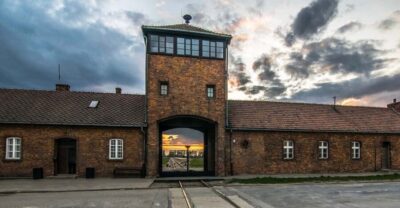
Auschwitz-Birkenau Guided Tour with Pickup & Lunch
Read our review →
Krakow to Auschwitz Birkenau Guided Tour with Transfer and Ticket
Read our review →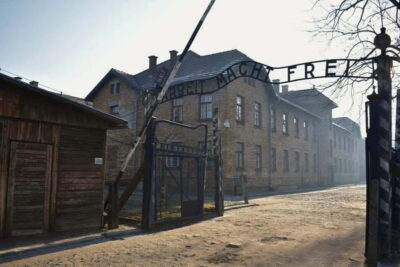
Auschwitz-Birkenau Guided Tour or Self-Guided Tour
Read our review →Browse the lists this tour appears in