
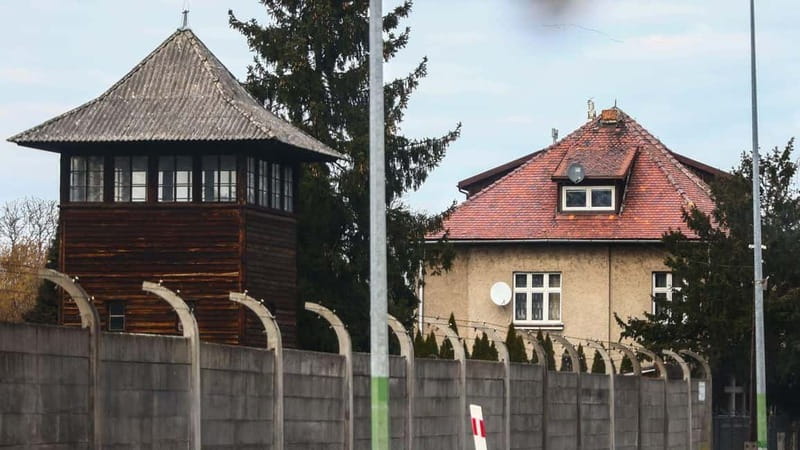
Reviewed · AUSCHWITZ-BIRKENAU GUIDED TOURS
From Kracow: Auschwitz Complex Alternative Tour
Auschwitz, but through the parts most people miss. This 8 hour Auschwitz complex alternative tour from Krakow gives you a wider sense of how the system worked, with round trip transport and a guided walk through major surrounding sites tied to arrivals, executions, and the camp’s final days. The tradeoff is real: the content is heavy, and you should expect a significant amount of walking.
I like that this tour is led by a live English guide who can answer questions clearly. One recent experience also praised a driver named Ollie for keeping the group comfortable before heading out, with a cool playlist to make the ride feel more human without getting inappropriate.
In This Review
- Key things I’d focus on before you go
- Why this Auschwitz alternative tour uses Auschwitz III, ramps, and execution sites
- Krakow pickup, round-trip transport, and why it reduces stress
- Auschwitz III (Monowitz) memorial: the final victims and the January 1945 mass grave
- The camp extension around Auschwitz: SS barracks, the women’s camp, and final public execution
- Ramps, the Zyklon B theater storage, and how arrivals became a system
- Commandant’s villa and gravel pits: punishment for clergy and Polish intelligentsia
- Interest Zone maps from 1944: seeing how the camp expanded beyond fences
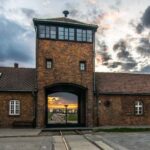
- Birkenau parts that hit hard: Death Gate, SS barracks, and the extermination zone
- Sauna building and belongings processing: the last steps in the process
- Finishing at Auschwitz-Monowitz: why the day feels cohesive
- Price and value: is $55 worth an 8-hour guided memorial tour?
- Who this tour suits best, and who should think twice
- Should you book this Auschwitz Complex Alternative Tour?
- FAQ
- Does the tour include Auschwitz I and Auschwitz II-Birkenau main camps?
- What Auschwitz areas do you visit on this tour?
- How long is the tour, and where does it start?
- Is this tour guided, and what language is offered?
- Is the tour suitable for wheelchair users?
- What should I bring for the day?
- Is there an option to skip the line?
Key things I’d focus on before you go
- Skip-the-line via a separate entrance, which matters when the memorial sites are busy.
- Auschwitz III (Monowitz) on the schedule, so you see how the camp network extended beyond the famous gates.
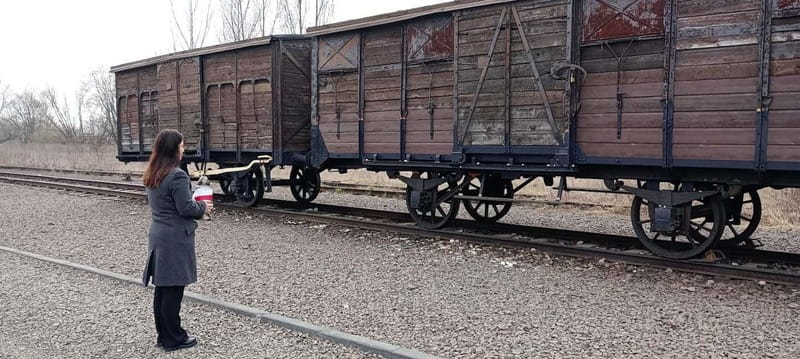
- Specific, gut-check locations like the Polish Ramp and Old Jewish Ramp, plus gravel pits tied to executions.
- Birkenau areas you can still make sense of, including the Death Gate and key zones like Bunker 1 and Bunker 2.
- Maps and aerial photos from 1944 that help you understand the so called Interest Zone at a glance.
- A practical approach to questions, with a guide who stays polite and responsive.
Why this Auschwitz alternative tour uses Auschwitz III, ramps, and execution sites
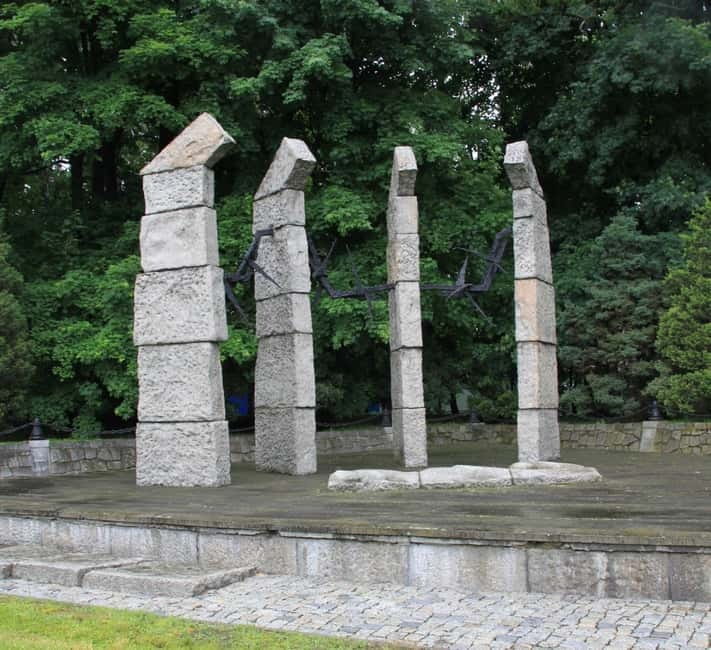
Most Auschwitz visits focus on the headline areas, then people move on. This tour takes a different angle, and I think that’s the point: it threads together the camp system, from prisoner arrival spaces to places where violence happened, and then to the end of the camp complex.
You do not get the Auschwitz I and Auschwitz II Birkenau main camp visits as a standard circuit. Instead, you focus on surrounding sites and related areas, including Auschwitz III (Auschwitz Monowitz), plus Birkenau sections like the Death Gate, main SS barracks, and parts of the extermination zone.
If you want Auschwitz context that goes beyond a checklist, this structure helps. The “why” behind the sites is what you’re actually chasing, and that’s what a good guide can pull into focus when the landscape itself becomes almost too much.
Other Auschwitz-Birkenau guided visits on this site:
- From Krakow: Auschwitz-Birkenau Guided Tour & Hotel Pickup
★ 4.5 · 33,358 reviews - From Krakow: Auschwitz-Birkenau Guided Tour & Hotel Pickup
★ 4.5 · 29,340 reviews - Krakow: Auschwitz Guided Tour with Optional Hotel Pickup
★ 4.5 · 15,280 reviews
Krakow pickup, round-trip transport, and why it reduces stress
This tour starts and ends in Krakow, with transportation included. The meeting point is the K+R bus stop, and that sounds simple, but it matters on a day like this when you are going to be tired, walking, and absorbing difficult material.
You also get a separate entrance for skip-the-line access. In practice, that can save time and mental energy, because waiting around before you step into the memorial areas feels extra draining.
The duration is 8 hours, so you should plan for a full half-day block. Comfortable shoes are not a suggestion here. Expect enough walking that you will appreciate water and weather-appropriate clothing, especially if the day starts with a cold morning or turns windy later.
Auschwitz III (Monowitz) memorial: the final victims and the January 1945 mass grave
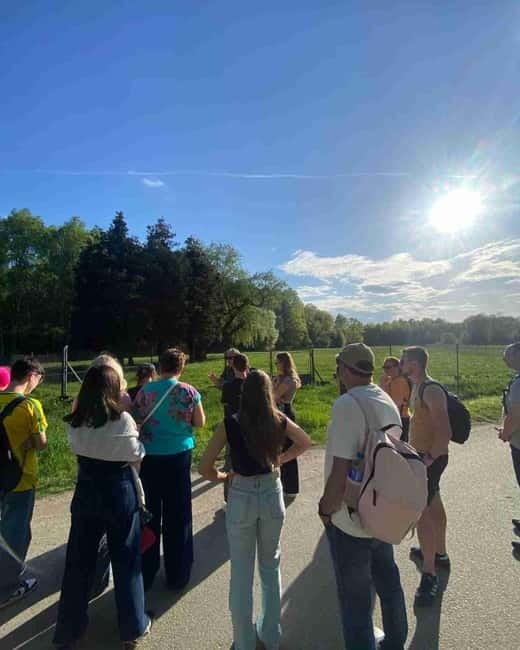
The tour includes a visit to the memorial for the final victims of Auschwitz-Monowitz (Auschwitz III). This stop is important because it brings the story into the camp’s last chapter, not just the earlier mechanics of selection and killing.
A key detail here is the presence of a mass grave of 700 prisoners shot during the camp evacuation in January 1945. Even if you already know Auschwitz basics, this kind of fact changes how you understand the end of the system. It is not only about how it started, it is also about how it ended, and what happened to people when the Nazis tried to break apart their own evidence.
I also like that the tour treats Monowitz as more than a sideline. It’s one of the ways you can see the camp complex as a network rather than a single location.
The camp extension around Auschwitz: SS barracks, the women’s camp, and final public execution
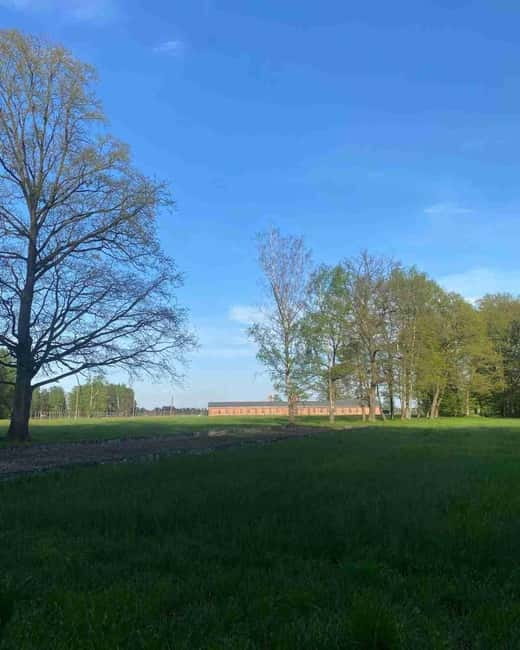
One of the most specific parts of this tour is the focus on what’s called the camp extension. You visit areas associated with new SS barracks and what’s described as the last women’s camp.
This section also includes a stop connected to the site of the final public execution. That detail is chilling because it shows how terror was used as a tool not only for mass murder, but also for control and public intimidation, even late in the process.
A practical note: because these areas are physically separate and the ground can be uneven, wear shoes you trust. You are on foot for a significant stretch, and you want to feel steady so you can focus on the guide’s explanation, not your balance.
Still tacked up around Krakow

Ramps, the Zyklon B theater storage, and how arrivals became a system
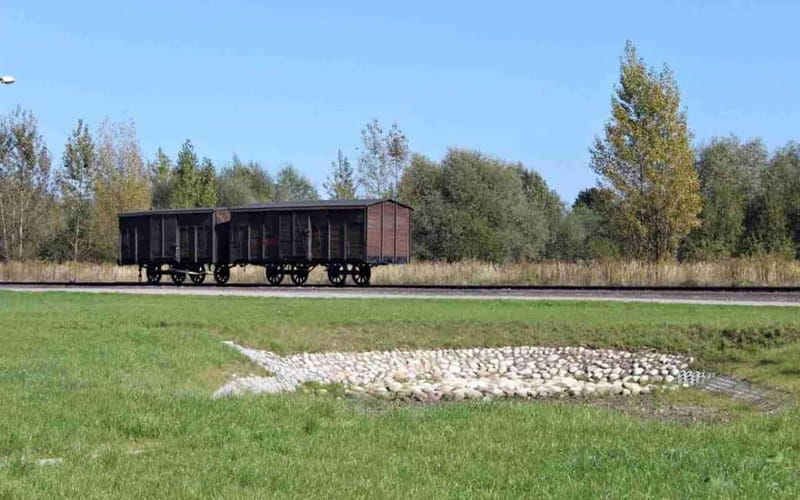
The tour includes several arrival and processing-related sites, and I think that’s where it becomes more than just “seeing memorials.” You stop at the pre-war theater used later for Zyklon B storage, plus you visit both the Polish Ramp and the Old Jewish Ramp.
Here’s what you should watch for: ramps are not just historical props. They represent stages of forced movement, including how people were processed and sorted upon arrival. The Old Jewish Ramp is identified as a main selection site for European Jews, which means you are standing near a place where lives were split into different outcomes in a system designed for murder.
The pre-war theater detail helps you understand how ordinary infrastructure got repurposed into a machine of extermination. It also reinforces a pattern: people often imagine cruelty as something that only happened in isolated rooms, but the Nazis used logistics and storage as part of the plan.
If you want the story to connect emotionally and logically, this stretch is a good anchor.
Commandant’s villa and gravel pits: punishment for clergy and Polish intelligentsia
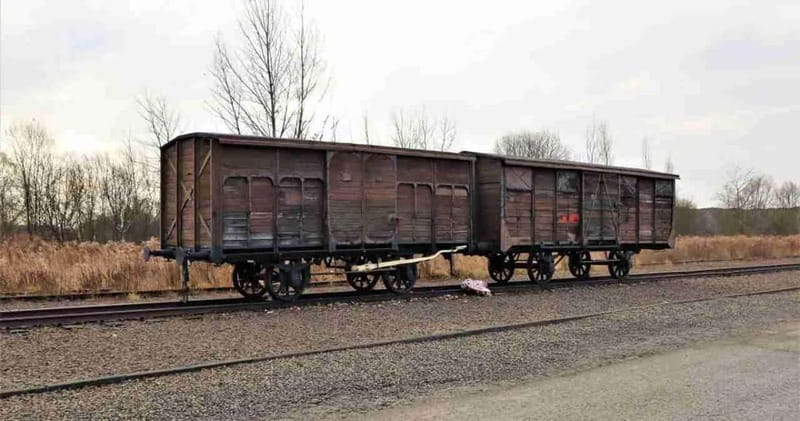
Another stop is the commandant’s villa, plus the gravel pits where executions took place. The information you’re given also points to victims including clergy and members of the Polish intelligentsia.
This matters because it widens the picture beyond one category of victims. Auschwitz was part of a broader Nazi system of terror aimed at different groups, and these sites help show how the camp complex fit into that wider violence.
One drawback to keep in mind is that the tour is sensitive by nature. If you know you react strongly to execution-related descriptions or mass death details, you might want to prepare yourself mentally. Bring water, take breaks when your guide suggests them, and pace your camera usage.
Interest Zone maps from 1944: seeing how the camp expanded beyond fences
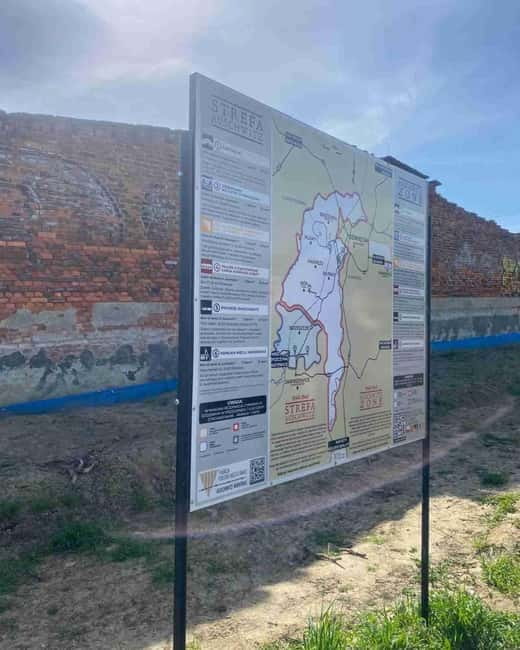
The tour includes an “Interest Zone” explanation using maps and aerial photographs from 1944. This is one of those features that can feel technical at first, but it’s genuinely useful.
When you look at a map while someone explains it, the physical remains start to make more sense. You can see how the camp complex connected to surrounding areas, how it grew, and why so many sites around Auschwitz matter even when they are not the most famous memorial buildings.
I like this approach because it turns the visit into interpretation. You’re not just looking at structures, you’re learning how planners and occupiers saw space, movement, and control.
Birkenau parts that hit hard: Death Gate, SS barracks, and the extermination zone
Even though the tour is described as not including the Auschwitz I and Auschwitz II main camp circuit, it still takes you into significant Birkenau areas.
You visit Birkenau’s Death Gate and the main SS barracks. Those stops are important because they frame how the killing space was organized, including the military presence that made the whole system run.
Then you move into the extermination zone, with stops including:
- Bunker 1 (Red House)
- Bunker 2 (White House)
- Remains of dressing rooms for victims
- A cemetery of Soviet POWs
I think it helps to know what you’re looking at. The tour’s inclusion of dressing rooms remnants is a quiet reminder that people were forced to undergo procedures that stripped dignity step by step, not instantly as an abstract concept.
The cemetery for Soviet POWs also broadens the victim story again. If you only think of Auschwitz as tied to one group, these details force your understanding to catch up with reality.
Sauna building and belongings processing: the last steps in the process
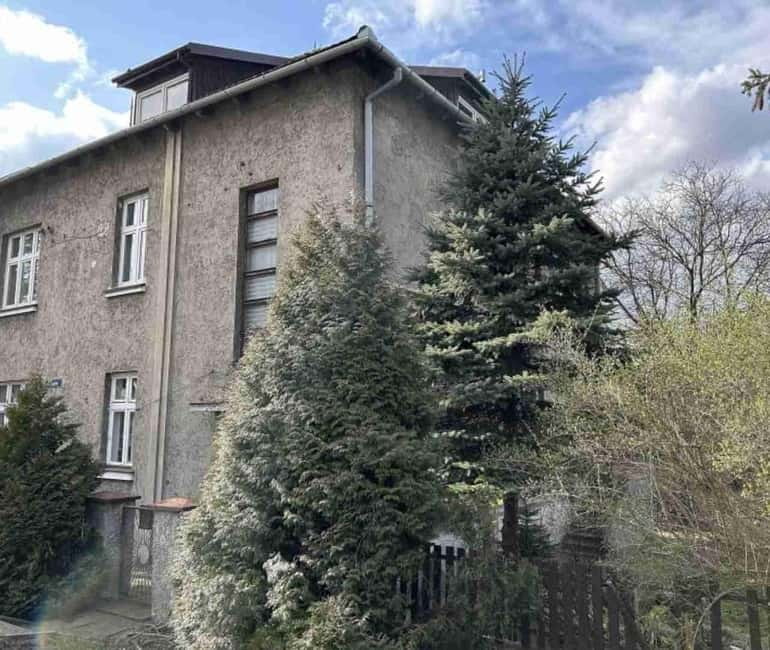
Another specific stop included here is the sauna building, described as being used for prisoner disinfection and belongings processing. It is easy to overlook a site like this if you focus only on the most photographed buildings.
But from a visitor perspective, this kind of stop can change your sense of what “process” meant. Disinfection and belongings handling were not side activities. They were part of the flow that turned people into items managed by the camp system.
If you’re the kind of person who gets numb when you see cruelty, this stop can also help you stay intellectually present, because it is concrete. The guide can explain how these functions fit into the overall machinery.
Finishing at Auschwitz-Monowitz: why the day feels cohesive
The tour concludes at the Auschwitz-Monowitz memorial. That ending matters because it brings you back to the final victim stage and the Auschwitz III perspective you started with.
I like that the schedule doesn’t just throw you between unrelated points. You can follow a storyline: arrivals and selection, storage and logistics, execution and punishment, then the Interest Zone framework, then the Birkenau extermination areas, and finally the Monowitz memorial tied to the end of the system.
When a tour ends with a place connected to the final phase, it tends to leave you with a more complete mental model, not just a collection of snapshots.
Price and value: is $55 worth an 8-hour guided memorial tour?
At $55 per person for 8 hours, this is priced like a budget-to-midrange day tour, especially given what’s included: a guided route through multiple sites, transportation from Krakow, and English commentary. You also get separate entrance skip-the-line access, which is one of those small perks that can make the day feel less stressful.
The big value question is not the currency amount. It’s whether you want a guide to connect the dots between locations that are not all the same kind of space. If you’re someone who benefits from interpretation, this price makes sense.
If you prefer a lighter walk, or you want only the most famous buildings with the simplest route, you might feel this tour is more intense than you want. The walking load and the sensitive content are the main reality checks here.
Who this tour suits best, and who should think twice
I’d say this tour suits you if:
- You want Auschwitz context tied to the camp system, not just a few headline structures.
- You are comfortable with difficult topics and want a guided, structured route.
- You like learning from specifics like ramps, storage spaces, and execution-related sites.
You might want to think twice if:
- You are sensitive to execution details and late-war violence.
- You are struggling with long walks on uneven ground.
- You want a visit that focuses only on the most famous main-camp buildings.
If you fall in the middle, go with your preparation. Bring water, plan for a long emotional day, and be ready to pause when you need to.
Should you book this Auschwitz Complex Alternative Tour?
Book it if you want a guided route that connects Auschwitz III, ramps, Zyklon B storage, commandant sites, gravel pits, the Interest Zone visuals, and Birkenau areas into one clearer story. The $55 price also feels fair for an organized day with round-trip transport and an English guide who can answer questions.
Skip it if your priority is the simplest possible route through the most famous Auschwitz areas, or if you know you cannot handle heavy content plus a significant walking day.
If you want, tell me your travel dates and whether you plan to visit other memorial sites in the region, and I’ll help you decide how to sequence this with the rest of your Poland trip.
FAQ
Does the tour include Auschwitz I and Auschwitz II-Birkenau main camps?
No. The tour does not include visits to Auschwitz I or Auschwitz II-Birkenau main camps.
What Auschwitz areas do you visit on this tour?
You visit Auschwitz-Monowitz (Auschwitz III) memorial, and you also see Birkenau sites such as the Death Gate and main SS barracks, plus parts of the extermination zone. The tour also includes the camp extension area and several other surrounding sites.
How long is the tour, and where does it start?
The tour lasts 8 hours and it starts and ends in Krakow. The meeting point is the K+R bus stop.
Is this tour guided, and what language is offered?
Yes. It includes a live English tour guide.
Is the tour suitable for wheelchair users?
Yes, the tour is described as wheelchair accessible.
What should I bring for the day?
Bring comfortable shoes, water, a camera (if you want one), and weather-appropriate clothing.
Is there an option to skip the line?
Yes. The tour includes skip-the-line access through a separate entrance.
Freshly posted from Krakow
- ZALIPIE – painted village, unique small group tour from Krakow★ 5.0 · 7 reviews
- Magic of Krakow: Guided Tour of the Old Town★ 5.0 · 7 reviews
- “John Paul II Route” PRIVATE -Wadowice, Kalwaria Z.-Łagiewniki★ 5.0 · 7 reviews
- Krakow: Craft Beer Tasting City Walking Tour★ 4.4 · 7 reviews
- Krakow in One Day: City Tour by Electric Car★ 5.0 · 7 reviews
- Krakow : Zakopane Tour + Thermal Pools with Hotel Pickup★ 4.8 · 7 reviews
- Full-Day Morskie Oko in The Tatra Mountains and Thermal Baths from Kraków★ 5.0 · 7 reviews
Auschwitz-Birkenau Guided Tours, compared.
Auschwitz-Birkenau Guided Tour & Hotel Pickup
Read our review →Auschwitz-Birkenau Guided Tour & Hotel Pickup
Read our review →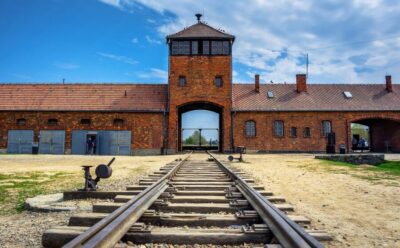
Auschwitz Guided Tour with Optional Hotel Pickup
Read our review →
Auschwitz-Birkenau Guided Tour with Pickup & Lunch
Read our review →
Krakow to Auschwitz Birkenau Guided Tour with Transfer and Ticket
Read our review →
Auschwitz-Birkenau Guided Tour or Self-Guided Tour
Read our review →Browse the lists this tour appears in