
Reviewed · 3-HOUR EXPERIENCES
3 Hours Guided Tour in Old and Main Town of Gdansk Poland
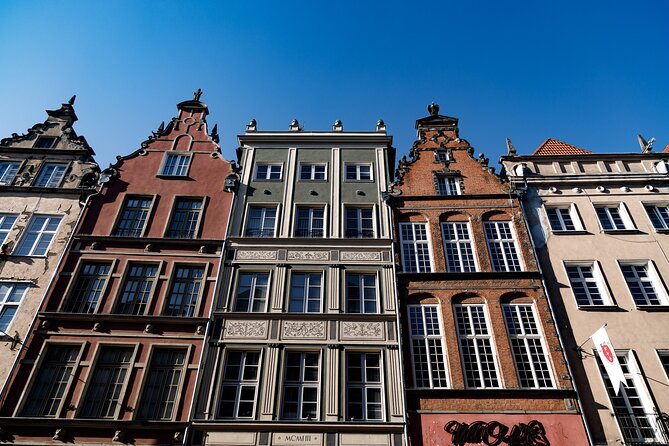
Gdansk feels personal when a guide points clues. This 3-hour walking tour strings together Old Town Hall, the Great Mill, and St. Bridget’s Church, then continues to St. Mary Church, Golden Gate, Artus Court, and Neptune’s Fountain.
I like two things a lot. First, you get free or included admission at many of the stops, so you spend your money on the guide’s stories, not on ticket math. Second, I appreciate the route flow, especially the finish near Długa Street, where you can keep wandering right away.
One thing to consider: this is a walking plan through outdoor landmarks and church exteriors, with short on-site moments. If you want long, inside-only time at every building, you may feel a bit pressed in just 3 hours.
In This Review
- Key highlights worth knowing before you go
- Why this Old and Main Town route works in 3 hours
- Starting at Ratusz Staromiejski, then straight into Old Town
- Old Town Hall: the civic engine of the city
- The Great Mill and the Amber Museum angle
- St. Bridget’s Church: Gothic architecture plus an amber altar
- Market Hall and church landmarks that shape the skyline
- The Great Armoury, then Golden Gate: power made visible
- Prison Tower and Długa Street: the human side of city walls
- Neptune’s Fountain and Artus Court: maritime symbolism and civic legend
- Main Town Hall Museum and Zuraw miniatura: port-city identity at the finish
- Price, group size, and what you get for $84.85
- Who should book this tour (and who might prefer a slower plan)
- Should you book this guided walk of Old and Main Gdansk?
- FAQ
- How long is the Old and Main Town of Gdansk guided tour?
- What landmarks are included on the tour?
- Is pickup offered, and where does the tour start and end?
- How much does it cost per person?
- Are admissions included for any stops?
- What is the cancellation refund window?
Key highlights worth knowing before you go

- Licensed guide storytelling that keeps the timeline clear while you walk
- Mostly free entry stops, with St. Bridget’s Church admission included
- Amber-focused stop at the Great Mill (now the Amber Museum), plus St. Bridget’s amber altar
- Main Town icons close together: St. Mary Church, Golden Gate, Artus Court, Neptune’s Fountain
- A route that ends on Długa Street, a practical place to grab food afterward
- Small-group feel with a maximum of 30 people
Why this Old and Main Town route works in 3 hours
If you only have a half-day in Gdansk, this kind of guided walk is a smart way to get oriented fast. You’re not just looking at buildings, you’re learning what the buildings were for and why they matter, then seeing the places connected to those jobs.
The price is $84.85 per person for about 3 hours, which may sound steep until you look at what’s included in the route. Many stops list free admission, and one major church stop is included. That usually means you’re paying primarily for a licensed guide and for having the route mapped out so you do not waste time figuring out what to see first.
Also, the group size is capped at 30. That helps in places where you might otherwise bunch up at doorways or along narrow streets. And if your schedule is tight, pickup is offered, which can take pressure off your planning.
Still tacked up around Gdansk
- Gdansk: City Cruise on Historical Polish Boat
★ 4.8 · 2,913 reviews - Gdańsk: Sunset Cruise on a Historic Polish Boat
★ 4.9 · 977 reviews - Gdańsk City Sights & History Guided Walking Tour in English
★ 4.8 · 876 reviews
Starting at Ratusz Staromiejski, then straight into Old Town
You meet at the Gdańsk Old City Hall area at Ratusz Staromiejski (Korzenna 33/35). This is a good start point because Old Town is compact, and you begin in the political and civic heart of the city.
From the first minutes, the tour tone is practical: you get brief context, then you look at the building in front of you with purpose. It also matters that this is a walking tour with a mobile ticket. If you prefer not to juggle paper, that little detail makes the experience smoother.
The pace feels designed for seeing a lot without turning it into a marathon. You get short stop times, then you move on, which is ideal if you want a city overview to build on later.
Old Town Hall: the civic engine of the city
The first major stop is Ratusz Starego Miasta, the Old Town Hall. This building served as a hub for political, economic, scientific, and social life. That’s a big claim, but you will understand it quickly once you learn what kinds of decisions and business would have run through that civic center.
What I like here is that you get a sense of how Gdansk functioned long before modern tourism. You’re not only seeing an old facade, you’re seeing a place where people would have gathered, negotiated, and managed daily affairs.
Potential drawback: Old Town Hall is one of those stops where the best value is in the guide’s explanation. If you are the kind of person who prefers to read and self-tour for long stretches, you might want to return later for extra time.
The Great Mill and the Amber Museum angle
Next comes the Great Mill, one of the largest medieval grain mills in Europe. The key today is that the area connects to the Amber Museum concept. Gdansk’s Baltic trade is a huge part of why the city became so powerful, and amber shows up again and again in the visual language of the city.
In a short stop window, you will likely do two things: you will look at the mill structure, and you will get the story of why it mattered. Then, later, you see how amber and trade aesthetics show up in religious art and other landmarks.
This is a strong stop for people who like material culture, trade, and objects. Even if you are not a museum person, amber is a tangible, memorable theme.
Beneath the newer pins on the Gdansk board:




St. Bridget’s Church: Gothic architecture plus an amber altar
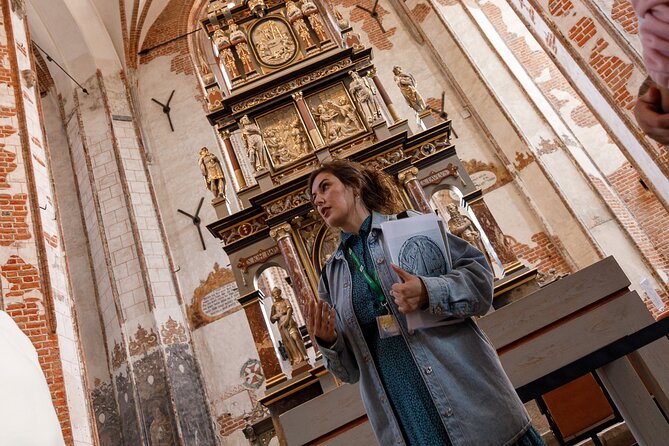
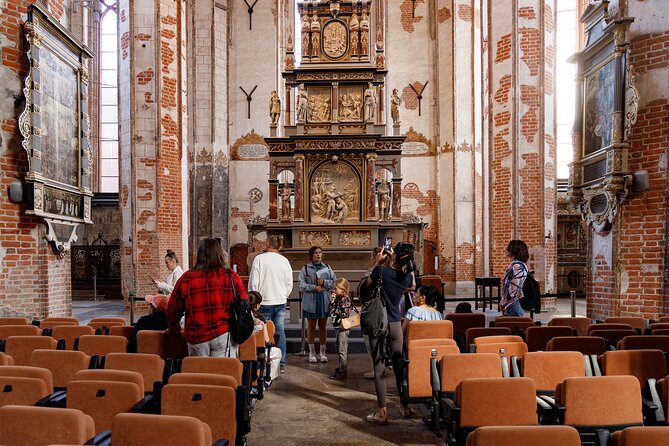
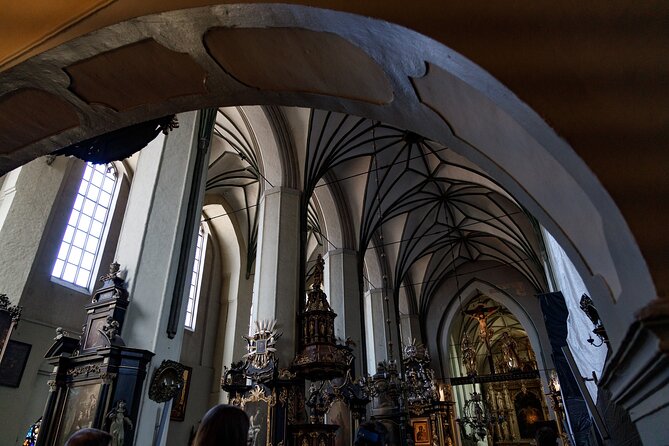
St. Bridget’s Church (Kosciol sw. Brygidy) is one of those buildings that makes you slow down without trying. It dates back to the 14th century and is a Gothic masterpiece, known for intricate stone carvings and soaring spires.
The tour highlights something specific: the church has a stunning amber altar. That detail matters because it connects your earlier trade theme from the Great Mill to a sacred space, where amber becomes more than a product. You can understand why Gdansk would want its wealth and identity expressed in church art.
The admission for this stop is included, so you are not trying to figure out what costs extra right when you are trying to enjoy the moment.
Possible consideration: church stops can vary in how busy they feel depending on day and hour. The stop time is short, so expect a look-and-listen visit rather than a long, quiet study.
Market Hall and church landmarks that shape the skyline
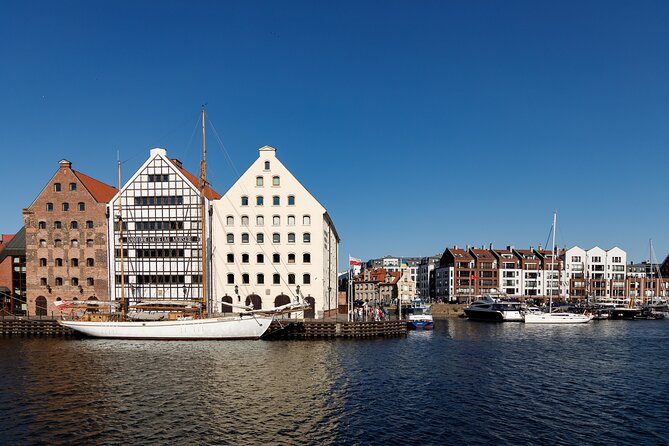
After St. Bridget’s, the tour moves to Market Hall, a centerpiece of commerce and culture for more than a century. Even with only a brief stop, you get the sense of why market life was central to the city’s identity. Market streets and market spaces are often where ordinary people interacted with the city’s power.
You also see St. Nicholas Church next. It is a 14th-century Gothic landmark. The main value here is architectural recognition and context. This is a good breather in the walk because it is easier to appreciate churches as forms, even if you only have a few minutes.
Then comes St. Mary Church, described as one of the largest brick churches in the world, with soaring towers and intricate architectural details. This stop tends to be the wow moment for many people because it is so visibly monumental. You get the big picture, then the guide gives you reasons to notice details rather than only the scale.
Tradeoff: if you are expecting lots of time inside, this is not that tour. It is a smart highlight walk that helps you decide what to revisit later.
The Great Armoury, then Golden Gate: power made visible
The Great Armoury (Wielka Zbrojownia) is a 17th-century Renaissance-style building. It has grandeur, and it functions as a reminder that the city needed military strength as well as trade.
This stop gives you balance. Gdansk often gets framed as merchants and ships, but armories tell you another side of the story. Even in a short visit, you can see how architecture communicated authority.
Right after that, you reach Golden Gate (Zlota Brama). It is a Renaissance-style gate with decorative sculptures and ornaments, built to welcome visitors into the historic center. This is one of those places where the guide’s timing helps. When you walk through it as part of the route, it feels like a threshold into the older city core.
If you are into photo stops, this is a strong one. Just remember the tour is moving on, so take your photos with an eye on timing rather than losing the group.
Prison Tower and Długa Street: the human side of city walls
Gdansk also has a darker storyline, and the tour includes it at the Prison Tower. The tour frames the tower as a glimpse into the dark history of crime and punishment. Even if you skip the deeper reading, you can usually feel how the site changes the mood of a walk.
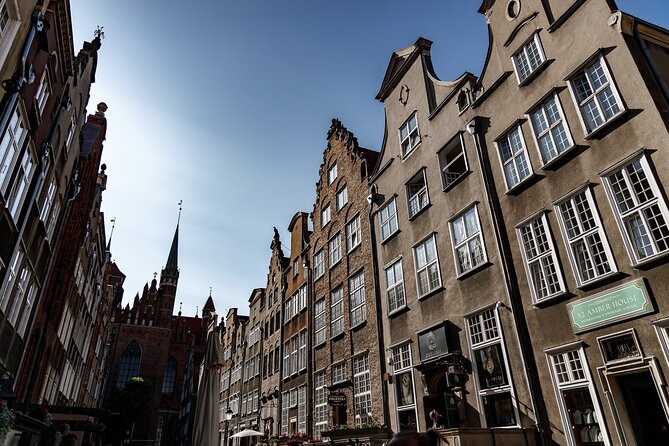
Then you move onto Long Street (Długa Street). This is the promenade through the historic center, lined with colorful merchant houses and cafes. The practical benefit is huge here: you go from landmark to everyday street life without a hard break.
If you want to snack or buy a souvenir, this is usually the place to do it. It is also where you can continue exploring on your own after the guide finishes.
Possible drawback: depending on the time you do this, Długa Street can feel more active than the church-and-gate sequence. If you do not like crowds, keep your expectations realistic. The tour still keeps things moving.
Neptune’s Fountain and Artus Court: maritime symbolism and civic legend
Next is Neptune’s Fountain (Fontanna Neptuna), the iconic symbol tied to the city’s maritime heritage. Neptune is easy to spot, and the guide’s job is to connect the fountain to what Gdansk did for centuries: trade, shipping, and life shaped by the sea.
From there, you reach Artus Court, also known for its ornate facade. Today it houses the Museum of Gdansk. Even in a brief stop, you get a sense of how a city’s identity gets expressed in meeting places, not just in churches and towers.
Artus Court is one of those landmarks where you can benefit from an explanation even if you do not go deep into museum exhibits. It helps you understand why the city built elegant civic spaces in addition to trade centers.
Main Town Hall Museum and Zuraw miniatura: port-city identity at the finish
The tour continues to the Main Town Hall (Museum of Gdansk). This building is described as a center of civic and administrative life for centuries. The value is in the framing: you learn how the city organized itself, then you see the building that reflects that authority.
Finally, you get Zuraw miniatura, the crane. It is a towering medieval structure and a reminder of Gdansk’s importance as a port city. The crane theme ties the whole walk together. Amber connects to trade wealth. The armory shows city protection. Neptune points to sea power. The crane brings you back to the work of moving goods.
The tour ends at Długa, Gdańsk, which is a convenient finish if you want to keep the day going. If you are hungry, you are already in the right place. If you want to return to a favorite stop, you can do it without needing a complicated transit plan.
Price, group size, and what you get for $84.85
At $84.85 per person, you are buying two things: a guided storytelling route and access to a sequence of key landmarks in a limited amount of time.
Here is why it can be good value:
- Many stops list free admission, so the tour cost focuses on guide expertise and route structure.
- The total time is about 3 hours, which can save you from spending half a day sorting out what to see.
- The group is capped at 30, which is large enough to run smoothly but small enough that you are not lost in a crowd.
One extra note: the tour is commonly booked about 34 days in advance. That does not mean it sells out instantly, but it suggests it is popular enough that you should not wait until the last minute.
If you are traveling as a small group, the tour also offers group discounts, which can bring the effective price down.
Who should book this tour (and who might prefer a slower plan)
This tour fits best if you want:
- A guided overview of Gdansk’s Old Town and Main Town landmarks in 3 hours
- A route where the guide connects buildings to themes like trade, governance, and maritime life
- A finish near Długa Street so your afternoon or evening is easy to extend
It might not be ideal if you want:
- Deep museum time inside every stop
- Lots of quiet time inside churches
- A slower pace designed around lingering and reading
Should you book this guided walk of Old and Main Gdansk?
I think you should book it if your goal is to get your bearings, learn the meaning behind major landmarks, and then choose what to revisit on your own later. The combination of Gothic churches, civic buildings, the amber theme, and the maritime symbols gives you a balanced view without needing a full day.
If you are the type who learns best by walking and listening, this is a strong match. And if your guide is Mr. Czarek from Walkative, you have an added reason to feel optimistic, since his style is described as informative and lively and encourages planning extra time in Gdansk.
If you prefer self-guided wandering with long stops, you might do better with more time than 3 hours. But as an efficient introduction to Gdansk’s core, this tour makes practical sense.
FAQ
How long is the Old and Main Town of Gdansk guided tour?
It runs for about 3 hours.
What landmarks are included on the tour?
You visit major Old Town and Main Town sights such as the Old Town Hall, the Great Mill (Amber Museum), St. Bridget’s Church, Market Hall, St. Nicholas Church, St. Mary Church, the Great Armoury, Golden Gate, the Prison Tower, Long Street (Długa Street), Neptune’s Fountain, Artus Court and the Museum of Gdansk areas, the Main Town Hall museum area, and Zuraw miniatura.
Is pickup offered, and where does the tour start and end?
Pickup is offered. The tour starts at Gdańsk Old City Hall, Ratusz Staromiejski (Korzenna 33/35 area) and ends at Długa, Gdańsk.
How much does it cost per person?
The price is $84.85 per person.
Are admissions included for any stops?
The tour notes free admission for several stops, and St. Bridget’s Church admission is included.
What is the cancellation refund window?
You can cancel for a full refund if you cancel at least 24 hours before the experience starts. If you cancel less than 24 hours before, the amount paid is not refunded.
Freshly posted from Gdansk
- 1-Day Private Tour Stutthof Concentration Camp and Malbork Castle★ 5.0 · 1 review
- Oliwa Cathedral in Gdansk & Trip to Park – 2h private trip by luxury car★ 5.0 · 1 review
- Private Bartending Workshop in Gdańsk★ 5.0 · 1 review
- A Two Hour Walking Tour in Old Town Gdansk★ 5.0 · 1 review
- Gdańsk Private Romantic Sunset Cruise★ 5.0 · 1 review
- Sopot: Old Town Highlights Private Walking Tour★ 5.0 · 1 review
- Surprise Walk of Gdansk with a Local★ 5.0 · 1 review
3-Hour Experiences, compared.


Warsaw Old Town 1.5-Hour or Full 3-Hour Segway Tour
Read our review →


3-Hour City WalkingTour with University & Cathedral
Read our review →
3-Hour Novice Ski Adventure & Relaxing Zakopane or Baths Combo
Read our review →
Browse the lists this tour appears in